Categories
The News And Times – thenewsandtimes.com

US general meets Egypt“s Sisi in push for aid to Gaza


2023-10-19T11:53:52Z

Trucks carrying humanitarian aid from Egyptian NGOs for Palestinians, wait for the reopening of the Rafah crossing at the Egyptian side, to enter Gaza, amid the ongoing conflict between Israel and the Palestinian Islamist group Hamas, in Rafah, Egypt October 17, 2023. REUTERS/Stringer

The top U.S. general overseeing American troops in the Middle East made an unannounced trip to Egypt for talks on Thursday with Egyptian President Abdel Fattah al-Sisi that focused on the Israel-Hamas war and how to get aid to the Gaza Strip.

Egypt’s Sinai peninsula adjoins the Gaza Strip and its Rafah border crossing is the sole route for aid to enter Gaza directly from outside Israel. It is also the only exit that does not lead to Israeli territory.

More than 100 trucks were waiting close to the crossing on the Egyptian side on Thursday, though it was not expected that aid would enter before Friday, Egyptian security sources said. More aid is being held in the Egyptian city of Al Arish, about 45 km (28 miles) from Rafah.

A statement from Sisi’s office said the talks with U.S. Army General Michael “Erik” Kurilla, head of U.S. Central Command, included in particular “the developments in the Gaza Strip”.

“The president outlined Egypt’s efforts for de-escalation, stressing the importance of the international community’s concerted efforts to contain the crisis and stop its escalation in dangerous directions,” the statement said.

The meeting in Cairo, where Kurilla also met Egypt’s Defence Minister Mohamed Zaki, came as Washington and Egypt have been pushing for a deal with Israel to get aid deliveries to Gaza.

Sisi’s office said delivering aid in a “sustainable manner” was a top priority given deteriorating humanitarian conditions.

Aid has been piling up on the Egyptian side after Israeli bombardments in reaction to the attacks by Hamas in Israel on Oct. 7 made the Rafah crossing inoperable, though work was expected on Thursday to repair roads to send aid across.

The Rafah crossing has become a focal point in the conflict between Israel and the Palestinian militant group Hamas as a humanitarian crisis unfolds and hundreds of thousands of Palestinians head to south Gaza from the enclave’s north to escape Israeli bombing.

Egypt has been alarmed at the idea that Israel’s unprecedented bombardment and siege of Gaza could force its residents southwards, and has said it will not allow any new mass displacement of Palestinians.

Most of Gaza’s 2.3 million residents depended on aid before the current conflict started on Oct. 7, and about 100 trucks daily were providing humanitarian relief to the enclave, according to the United Nations.

In a sign of its concerns, Sisi on Wednesday said Egyptians in their millions would reject the forced displacement of Palestinians into Sinai, adding that any such move would turn the Egyptian peninsula into a base for attacks against Israel.

The post US general meets Egypt“s Sisi in push for aid to Gaza first appeared on The News And Times – thenewsandtimes.com.


Categories
The News And Times – thenewsandtimes.com

Futures inch up ahead of Powell“s comments; Tesla drops, Netflix surges


2023-10-19T11:28:26Z

Traders work on the floor of the New York Stock Exchange (NYSE) in New York City, U.S., September 28, 2023. REUTERS/Brendan McDermid/File Photo

U.S. stock index futures rose on Thursday as Tesla and Netflix kicked U.S. earnings season into high gear, while Treasury yields eased off multi-year peaks ahead of remarks from Federal Reserve Chair Jerome Powell.

Netflix (NFLX.O) soared 13.3% in premarket trading after the streaming giant said it was raising prices for some of its plans in the United States, Britain and France after adding 9 million subscribers in the third quarter.

Tesla (TSLA.O), however, slid 5.1% as the electric vehicle (EV) maker missed Wall Street expectations on third-quarter gross margin, profit and revenue.

CEO Elon Musk said on Wednesday that he was concerned about the impact of high interest rates on car buyers, adding that the EV maker was hesitant about its plans for a factory in Mexico.

Legacy automakers Ford Motor (F.N) and General Motors (GM.N) lost around 1% each.

Yields on benchmark Treasury notes surged on Thursday, with the 2-year yield, which best reflects interest rate expectations, climbing to a 17-year high at 5.2313%. The yield on the 10-year stood at 4.9535%, inching closer to the 5% level last seen in 2007.

Powell is scheduled to speak at 12 p.m. ET, while other Fed officials including Chicago Fed President Austan Goolsbee, Atlanta’s Raphael Bostic and Philadelphia’s Patrick Harker will also speak during the day.

Fed policymakers on Wednesday signaled a pause in hiking interest rates for another couple of months as they wait for signs of progress in their fight against inflation and the potential for the recent rise in long-term yields to do some of their work for them.

“Even if the Fed decides against raising rates further, the ‘higher for longer’ reality is slowly sinking in for investors,” Raffi Boyadjian, lead investment analyst at forex broker XM said in a note.

Traders’ bets of interest rates remaining unchanged in November and December stood at around 94% and around 61%, respectively, as per CME’s FedWatch Tool.

On the data front, weekly jobless claims, October Philly Fed Business Index and September existing home sales will be eyed.

Wall Street’s main indexes ended around 1% lower on Wednesday amid surging bond yields.

Meanwhile, Israel pounded Gaza with more air strikes on Thursday, as British Prime Minister Rishi Sunak followed U.S. President Joe Biden on visits to demonstrate support for the war against Hamas while urging Israel to ease the plight of besieged Gazans.

At 6:48 a.m. ET, Dow e-minis were up 18 points, or 0.05%, S&P 500 e-minis were up 3.75 points, or 0.09%, and Nasdaq 100 e-minis were up 36.5 points, or 0.24%.

Lam Research (LRCX.O) fell 2.1% as the chip manufacturing equipment supplier forecast second-quarter revenue slightly below Wall Street estimates.

Las Vegas Sands (LVS.N) rose 5.4% following the casino operator’s better-than-expected third quarter profit and revenue.

AT&T (T.N) added 3.3% after the telecom firm raised its annual free cash flow forecast.

The post Futures inch up ahead of Powell“s comments; Tesla drops, Netflix surges first appeared on The News And Times – thenewsandtimes.com.


Categories
The News And Times – thenewsandtimes.com

What is Israel’s endgame in Gaza invasion?


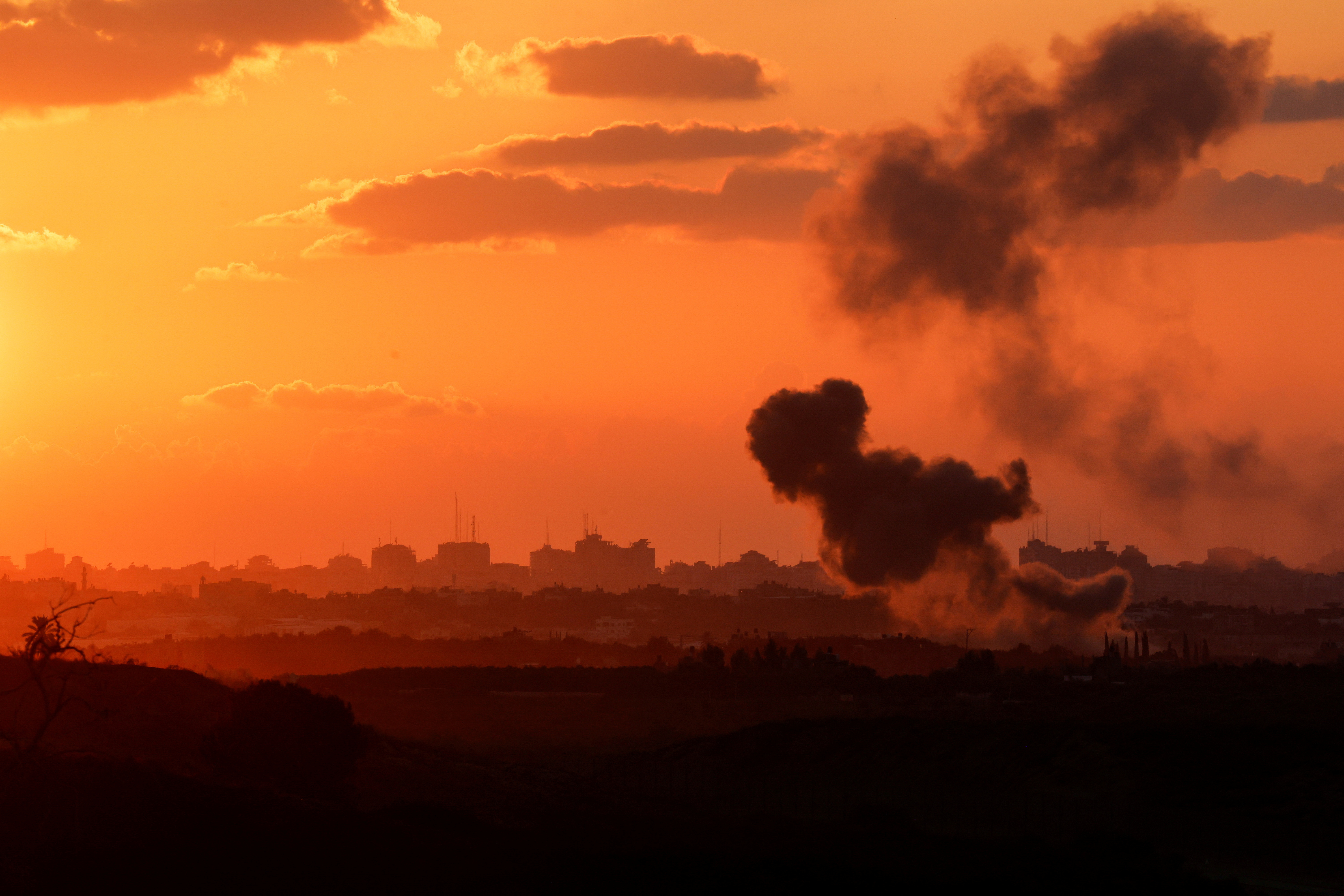
A view shows smoke in the Gaza Strip as seen from Israel's border with the Gaza Strip, in southern Israel

A view shows smoke in the Gaza Strip as seen from Israel’s border with the Gaza Strip, in southern Israel October 18, 2023. REUTERS/Amir Cohen Acquire Licensing Rights

DUBAI/WASHINGTON, Oct 18 (Reuters) – Israel is vowing to wipe out Hamas in a relentless onslaught on the Gaza Strip but has no obvious endgame in sight, with no clear plan for how to govern the ravaged Palestinian enclave even if it triumphs on the battlefield.

Codenamed “Operation Swords of Iron”, the military campaign will be unmatched in its ferocity and unlike anything Israel has carried out in Gaza in the past, according to eight regional and Western officials with knowledge of the conflict who declined to be named due to the sensitivity of the matter.

Israel has called up a record 360,000 reservists and has been bombarding the tiny enclave non-stop following Hamas’s assault on southern Israel on Oct. 7, which killed about 1,400 people, mostly civilians.

The immediate Israeli strategy, said three regional officials familiar with discussions between the U.S. and Middle Eastern leaders, is to destroy Gaza’s infrastructure, even at the cost of high civilian casualties, push the enclave’s people towards the Egyptian border and go after Hamas by blowing up the labyrinth of underground tunnels the group has built to conduct its operations.

Israeli officials have said that they don’t have a clear idea for what a post-war future might look like, though.

Some of U.S. President Joe Biden’s aides are concerned that while Israel may craft an effective plan to inflict lasting damage to Hamas, it has yet to formulate an exit strategy, a source in Washington familiar with the matter said.

Trips to Israel by Secretary of State Antony Blinken and Defense Secretary Lloyd Austin this past week had stressed the need to focus on the post-war plan for Gaza, the source added.

Arab officials are also alarmed that Israel hasn’t set out a clear plan for the future of the enclave, ruled by Hamas since 2006 and home to 2.3 million people.

“Israel doesn’t have an endgame for Gaza. Their strategy is to drop thousands of bombs, destroy everything and go in, but then what? They have no exit strategy for the day after,” said one regional security source.

An Israeli invasion has yet to start, but Gaza authorities say 3,500 Palestinians have already been killed by the aerial bombardment, around a third of them children – a larger death toll than in any previous conflict between Hamas and Israel.

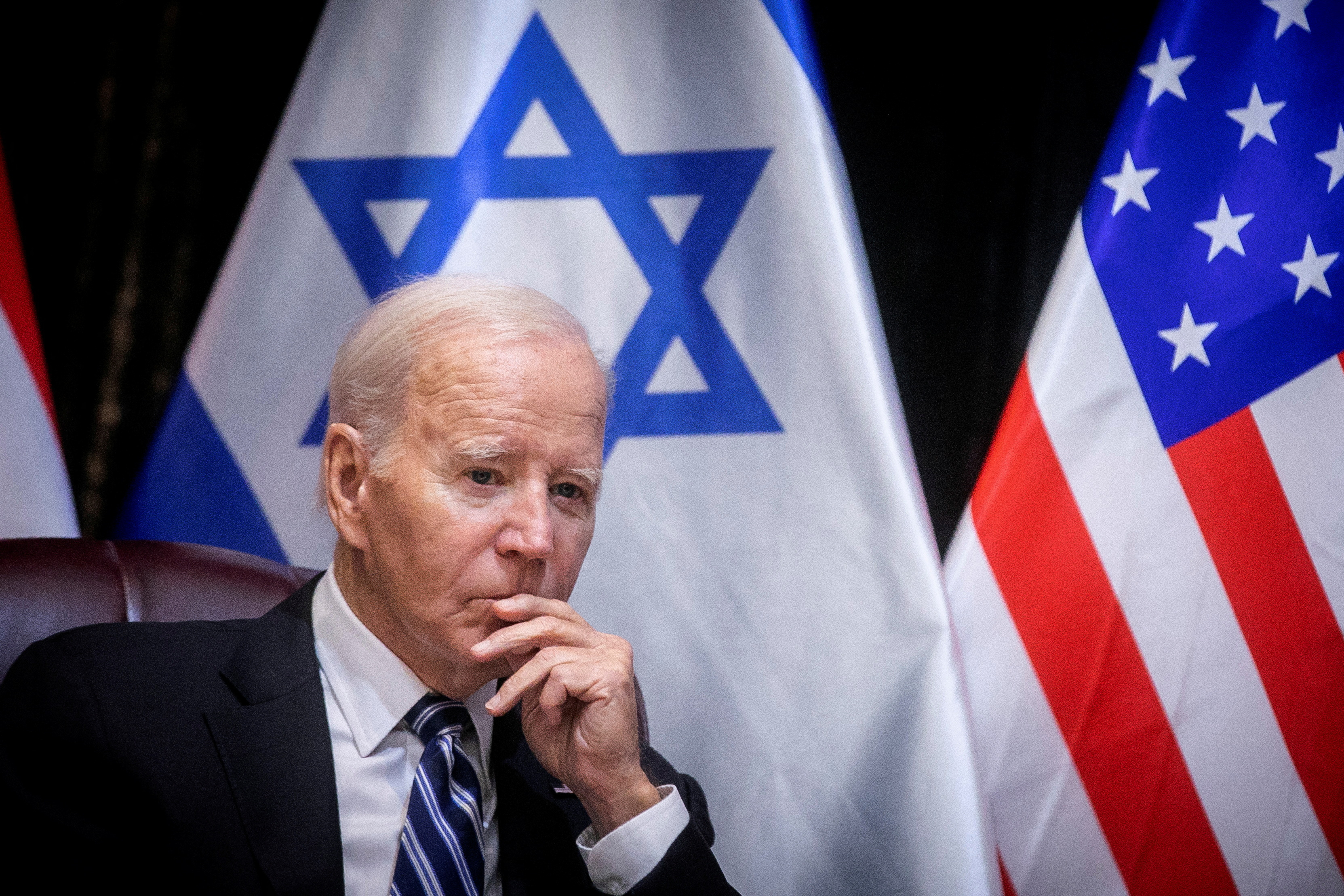
Biden, on a visit to Israel on Wednesday, told Israelis that justice needed to be served to Hamas, though he cautioned that after the 9/11 attacks on New York, the U.S. had made mistakes.

The “vast majority of Palestinians are not Hamas”, he said. “Hamas does not represent the Palestinian people.”

Aaron David Miller, a Middle East expert at the Carnegie Endowment for International Peace, said Biden’s visit would have given him a chance to press Israeli leader Benjamin Netanyahu to think through issues such as the proportional use of force and the longer-term plans for Gaza before any invasion.

‘CITY OF TUNNELS’

Israeli officials, including Netanyahu, have said they will wipe out Hamas in retribution for the Oct. 7 killings, the deadliest militant attack in Israel’s 75-year-old history.

What will follow is less defined.

“We are of course thinking and dealing with this, and this involves assessments and includes the National Security Council, the military and others about the end situation,” Israeli National Security Council director Tzachi Hanegbi told reporters on Tuesday. “We don’t know what this will be with certainty.”

“But what we do know is what there will not be,” he said, referring to Israel’s stated aim to eradicate Hamas.

This might be easier said than done.

“It’s an underground city of tunnels that make the Vietcong tunnels look like child’s play,” said the first regional source, referring to the Communist guerrilla force that defied U.S. troops in Vietnam. “They’re not going to end Hamas with tanks and firepower.”

Two regional military experts told Reuters that Hamas’s armed wing, the Ezzedine al-Qassam Brigades, has mobilised for an invasion, setting up anti-tank mines and booby-trapped explosive devices to ambush troops.

Israel’s coming offensive is set to be much bigger than past Gaza operations that Israeli officials had previously referred to as “mowing the grass”, degrading Hamas’s military capabilities but not eliminating it.

Israel has fought three previous conflicts with Hamas, in 2008-9, 2012 and 2014, and launched limited land invasions during two of those campaigns, but unlike today, Israel’s leaders never vowed to destroy Hamas once and for all.

In those three confrontations, just under 4,000 Palestinians and fewer than 100 Israelis died.

There is less optimism in Washington, though, that Israel will be able to completely destroy Hamas and U.S. officials see little chance that Israel will want to hold on to any Gaza territory or re-occupy it, the U.S. source said.

A more likely scenario, the person said, would be for Israeli forces to kill or capture as many Hamas members as they can, blow up tunnels and rocket workshops, then after Israeli casualties mount, look for a way to declare victory and exit.

CLOUDS OF WAR

The fear across the region is that the war will blow up beyond the confines of Gaza, with Lebanon’s Hezbollah and its backer Iran opening major new fronts in support of Hamas.

Iranian Foreign Minister Hossein Amir-Abdollahian warned of a possible “preemptive” action against Israel if it carried out its invasion of Gaza. He said last weekend that Iran would not watch from the sidelines if the U.S. failed to restrain Israel.

Arab leaders have told Blinken, who has been criss-crossing the region this past week, that while they condemn Hamas’s attack on Israel, they oppose collective punishment against ordinary Palestinians, which they fear will trigger regional unrest.

Popular anger will ratchet up across the region when the body count rises, they said.

Washington has sent an aircraft carrier strike group to the eastern Mediterranean and is concerned that Hezbollah might join the battle from Israel’s northern border. There has been no sign, however, that the U.S. military would then move from a deterrent posture to direct involvement.

The regional sources said Washington was proposing to re-energise the Palestinian Authority (PA), which lost control of Gaza to Hamas in 2007, although there is huge doubt whether the PA or any other authority would be able to govern the coastal enclave should Hamas be driven out.

Miller, a former U.S. Middle East negotiator, expressed deep skepticism about the potential for establishing a post-Hamas government to rule Gaza.

“I could paint you a picture more appropriate to a galaxy far, far away and not on planet Earth on how you could combine the U.N., the Palestinian Authority, the Saudis, the Egyptians, led by the U.S. marshalling the Europeans, to basically convert Gaza from an open-air prison to something much better,” he said.

In the meantime, calls for the creation of humanitarian corridors within Gaza and escape routes for Palestinian civilians have drawn a strong reaction from Arab neighbors.

They fear an Israeli invasion will spark a new permanent mass wave of displacement, a replay of the 1948 Israeli war of independence and 1967 Arab-Israeli war. Millions of Palestinians who were forced to flee then have remained stranded as refugees in the countries that hosted them.

Egyptian President Abdel Fattah al-Sisi said he rejected the forced displacement of Palestinians from their land into the Sinai peninsula bordering Gaza, adding that any such move would turn the area into a base for attacks against Israel. He said Egyptians in their millions would protest against any such move.

East Jerusalem, captured by Israel in the 1967 war and then annexed, and Israeli settlement expansion across occupied territory are at the core of the conflict with Palestinians. Netanyahu has openly embraced the religious and radical far-right, promising to annex more land to be settled by Jews.

Hundreds of Palestinians have died in the West Bank since the start of the year in repeated clashes with Israeli soldiers and settlers, and there is widespread concern that the violence might engulf the territory as nearby Gaza burns.

“Whatever worst-case scenario you have, it will be worse,” a second regional source said about the potential for the conflict to spread beyond Gaza.

  • Rescue personnel work after hundreds of Palestinians were killed in a blast at Al-Ahli hospital in Gaza that Israeli and Palestinian officials blamed on each other

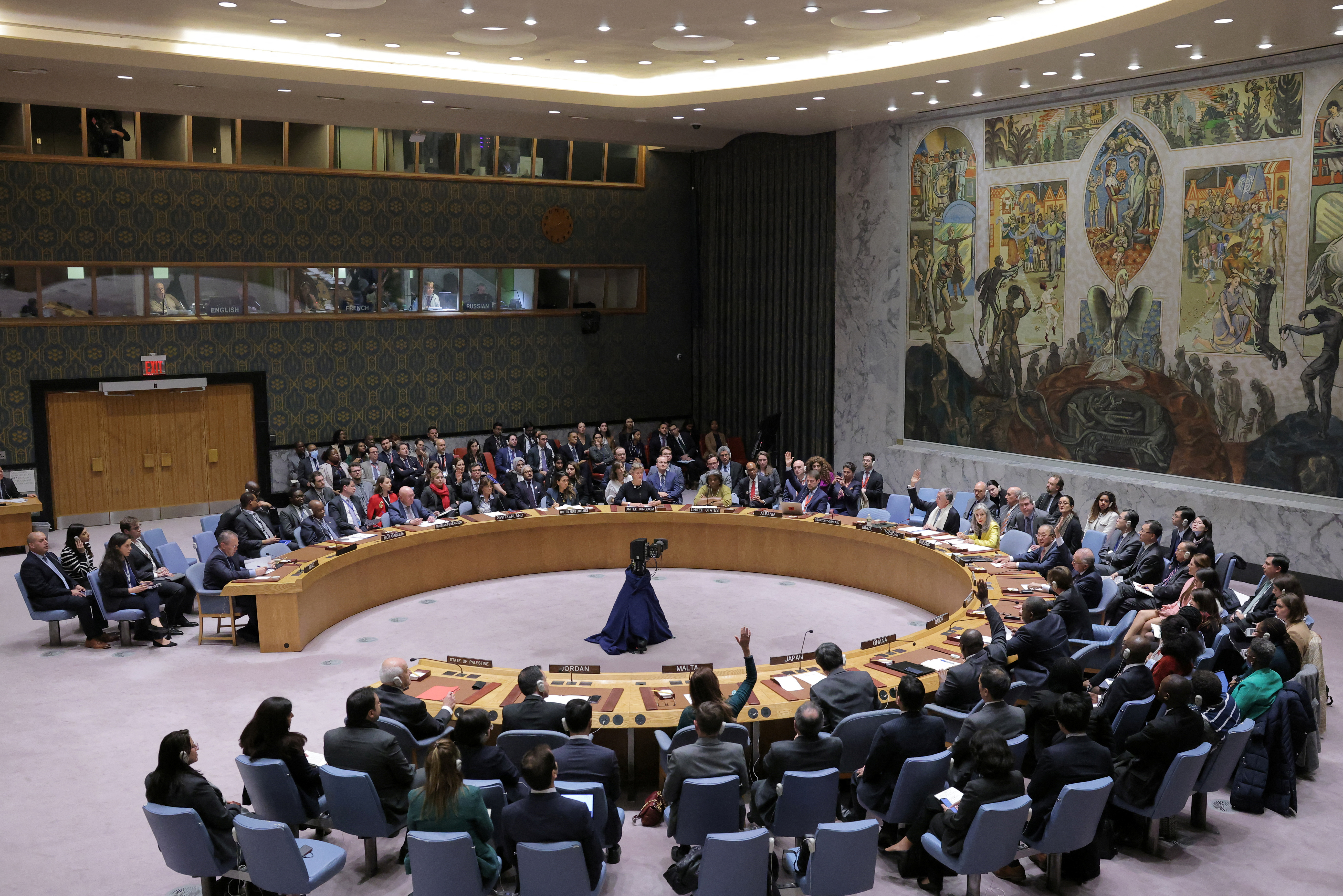
  • United Nations Security Council meeting on the conflict between Israel and Hamas at U.N. headquarters in New York

  • U.S. President Joe Biden meets Israeli Prime Minister Benjamin Netanyahu in Tel Aviv

  • Pumpjacks are seen during sunset at the Daqing oil field in Heilongjiang

Aditional reporting by Humeyra Pamuk in Washington, Jonathan Saul in Jerusalem and Andrew Mills; Editing by Crispian Balmer, Pravin Char and Nick Macfie

Our Standards: The Thomson Reuters Trust Principles.

The post What is Israel’s endgame in Gaza invasion? first appeared on The News And Times – thenewsandtimes.com.


Categories
The News And Times – thenewsandtimes.com

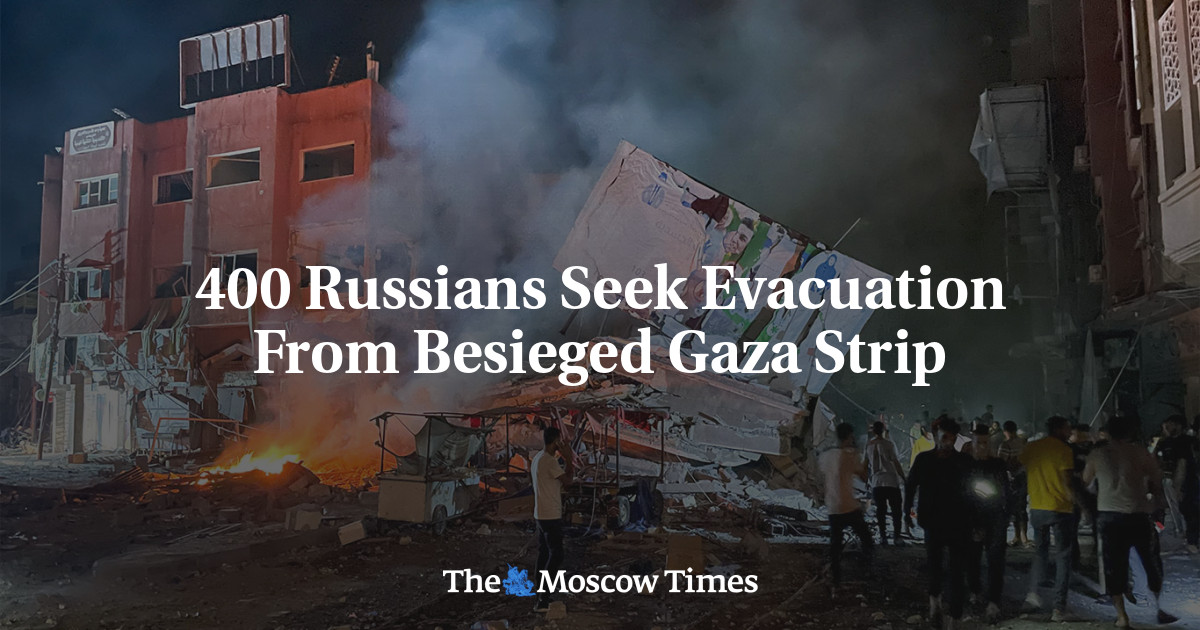
400 Russians Seek Evacuation From Besieged Gaza Strip


82748__e7270f0688527c3e73963bbe3fc86d9e.

Around 400 Russian nationals are seeking to evacuate the Gaza Strip as the Israeli military continues to bombard the coastal enclave in retaliation to Hamas’ surprise attack, Russia’s diplomatic mission in Palestine said Thursday.

Alia Zaripova, the spokeswoman for Russia’s representative mission in Ramallah, said Moscow was working to evacuate its citizens from the besieged territory, according to the state-run TASS news agency.

An additional 110 citizens of Palestine, Belarus, Ukraine, Moldova and Kazakhstan have also requested assistance from the Russian office with evacuations, Zaripova said.

The United Nations humanitarian office OCHA says nearly 340,000 Palestinians have been displaced in the unfolding humanitarian crisis.

Russian Foreign Ministry spokeswoman Maria Zakharova said Moscow was working with the Egyptian government to organize the evacuation of its citizens from the Gaza Strip.

At the same time, Israel’s Ambassador to Russia Alexander Ben Zvi said Tel Aviv was in talks with Cairo on opening the border post with Gaza to allow civilian evacuations.

It has been six days since Hamas fighters stormed into southern Israel, killing at least 1,200 Israelis, mostly civilians, and taking around 150 hostages in an unprecedented attack.

In retaliation, Israel has pounded Gaza with airstrikes, leveling entire city blocks and killing at least 1,100 people.

The post 400 Russians Seek Evacuation From Besieged Gaza Strip first appeared on The News And Times – thenewsandtimes.com.


Categories
The News And Times – thenewsandtimes.com

Moscow Seeks to Benefit From Fighting in Gaza


putin-and-iraqi-prime-minister.jpeg

Russia’s war against Ukraine crosses the 600-day mark today, and the fighting between Israel and the Hamas terrorists based in Gaza is on its tenth day. The effects of the latter on the former are still emerging. The interplay between these two major breakdowns in the world order is certain to be strong. Russian President Vladimir Putin already is seeking opportunities to benefit from the new turmoil. His immediate gain is the obvious diversion of international attention from Russia’s continuing aggression in Ukraine (Topwar.ru, October 13). The Kremlin’s hopes are fixated on the possible sustained reduction of US military aid to Ukraine caused by the urgent need to deliver various arms, particularly missile defense systems, to Israel (Izvestiya, October 12; TASS, October 12).

These hopes were dampened by the recent meeting of the Ramstein working group of Western military supporters of Ukraine led by US Defense Secretary Lloyd Austin. On October 12, he announced a new aid package and confirmed that commitments to Ukraine would not be diminished by aid to Israel (NV.ua, October 12). Russian commentators have tried to portray the deadlock in the US House of Representatives as a consequence of deep disagreements in the American political class over the scale of financing for Ukraine (Rossiiskaya gazeta, October 14; Kommersant, October 13). The fighting in Gaza unleashed by the Hamas attack increases the urgency in Washington to overcome this deadlock. An initiative that combines the funding for aid to Israel and Ukraine can become a means to this end (Interfax, October 12).

Moscow also presumes that strong US support for Israel would create new issues in relations with those European allies traditionally more sympathetic to the Palestinian cause. From the Kremlin’s perspective, this presumed discord would further erode Western solidarity with Ukraine. The European states at the Ramstein meeting have committed to new deliveries of weapons to Ukraine, prioritizing air defense while admitting that they cannot compensate for the hypothetical discontinuation of American support (Vedomosti.ru, October 5). Perhaps more impactful politically was the resolution adopted by the Parliamentary Assembly of the Council of Europe that describes Putin’s regime as a dictatorship and that seeks to terminate all connections with his illegitimate presidency (Meduza, October 13). The condemnation coming from Europe, in particular France and the European Union itself, of the atrocities committed by Hamas has been much stronger than Moscow had anticipated (RIA Novosti, October 14; Kommersant, October 13).

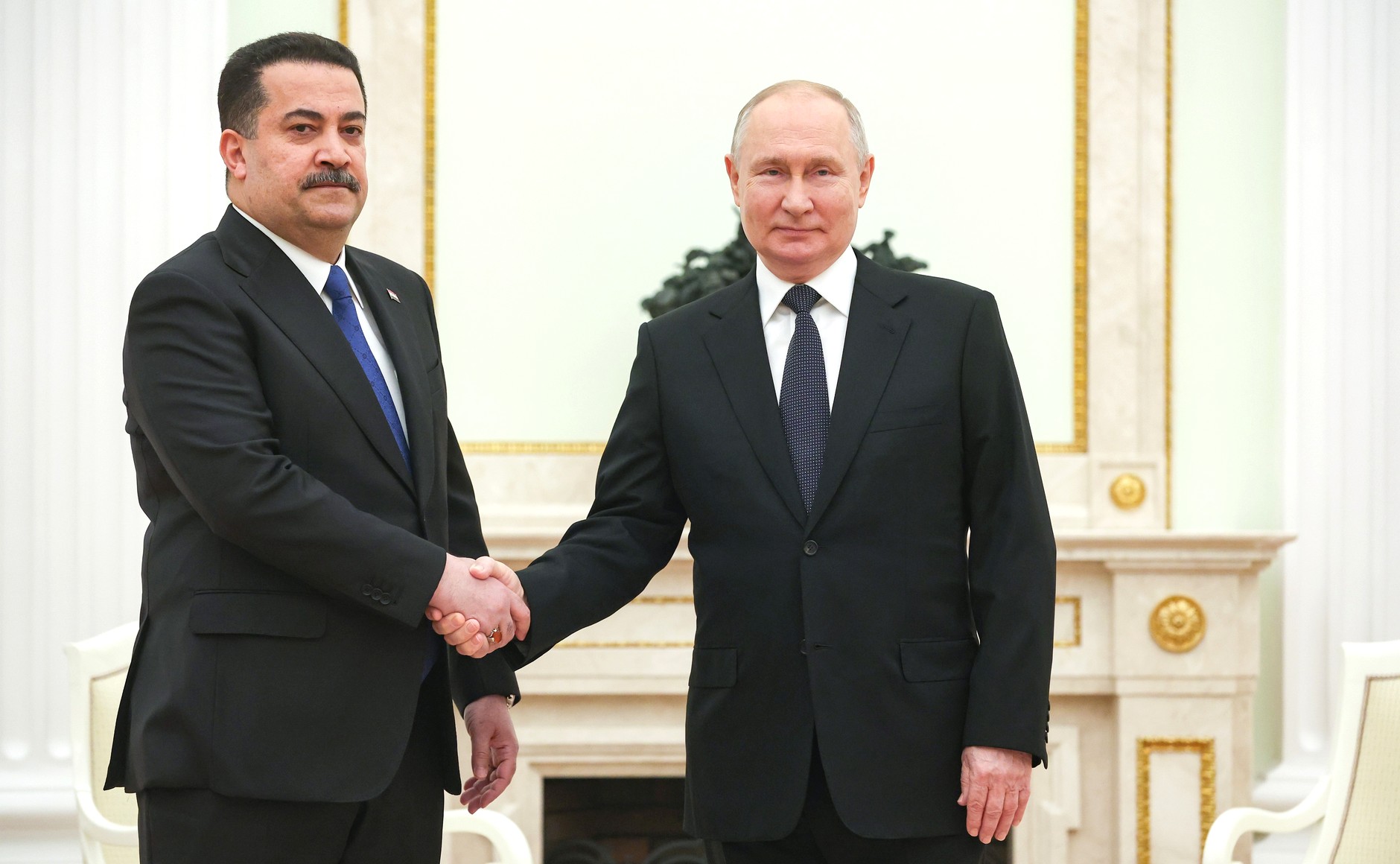
Russia’s response to the developments in Gaza has been ambivalent and attuned to the positions of others in the wider Middle East. Two days after the Hamas attack, on October 9, Russian Foreign Minister Sergei Lavrov met with Arab League Secretary-General Ahmed Aboul Gheit and suggested an immediate ceasefire (Kommersant, October 9). The next day, at the Kremlin, Putin greeted Iraqi Prime Minister Mohammed Shia al Sudani and described the escalation of the conflict as a failure of US policy in the Middle East (Kremlin.ru, October 10). Addressing the summit of the Commonwealth of Independent States in Bishkek, Putin did not express any solidarity with Israel. He instead elaborated on “unacceptable casualties” among the Palestinians and warned about the serious consequences of these actions (RBC, October 13). Hamas duly expressed gratitude to the Russian president for taking this stance (RIA Novosti, October 14).

Russia appears to be on the same page with Saudi Arabia and Turkey while counting the fighting in Gaza to resonate and produce violent turmoil across the wider Middle East (Forbes.ru, October 13). Foreign policy pundits in Moscow predict the inevitable horizontal escalation of hostilities, confident in a perfect fit of such a development with Russia’s interests (Rossiiskaya gazeta, October 10). It is not only the inevitable spike in oil prices that underpin these expectations (Nezavisimaya gazeta, October 10). No less important is the hoped-for failure of US attempts to deter and dissuade the spread of localized war, exemplified by Secretary of State Antony Blinken’s shuttle diplomacy in Saudi Arabia, Jordan, and Egypt (The Moscow Times, October 12). At the same time, Moscow is wary of undercutting these efforts knowing that China, where Putin will travel later this week, is also trying to prevent escalation, even if Beijing’s reaction has been rather subdued (RBC, October 15).

Russian intrigues sharply contrast with Ukraine’s unequivocal support for Israel, which President Volodymyr Zelenskyy expressed while attending the meeting of North Atlantic Treaty Organization defense ministers in Brussels on October 11 and 12 (Novayagazeta.eu, October 14). Zelenskyy also sent a request to visit Israel in the coming days (RBK, October 12). Ukrainians tend to see Hamas’ attack on Israel in the same light as Russian aggression against their own country. They have no reservations against Israel’s ground attack on Gaza aimed at destroying the terrorist organization (NV.ua, October 13).

This position may influence Israel’s stance on the war in Ukraine, from which it has tried to keep a convenient distance, abstaining from joining the Western sanctions regime against Russia (Novayagazeta.eu, October 13). Russian military intervention in Syria is a major consideration underpinning this caution; however, it is becoming clear to Israeli analysts that Moscow’s capacity for sustaining this deployment has been depleted (Carnegie Politika, October 10). Russia has conceded the central role in Syria to Iran, expanding military ties with Tehran in the process. Additionally, the clandestine deal on Russia importing Iranian ballistic missiles and drones in exchange for missile technologies constitutes a serious challenge for Israel (RBK, October 10).

Every aggression produces an impulse of moral clarity, translating into political choices and actions. The states that have formed the coalition supporting Ukraine are also members of the anti-Hamas coalition. Putin’s expectations that the war in the Middle East would leave Ukraine forgotten and isolated will likely be disproven by reaffirmed Western unity and Ukraine’s solidarity with Israel. The fighting in Gaza has proven, yet again, that compromises with terrorists are as senseless and dangerous as are attempts to appease aggressors. Moscow’s appeals to resume conversations with Hamas are essentially self-serving and aimed at promoting the dismembering of Ukraine through a “peace process.” Peace will come for Ukraine and Israel will succeed in normalizing relations with its Arab neighbors only after the aggressors and terrorists are soundly defeated.

The post Moscow Seeks to Benefit From Fighting in Gaza first appeared on The News And Times – thenewsandtimes.com.


Categories
The News And Times – thenewsandtimes.com

Everything we know about the Gaza hospital strike


XRLHYTPP7IBADPUEYLNA7QK4HQ.JPG&w=1440

In a conflict already freighted with allegations of war crimes, a strike on a Gaza City hospital on Tuesday has divided opinion, set back hopes for a diplomatic end to fighting and deepened global anguish over the prospect of more civilian deaths.

The early evening blast at the al-Ahli Hospital killed 471 and injured more than 300, a spokesman for Gaza’s Ministry of Health, Ashraf al-Qudra, told The Washington Post. Israel has disputed that death toll.

Palestinian and Israeli officials blame each other for the blast, which was the single deadliest incident for civilians in Gaza since the war began, coming 10 days after Hamas’s Oct. 7 cross-border attack on Israel.

The post Everything we know about the Gaza hospital strike first appeared on The News And Times – thenewsandtimes.com.


Categories
The News And Times – thenewsandtimes.com

The Israel-Hamas war is the latest proof Russia is an agent of chaos


By Aleksandar Đokić, Political scientist and analyst

The opinions expressed in this article are those of the author and do not represent in any way the editorial position of Euronews.

Russia’s leadership doesn’t even have a stable, non-contradictory set of principles or values it adheres to, and its hodgepodge of narratives shows it is trying to fuel any conflict it can, all with the goal of carving out an empire for itself, Aleksandar Đokić writes.

ADVERTISEMENT

It’s not unusual that in times of major crises, analogies are often forced upon us to more easily come to terms with and understand the political reality we live in. 

With the world struck by one shock after another in rapid succession in recent years, it’s also hardly surprising to see some draw parallels with the run-up to World War II.

Yet, the period of time most resembling our own could be compared to the early stages of the Cold War instead.

And this time, Russia, as the only actor on the global geopolitical stage completely hollowed out from any true belief, is an even greater agent of chaos than it ever was in the past.

A menace in a world of partial disorder

The structure of the global order is unwinding, not because democracies in Europe and North America are weaker or less economically influential than they were, but because other regional players have grown in the meantime. 

In parallel, the institutional framework of the global order is outdated yet remains rigid to our contemporary needs due to clashing visions on the global stage, while no clear victor has yet emerged from the fray. 

Some of the major actors outside of the Western democratic world are more rational, desiring economic growth rather than waging wars, and not all of them ascribe to an ideological system that is antagonistic towards the West as a whole.

Russia, unfortunately for the rest of us, is the exact opposite.

It’s putting the concept of state power in front of the well-being of its citizens; framing victory through the lenses of war, instead of economic development; all the while propping its authoritarian regime with an eclectic ideological mashup bound together solely by the belief that Russia is the opposite of the imagined and imaginary West. 

Although other Russias did exist, like the strain of liberal thought in Russian culture going back all the way to the 18th century, we are dealing with a particular version of Russia which is highly minacious in a world of partial disorder.

Flashpoints outlining the Kremlin’s shadow

For the past two years, there have been three flashpoints all involving Russia: its invasion of Ukraine, the latest Nagorno-Karabakh conflict and the bloody incursion of the Hamas’ military wing into Israel. 

Russia plays various roles in all three. In Ukraine, it is the invader, in Nagorno-Karabakh it is the (intentionally) failed peacekeeper. 

And as for Israel, it’s a weak partner who colluded with the Iranian regime as well as with Israeli PM Benjamin Netanyahu, while acting as a meddling influence on the balance of power in the Middle East. 

Yet, it was Vladimir Putin whom Netanyahu officially spoke to over the phone after the attack, at the same time refusing an offer from Ukraine’s President Volodymyr Zelenskyy for a state visit to Israel in its time of need. 

It can seem confounding, considering that the USSR armed the forces poised to destroy Israel on both occasions its very existence was at stake — the 1967 Six-Day War and the 1973 Yom Kippur War — as a Cold War flex to rattle the US.

But this time, Russia is not the USSR, especially not in terms of ideology, as much as it’s willing to toy with the idea whenever it thinks it’s useful.

Questions over Russia’s involvement in bloodshed

At the same time, Iran has been leading the charge in clamouring for war against Israel now — an aggressive stance most Arab countries have meanwhile given up on because of its futility and great cost. 

Meanwhile, Russia is undisputably buying weapons for its war against Ukraine from Iran while forging a tenuous alliance with Tehran in Syria, where Moscow intervened to keep Bashar al-Assad’s authoritarian regime in power by any means necessary. 

ADVERTISEMENT

Naturally, questions arose over Russia’s possible role in Hamas’ attack on 7 October.

Recently, it was uncovered that the Palestinian militants partially financed their operations by purchasing cryptocurrency in Russia in the lead-up to last Saturday’s incursion and the resulting atrocities. 

Millions of dollars were funnelled through Garantex, a Moscow-based crypto exchange, to various extremist groups connected to Hamas. 

Beyond that, there is no evidence that the Kremlin actually supplied Hamas or any other extremist group in Palestine with weapons, or that it took part in the planning of any of their operations.

Bullets for Kalashnikovs and conflicting narratives

Moscow, however, does enjoy close political ties to Hamas, seen again just last Saturday when its leadership publically waxed lyrical about Putin, saying it “appreciates Russian President Vladimir Putin’s position … and the fact that he does not accept the blockade of the Gaza Strip.”

ADVERTISEMENT

“We also affirm that we welcome Russia’s tireless efforts to stop the systematic and barbaric Zionist aggression against the Palestinian people in the Gaza Strip,” they said in a statement. 

In another interview with Russia’s state-owned RT in Arabic, a high-ranking Hamas official stated that “Hamas has a license from Russia to locally produce bullets for Kalashnikovs, that Russia sympathises with Hamas, and that it is pleased with the war because it is easing American pressure on it with regard to the war in Ukraine”.

On their end, Russian officials, state propagandists and organised bots have been peddling various narratives, some contradicting each other. 

The Kremlin officials have blamed the US for Hamas’ attack, while not condemning the militants’ incursion, especially not in such explicit terms. In fact, Putin himself labelled it “a failure of US policy in the Middle East”, while the ever-increasingly toxic former Russian President Dmitry Medvedev said it was a part of Washington’s “manic obsession to incite conflicts”.

The state propagandists supported the same narrative and also added a new one: Russia’s war against Ukraine is much more benign than Israel’s reaction in Gaza. 

ADVERTISEMENT

Russian bots, on many social platforms, didn’t hold back from supporting Hamas and accusing Ukraine of supporting the “fascists” in the conflict — meaning, Israel.

Carving an empire in blood devoid of meaning

Yet on a much larger scale, Moscow’s hodgepodge of narratives shows it for what it really is — an agent of chaos, trying to fuel any conflict in the borderlands of the democratic world, all with the goal of apportioning a regional empire for itself. 

Russia’s leadership is not interested in peace and it doesn’t work towards it. 

Its social media bots and online influencers tell us the tale of the lowest common denominator in Russian society — a revanchist, disgruntled anti-Semite who has given up on his own life and wants to see the entire world crumble down to his level. 

The most striking part of it all is that Russia’s leadership doesn’t even have a stable, non-contradictory set of principles or values it adheres to.

ADVERTISEMENT

Carving out an empire in blood is immanently meaningless when one lacks a higher cause to aspire to, let alone a coherent narrative. The Kremlin, however, has demonstrated time and again it’s utterly devoid of that, left completely without a vision, and in the end, barren of any semblance of a soul or empathy for others. 

And that is what makes it more dangerous and unpredictable than ever — to its neighbours and to the rest of the world.

Aleksandar Đokić is a Serbian political scientist and analyst with bylines in Novaya Gazeta. He was formerly a lecturer at RUDN University in Moscow.

At Euronews, we believe all views matter. Contact us at view@euronews.com to send pitches or submissions and be part of the conversation.

The post The Israel-Hamas war is the latest proof Russia is an agent of chaos first appeared on The News And Times – thenewsandtimes.com.


Categories
The News And Times – thenewsandtimes.com

Putin, GRU, and Wagner Group are behind the Gaza War and the attack on al Ahli Arab Hospital, timed to undermine the Biden’s visit


The post Putin, GRU, and Wagner Group are behind the Gaza War and the attack on al Ahli Arab Hospital, timed to undermine the Biden’s visit first appeared on The News And Times – thenewsandtimes.com.


Categories
The News And Times – thenewsandtimes.com

Putin, GRU, and Wagner Group are behind the Gaza War and the attack on al Ahli Arab Hospital, timed to undermine the Biden’s visit


The post Putin, GRU, and Wagner Group are behind the Gaza War and the attack on al Ahli Arab Hospital, timed to undermine the Biden’s visit first appeared on The News And Times – thenewsandtimes.com.


Categories
The News And Times – thenewsandtimes.com

Biden vows aid for Gaza, Israel as protests rock Middle East


TEL AVIV/GAZA, Oct 18 (Reuters) – U.S. President Joe Biden pledged to help Israel and the Palestinians during a lightning visit on Wednesday, but a deadly hospital blast that he ascribed to an errant rocket fired by Gaza militants derailed talks to prevent the war spreading.

Raising fears of wider instability, protesters staged anti-Israeli demonstrations around the Middle East over the fireball that engulfed the Gaza Strip’s Al-Ahli al-Arabi hospital late on Tuesday, which Palestinian officials said killed 471 people.

They blamed what they said was an Israeli air strike, while Israel said it was caused by a failed rocket launch by the Islamic Jihad militant group, which denied responsibility.

Biden promised more aid to Israel at the end of his impromptu one-day visit to the country, which is bombarding Gaza to try to root out militants from its ruling Hamas group after they killed 1,400 Israelis in a cross-border assault on Oct. 7.

He said of the hospital blast: “Based on the information we have seen today, it appears the result of an errant rocket fired by a terrorist group in Gaza.”

In Washington, the White House National Security Council echoed Biden, saying the U.S. assessment was based on analysis of overhead imagery, intercepts and open source information.

Arab leaders responded to the loss of life at the hospital, which they blamed on Israel, by cancelling a summit with Biden in Jordan.

Biden said the United States would do everything it could to ensure Israel was safe while also urging Israelis not to be consumed by rage, reiterating that the vast majority of Palestinians were not affiliated with Hamas.

The Gaza health ministry said 3,478 Palestinians have been killed and 12,065 injured in Israeli air strikes on the besieged enclave since Oct 7.

Biden said the U.S. would provide $100 million in new funding for humanitarian aid to Palestinians in Gaza and the Israeli-occupied West Bank.

“What sets us apart from the terrorists is we believe in the fundamental dignity of every human life,” Biden said. If that was not respected, “then the terrorists win.”

In a less than eight-hour visit, he also said he would ask Congress for an “unprecedented” aid package for Israel this week, although no action is possible until the House of Representatives elects a new speaker.

Biden faced intense pressure to secure a clear Israeli commitment to let aid into Gaza from Egypt, to ease the plight of civilians in the small, densely populated coastal enclave.

[1/13]People inspect the area of Al-Ahli hospital where hundreds of Palestinians were killed in a blast that Israeli and Palestinian officials blamed on each other, and where Palestinians who fled their homes were sheltering amid the ongoing conflict with Israel, in Gaza City, October 18, 2023. … Acquire Licensing Rights Read more

At the end of Biden’s visit, Israeli Prime Minister Benjamin Netanyahu’s office put out a statement saying Israel would let food, water and medicines reach southern Gaza via Egypt. Israel reiterated it would not let aid in from Israel until Hamas released about 200 hostages seized during the Oct. 7 attack.

BIDEN SUMMIT WITH ARABS CANCELLED

Biden’s Middle East trip was designed to calm the region, but Jordan called off his planned summit there with Egypt and the Palestinian Authority after the hospital blast. Instead he was expected to hold phone calls with Jordan and Egypt from Air Force One on his way home.

The accounts of destruction at the hospital were horrific even by the standards of the past 12 days, which have confronted the world with relentless images, first of Israelis murdered by Hamas gunmen in their homes and then of Palestinian families buried under rubble from Israel’s retaliatory strikes.

Rescue workers scoured blood-stained debris for survivors. The Gaza health ministry put the death toll at 471, though Israel disputed the figure. Palestinian ministry spokesperson Ashraf Al-Qudra said rescuers were still recovering bodies.

“We don’t know what it was, but we found out what it could do, after it targeted children, who were cut into pieces,” said Mohammad Al-Naqa, a doctor at the hospital who said 3,000 people were sheltering there when it was hit.

Israel last week ordered more than one million civilians in northern Gaza to evacuate to avoid being hit in attacks on Hamas strongholds there, and displaced Palestinians face a worsening humanitarian crisis.

The immediate Israeli strategy, said three regional officials, is to destroy Gaza’s infrastructure, even at the cost of high civilian casualties, push the enclave’s people towards the Egyptian border and go after Hamas by blowing up its labyrinth of underground tunnels.

Neighboring Egypt and Jordan have squarely rejected the notion that Palestinian refugees could move into their territories. Egyptian President Abdel Fattah al-Sisi and Palestinian leaders in the occupied West Bank on Wednesday denounced forced displacement of Gaza civilians. Palestinian leaders called it a “red line” that could not be crossed.

FURY ACROSS MIDDLE EAST

World leaders from U.N. Secretary General Antonio Guterres to Russian President Vladimir Putin denounced the Gaza hospital blast in statements that nonetheless avoided addressing who was to blame.

The blast unleashed anger across the Middle East.

In Lebanon, security forces fired tear gas and water cannon at protesters throwing projectiles near the U.S. embassy north of Beirut. State-sponsored marches were held across Iran, backer of Hamas and Israel’s sworn foe, with demonstrators carrying banners that read “Death to America” and “Death to Israel”.

Palestinian officials said Israeli forces shot dead two Palestinian teenagers near Ramallah in the West Bank during widespread protests.

There were new clashes on Israel’s border with Lebanon, part of the deadliest violence between the Iran-backed Hezbollah movement and Israel since the last all-out war in 2006. Hezbollah said two of its fighters were killed.

  • A view shows smoke in the Gaza Strip as seen from Israel's border with the Gaza Strip, in southern Israel


  • Israeli tanks and military at Israel's border with the Gaza Strip, in southern Israel

  • Ryanair aircraft Boeing 737-8AS takes off from Riga International Airport

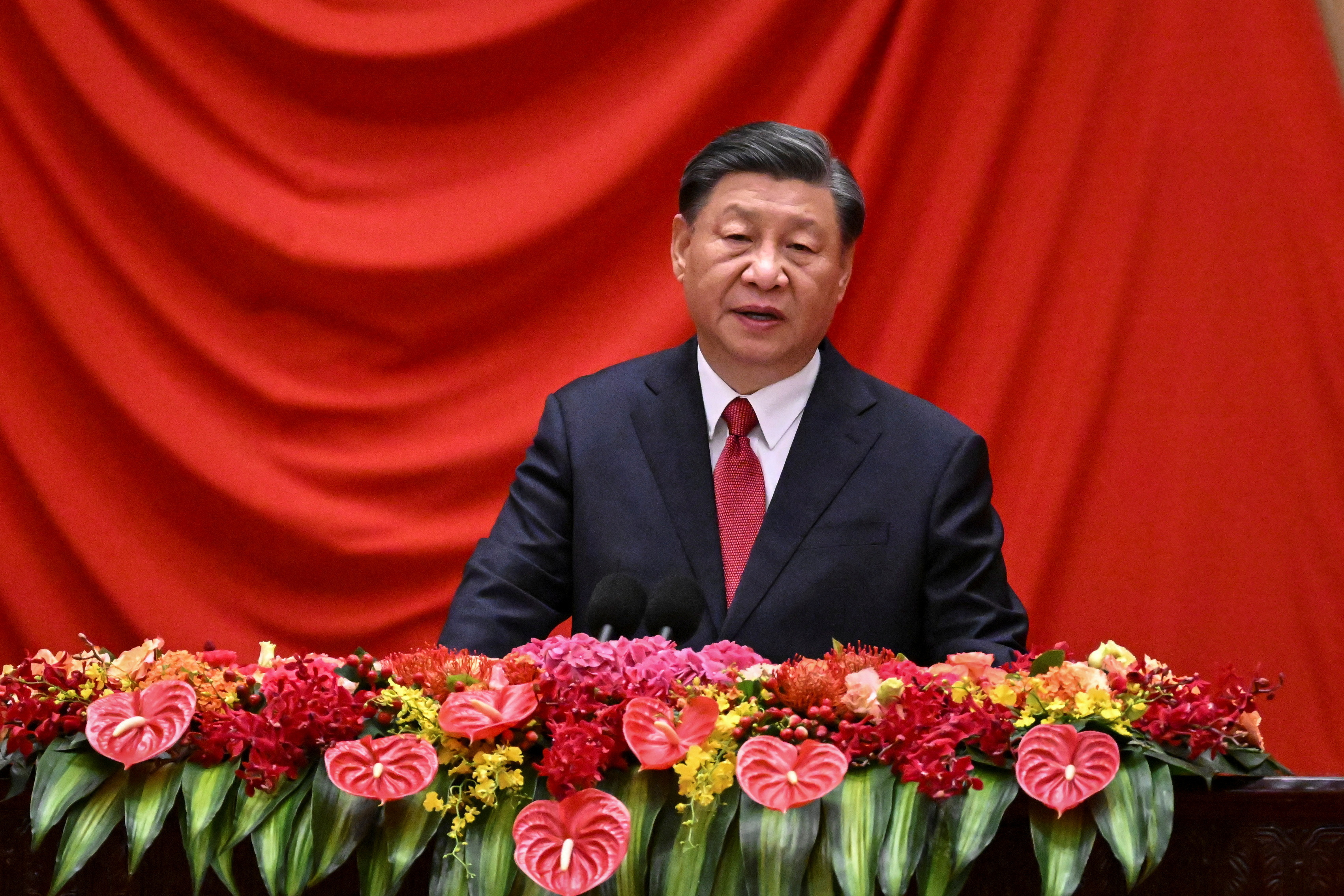
  • Reception ahead of China's National Day in Beijing

Reporting By Nidal Mughrabi in Gaza, Steve Holland aboard Air Force One, and Jerusalem Bureau; Writing by Peter Graff, Mark Heinrich and Cynthia Osterman; Editing by Gareth Jones, Philippa Fletcher and Howard Goller

Our Standards: The Thomson Reuters Trust Principles.

A senior correspondent with nearly 25 years’ experience covering the Palestinian-Israeli conflict including several wars and the signing of the first historic peace accord between the two sides.

The post Biden vows aid for Gaza, Israel as protests rock Middle East first appeared on The News And Times – thenewsandtimes.com.