Categories
The News And Times Blog

Global News Headlines: August 24, 2026


Here are the top news headlines for the morning of August 24, 2026:


Global Security & Diplomacy

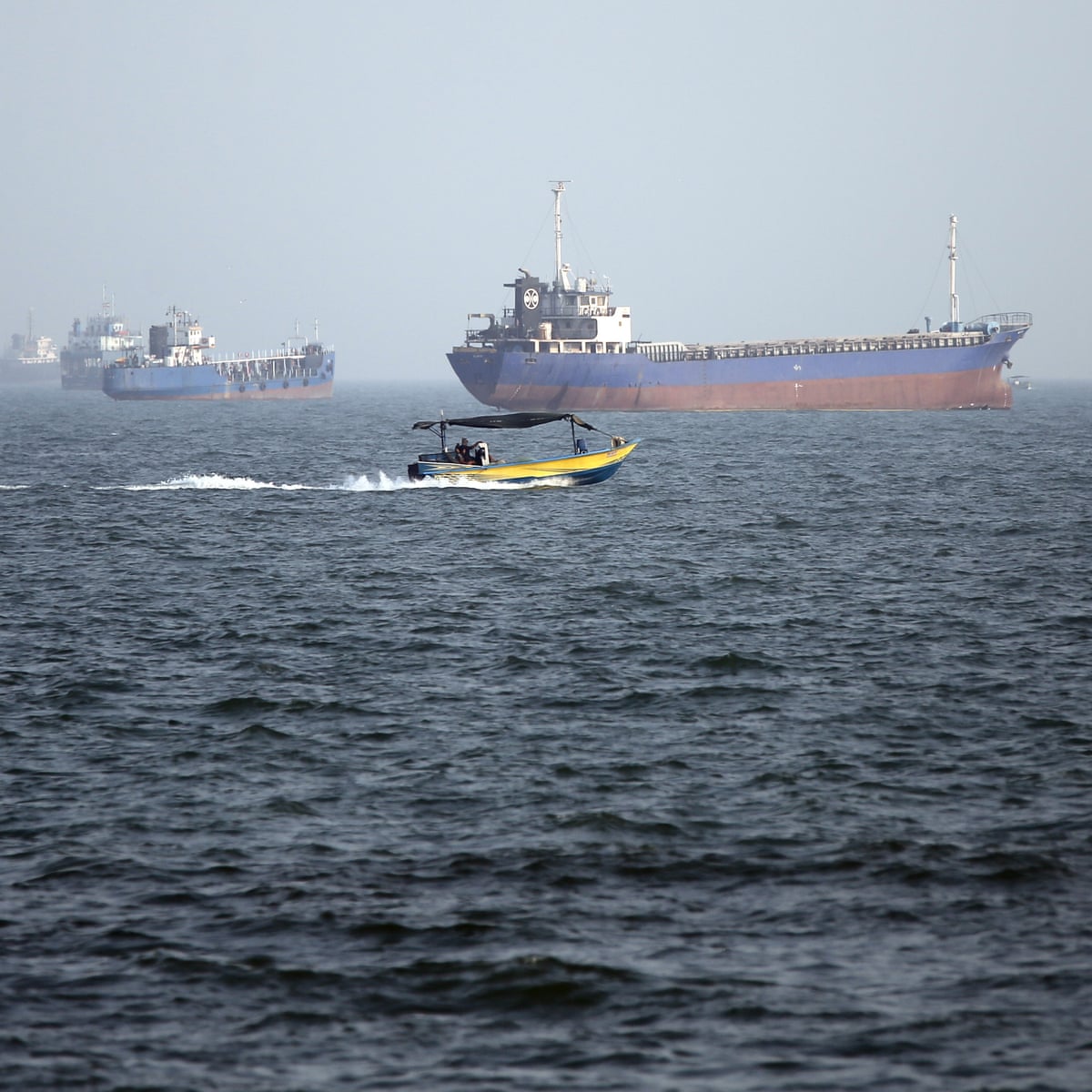
  • Strait of Hormuz Standoff: The U.S. Treasury Department, led by Secretary Scott Bessent, is expected to announce a new round of maximum-pressure sanctions against Iran today, targeting any entity globally that trades with the nation. In response, Tehran has choked off the Strait of Hormuz, with the Iranian security council chief stating the vital oil route will remain closed until Washington changes its posture. The U.S. Navy is currently blockading Iranian ports following the collapse of nuclear talks weeks ago.


  • Sino-Indian Boundary Talks: India’s National Security Advisor, Ajit Doval, is in Beijing today for Special Representative-level talks with his Chinese counterpart, Wang Yi, aimed at addressing the ongoing boundary disputes between the two nations.


  • Russia-India Relations: Indian External Affairs Minister S. Jaishankar is in Russia to attend the 27th Session of the India-Russia Inter-Governmental Commission. He is scheduled to meet with Russian Foreign Minister Sergey Lavrov and First Deputy Prime Minister Denis Manturov.


Economy & Trade

  • North American Trade Escalation: A trade dispute between the U.S. and Canada intensified over the weekend as a 50% U.S. tariff on $20 billion of Canadian exports went into effect. Canadian Prime Minister Mark Carney stated his administration walked away from negotiations after the U.S. demanded limits on Canada’s trade with other nations, announcing retaliatory tariffs on American steel, dairy, and farm equipment scheduled to take effect September 8.


Technology & Domestic News

  • Robotics Milestone: “Tiangong Ultra,” a humanoid robot developed by the Beijing Humanoid Robot Innovation Centre, reportedly ran the 100-meter dash in 9.39 seconds during a preliminary heat at the World Humanoid Robot Games in Beijing—surpassing Usain Bolt’s human world record.


  • Texas Datacenter Moratorium: The state of Texas has enacted a moratorium on the construction of new datacenters. This comes as North Texas endures a severe, record-breaking heat wave that is placing immense strain on the state’s power grid.


  • Immigration Policy: Today is the final deadline for public comments on a proposed rule by USCIS that would drastically increase application fees for naturalization (Form N-400) and eliminate the fee waiver option for low-income applicants.

AI Mode 
The top morning headlines for Monday, August 24, 2026, are dominated by escalating global economic tensions, retaliatory trade measures, a major domestic wildfire emergency, and notable judicial rulings.

🌐 Global Economics & Geopolitics

  • U.S. Economic “D-Day” for Iran: Treasury Secretary Scott Bessant is holding a press conference today to detail what the administration calls the “single greatest financial offensive ever marshaled against an adversary,” targeting Iran’s remaining financial lifelines. In response, Iran’s leaders have threatened to halt all oil exports from the Persian Gulf and treat any nation’s support of these sanctions as an act of war. Meanwhile, Iran’s currency hit a record low. [1, 2, 3, 4]
  • U.S.-Canada Trade War Escalates: A steep trade dispute has triggered after negotiations collapsed over the weekend. Following the U.S. imposition of 50% tariffs on roughly $20 billion worth of Canadian goods, Canadian Prime Minister Mark Carney defiantly vowed to match the tariffs dollar-for-dollar beginning September 8th. [2, 5, 6]

⚖️ Domestic Policy & Legal Developments

  • 75-Nation Visa Ban Struck Down: In New York, U.S. District Judge Jeannette Vargas struck down the administration’s immigration policy that suspended visa issuances for 75 countries. The judge labeled the measure “patently unlawful,” finding that it violated federal law by discriminating based on nationality. [7]
  • Haiti Deportations Begin: The first deportation flight carrying more than 160 people arrived in Cap-Haïtien following the Supreme Court’s decision to allow the termination of Temporary Protected Status (TPS) for an estimated 350,000 Haitians. [7]

🚨 National Disasters & Corporate News

  • Nevada Wildfire Emergency: A massive, fast-moving wildfire has burned over 15,000 acres just northwest of Reno, Nevada. The Governor has declared a state of emergency and mobilized the National Guard, forcing the evacuation of tens of thousands of residents. Investigators determined the blaze was human-caused. [1, 8]
  • Mass Tyson Foods Layoffs: Tyson Foods has permanently shuttered two major meatpacking facilities in Illinois and Utah, resulting in immediate layoffs for more than 3,000 workers. [7]

📈 Markets & Media

  • AI Market Correction: On Wall Street, financial analysts like Jim Cramer reported that the artificial intelligence trade is “currently broken” amid growing investor anxiety over a sudden data center development slowdown. [9]

If you are interested in a specific sector, I can provide more details. Would you like to focus on the evolving trade war with Canada, the developments regarding Iran, or the Nevada wildfire emergency?

Search: 
  • Iran’s potential entry into the Mecca Joint Defence Agreement
  • Islamic pre-NATO (Mecca Agreement) to Iran: Play with us, and you will be safe with us!
  • The Mecca Agreement and Iran
  • Egypt declined an invitation to join Mecca Agreement
  • The sunni-shia schism and today’s politics
  • The primary driver of modern sectarian politics is the geopolitical competition between Shia-led Iran and Sunni-led Saudi Arabia.
  • Geopolitical competition between Shia-led Iran and Sunni-led Saudi Arabia
Search: 
  • Iran’s potential entry into the Mecca Joint Defence Agreement
  • Islamic pre-NATO (Mecca Agreement) to Iran: Play with us, and you will be safe with us!
  • The Mecca Agreement and Iran
  • Egypt declined an invitation to join Mecca Agreement
  • The sunni-shia schism and today’s politics
  • The primary driver of modern sectarian politics is the geopolitical competition between Shia-led Iran and Sunni-led Saudi Arabia.
  • Geopolitical competition between Shia-led Iran and Sunni-led Saudi Arabia

Categories
The News And Times Blog

Iran is invited to join the Mecca Agreement: Analysis, Significance, Predictions


Iran is invited to join the Mecca Agreement: Analysis, Significance, Predictions

Iran and the Mecca Agreement


https://share.gemini.google/t1dIv70ObDkg


Recently, reports have emerged that Iran has been invited to join the Mecca Joint Defense Agreement, a trilateral security pact signed on August 7, 2026, by Saudi Arabia, Turkey, and Pakistan. According to Mehdi Rahimi, head of the Iranian parliament’s official news agency, Tehran has received the invitation and the matter is currently “under consideration”.

However, it is important to note that this invitation has not yet been independently confirmed by Iran’s Foreign Ministry, senior leadership, or any of the pact’s three founding nations.

Here is a breakdown of the analysis, significance, and potential predictions surrounding this development.

Understanding the Mecca Agreement

The Mecca Agreement is a mutual defense pact, conceptually similar to NATO’s Article 5. Its central premise is that an armed attack against one member will be treated as an attack against all three.

Initially forged in the shadow of regional instability and the broader US-Iran conflict, the pact was widely viewed as a potential bulwark against Iranian influence and proxy attacks in the region, particularly those threatening Saudi energy infrastructure. However, the founding members, particularly Pakistan, have stressed that the alliance is not an “exclusive club” and is purely defensive in nature.

Strategic Significance of the Invitation

If confirmed and accepted, Iran’s inclusion would represent one of the most dramatic diplomatic shifts in the modern Middle East.

  • From Deterrence to Integration: Bringing Iran into the tent would transform the agreement from a potential anti-Iran coalition into a comprehensive regional security forum.

  • Shifting Away from US Reliance: The agreement highlights a growing trend of Middle Eastern and Muslim-majority powers seeking to establish their own security architectures, reducing their historical reliance on the traditional US security umbrella.

  • Constraining Escalation: For Iran, joining a pact alongside its primary regional rival (Saudi Arabia) and two nuclear-armed or NATO-aligned neighbors (Pakistan and Turkey) would require it to curb expansionist policies and proxy warfare, while simultaneously providing it with strategic breathing room and a voice in the new regional order.

Predictions and Potential Outcomes

  1. If Iran Joins:
    Iran stands to gain a diplomatic buffer and enhanced legitimacy in the broader Muslim world. A successful integration could lead to mutually acceptable arrangements regarding proxy conflicts (such as the Houthi situation in Yemen) and lower the temperature of direct regional confrontations. However, it would heavily test the alliance’s political limits the moment a proxy conflict flares up.

  2. If Iran Declines or is Excluded:
    Iranian strategists are reportedly approaching the pact with cautious optimism to avoid turning it into a self-fulfilling prophecy. If Iran views the pact as an inherently anti-Iran project and refuses to engage—or tests it by encouraging proxy strikes—the alliance will likely be forced to organize its collective defense explicitly around the Iranian threat. This would deepen Tehran’s isolation and heighten regional insecurity.
  3. A Slow Diplomatic Dance:
    Given the deep-seated mistrust and complex proxy networks in the region, Iran’s formal accession to the pact would likely be a prolonged process requiring significant concessions and confidence-building measures from all sides.

Israel and Iran in Mecca Agreement: How does this change the dynamics of the Middle East?

The August 2026 formalization of the Mecca Joint Defense Agreement between Saudi Arabia, Turkey, and Pakistan fundamentally alters the geopolitical calculus for both Israel and Iran. While neither nation is a signatory, they are the primary strategic targets of the pact’s messaging.

By pooling Saudi capital, Turkish military technology, and Pakistani manpower into a mutual defense framework modeled on NATO’s Article 5, the agreement disrupts the traditional binary power struggles of the Middle East.

Here is how the pact changes the regional dynamics regarding Israel and Iran.

The Emergence of a “Third Pole”

Historically, Middle Eastern security has been heavily defined by a bipolar struggle: the US-Israeli security architecture versus Iran and its “Axis of Resistance.”

  • Breaking the Monopoly: Analysts view the Mecca pact as a deliberate attempt to build a “third pole”. This new bloc is designed to possess enough diplomatic, economic, and military weight to prevent either Israel or Iran from dictating the rules of a new regional order.

  • Preparing for a Post-War Region: Forged amidst the ongoing 2026 Iran war, the agreement is a recognition by Sunni-majority powers that they can no longer fully outsource their security to a US umbrella. It is an effort to establish a native security architecture to manage the fallout and vulnerabilities of a post-war Middle East.

Changing the Dynamic for Israel

While the US has generally welcomed the agreement as a way for regional partners to shoulder more of the defense burden, it complicates Israel’s strategic freedom.

  • Deterrence Against Escalation: The agreement acts as a geopolitical warning shot to Tel Aviv. It signals that unilateral military actions—such as the 2025 airstrike on Doha, which Gulf states interpreted as a display of a “Greater Israel” agenda—will now carry severe diplomatic and potential military costs.

  • Fears of a “Sunni Axis”: Israel has officially met the Mecca accord with silence, but the pact deeply exacerbates existing Israeli-Turkish tensions. Some Israeli politicians, such as Naftali Bennett, have voiced alarm over an emerging “Sunni axis,” going so far as to describe Turkey as “the new Iran” in terms of its regional threat profile.

Changing the Dynamic for Iran

For Tehran, the Makkah Agreement establishes a strict structural boundary, even as the Iranian leadership cautiously considers diplomatic engagement.

  • Checking Territorial Ambitions: The pact serves as a unified declaration that attempts by Iran to forcibly redraw the Gulf’s geography will not be tolerated. By explicitly stating that an attack on one member is an attack on all three, the alliance aims to neutralize the effectiveness of Iran’s traditional proxy warfare strategy.

  • Strategic Recalculation: The immediate goal of the triad is deterrence rather than mobilization. The agreement is designed to force Tehran’s strategists to recalculate the risks of regional aggression by threatening a unified response from the Arab world’s largest economy (Saudi Arabia), NATO’s second-largest army (Turkey), and the Muslim world’s only nuclear power (Pakistan).

Key Insight: The Mecca Agreement does not mean the region is preparing for an immediate, unified war against either Israel or Iran. Instead, it is the sound of regional powers building the architecture for the day the call to Washington goes unanswered, ensuring neither Tel Aviv nor Tehran can dominate the vacuum.

Which other countries are considering joining the Mecca Joint Defense Agreement, and what are the obstacles to expanding the alliance?

While the August 2026 Mecca Joint Defense Agreement is currently limited to its three founding members—Saudi Arabia, Turkey, and Pakistan—the framework was designed with the potential for expansion. However, bringing new nations into a mutual defense pact in the Middle East involves navigating complex geopolitical hurdles.

Potential Candidates for Expansion

The alliance is positioned as a foundation for broader regional security, and a few key players are actively involved in its orbit:

  • Egypt: Egypt is the most natural candidate for near-term expansion. It is already deeply engaged with the founding members through the “R-4 Group,” a quadrilateral consultative mechanism that includes Saudi Arabia, Turkey, Pakistan, and Egypt. Given Cairo’s military weight and strategic location, formalizing its inclusion would significantly boost the pact’s credibility.

  • Gulf Cooperation Council (GCC) Members: The pact is designed to layer onto existing security architectures. Saudi Arabia could eventually leverage its leadership position to integrate other GCC states—such as the UAE or Bahrain—into the framework, consolidating a unified Sunni-majority defense bloc.

  • Iran: As previously noted, inviting Iran is a strategic play to transition the pact from a deterrent against Tehran into a comprehensive regional security forum. However, this remains a highly speculative and politically fragile prospect.

Obstacles to Expanding the Alliance

Expanding a mutual defense pact modeled on NATO’s Article 5 requires a level of trust and operational integration that is historically difficult to achieve in the Middle East. Prospective members and the founders face several major roadblocks:

1. Lack of Operational Infrastructure

Despite the strong rhetoric regarding collective defense, the Mecca Agreement does not yet possess the mechanical architecture of a true military alliance. Currently, it lacks a unified joint command structure, standing integrated forces, or a clearly defined trigger mechanism for military mobilization. For new countries, joining a pact that functions more as a political signaling tool than a guaranteed military shield might not justify the diplomatic risks.

2. The Persistent US Security Umbrella

The pact is an attempt to diversify security, but it does not replace the United States. Saudi Arabia continues to rely heavily on American defense technology, Turkey remains a core NATO member hosting US nuclear weapons, and Pakistan maintains close coordination with US Central Command. Prospective members must carefully calculate whether joining a regional bloc aimed at “strategic autonomy” might antagonize Washington or jeopardize their own bilateral defense deals.

3. Importing Structural Vulnerabilities

A mutual defense pact means that the security of one state is tied to the vulnerabilities of another. Expanding the membership increases the risk of entrapment—being dragged into a conflict not of one’s own making. For example, Pakistan brings its own structural constraints to the table, including severe economic challenges, a 900-kilometer border with Iran, and complex domestic politics. Adding more nations mathematically increases the chances that the alliance will be tested by a localized border skirmish or proxy attack.

4. Divergent Threat Perceptions

An alliance requires a shared understanding of the primary threat. Middle Eastern states often have vastly different security priorities. While some nations may view an expansionist Israel as the primary destabilizing force, others remain laser-focused on Iran’s proxy networks. Expanding the alliance too broadly risks bringing these contradictory threat perceptions under one roof, which could lead to internal paralysis during a crisis.

Why has the United States reportedly welcomed the Mecca Joint Defense Agreement despite it challenging US regional dominance?

The United States’ surprisingly warm reception of the Mecca Joint Defense Agreement stems from a long-standing strategic desire to reduce its direct military footprint in the Middle East while maintaining regional stability. President Donald Trump openly welcomed the pact, expressing that he was “very happy” the nations had formalized the arrangement.

While the agreement signifies a shift away from absolute US dominance, Washington views the development through the lens of several strategic benefits:

1. Advancing the “Burden Sharing” Doctrine

The primary reason the US supports the pact is that it aligns with a broader policy of military retrenchment. By institutionalizing their own security cooperation, regional partners are taking on the financial and operational costs of their own defense. This self-reliance theoretically allows Washington to offload regional security burdens, better focus its limited resources on other pressing global theaters, and potentially reduce its defense budget.

2. Realizing a “Middle East NATO”

The formation of a formalized defense bloc among Saudi Arabia, Turkey, and Pakistan fulfills a decades-old US ambition to knit its regional partners into a coordinated, self-sustaining defense posture. Although assembled outside the traditional US-led framework, the pact effectively preserves existing pro-Western regimes and their unspoken aligned interests.

3. Containing Iran Without US Troops

Forged amidst the 2026 Iran war, the agreement acts as a formidable deterrent against Iranian aggression. By uniting Saudi capital, Turkish defense technology, and Pakistani manpower, the pact creates a powerful bulwark against shared adversaries without requiring direct US military deployments or guaranteed interventions.

The Underlying Warning for Washington

Despite the official welcome, defense analysts and think tanks have cautioned that the Mecca Agreement is not purely a victory for US strategy—it is also a warning.

  • Hedging Against Unreliability: The timing indicates that these regional heavyweights increasingly view the US as an unpredictable and unreliable partner. The pact is a deliberate move to hedge against a perceived erosion of the US security umbrella.

  • Loss of Strategic Leverage: While it is desirable for allies to become more militarily capable, absolute self-reliance means these nations will be increasingly empowered to make independent foreign policy decisions. Over time, this localized ownership of regional security could jeopardize America’s ability to steer Middle Eastern geopolitics and align the region with its own strategic objectives.

What is the ‘Hexagon alliance’ proposed by Israel in 2026, and how does it compare to the Mecca Agreement?

In February 2026, just days before the outbreak of the wider Iran-Israel-U.S. war, Israeli Prime Minister Benjamin Netanyahu publicly outlined a new geopolitical construct termed the “Hexagon Alliance”.

Rather than a formal, rigid military treaty, the Hexagon Alliance is envisioned as a strategic, diplomatic, and economic alignment of six geopolitical spaces located around or within the Middle East. Its explicit goal is to unite nations that share similar threat perceptions to counter what Netanyahu described as both the “radical Shia axis” (Iran and its proxies) and an “emerging radical Sunni axis”.

The Core of the Hexagon

The proposed alignment heavily centers on Israel’s deepening relationship with India, framing New Delhi as a pivotal player. The envisioned members include:

  • Israel and India: The anchor nations, cooperating heavily on artificial intelligence, defense tech (such as the Iron Beam laser weapon), and trade.

  • The Mediterranean: Greece and Cyprus.

  • Select Arab States: Likely moderate members of the Abraham Accords, such as the UAE and Bahrain.

  • African Partners: Nations such as Ethiopia (which saw a visit from Israel’s President shortly after the announcement), Morocco, South Sudan, and Somaliland.

The alliance rests on three pillars: Security (intelligence sharing, cyber defense, and maritime domain awareness), Diplomatic Alignment (coordinated messaging and sanctions), and Economic Cooperation (focused on trade routes like the India-Middle East-Europe Economic Corridor, semiconductors, and AI).

The Hexagon vs. The Mecca Agreement

The Hexagon Alliance and the August 2026 Mecca Joint Defense Agreement represent competing visions for the future of Middle Eastern security. While both were formed in response to regional instability and the shifting US posture, they are fundamentally different in their structure and intent.

Feature The Hexagon Alliance The Mecca Agreement
Primary Actors Israel, India, Greece, Cyprus Saudi Arabia, Turkey, Pakistan
Format & Binding A consultative strategic and economic alignment; not a formal defense pact. A formal mutual defense pact modeled on NATO’s Article 5.
Primary Goal To integrate Israel into a broader, non-Muslim global architecture (spanning Europe, Asia, and Africa) to counter Iranian and radical Sunni influence. To establish localized ownership of regional security by uniting Sunni-majority heavyweights without relying on the US.
Military Integration Focuses on intelligence sharing, technology co-development, and maritime awareness. Aims to pool troop manpower, defense manufacturing, and collective military mobilization.
Geopolitical Stance Seeks to expand Israel’s diplomatic reach and reduce isolation by leveraging India’s “Global South” credibility. Acts as a “third pole” deterrent against both Iranian proxy warfare and Israeli unilateral military actions.

The “Emerging Sunni Axis”

When Netanyahu warned of an “emerging radical Sunni axis” in February 2026, he was likely telegraphing Israeli intelligence regarding the deepening cooperation between Riyadh, Ankara, and Islamabad. In many ways, the Mecca Agreement is the exact regional realignment the Hexagon Alliance was designed to outflank.

The clash between these two frameworks forces other nations—most notably Arab states in the Gulf—into a delicate balancing act, as they must choose between the technological and economic perks of aligning with Israel and India, or the collective security guarantees offered by their regional peers.


Categories
The News And Times Blog

Ukraine’s New Missile Defense Strategy


Ukraine’s New Missile Defense Strategy

As of August 2026, Ukraine is undergoing a major pivot in its missile defense strategy. Driven by plummeting interception rates and dwindling Western stockpiles of high-end interceptors, Kyiv has shifted from a purely reactive posture to a hybrid strategy combining preemptive “active defense” with the accelerated development of sovereign and pan-European anti-ballistic architectures.


Here is an analysis of Ukraine’s new strategic framework, along with expert assessments and predictions for the 2026–2027 timeline.


The “Lethal Math” Forcing the Shift

The catalyst for this new strategy is a severe disparity in production and interception mathematics.


According to recent analyses, Russia has significantly ramped up its ballistic missile production, currently holding around 600 to 630 in reserve and aiming to produce up to 1,300 annually (roughly 100 per month). Simultaneously, Ukraine’s stocks of Patriot (PAC-2/PAC-3) interceptors have run dangerously low. As a result, the interception rate for Russian ballistic missiles has dropped dramatically to just 10.2% in 2026, down over 200% from the war’s outset.


To survive, Ukraine cannot afford to simply wait and shoot down incoming fire.


Three Pillars of the New Strategy

1. Active Defense: “Hunting the Launchers”

Instead of relying on scarce interceptors to shoot down missiles mid-air, Ukraine has initiated a new operational phase focused on preemptively destroying the launch platforms themselves.


  • The Tactic: Utilizing deep-strike capabilities and expanded intelligence sharing, Ukrainian forces are actively hunting Russian mobile erector-launchers (like the Iskander systems) positioned in border regions such as Bryansk and Kursk.


  • Recent Success: On August 22, 2026, President Zelenskyy confirmed a successful strike on an Iskander launcher, validating this “active defense” doctrine aimed at disrupting large-scale Russian salvos before they are fired.


2. Project FREYJA: A Sovereign European Shield

Recognizing that reliance on non-European (primarily US) systems is a critical vulnerability, Ukraine is spearheading Project FREYJA, formally launched in Paris in July 2026.


  • The Coalition: The initiative includes 10 European nations (including the UK, France, Germany, and Sweden), with Ukraine acting as the system integrator.


  • The Goal: The coalition aims to bypass operational bottlenecks—such as microelectronic supply chain issues—to build a pan-European, multilayered anti-ballistic missile architecture. A working prototype of the FREYJA interceptor shield is targeted for the first half of 2027.


3. Domestic Production & Bridging the Gap

While FREYJA develops, Ukraine is bridging its immediate vulnerabilities through a mix of domestic manufacturing and stopgap European procurement:


  • Domestic Ballistics: Ukraine has accelerated its native defense-tech sector (working with clusters like Brave1), aiming to roll out its own domestic anti-ballistic systems and ballistic capabilities by 2026–2027.


  • European Procurement: To cover the immediate shortfall, Ukraine recently secured an agreement with Germany for 600 PAC-2 missiles to be delivered across 2027–2028, and expects new radar systems and a SAMP/T battery from France this fall.


Assessments and Predictions for 2026–2027

1. A Vulnerable Winter Ahead
Despite the strategic shift, the winter of 2026–2027 is predicted to be exceptionally difficult. Ukraine’s energy infrastructure has been heavily degraded, and spare equipment is finite. Because FREYJA and domestic anti-ballistic systems will not yield operational results until mid-to-late 2027, Russia will likely exploit the current 10% interception rate to continue pounding power grids and logistical nodes.


2. Escalation of Deep-Strike Warfare
Analysts predict the war will move further away from massive mechanized land maneuvers and heavily toward deep-strike warfare. Ukraine will increasingly use AI-guided drone swarms, cyber warfare, and long-range strikes to hold Russian oil, gas, and military manufacturing facilities at risk. This asymmetric pressure is intended to force Moscow to pull air defenses deeper into Russian territory, thereby easing the pressure on the frontline.


3. Integration into the European Defense Base
By 2027, Ukraine is predicted to fundamentally shift its defense posture away from US dependency. Through Project FREYJA and licenses to manufacture French and other European weaponry domestically, Ukraine is positioning itself as the central testing ground and manufacturer for Europe’s next generation of continental air defense.


Ukraine has recently shifted its defensive tactics toward directly hunting down and destroying Russian ballistic missile launchers, rather than solely relying on intercepting the missiles in the air. This shift is primarily driven by a shortage of air defense interceptors, such as Patriot missiles, and an unprecedented surge in Russian ballistic missile attacks.


President Volodymyr Zelenskyy confirmed this approach on August 22, 2026, following a successful strike on a Russian Iskander launcher near the border.


The “Archer vs. Arrow” Strategy

Military analysts describe this approach using an “archer and arrow” analogy: instead of expending limited, expensive interceptor missiles to shoot down every incoming “arrow” (the missile), it is more effective to destroy the “archer” (the mobile launcher) before it can fire.


Here is a breakdown of why this strategy has been implemented and how it works:


  • Interceptor Shortages: Ukraine is facing a severe shortage of Western-supplied anti-ballistic missile systems, making it difficult to maintain a purely defensive posture against incoming strikes.


  • Record Attacks: Russia launched nearly 200 ballistic missiles (including S-400s, Zircons, and Oniks) at Ukraine in July 2026 alone—the highest monthly total since the full-scale invasion began.


  • Targeting Mobile Launchers: Russia relies on an estimated 100 to 150 mobile launch units for these strikes. By systematically hunting down these specific vehicles, Ukraine aims to permanently degrade Russia’s capacity to launch mass barrages.


  • Deep Strike Capabilities: To execute this, Ukraine is utilizing complex strike operations, which include the use of advanced kamikaze drones capable of striking targets deep inside Russian territory or near the border. There are also ongoing discussions about equipping long-range drones with Starlink for better navigation and control during these specific hunt-and-destroy missions.


Zelenskyy has described this effort as a “separate, more difficult tactic” and a dedicated operation that the Ukrainian Defense Forces are actively prioritizing to protect strategic infrastructure.


Links 

Ukraine’s New Missile Defense Strategy https://share.gemini.google/lIySop1t6s3p

Ukraine’s New Missile Defense Strategy https://share.gemini.google/vlsOfY8EK8Fw

Categories
The News And Times Blog

Probe into Russian Complicity in Iranian Strikes on CIA Sites


U.S. intelligence analysts are investigating whether Moscow provided targeting data to Tehran following a series of surgically precise Iranian strikes on secret CIA facilities in the Gulf. The attacks have targeted specific buildings across at least three Middle Eastern countries over recent months. While an intelligence-sharing pact between Russia and Iran is well-documented, the precise extent of Russian operational support in these specific strikes remains under assessment. 

U.S. intelligence agencies are actively investigating whether the Russian Federation supplied critical targeting intelligence or technological hardware to assist Iran in executing recent surgical drone strikes against CIA facilities in the Middle East.


While the intelligence community has not yet published a definitive conclusion on Moscow’s direct involvement, the effectiveness and unprecedented precision of the attacks have raised severe counterintelligence concerns regarding compromised operational security and the depth of the Moscow-Tehran intelligence-sharing alliance.


The March 2026 Strikes

The investigation primarily centers on a series of strikes that occurred in March 2026. Iran successfully struck at least two specific CIA sites:


  • The official CIA station located within the U.S. Embassy compound in Riyadh, Saudi Arabia.


  • A separate, covert facility located in eastern Iraq.


Intelligence sources indicate that additional facilities—potentially including logistics hubs, safe houses, and other compartmentalized operational sites—may have been targeted across the region.


During the Riyadh strike, the operational tradecraft demonstrated a highly sophisticated “double-tap” maneuver. Iranian forces reportedly utilized an advanced version of their kamikaze drones to blow a hole through a specifically vulnerable section of the embassy’s exterior wall. A second drone was then piloted directly through the breach to detonate inside the facility.


Vectors of Suspected Russian Assistance

Analysts are examining two primary avenues where Russian complicity is suspected:


1. Technological Enhancement and Electronic Warfare
To execute strikes with such structural precision, Iran’s domestic drone capabilities likely required external augmentation. Intelligence reports suggest that the Shahed-136 drones used in the attacks were enhanced with Russian technical expertise. Specifically, Moscow is suspected of supplying Tehran with Kometa-M satellite navigation receivers. These Russian systems provide significantly higher guidance accuracy and offer robust protection against the electronic warfare jamming that U.S. facilities typically employ for airspace defense.


2. Provision of Targeting Intelligence
The locations of CIA logistics hubs and operational outposts are highly compartmentalized, even within the agency itself. Few global adversaries possess the signals intelligence and geospatial resources necessary to map these covert networks. An internal memo from a Western intelligence agency reportedly concluded that Russia likely played a role in identifying and sharing the coordinates of these regional CIA facilities with Iranian targeters.


Analytical Caveats

Despite the circumstantial evidence of technological support, internal assessments remain divided on intent. While some analysts point to a deliberate, joint effort by Russia and Iran to degrade U.S. operational capacity in the region, others introduce a margin for error. Some intelligence officials have cautioned that Tehran may have been aiming at the broader U.S. embassy complex in Riyadh and simply struck the localized CIA station by chance.

Categories
The News And Times Blog

GLOBAL SECURITY AND INTELLIGENCE NEWS REVIEW – for the week of August 22, 2026


Here is a review of the most significant developments in global security and intelligence for the week of August 22, 2026, focusing on strategic technologies, structural reforms, and counterintelligence operations.


Artificial Intelligence & Strategic Defense

UK Evaluates Sovereignty Risks Over U.S. AI Dependency
The UK Cabinet Office has launched an urgent assessment of the economic and security impacts of potentially losing access to frontier U.S. artificial intelligence models. This inquiry was triggered by a June 2026 directive from U.S. President Donald Trump that temporarily restricted foreign access to Anthropic’s Fable 5 model. British economic security officials are analyzing the systemic risks if critical AI tools are suddenly gated, particularly the threat of foreign adversaries exploiting cyber vulnerabilities using advanced AI before UK defenders can access the same capabilities to patch them.


Intelligence Oversight & Structural Reforms

Germany Advances Historic Intelligence Expansion
Germany is moving toward its most sweeping intelligence restructuring since World War II. Under reforms detailed by Minister of the Interior Alexander Dobrindt, Germany’s covert agencies will be granted the mandate to conduct offensive intelligence, sabotage, and information operations abroad. Notably, the legislation—expected to pass the Bundestag in September—will authorize agents to use kinetic means (including firearms) for self-defense, fundamentally shifting the operational posture and tradecraft of German intelligence.


Counterintelligence & Espionage

Multinational Coalition Disrupts Chinese Cyber-Recruitment Network
A joint counterintelligence operation by the U.S. FBI and agencies in Australia, Canada, New Zealand, and the UK has resulted in the seizure of 13 fake corporate websites. These professionally designed domains posed as Western consultancy firms offering to hire experts, but operated as a Chinese espionage apparatus designed to solicit sensitive insights and recruit Western professionals.


Probe into Russian Complicity in Iranian Strikes on CIA Sites
U.S. intelligence analysts are investigating whether Moscow provided targeting data to Tehran following a series of surgically precise Iranian strikes on secret CIA facilities in the Gulf. The attacks have targeted specific buildings across at least three Middle Eastern countries over recent months. While an intelligence-sharing pact between Russia and Iran is well-documented, the precise extent of Russian operational support in these specific strikes remains under assessment.


Espionage Charges Complicate Sino-Czech Relations
A Czech citizen employed by a radar manufacturer operating in China was detained in late June 2026 under suspicion of espionage, facing charges related to obtaining and passing on unspecified information. This detention is currently stressing the Czech government’s recent efforts to build a more pragmatic, trade-focused relationship with Beijing.

AI Mode 
Global security and intelligence operations are currently navigating intense regional escalations, aggressive economic warfare, and regulatory interventions in cutting-edge tech. Key developments from the past week highlight critical friction points spanning the Middle East, South Asia, Eastern Europe, and global cyber defense sectors. [1, 2, 3, 4, 5]

⚠️ Middle East & Economic Warfare

  • Economic “D-Day” Counter-Measures: The United States has initiated a massive economic crackdown targeting the Iranian regime’s oil smuggling networks, front companies, and international maritime shipping. Foreign banks and corporations providing secondary assistance face severe U.S. sanctions. [2, 4]
  • Strait of Hormuz Deadlock: Tensions remain at a peak due to Iran’s continued blockade threats regarding the Strait of Hormuz. Military observers report ongoing strikes and active counter-proxy operations across the theater. [1, 4, 6]

📌 South Asia & Eastern Europe Friction Points

  • Indus Waters Treaty Suspension: India’s government has suspended the long-standing Indus Waters Treaty with Pakistan. While Pakistan issues retaliatory threats, India has moved forward with building multiple regional hydropower projects along the Chenab river tunnel. [5]
  • Mass Terror Operative Arrests: Indian domestic intelligence operations successfully thwarted a major planned cross-border assault, arresting over 200 terror suspects across 14 states. Large quantities of improvised explosive devices (IEDs) and weaponry were seized. [7]
  • North Korean Drone Support: Intelligence reports verified that North Korea has expanded its military assistance to Russia, deploying specialized drone operators directly into active combat theaters. [2]
  • Black Sea Intercepts: Romanian jet fighters successfully intercepted and destroyed a naval drone operating dangerously close to a Black Sea gas platform to mitigate critical infrastructure infrastructure risk. [2]

🔎 Artificial Intelligence & Cybersecurity Controls

  • Mandatory AI Cybersecurity Testing: Moving away from a purely deregulatory approach, the White House has issued an executive order mandating advanced cybersecurity vetting for powerful next-generation AI models. [3]
  • 30-Day Vetting Protocols: Leading AI developers must now submit advanced coding and autonomous systems to federal agencies—including the Department of Defense and Homeland Security—for a 30-day evaluation window to identify structural vulnerabilities before public release. [3]
  • Defense Procurement Strain: A comprehensive review of the U.S. Defense Research Enterprise exposed significant friction points. Government procurement cycles are falling behind commercial tech advancement paces, creating “predictable obsolescence” in fields like AI and cloud computing. [8]


If you would like to investigate a specific region or intelligence topic further, please let me know. I can provide deeper details on:
  • The specific hydropower projects India is constructing
  • Tactical indicators from the U.S. economic campaign against Iran
  • Technical criteria used in the new AI safety vetting protocols [3, 4, 5]


Categories
The News And Times Blog

Russia – Ukraine war news today – 10:30 AM


#Russia#Ukraine #War
share.gemini.google/QQPGw6C3xa0R
Russia-Ukraine War Updates – Gemini
Here are the latest developments in the Russia-Ukraine war for today, August 22, 2026 – 10:30 AM :
Russian Attacks on Ukraine
Missile Barrage on Kyiv: Explosions were heard in Kyiv early this morning as Russia launched a series of ballistic missiles at the Ukrainian capital, triggering air raid alerts and emergency responses.
Strike in Kryvyi Rih: The death toll from a Russian “double-tap” strike on a shopping center in Kryvyi Rih has risen to at least 16 people killed and 130 injured.
Nationwide Casualties: Across Ukraine, Russian attacks over the past 24 hours have killed at least 7 people and injured 31. This included a strike on a border crossing with Moldova.

Ukrainian Strikes Inside Russia

Drone Attacks on Industrial Targets: Ukraine launched strikes deep into Russian territory, including an attack that set a major oil refinery in Perm ablaze.
Ozon Warehouse Fire: Ukraine struck a warehouse belonging to Ozon (Russia’s second-largest online marketplace) in the Samara Oblast, causing a fire that forced the evacuation of over 500 employees.
Air Base Hit: A Ukrainian attack on the Akhtubinsk air base—home to Russia’s 929th State Aircraft Test Center—reportedly damaged a Russian Su-34 bomber.

Espionage Claims and Detentions

Arrests in Moscow Region: Russian authorities, citing the Federal Security Service (FSB), announced the arrest of eight individuals accused of planning an attack on a “strategic defense enterprise” in the Moscow region. The FSB claims the group was operating on behalf of Ukrainian special services and possessed 35 drones equipped with explosives smuggled from the EU.
Detention in Murmansk: A foreign national was detained in the northwestern Murmansk region while allegedly attempting to cross the border into Norway. Russian authorities suspect the individual of scouting petroleum transport trains and administrative buildings in Moscow.

Diplomatic and Political Developments

U.S. Delegation in Odesa: Former U.S. envoy Keith Kellogg led a delegation to Odesa to inspect damage to port infrastructure from Russian strikes and review measures to maintain operations.
Election Interference Charges: In Russia, a Communist politician was fined over a photograph involving the late opposition leader Alexei Navalny, a move that is likely to bar him from participating in upcoming elections.

Russia – Ukraine war news today
– AI Mode – 10:30 AM
Russian forces have intensified heavy aerial bombardments across Ukraine, launching devastating missile and drone strikes that have caused severe civilian casualties in Kyiv and Kryvyi Rih. Meanwhile, Ukrainian long-range drones have retaliated by striking major economic and energy infrastructure deep within Russian territory. [1, 2, 3]
🔴 Deadly Strikes in Ukraine

Shopping Mall Attack: A Russian “double-tap” drone strike targeted a busy shopping center in Kryvyi Rih—the hometown of President Volodymyr Zelenskyy—killing 16 people and injuring 130 others. [2, 4, 5]
Kyiv Infrastructure Blitz: Russian ballistic and cruise missile salvos bombarded the capital city, killing at least 16 people. An overnight strike on the capital’s railway network killed a national rail operator employee. [1, 3, 6]
Airspace Incursions: The massive aerial campaign saw Russian drones penetrate the airspace of NATO neighbors Moldova and Romania, destroying a drone near a Romanian natural gas platform. [7]

🔵 Ukrainian Retaliation & Drone Strikes

Oil Refinery Hit: Ukrainian forces launched a successful overnight drone counter-attack against an oil refinery in Russia’s Samara region, sparking a massive fire. [2]
Retail Supply Hubs: For the first time, Ukraine targeted a warehouse belonging to Ozon (Russia’s second-largest online retailer) in Samara. This follows previous Ukrainian logistics strikes against Wildberries hubs aimed at disrupting funds financing the war. [2]
Cross-Border Casualties: Russian officials reported downing 457 Ukrainian drones overnight. Local governors stated that cross-border strikes killed two children in Krasnodar and two people in the Belgorod region. [2]

🌐 Diplomacy and Geopolitics

Stalled Peace Talks: Russia announced it remains open to “new ideas” but reiterated Vladimir Putin’s strict demands. Ukraine must fully surrender the eastern Donbas region, demilitarize, and drop its NATO ambitions. [8]
U.S. Mediation: Following stalled Geneva negotiations earlier this year, President Zelenskyy stated his diplomatic team is preparing “new approaches” to revive peace talks with U.S. mediators. [8, 9]
Intel Espionage: In international news, Australian police arrested and charged a man for attempting to share sensitive Ukrainian military intelligence with Russian agents. [5]

Would you like to set up an information agent to monitor daily updates on the frontline positions or the progress of the U.S.-brokered peace negotiations?

[1] youtube.com
[2]
bbc.com
[3]
independent.co.uk
[4]
bbc.com
[5]
theguardian.com
[6]
youtube.com
[7]
understandingwar.org
[8]
aljazeera.com
[9]
themoscowtimes.com

nytimes.com/live/2023/09/0


Categories
The News And Times Blog

Royal Pettiness: William vs Camilla – AI Report


Royal Pettiness: William vs Camilla
#Royal Pettiness: #William vs #Camilla
The recent incidents that have sparked rumors of royal pettiness
William and Camilla Royal Tension – Gemini
share.gemini.google/YsrvPxxpDYbD
Recent reports from royal insiders suggest that the relationship between Prince William and Queen Camilla has reached a new level of icy maneuvering. The tension reportedly centers on a power struggle over who truly belongs in the royal inner circle, with William strictly enforcing a “bloodline first” approach that actively marginalizes Camilla’s family.
Here is a breakdown of the recent incidents that have sparked rumors of royal pettiness – Gemini

The relationship between Prince William and Queen Camilla has escalated into a series of petty power struggles and behind-the-scenes clashes, fueled by decades of family baggage and battles over royal protocol. While they maintain a united public front during King Charles III’s cancer treatments, palace insiders report that behind closed doors, they are increasingly “at war” as William prepares for his eventual reign.Several flashpoints highlight the underlying pettiness and tension between the two
– AI Mode

Reports of friction between Prince William and Queen Camilla highlight a complex dynamic rooted in long-standing family history, recent snubs, and clashing visions for the future of the monarchy. While public appearances remain cordial, palace insiders frequently point to simmering tension behind closed doors.
– GS


Categories
The News And Times Blog

Ukraine has been actively seeking permission to use Elon Musk’s Starlink satellite network


Ukraine has been actively seeking permission to use Elon Musk’s Starlink satellite network to guide long-range drones in striking military targets inside Russia, specifically focusing on mobile ballistic missile launchers.


Here is the current operational and political status of these efforts:

The Strategic Objective

Ukrainian officials want to equip long-range drones with Starlink terminals to strike targets up to 200 kilometers (124 miles) inside Russian territory. The primary goal is to hunt down mobile ballistic missile launchers and command infrastructure before they can be deployed against Ukrainian cities.

This tactical shift aims to compensate for Ukraine’s dwindling supply of Patriot air defense interceptor missiles ahead of the winter season, when Moscow is expected to intensify attacks on energy infrastructure. Starlink’s highly directional signals and fragmented network architecture would help protect these drones from Russian electronic warfare jamming while maintaining a stable, encrypted link to operators during the strikes.

Current Access Restrictions

Elon Musk has consistently restricted the use of Starlink for offensive operations deep inside Russian territory. While SpaceX allows the Ukrainian military to use Starlink within Ukrainian-controlled and Russian-occupied territories (including Crimea), it currently blocks the network’s functionality across the Russian border. Musk has previously expressed concerns that enabling strikes deep into Russia could trigger nuclear escalation.

Consequently, Ukrainian long-range drones currently rely on alternative navigation systems, including AI-based technology, when operating in Russian airspace.

Diplomatic Interventions

The issue has escalated to the highest political levels. During a meeting at the White House in July 2026, Ukrainian President Volodymyr Zelenskyy reportedly asked U.S. President Donald Trump to intervene and persuade Musk to lift the geographic restrictions. Kyiv hoped that capping the strike range at 200 kilometers might incentivize Musk to approve the request.

However, Trump reportedly rejected the request to intervene and did not support the proposal. Zelenskyy also reportedly sought a direct meeting with Musk during his U.S. visit, but the billionaire declined. 


Categories
The News And Times Blog

Ukraine Political Shakeup: Mudra, Fedorov


Ukraine Political Shakeup: Mudra, Fedorov


Here is an analytical breakdown of the recent structural shifts within Ukraine’s government, focusing on the dismissals of Mykhailo Fedorov and Iryna Mudra and their implications for the country’s security and political apparatus.


The Ousting of Mykhailo Fedorov

Mykhailo Fedorov was dismissed from his position as Minister of Defense in mid-July 2026 after a six-month tenure, as reported by Defense News. Known as a digitally savvy modernizer, Fedorov was heavily credited with integrating innovative open-source and drone technologies into the military and pushing for structural budget reforms.


  • The Public Fallout: His sudden removal sparked significant street protests in Kyiv. Supporters and defense analysts argued that his departure could slow ongoing defense technology procurement and military modernization efforts, according to coverage by PBS News.


  • Call for Elections: On August 18, 2026, Fedorov released a video address directly challenging President Volodymyr Zelenskyy by breaking a wartime taboo and calling for presidential elections. According to The Guardian, Fedorov argued that democracy cannot be sidelined by the conflict and criticized government appointments based on personal loyalty over structural professionalism.


  • Defense Succession: Following Fedorov’s departure, lawmakers approved the appointment of Maj. Gen. Yevhenii Khmara—a former special operations expert and acting head of the state’s security service—as the new Minister of Defense.


The Dismissal of Iryna Mudra

The political shakeup extended into the presidential administration with the dismissal of Iryna Mudra, the deputy head of the presidential office.


  • Anti-Corruption Probe: According to Euractiv, Mudra’s dismissal occurred as a major anti-graft investigation reached senior figures in the Ukrainian political establishment. Authorities reportedly searched several locations linked to her, though they have not formally named her as a suspect.


  • Broader Context: Her removal coincided with the broader cabinet reshuffle. GV Wire noted that anti-corruption authorities announced charges related to an alleged $3 million money-laundering scheme involving a deputy chief of Zelenskyy’s office just hours before the new defense minister was formally appointed.


These dual developments represent a complex stress test for Ukraine’s wartime leadership apparatus, as the government attempts to balance strict anti-corruption oversight with the operational continuity of its defense technology and military structures. 


Here is your daily briefing, focusing on key global security dynamics, geopolitical shifts, and major domestic developments.


Global Security & Geopolitical Developments

  • U.S.-Iran Economic Tensions Escalate: Iranian Foreign Minister Abbas Araghchi publicly dismissed recent threats of “crushing economic measures” from the U.S. administration. U.S. Treasury Secretary Scott Bessent has warned of secondary sanctions targeting nations and companies that continue to do business with Iran, signaling an attempt at unprecedented economic isolation.


  • Major Drone Offensive on Russian Territory: Ukraine launched a massive wave of nearly 800 domestically produced long-range drones targeting multiple Russian regions, including Moscow. While Russian air defenses intercepted a large number of them, the operation marks one of the most significant attacks since the summer began. In a separate incident, a Russian missile strike on a village in Ukraine’s Kharkiv region killed 10 civilians.


  • North Korean Missile Barrage: North Korea fired a series of ballistic missiles into the sea on Thursday, reportedly dismissing recent diplomatic overtures from Washington.


  • West Bank Settlements: European nations and Canada have issued condemnations regarding Israeli plans for new settlements in the West Bank.


U.S. Politics & Domestic Affairs

  • California Special Election Concludes: State lawmaker Aisha Wahab won the California special election to fill the House seat vacated by former Representative Eric Swalwell, overcoming significant outside spending.


  • Ex-Rep. Swalwell Investigated: Federal agents recently raided the home of former U.S. Representative Eric Swalwell in connection with an ongoing sexual misconduct probe.


  • FBI Headquarters Relocation Halted: A federal judge has blocked the current administration’s attempt to move the FBI headquarters out of Maryland and into a Washington D.C. office building.


  • National Debt Approaches $40 Trillion: The U.S. national debt is nearing the $40 trillion threshold, renewing debates in Washington over borrowing, spending, and economic stability.


Health & Science

  • Ebola Response in Central Africa: The Democratic Republic of the Congo is preparing to receive 70,000 doses of the Ervebo vaccine to combat a deadly surge in Ebola infections.


  • Melanoma Vaccine Breakthrough: A landmark clinical trial has demonstrated that a new cancer vaccine is highly effective at preventing deadly melanoma from returning or spreading.

Israel quiet over 'hotline' with Russia on Syria

Israel quiet over ‘hotline’ with Russia on Syria

It speaks volumes that Russia, rather than Israel, has been going public with details of a “hotline” and joint air exercises they have launched to avoid an accidental clash in the skies over Syria.
The Russia Exception

The Russia Exception

Israel’s relationship with Vladimir Putin survived Ukraine, Syria, and Oct. 7. But is it now quietly coming undone?

The Russia Exception

When Israeli Prime Minister Benjamin Netanyahu and Ukrainian President Volodymyr Zelenskyy briefly spoke to each other at the funeral of Sen. Lindsey Graham on Tuesday, ahead of their separate meetings with President Donald Trump, the conversation was reportedly cordial. The men smiled and shook han
US suggests Russian elections neither free nor fair

US suggests Russian elections neither free nor fair

U.S. Secretary of State Hillary Clinton suggested Russia’s elections were neither free nor fair as she made a broad plea on Tuesday for digital freedoms at a European security gathering.
Treasury Targets Actors Involved in Production and Transfer of Iranian Unmanned Aerial Vehicles to Russia for Use in Ukraine

Treasury Targets Actors Involved in Production and Transfer of Iranian Unmanned Aerial Vehicles to Russia for Use in Ukraine

WASHINGTON — Today, the U.S. Department of the Treasury’s Office of Foreign Assets Control (OFAC) is sanctioning firms involved in the production or ongoing transfer to Russia of Iranian unmanned aerial vehicles (UAVs), which Russia has used in devastating attacks against civilian infrastructure in Ukraine. OFAC is designating Shahed Aviation Industries Research Center, the firm responsible for the design and production of Shahed-series UAVs being used by Russian forces in Ukraine. OFAC is also targeting Success Aviation Services FZC and i Jet Global DMCC for facilitating the transfer of Iranian UAVs to Russia. The U.S. Department of State is concurrently designating Russian Private Military Company “Wagner” (PMC Wagner) and Iran’s Islamic Revolutionary Guard Corps Aerospace Force (IRGC ASF) and Qods Aviation Industries pursuant to Executive Order (E.O.) 14024. To supplement the U.S. Department of State’s designation of PMC Wagner, OFAC is also designating two individuals for facilitating PMC Wagner’s acquisition of UAVs from Iran, Abbas Djuma and Tigran Khristoforovich Srabionov. “As we have demonstrated repeatedly, the United States is determined to sanction people and companies, no matter where they are located, that support Russia’s unjustified invasion of Ukraine. Today’s action exposes and holds accountable companies and individuals that have enabled Russia’s use of Iranian-built UAVs to brutalize Ukrainian civilians,” said Secretary of the Treasury Janet L. Yellen. “This is part of our larger effort to disrupt Russia’s war effort and deny the equipment it needs through sanctions and export controls.” Today’s action is being taken pursuant to E.O. 13382 and E.O. 14024 and follows OFAC’s September 8, 2022 designation of an Iranian air transportation service provider involved in the shipment of Iranian UAVs to Russia, as well as three companies and one individual involved in the research, development, production, and procurement of Iranian UAVs and UAV components for Iran’s IRGC and its Aerospace Force (IRGC ASF) and Navy. This also follows the October 20, 2022 decision by the European Union to impose sanctions on three Iranian military leaders and Shahed Aviation Industries Research Center for their role in the development and delivery of UAVs used by Russia in its war against Ukraine. Today’s actions implement commitments to target international actors involved in supporting Russia’s war machine, as highlighted by OFAC Frequently Asked Questions 1091 and 1092 and reinforced by an October 14, 2022 meeting of senior officials in Washington representing ministries of finance and other government agencies from 33 countries, in which the participants acknowledged the significance of sanctions actions taken so far and discussed additional steps to further impair Russia’s military-industrial complex and critical defense supply chains.  The Departments of the Treasury, Commerce, and State released an alert on that same day detailing the impact of international sanctions and export controls to date. Read the joint alert here. Iranian UAV Producer Shahed Aviation Industries Research Center (SAIRC), subordinate to the IRGC ASF, has designed and manufactured several Shahed-series UAV variants, including the Shahed-136 one-way attack UAV that Russian forces have used in recent attacks targeting civilian infrastructure in Kyiv, Odesa, and the Kharkiv region of Ukraine. SAIRC also developed the Shahed-129 medium-altitude reconnaissance and strike UAV for the IRGC ASF, and it is the lead contractor for the IRGC ASF’s Shahed-171 project. SAIRC is being designated pursuant to E.O. 13382 for having provided, or attempted to provide, financial, material, technological or other support for, or goods or services in support of, the IRGC ASF. The IRGC ASF, also known as the IRGC Air Force, was designated pursuant to E.O. 13382 on June 16, 2010 as a key element in the operational deployment of Iran’s ballistic missile capability. Shipment of Iranian UAVs to Russia UAE-based air transportation firms Success Aviation Services FZC (Success Aviation) and i Jet Global DMCC (iJet) collaborated with U.S.-sanctioned Iranian firm Safiran Airport Services (Safiran) to coordinate flights between Iran and Russia, including those associated with transporting Iranian UAVs, personnel, and related equipment from Iran to Russia. The actions against the UAE-based targets are being taken in cooperation with the UAE government.  Success Aviation continues to cooperate with Safiran even after the latter’s designation, including to facilitate travel between Russia and Iran. iJet also continues to work with Safiran to coordinate Russian Air Force flights between Iran and Russia despite Safiran’s designation and exposure. Safiran was designated pursuant to E.O. 14024 on September 8, 2022 for being owned or controlled by, or having acted or purported to act for or on behalf of, directly or indirectly, the Government of the Russian Federation (GoR). iJet has also worked with U.S.-sanctioned, Syria-based Cham Wings Airlines (Cham Wings). iJet has allegedly used its branch in Syria, known as Trade Med Middle East, to assist Cham Wings in facilitating the transport of Syrian fighters to Russia. Cham Wings was designated pursuant to E.O. 13582 on December 23, 2016 for having materially assisted, sponsored, or provided financial, material or technological support for, or goods or services in support of, the Government of Syria and Syrian Arab Airlines, a U.S.-designated airline that Iran’s IRGC-Qods Force has used to transfer illicit cargo to Syria.  Success Aviation and iJet are being designated pursuant to E.O. 14024 for being owned or controlled by, or for having acted or purported to act for or on behalf of, directly or indirectly, the GoR. PMC Wagner Facilitators PMC Wagner is a Russian private military company with ties to the Russian government that has been used to engage in conflicts on the Russian government’s behalf around the world. PMC Wagner was previously designated pursuant to E.O. 13660 in 2017 for being responsible for or complicit in, or having engaged in, directly or indirectly, actions or policies that threaten the peace, security, stability, sovereignty, or territorial integrity of Ukraine. The European Union, the United Kingdom, Canada, Australia, and Japan have also sanctioned PMC Wagner. The State Department today is concurrently designating PMC Wagner pursuant to E.O. 14024 for operating or having operated in the defense and related materiel sector of the Russian Federation economy. In coordination with the State Department’s redesignation of PMC Wagner, OFAC is taking action against individuals facilitating the movement of Iranian UAVs to Russia.  Abbas Djuma (Djuma) and Tigran Khristoforovich Srabionov (Srabionov) were involved in PMC Wagner’s acquisition of Iranian UAVs to support combat operations in Ukraine. Djuma is being designated pursuant to E.O. 14024 for having materially assisted, sponsored, or provided financial, material, or technological support for, or goods and services to or in support of, PMC Wagner. Srabionov is being designated pursuant to E.O. 14024 for having acted or purported to act for or on behalf of, directly or indirectly, PMC Wagner.   Sanctions Implications As a result of today’s action, all property and interests in property of the individuals and entities that are in the United States or in the possession or control of U.S. persons must be blocked and reported to OFAC. OFAC sanctions generally prohibit all dealings by U.S. persons or within the United States (including transactions transiting the United States) that involve any property or interests in property of blocked or designated persons. In addition, persons that engage in certain transactions with the individuals or entities designated today may themselves be exposed to sanctions. Furthermore, any foreign financial institution that knowingly facilitates a significant transaction or provides significant financial services for any of the individuals or entities designated today pursuant to E.O. 13382 could be subject to U.S. sanctions. The power and integrity of OFAC sanctions derive not only from OFAC’s ability to designate and add persons to the Specially Designated Nationals and Blocked Persons List (SDN List) but also from its willingness to remove persons from the SDN List consistent with the law. The ultimate goal of sanctions is not to punish but to bring about a positive change in behavior. For information concerning the process for seeking removal from an OFAC list, including the SDN List, please refer to OFAC’s FAQ 897.   Click here for identifying information on the individuals and entities designated today.   ###

Ukraine’s Conscription Crisis

Ukraine’s Conscription Crisis Get link Facebook X Pinterest Email Other Apps Michael Novakhov (Mike Nova) Ukraine’s Conscription Crisis and Reforms Prompt: Ukrainian Conscription Clashes: Internally, Ukraine is dealing with growing domes

Categories
The News And Times Blog

Ukraine’s Conscription Crisis


Ukraine’s Conscription Crisis and Reforms

Prompt: 
Ukrainian Conscription Clashes: Internally, Ukraine is dealing with growing domestic friction. Violent clashes between citizens and forcible military recruitment officers have tripled, prompting the recently appointed Ukrainian Defense Minister, Yevheni Kamar, to vow reforms to the mobilization system
Gemini: 
You’ve captured the core reality of a very tense situation in Ukraine right now, though there is a slight mix-up with the minister’s name. Here is a breakdown of the facts on the ground:

The Conscription Crisis

Ukraine is indeed facing significant domestic friction regarding its mobilization efforts. There are widespread reports and documented instances of physical altercations between civilians and military recruitment officers. While the specific statistic that these clashes have “tripled” is difficult to independently verify, the tension is undeniably high. In recent months, public frustration has been fueled by heavy-handed recruitment tactics and the expansion of the draft.

Leadership Shakeup

The new Ukrainian Defense Minister is Yevhenii Khmara (not Yevheni Kamar). A former head of the Security Service of Ukraine’s (SBU) Alpha Group, Khmara was formally appointed by the Ukrainian parliament on August 19, 2026, after serving in an acting capacity since mid-July. He replaced Mykhailo Fedorov, whose controversial dismissal previously sparked public protests over the direction of the country’s military leadership.

Promised Reforms

Addressing the parliament upon his confirmation, Khmara did speak to the mobilization system, emphasizing that it requires a “comprehensive decision” rather than quick fixes. His outlined approach focuses on:

  • Troop Dignity: Improving the conditions under which soldiers serve, train, carry out missions, and recover.

  • Systemic Planning: Tying future mobilization plans directly to a broader, overarching war plan being developed alongside Commander-in-Chief Mykhailo Drapatyi.

  • Transparency: Reducing bureaucracy so that procurement and support serve the frontlines efficiently.

This broadcast provides live reporting from Kyiv as the parliament formally approved Yevhenii Khmara’s appointment amid the ongoing military and political challenges.
AI Mode: 
Violent domestic clashes over forcible military recruitment have drastically risen in Ukraine, leading to more than 500 official probes into the obstruction of army activities in the first half of 2026 alone—well over double the 200 cases filed during the same window last year. [1]
This friction escalated heavily across the country due to aggressive draft tactics, colloquially termed “busification,” which involve recruitment officers forcing men into vans off public streets. High-profile public revolts have erupted in response, including a massive confrontation in Lviv where a crowd of hundreds surrounded and overturned a military conscription vehicle, and a standoff in Vinnytsia where citizens tried to breach a stadium to free mobilized men. [1, 2, 3, 4, 5]

Minister Khmara’s Stance and Proposed Reforms

Amidst this domestic turmoil and a wider political shake-up, Ukraine’s parliament officially confirmed Yevhenii Khmara (frequently transliterated as Kamar or Khmara) as the new Minister of Defense on August 19, 2026. A former Major General and head of the Security Service of Ukraine’s (SBU) elite Alpha unit, Khmara formally transitioned to a civilian status to accept the role. [6, 7, 8, 9]
Addressing parliament regarding the mobilization crisis, Khmara vowed a systematic overhaul rooted in the following core principles: [10]
  • Personnel Support First: He stressed that treating troops with dignity, ensuring proper combat conditions, adequate equipment, and thorough training must happen before executing a mobilization plan. [10]
  • Comprehensive War Plan Alignment: Khmara stated that the mobilization numbers and strategies will depend entirely on a broader, synchronized war plan currently being developed alongside Commander-in-Chief Mykhailo Drapatyi. [10]
  • Technological Asymmetry: Rather than relying purely on mass personnel drafts, his agenda prioritizes expanding unmanned aerial vehicles (UAVs), robotic systems, and technological strikes to reduce human exposure on the front lines. [9, 11]

Domestic and European Repercussions

The conscription friction is triggering wider geopolitical and political ripples:
  • Political Turmoil: Khmara’s appointment followed the highly controversial ouster of his predecessor, Mykhailo Fedorov. Fedorov has since challenged the administration publicly, warning of a “crisis of governance” and calling for wartime elections. [8, 12, 13]
  • Workforce and Social Shortages: Millions of Ukrainian men are estimated to be evading the draft system, leading to acute workplace shortages and deep internal societal divisions. [14, 15]
  • European Union Policy Shifts: Due to the draft evasion crisis, the European Union has debated adjustments to its Temporary Protection Directive. Member states like Germany and Poland are considering limits on automatic residency protections for newly arriving Ukrainian men aged 23 to 60 to support Kyiv’s ability to retain military-age personnel. [16]

In Ukraine, forcible military recruitment efforts escalate into violence

Anton was walking home with a friend in Kyiv when he was suddenly seized and forced into the back seat of a police car, with an officer on each side, heading towards a future that would likely see him in the trenches.The 52-year-old, who requested to withhold his surname to protect his identity, has