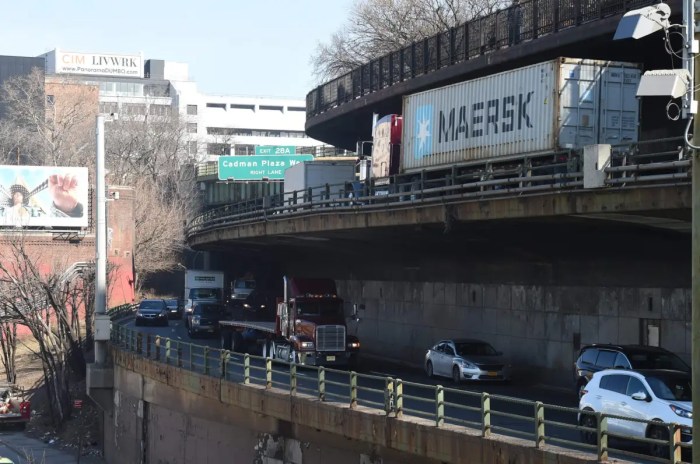
The number of overweight trucks barreling across the Brooklyn-Queens Expressway’s triple cantilever is way down, thanks to the city’s weigh-in-motion technology, according to a new report released Tuesday.
Since the tech was deployed in the fall of 2023, overweight truck traffic on the Queens-bound BQE is down 60%, per the report. The weigh-in-motion sensors actively detect overweight trucks and issue their drivers with $650 violations. According to the city’s Department of Transportation, before the tech was activated, 7,920 overweight trucks were crossing the roadway each day. Now, it’s down to about 3,041 per month.
Sensors are only active on the Queens-bound portion of the roadway, and are set to be activated on the Staten Island-bound portion this year.
The reduction is a win for the city’s Department of Transportation, which implemented weigh-in-motion hoping to cut truck traffic and extend the lifespan of the aging triple cantilever. Long-term repair of the roadway is years away, and heavy trucks cause significantly more damage than normal passenger cars, and before weigh-in-motion was activated, some overweight trucks were exceeding the cantilever’s 80,000 pound weight limit by more than 100%, according to the DOT.
The DOT hopes to extend the program past the end of this year. File photo by Todd Maisel
“Weigh-in-Motion technology has successfully eliminated 60% of the overweight truck traffic on the Queens bound BQE,” said Councilmember Lincoln Restler. “I am pleased WIM is finally being implemented on Staten Island bound lanes and hope to see a similar reduction in illegal, overweight trucks to extend the lifespan of the triple cantilever structure.”
But the bill that allowed weigh-in-motion to take effect is expiring this year, and city lawmakers are pushing for state legislators to extend the program. DOT Commissioner Ydanis Rodriguez made the trip to Albany on Tuesday to urge his colleagues to extend the timeline and allow the city to install weigh-in-motion tech in other places, like on the Washington Bridge between Washington Heights and Highbridge.
“Modern problems require modern solutions, deploying cutting-edge technology is the key to addressing our city’s most complex infrastructure needs,” Rodriguez said in a statement. “I hope our productive partnership with legislative leaders and the governor to bring weigh-in-motion to New York City, and the results it has yielded, can serve as a national model for other cities and states, including the rest of New York State.”
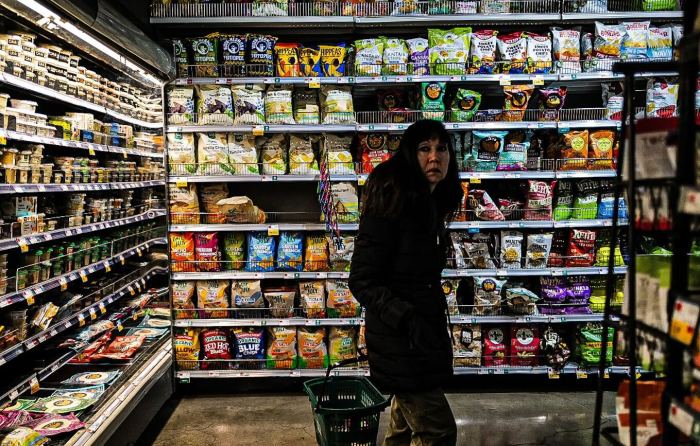
Rising food costs are eating a hole in New Yorkers’ budgets and driving them into debt, a new poll released Tuesday found.
No Kid Hungry New York unveiled alarming statistics about the financial and health struggles residents are facing due to the skyrocketing food costs. The survey, which engaged 1,596 respondents between Feb. 8 and 14, reveals that a staggering 53% of New Yorkers report an increase in debt over the past year as food prices surge.
The rising cost of living, particularly food expenses, has become an inescapable reality for many families. Influenced by several factors — including supply chain disruptions, inflation and looming tariffs on imported goods — the current economic landscape is making it increasingly difficult for families to make ends meet.
According to the Bureau of Labor Statistics, food prices have risen substantially in the past year, contributing to an escalating cost of living that is outpacing wage growth for many.
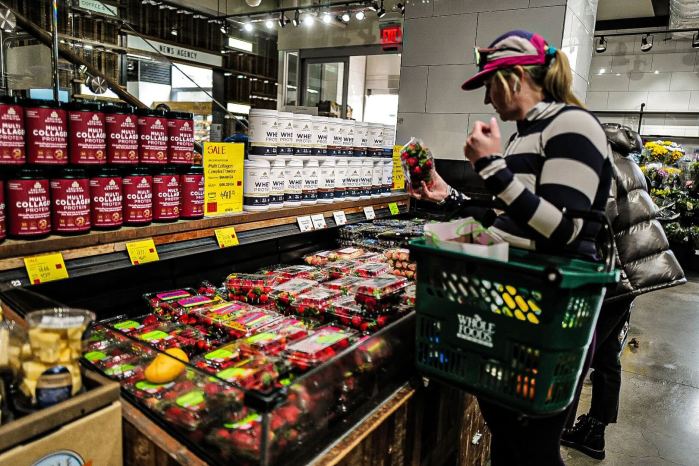
The poll highlights not only the immediate need for financial support but also the importance of long-term solutions. Photo by Dean Moses.
Rachel Sabella, director of No Kid Hungry New York, calls the survey’s findings a “wake-up call” for policymakers.
“The rising cost of groceries isn’t just straining household budgets. It’s pushing families deeper into debt. New Yorkers need urgent assistance,” she said. “There is a consensus among New Yorkers, regardless of their region or political affiliation, that we need bipartisan solutions, like SNAP, universal school meals, and Summer EBT, that help families keep food on their tables.”
As food prices increase, debt levels have followed suit, further complicating New Yorkers’ financial struggles. The poll found 53% of respondents have taken on additional debt, and 63% reported a decline in their mental health due to food insecurity.
Over half of those surveyed (52%) cited deterioration in their physical health, highlighting the broader implications of rising food costs on overall well-being.
Families are now concerned that President Trump’s recently imposed tariffs on imported goods will make growing food costs worse. They fear this could add an additional layer of complexity to food prices. In recent years, regulatory measures aimed at protecting domestic agriculture have led to increased costs for several food items, particularly fruits, vegetables, and dairy products.
As trade discussions continue, the potential for more tariffs could exacerbate the already challenging financial situation for families.
Since American businesses will be responsible for paying these tariffs, owners typically take some of the load off by raising prices for consumers, making essential food items less affordable.
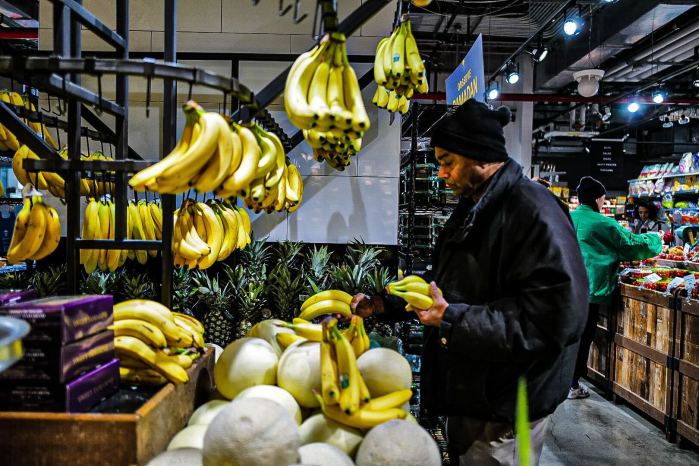
Sources say families have already had to cut back on purchasing fresh fruits and vegetables, pivoting to filler foods like rice and pasta.Photo by Dean Moses.
According to Sabella, many New Yorkers have expressed concerns that these tariffs, if furthered, will merely serve to deepen the hardship experienced by low-income families who rely on food assistance programs to meet their basic needs.
“New Yorkers are facing unbelievable challenges. We know there are solutions that can help this problem,” she said. “It’s not just about financial health; it’s about physical and mental health as well.”
The poll revealed significant opposition to proposed federal cuts to food assistance programs, emphasizing a shared conviction among New Yorkers that these programs are crucial for maintaining food security. An overwhelming 62% of respondents expressed disapproval of potential cuts to critical programs such as the Supplemental Nutrition Assistance Program (SNAP), the Women, Infants, and Children program, and Summer EBT.
Given the current economic situation, many New Yorkers understand the importance of these programs. The poll found that 84% believe school meals should be free for all students and 82% think that food assistance benefits should increase at a rate commensurate with rising food prices, underscoring the necessity for adaptive measures to meet evolving economic challenges.
Sabella also shared health ramifications of food insecurity are stark. The survey results illustrate that the hardship of meeting basic nutritional needs is affecting New Yorkers’ mental and physical well-being.
A significant majority, 63%, reported declines in mental health, indicating that the pressures of affording food are taking a toll on psychological resilience. Photo by Dean Moses.
In urban areas like New York City, the struggle is even more pronounced. The survey found that 52% of residents have taken on additional debt to afford groceries in the past year, while majorities reported suffering from both mental, 61%, and physical health issues, 52%, due to financial stress associated with food costs.
“Being on a budget, the rise in food cost strains my pockets,” a mother from the Bronx said. She chose not to share her name. “There are times where I have to use my credit card just to make sure there’s enough food in the house for me and my son until my next paycheck.”
According to Sabella, New Yorkers need to call on their elected officials to act decisively to protect the existence of food programs like SNAP and WIC.
Increased funding for food assistance programs, adjustments to benefits that keep pace with rising food prices, and the elimination of tariffs that disproportionately impact low-income families are all relevant considerations for policymakers moving forward.
“Ensuring that families have access to nutritious food is not just a matter of compassion; it’s a fundamental economic necessity,” Sabella told amNewYork Metro. “This crisis impacts families across the city, and we need clear policies to address food insecurity.”
The MTA unveiled its newest train cars on the G line Tuesday, introducing a five-car fleet with an open-gangway design at Church Avenue station in Brooklyn. The move marks a significant step in the ongoing modernization of the city’s subway system.
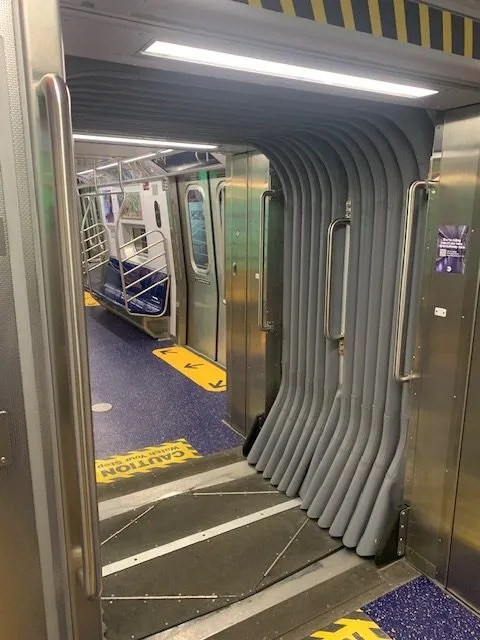
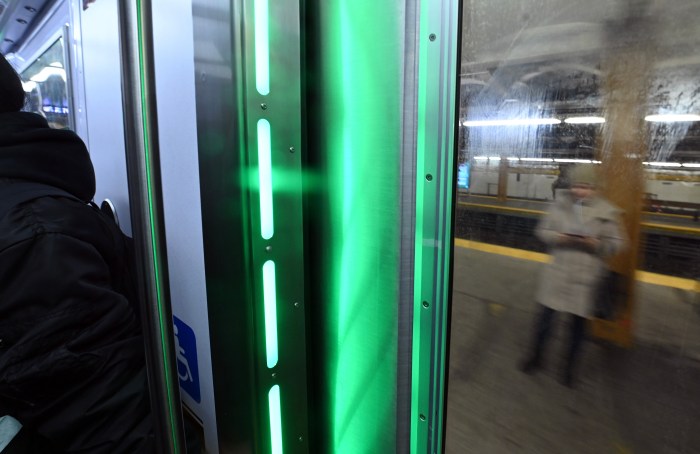
The spacious R211T trains feature bright lighting, colorful interiors, and several upgrades aimed at enhancing passenger comfort and safety. The open gangway train design allows riders to walk freely between cars, a first for the G line, offering increased mobility throughout the train. Additional features include wider doors, improved lighting, and digital screens displaying real-time train information.
“Open gangways offer a unique experience for G train riders,” said MTA NYC Transit President Demetrius Crichlow. “They are open from end to end, so customers have the ability to walk from one end of the car to the opposite end to where there is space. We’re really excited about that.”
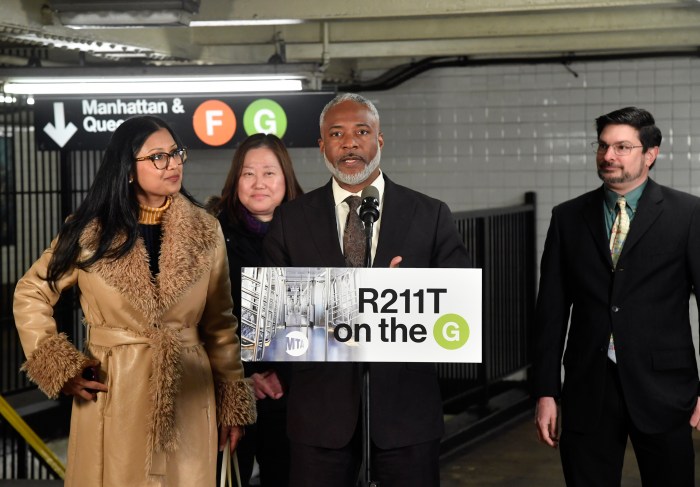
MTA New York City Transit President Demetrius Crichlow announces the launch of the first set of R211T subway cars on the Crosstown G line, joined by City Council Member Shahana Hanif, Chief Mechanical Officer Siu Ling Ko, and Acting SVP of Subways Bill Amarosa during a press conference.
The G train, which accommodates about 160,000 riders each day, is the second line in NYC to be treated to open gangway trains. Last year, the MTA put open gangway trains on the C line. Similar model cars known as the R211s are already in service on the A line, but do not have open gangways.
The R211T cars have a futuristic, spaceship-like look. Similar to an articulated bus, the open gangway creates an accordion or movable-panel floor that allows straphangers to traverse the train throughout their trip.
The new cars also allow for improved accessibility, better lighting, and better cameras that capture seven different viewpoints to enhance safety measures.
“They are more reliable,” Crichlow added. “They are running more reliably and have larger doors to allow more people to enter and exit.”
Brooklyn City Council Member Shahana Hanif, who grew up in Kensington, was at the unveiling of the new train.
“It’ll make our ride as users more comfortable and efficient,” she said. “Im an avid subway rider, I take trains and buses to get around as an elected official. And it makes me proud to know these changes are coming to our communities.”
More R211T trains are planned to arrive on the G line Wednesday, and within a month or two, two more R211T trains will be added to the line, MTA officials said.
New railcars such as the R211T are a priority project in the MTA’s $68 billion capital plan for 2025-2029, which needs full state approval.
Meanwhile, Brooklyn and Queens subway riders smiled upon entering the new train, not expecting a brand-new look once they stepped inside.
“It’s great,” said Larry Geddes of Windsor Terrace said. “I’m excited. We have freedom now to move. It makes a big difference.”
The open gangway of the G train.Photo by Barbara Russo-LennonThe futuristic design of the new R211T train brings a modern look to the G line, with features like wider doors and improved lighting.Photo by Marc A. Hermann/MTA
Brian Lucero of Red Hook called the open gangway an improvement to the busy G line.
“The G train right now can’t fit too much, but this is a new feature on the G line,” he said. “With more people going back and forth, it will be more helpful.”
In December, transit authority officials said that by early 2025, at least two open-gangway trains will launch on the G line through Brooklyn and Queens. Additionally, 355 traditional train cars with improved features will start rolling on the tracks by 2027.
This story first appeared on Brooklyn Paper’s sister site, amNewYork Metro