Categories
The News And Times – thenewsandtimes.com

‘I Wanted to Scream’: Conflict in Congo Drives Sexual Assault of Displaced Women


A hooded man burst into the 42-year-old woman’s tent while her children were out searching for food, then raped her in the displacement camp where she had fled war in eastern Congo.

“I wanted to scream [but] he took my mouth and he threatened me with death,” said the mother of four, who was abandoned by her husband after she became disabled in a motorcycle accident several years ago.

Now, she says, she lives in fear and hesitates to let her children leave her side.

Sexual violence by armed men against displaced women is increasing rapidly in eastern Congo as yearslong conflicts continue. The trend underscores the disproportionate consequences for women and girls in the region’s perpetual state of war. The Associated Press is not identifying survivors who spoke to journalists in the Bulengo displacement camp.

In Bulengo and other displacement sites nearby, an average of 70 sexual assault victims each day visit clinics run by Doctors Without Borders, also known by its French acronym MSF.

Conflict has simmered in eastern Congo for nearly three decades. The United Nations estimates that more than 130 armed groups are active in the country’s northeast, vying for land or resources while some have formed to protect their communities. Sexual violence has long been used as a weapon of war by armed fighters in the region.

More than 4 million people were displaced within Congo because of conflict in 2022, the most in Africa and second in the world only to Ukraine, according to the Internal Displacement Monitoring Center. Of nearly 100,000 people who arrived at displacement sites near the eastern city of Goma in July, nearly 60% were women and girls, according to the International Organization for Migration.

Doctors Without Borders treated 1,500 female victims of sexual violence in just three displacement camps outside Goma in July, more than double the number in May, the organization said in a September 18 report. 

Survivors and aid workers say displacement rips people from their livelihoods and leaves women and girls vulnerable to assault.

Like many other displaced single mothers, the 42-year-old mother of four is struggling to feed her family and unsure when she might return home.

With the help of her two sons and two daughters, she had cultivated her fields of cassava, potatoes and beans. But in February, armed rebels and Congolese security forces clashed close to her home in the northeastern village of Karenga.

“We were forced to flee, leaving behind all our belongings,” she said. Limping, she walked an entire day to bring her family to one of more than 100 sites where displaced people have gathered around Goma.

One May evening, after three months of struggling to feed her family in a camp with tens of thousands of other displaced people, she sent her children to find food. They hadn’t eaten all day, she said. That’s when a stranger found her alone and raped her.

After the attack, she confided in a friend who directed her to a clinic run by MSF. The charity group along with United Nations agencies and local organizations help provide medical services, psychological treatment, latrines and other measures to improve conditions for survivors of sexual violence.

But their role is limited. Deliveries of food and other basic needs to the camp are infrequent, said Rebecca Kihiu, MSF’s regional sexual violence activity manager.

The camp’s conditions leave women vulnerable to abuse. Shelters are little more than plastic sheets, with no way of securing them from intruders, Kihiu said. Armed men lurk outside the camp, where women and girls are forced to venture to find firewood and other necessities.

“They know that they will go and find these assaults outside the camp. But they have no option,” Kihiu said.

Already scarred by fleeing their homes, survivors of sexual assault in camps like Bulengo live with the experience long afterward. “It’s a trauma that will stay for a lifetime,” said Esmeralda Alabre, coordinator for UNFPA gender-based violence programming in northeast Congo.

A mother of eight in the same displacement camp received some medical help after she was raped. But she is still afraid, especially at night. She now arranges her children around her when they sleep, hoping their presence will deter a future aggressor.

Kihiu says some groups of women band together on trips outside the camp for added security, but this tactic falters if they need to split up to collect resources more efficiently.

For hundreds of thousands of other displaced women in northeast Congo, escalating armed conflict stands in the way of a return to normal life. The two women interviewed by the AP said they think each day about how they can return to farming in their village.

And each night they fear for their safety.

“Let the government do everything to end this war so that we can give up this life of misery,” the mother of four said. 

The post ‘I Wanted to Scream’: Conflict in Congo Drives Sexual Assault of Displaced Women first appeared on The News And Times – thenewsandtimes.com.


Categories
The News And Times – thenewsandtimes.com

Can Russia Ever Learn To Live Without Its Imperial Ambitions?


 Michael Novakhov’s favorite articles 

image-of-russian-solders-in-front-of-the

-Analysis-

WARSAW — For Moscow to finally let go of its imperial ambitions, it must lose the war it has been waging in Ukraine. As the history of the last few hundred years shows, this is the only way Russia will change.

The idealogue at the head of Putinist Russia, Vladislav Surkov, has made his vision of an ideal Russia very clear. In his view, Russia is a country that “having stopped falling, has begun to rebuild itself and returned to the natural and only possible state of a great, growing and land-collecting community of nations.”

Surkov says that Russia makes “no promise” of peace. “The immodest role given to our country by universal history does not allow us to leave the stage or remain silent in the crowd,” he declared.

This feeling of Russia having a historical destiny, and an imperative to expand its territory is not new. It goes back as far as the 15th century, after the capture of Constantinople by the Turks when the ruler of Moscow considered himself the successor of the Byzantine and Roman Empires, and the only defender of the true Christian faith, untainted by what they believed to be Latinism and sterile rationalism. Even the title of tsar adopted by Ivan the Terrible in the 16th century was a reference to the Roman title of Caesar.

Pavel Miliukov, the 20th-century historian and political activist, wrote 100 years ago about the tsars’ ambitions. According to him, if you asked about their program of action, “They would probably not be able to develop a program other than the old, traditional one, which has become an instinct: to seek and collect even more.”

Almost 200 years later, Peter I solemnly assumed the title of Emperor of All Russia. Russia was officially becoming an empire, and, thus, the main function of the empire was constant territorial expansion.

Jan Kucharzewski, the historian and former Prime Minister of Poland, likewise acknowledged Russian imperialism. “Russia, in its wars of conquest, has used (the same) traditional methods for centuries,” he wrote. “When seizing lands, it claimed that it was regaining them, even when it came to the Amur Land, and that it was liberating the people of these lands either from the yoke of a foreign nation or from the yoke of political and social oppression,” he added, arguably predicting the Russian narrative of “liberating” or “de-nazifying” Ukraine.

For Kucharzewski, these imperial conquests were always justified “on the basis of some alleged old titles and demagogy, national and social, applied to the country against which the fight is being waged in order to weaken it internally,” which he also referred to as “political means used to justify and support military action.”

The accuracy of this assessment is backed up by Russia’s past, as well as by the government’s current choices. When Soviet commander Semyon Budyonny’s horse army approached Lviv and Zamość during the Soviet-Polish war in 1920, it was supposedly fighting, as Russian writer Isaac Babel wrote, not against Polish workers or peasants, but was “attacking the nobility.”

According to the Russian narrative, Putin’s shameful attack on Ukraine is aimed not at subjugating Ukrainians, but at “denazification” , that is, freeing them from the oppressive and anti-national regime of President Zelensky.

The expanding borders of the Russian Empire were drawn in the mid-19th century by the Russian poet and diplomat Fyodor Tyutchev:

Seven inner seas, seven rivers

From the Nile to the Neva, from the Elbe to Cathay

From the Volga to the edges of the Euphrates, Ganges, and the Danube

It is said that when Vladimir Putin asked a young boy where Russia ends, and was told “at the Bering Strait near Alaska”, that he smiled and said: “No, Russia doesn’t end.” This is very similar to a common joke in Poland, which reads, “With whom does Russia share a border?” “With whoever it wants to.”

Russians have almost always been aware of comparisons made between them and the West, especially when it comes to the standard of living and the degree of economic development. In their own view, the lack of freedom was to be compensated by the sense of the country’s greatness and strength and the importance of the historical mission it supposedly had to fulfill.

As Mikhail Lermontov wrote: “Let me be a slave, but a slave of the tsar of the world,” and the 19th-century historian Sergei Soloviev claimed that for an autocratic state the goal is not prosperity, but “the glory of the citizens, the state and the ruler,” and that “national pride arouses in the nation governed by authority, the sense of freedom that drives them to great deeds no less than freedom itself.”

“You will get rich quickly, but don’t interfere with my rule.”

We find all of these ideas lingering today, in the narrative and policy of Putin’s Russia. When the 2008 financial crisis exposed the country’s economic weakness, citizens lost the belief that Russia would soon become one of the largest economic powers, that the ruble would be the world’s reserve currency next to the dollar, and Moscow would be one of the financial centers on a par with New York, Frankfurt and London.

Putin’s informal deal with Russians had been “You will get rich quickly, but don’t interfere with my rule.” But the crash showed that this could soon stop working, and had to be replaced with something else — something well embedded in the Russian tradition: to replace bread with imperial games, and a sense of imperial grandeur. Russia under Putin’s rule was to become great again and, just as the country had defended the world from Nazism, now it was to face American hegemony and the nihilism of the West, threatening the true Christian civilization represented and protected, as always, by Russia.

Since then, Putin himself has crafted a new role. As Dmitry Trenin of the Carnegie Moscow Center wrote: “At the end of his four-year term, Putin seemed imbued with a sense of history and God’s mandate. Perceived as a pragmatist and outspoken public official, the country manager turned into a missionary. Putin not only appealed to God in his public speeches, but also behaved as someone who was carrying out a work entrusted to him by the Almighty. Later, during the 2014 Ukraine crisis, it allowed Putin to remain calm and confident that God was on his — and Russia’s — side in a new, fierce competition with the United States.”

There are many indications that this new legitimization of Putin’s power has been accepted by many in the country. Putin describes himself as “a leading Russian nationalist.” And a Russian nationalist, as sociologist Irina Glebova wrote, “refers to memories of the power of the Soviet state and the Russian Orthodox superpower greatness and satisfies the spontaneous social demand for it,” which results in an increased support for the government.

The return of the imperial idea and the complete rejection of the West does not have to be permanent.

This makes a permanent treaty ending the war with Ukraine, which in Putin’s propaganda is compared to the Great Patriotic War with Hitler’s Germany, virtually impossible. At least as long as imperial and nationalist intoxication persists in Russia.

In spite of its long tradition, this imperialism does not have to last forever. First, it is not entirely clear to what extent the public actually support President Putin and his policies. It is important to remember the political conditions in which surveys are conducted and the degree of refusal to respond.

Secondly, one cannot underestimate the courage and determination of those, many of them, who demonstrated against the war. Today, such demonstrations are not visible, but these people did not disappear, even if many of them fled abroad. The return of the imperial idea and the complete rejection of the West does not have to be permanent.

It is worth recalling what Vladimir Putin himself said relatively recently. He made a clear proposal that only in cooperation with Russia can Europe become a powerful and independent factor in world politics. The well-known Russian political scientist Alexei Arbatov envisioned Russia’s entry into the EU as late as 2007, which he believed would prompt the creation of “the most powerful global center of military, economic and cultural power.”

As for today’s emphasizing of the fundamental and supposedly insurmountable differences between European and Russian civilization, it is worth remembering what Putin himself or Sergey Lavrov said about Russia’s Europeanness: the latter claimed that there is no conflict of values between Russia and the West.

In turn, another significant Russian political scientist and politician, Vladimir Lukin, wrote that “Russia has always been part of the Old World … and will be able to resist the pressure of Asia, America and other civilizational centers of gravity only if it is with Europe.”

The awareness of the failure of Putin’s policy, which led to the loss of chances to win over Ukraine, to the collapse of the myth about the strength and greatness of the Russian armed forces, to the international isolation of Russia and to its increasing dependence on the increasingly stronger and potentially dangerous China, has the potential bring about a redefinition of Russian nationalism.

One thinks of General Aleksandr Lebed, a Russian nationalist and veteran of many battles, who claimed in the 1990s that “the era of empires is over. You can pity her, she was great and proud, but a new era is beginning — the construction of a full-fledged Russian nation state. In the international arena, pragmatic nationalism means that … Russia does not intend to pay a disproportionate price for a return to the imperial chimera”.

So, Russian nationalism may take a less threatening form. Maybe Russia will follow in the footsteps of other countries that have dealt with their imperial past.

Russia will not disappear from the map. The problem is whether it will continue to build its greatness on constant expansion and domination, or on the strength of its culture, economy and prestige resulting from compliance with the rule of national and international law.

For Russia to change, it must lose the war with Ukraine. As the history of the last few hundred years shows, Russia has changed only in such a situation. This was the case after the Crimean War in the mid-19th century, after the Russo-Japanese War in 1905, after the First World War and after the Cold War.

The military defeat should become an opportunity for those who think about a different Russia, but are unable to do anything today. These people must be remembered. And remember that whatever Putin says today: Russia, although it will probably remain outside the European Union, will remain part of Europe.

Moscow says high risk of ‘third-party’ entering war in Israel  The Cradle

Can Russia Ever Learn To Live Without Its Imperial Ambitions?  Worldcrunch

NATO has sufficient resources for Israel and Ukraine in a way not to …  London Loves Business

Meet the 4 Most Famous (or Infamous) Guns in History

Sig Sauer photo of XM5 and XM250 rifles. Image Credit: Industry Handout.

Let the debate begin: What is truly the most famous gun of all time? Thanks in no small part to the proliferation of social media; we currently live in a world where many people have become famous for being famous. This has created a desire to rate the fame of not just individuals but also […]

The post Meet the 4 Most Famous (or Infamous) Guns in History appeared first on 19FortyFive.

Former Vice President of the United States Joe Biden speaking with attendees at the 2020 Iowa State Education Association (ISEA) Legislative Conference at the Sheraton West Des Moines Hotel in West Des Moines, Iowa. By Gage Skidmore.

Ever heard the phrase “Give someone an inch and they’ll take a mile”? Americans gave Joe Biden the Oval Office, and now he is taking away their cars, dishwashers, gas stoves, and, most recently, their water heaters. Biden’s Department of Energy on July 21 released new proposed energy-efficiency standards for water heaters. This is the latest round in the […]

The post Here Comes Joe Biden: Enjoy Your Water Heater—While You Still Can appeared first on 19FortyFive.

Nikki Haley’s breakout jolts the 2024 GOP undercard race – POLITICO  POLITICO

On “Forbes Newsroom,” attorney Alan Dershowitz discusses Hamas’ future in Gaza.

Fuel your success with Forbes. Gain unlimited access to premium journalism, including breaking news, groundbreaking in-depth reported stories, daily digests and more. Plus, members get a front-row seat at members-only events with leading thinkers and doers, access to premium video that can help you get ahead, an ad-light experience, early access to select products including NFT drops and more:

https://account.forbes.com/membership/?utm_source=youtube&utm_medium=display&utm_campaign=growth_non-sub_paid_subscribe_ytdescript

Stay Connected
Forbes on Facebook: http://fb.com/forbes
Forbes Video on Twitter: http://www.twitter.com/forbes
Forbes Video on Instagram: http://instagram.com/forbes
More From Forbes: http://forbes.com

How the US is Preparing For a Post-Quantum World  Slashdot

Complete Guide to Cyberthreat Intelligence Feeds And Sources  EC-Council

2023-10-12t174457z_1741159650_rc25r3addx

Ситуация в секторе Газа становится хуже каждый час, число жертв среди мирного населения “абсолютно неприемлемо”, заявил Генеральный секретарь ООН Антониу Гутерриш, выступая в воскресенье в Катманду, столице Непала.

The post Can Russia Ever Learn To Live Without Its Imperial Ambitions? first appeared on The News And Times – thenewsandtimes.com.


Categories
The News And Times – thenewsandtimes.com

Can Russia Ever Learn To Live Without Its Imperial Ambitions?


image-of-russian-solders-in-front-of-the

-Analysis-

WARSAW — For Moscow to finally let go of its imperial ambitions, it must lose the war it has been waging in Ukraine. As the history of the last few hundred years shows, this is the only way Russia will change.

The idealogue at the head of Putinist Russia, Vladislav Surkov, has made his vision of an ideal Russia very clear. In his view, Russia is a country that “having stopped falling, has begun to rebuild itself and returned to the natural and only possible state of a great, growing and land-collecting community of nations.”

Surkov says that Russia makes “no promise” of peace. “The immodest role given to our country by universal history does not allow us to leave the stage or remain silent in the crowd,” he declared.

This feeling of Russia having a historical destiny, and an imperative to expand its territory is not new. It goes back as far as the 15th century, after the capture of Constantinople by the Turks when the ruler of Moscow considered himself the successor of the Byzantine and Roman Empires, and the only defender of the true Christian faith, untainted by what they believed to be Latinism and sterile rationalism. Even the title of tsar adopted by Ivan the Terrible in the 16th century was a reference to the Roman title of Caesar.

Pavel Miliukov, the 20th-century historian and political activist, wrote 100 years ago about the tsars’ ambitions. According to him, if you asked about their program of action, “They would probably not be able to develop a program other than the old, traditional one, which has become an instinct: to seek and collect even more.”

Almost 200 years later, Peter I solemnly assumed the title of Emperor of All Russia. Russia was officially becoming an empire, and, thus, the main function of the empire was constant territorial expansion.

Jan Kucharzewski, the historian and former Prime Minister of Poland, likewise acknowledged Russian imperialism. “Russia, in its wars of conquest, has used (the same) traditional methods for centuries,” he wrote. “When seizing lands, it claimed that it was regaining them, even when it came to the Amur Land, and that it was liberating the people of these lands either from the yoke of a foreign nation or from the yoke of political and social oppression,” he added, arguably predicting the Russian narrative of “liberating” or “de-nazifying” Ukraine.

For Kucharzewski, these imperial conquests were always justified “on the basis of some alleged old titles and demagogy, national and social, applied to the country against which the fight is being waged in order to weaken it internally,” which he also referred to as “political means used to justify and support military action.”

The accuracy of this assessment is backed up by Russia’s past, as well as by the government’s current choices. When Soviet commander Semyon Budyonny’s horse army approached Lviv and Zamość during the Soviet-Polish war in 1920, it was supposedly fighting, as Russian writer Isaac Babel wrote, not against Polish workers or peasants, but was “attacking the nobility.”

According to the Russian narrative, Putin’s shameful attack on Ukraine is aimed not at subjugating Ukrainians, but at “denazification” , that is, freeing them from the oppressive and anti-national regime of President Zelensky.

The expanding borders of the Russian Empire were drawn in the mid-19th century by the Russian poet and diplomat Fyodor Tyutchev:

Seven inner seas, seven rivers

From the Nile to the Neva, from the Elbe to Cathay

From the Volga to the edges of the Euphrates, Ganges, and the Danube

It is said that when Vladimir Putin asked a young boy where Russia ends, and was told “at the Bering Strait near Alaska”, that he smiled and said: “No, Russia doesn’t end.” This is very similar to a common joke in Poland, which reads, “With whom does Russia share a border?” “With whoever it wants to.”

Russians have almost always been aware of comparisons made between them and the West, especially when it comes to the standard of living and the degree of economic development. In their own view, the lack of freedom was to be compensated by the sense of the country’s greatness and strength and the importance of the historical mission it supposedly had to fulfill.

As Mikhail Lermontov wrote: “Let me be a slave, but a slave of the tsar of the world,” and the 19th-century historian Sergei Soloviev claimed that for an autocratic state the goal is not prosperity, but “the glory of the citizens, the state and the ruler,” and that “national pride arouses in the nation governed by authority, the sense of freedom that drives them to great deeds no less than freedom itself.”

“You will get rich quickly, but don’t interfere with my rule.”

We find all of these ideas lingering today, in the narrative and policy of Putin’s Russia. When the 2008 financial crisis exposed the country’s economic weakness, citizens lost the belief that Russia would soon become one of the largest economic powers, that the ruble would be the world’s reserve currency next to the dollar, and Moscow would be one of the financial centers on a par with New York, Frankfurt and London.

Putin’s informal deal with Russians had been “You will get rich quickly, but don’t interfere with my rule.” But the crash showed that this could soon stop working, and had to be replaced with something else — something well embedded in the Russian tradition: to replace bread with imperial games, and a sense of imperial grandeur. Russia under Putin’s rule was to become great again and, just as the country had defended the world from Nazism, now it was to face American hegemony and the nihilism of the West, threatening the true Christian civilization represented and protected, as always, by Russia.

Since then, Putin himself has crafted a new role. As Dmitry Trenin of the Carnegie Moscow Center wrote: “At the end of his four-year term, Putin seemed imbued with a sense of history and God’s mandate. Perceived as a pragmatist and outspoken public official, the country manager turned into a missionary. Putin not only appealed to God in his public speeches, but also behaved as someone who was carrying out a work entrusted to him by the Almighty. Later, during the 2014 Ukraine crisis, it allowed Putin to remain calm and confident that God was on his — and Russia’s — side in a new, fierce competition with the United States.”

There are many indications that this new legitimization of Putin’s power has been accepted by many in the country. Putin describes himself as “a leading Russian nationalist.” And a Russian nationalist, as sociologist Irina Glebova wrote, “refers to memories of the power of the Soviet state and the Russian Orthodox superpower greatness and satisfies the spontaneous social demand for it,” which results in an increased support for the government.

The return of the imperial idea and the complete rejection of the West does not have to be permanent.

This makes a permanent treaty ending the war with Ukraine, which in Putin’s propaganda is compared to the Great Patriotic War with Hitler’s Germany, virtually impossible. At least as long as imperial and nationalist intoxication persists in Russia.

In spite of its long tradition, this imperialism does not have to last forever. First, it is not entirely clear to what extent the public actually support President Putin and his policies. It is important to remember the political conditions in which surveys are conducted and the degree of refusal to respond.

Secondly, one cannot underestimate the courage and determination of those, many of them, who demonstrated against the war. Today, such demonstrations are not visible, but these people did not disappear, even if many of them fled abroad. The return of the imperial idea and the complete rejection of the West does not have to be permanent.

It is worth recalling what Vladimir Putin himself said relatively recently. He made a clear proposal that only in cooperation with Russia can Europe become a powerful and independent factor in world politics. The well-known Russian political scientist Alexei Arbatov envisioned Russia’s entry into the EU as late as 2007, which he believed would prompt the creation of “the most powerful global center of military, economic and cultural power.”

As for today’s emphasizing of the fundamental and supposedly insurmountable differences between European and Russian civilization, it is worth remembering what Putin himself or Sergey Lavrov said about Russia’s Europeanness: the latter claimed that there is no conflict of values between Russia and the West.

In turn, another significant Russian political scientist and politician, Vladimir Lukin, wrote that “Russia has always been part of the Old World … and will be able to resist the pressure of Asia, America and other civilizational centers of gravity only if it is with Europe.”

The awareness of the failure of Putin’s policy, which led to the loss of chances to win over Ukraine, to the collapse of the myth about the strength and greatness of the Russian armed forces, to the international isolation of Russia and to its increasing dependence on the increasingly stronger and potentially dangerous China, has the potential bring about a redefinition of Russian nationalism.

One thinks of General Aleksandr Lebed, a Russian nationalist and veteran of many battles, who claimed in the 1990s that “the era of empires is over. You can pity her, she was great and proud, but a new era is beginning — the construction of a full-fledged Russian nation state. In the international arena, pragmatic nationalism means that … Russia does not intend to pay a disproportionate price for a return to the imperial chimera”.

So, Russian nationalism may take a less threatening form. Maybe Russia will follow in the footsteps of other countries that have dealt with their imperial past.

Russia will not disappear from the map. The problem is whether it will continue to build its greatness on constant expansion and domination, or on the strength of its culture, economy and prestige resulting from compliance with the rule of national and international law.

For Russia to change, it must lose the war with Ukraine. As the history of the last few hundred years shows, Russia has changed only in such a situation. This was the case after the Crimean War in the mid-19th century, after the Russo-Japanese War in 1905, after the First World War and after the Cold War.

The military defeat should become an opportunity for those who think about a different Russia, but are unable to do anything today. These people must be remembered. And remember that whatever Putin says today: Russia, although it will probably remain outside the European Union, will remain part of Europe.

The post Can Russia Ever Learn To Live Without Its Imperial Ambitions? first appeared on The News And Times – thenewsandtimes.com.


Categories
The News And Times – thenewsandtimes.com

Intelligence Failures – Again


Michael Novakhov’s favorite articles 

Intelligence Failures – Again

  • The failure of the U.S. intelligence community has three components: 1) It has become politically charged and lost focus on its mission protecting Americans, instead engaging in partisan politics. 2) It continues to focus on technological intelligence collection rather than the difficult and risky world of human intelligence collection. 3) It continues to suffer from a lack of creativity in anticipating and understanding the new threats being developed by our enemies.

  • There is little doubt that the Intelligence Community has become seriously politicized. In 2016-2017, its leaders and the FBI undermined the incoming President Donald Trump by raising the specter of Russian influence over Trump. The disproven Russia hoax would go on to shadow and undermine Trump’s entire time in office.

  • Despite warnings from the U.S. Intelligence Community, the Biden administration failed to anticipate or plan for the dramatic and quick collapse of Afghanistan’s government when U.S. troops were withdrawn.

  • A little more than a week prior to the Hamas attack, Biden’s National Security Advisor, Jake Sullivan, was talking-up successes in the Middle East… “the Middle East region is quieter today than it has been in two decades.”

  • He could not have been more wrong. Boiling just under the surface was a terrorist attack that would result in more than 1,400 Israelis killed, at least 31 Americans killed, atrocities against Israeli civilians that include beheaded babies and babies burned alive…

  • The Intelligence Community also shifted some of its focus from international threats to domestic threats — often spurious — while ignoring the real ticking time bomb of 5.6 million migrants flooding onto the United States through the southern border, in addition to at least 1.5 million known “gotaways” and an unknown number of unknown “gotaways.”

  • The biggest U.S. intelligence failure of all so far, unfortunately, has been strenuously pretending not to know that Iran, Qatar and Turkey are the kingpins behind the current attacks by Hamas on Israel. If Iran, Qatar and Turkey are to be discouraged from continuing their malign actions destabilizing the region, the price they pay needs to be steep. Hamas. Iran, Qatar and Turkey must not be let off the hook. In addition, the US must move its military assets from Al Udeid Airbase in Qatar to the United Arab Emirates as soon as it can.

  • To go just after Hamas is like targeting crime syndicate, but ignoring Al Capone. Hamas needs to be dealt with first – along with the realization that any humanitarian aid allowed into Gaza supplies Hamas, not the people for whom it was well-meaningly intended. As the journalist Caroline Glick points out, the trucks are not inspected. They might be bringing in food and water – or weapons. Sadly, even if the contents are food and water, Hamas keeps them, then sparingly doles them out to whomever they want.

  • Moving forward, we once again need to examine how we do intelligence across the West. Perhaps Congress or a special commission can be established to identify the exact strengths and weaknesses of our intelligence community… and to discard the biased and flawed analytical tradecraft standards that have led us to where we are today.

 (Image source: iStock)

In light of the devastating and deadly terrorist attack executed by Hamas against Israel on October 7, many are correctly calling the failure to intercept and prevent the assault an “intelligence failure.” Many are especially surprised given the vaunted, basically legendary, status almost universally accorded Israel’s national security apparatus.

This, however, is not the only recent intelligence failure, or failure by political leaders to anticipate emerging threats. According to a Brookings report examining the U.S. intelligence failure and reorganization following the 9/11 terrorist attacks against America:

“In the aftermath of 9/11 everyone, from elected officials and national security experts to ordinary citizens had one question: how could this happen to a nation with such an enormous and expensive military and intelligence architecture?”

Despite warnings from the U.S. Intelligence Community, the Biden administration failed to anticipate or plan for the dramatic and quick collapse of Afghanistan’s government when U.S. troops were withdrawn. And while the Intelligence Community correctly and publicly warned of Russia’s impending invasion of Ukraine, it failed to predict the tenacity of Ukrainian fighters defending their homeland and instead forecast an almost Afghanistan-style collapse in a matter of days. General Mark Milley, then Chairman of the Joint Chiefs of Staff, even warned lawmakers that “a full-scale Russian invasion of Ukraine could result in the fall of Kyiv within 72-hours and could come at a cost of 15,000 Ukrainian troop deaths and 4,000 Russian troop deaths,” according to lawmakers he briefed behind closed-doors.

These misses once again have citizens asking if our intelligence agencies and political leaders are capable of keeping them safe. The short answer, unfortunately, is no. Terrorists and our enemies only have to be right once, while our intelligence services need to be correct 100% of the time. Just look at Pearl Harbor.

It is not unreasonable to expect that Israeli or US intelligence should have been able to detect the 10/7 attacks on Israel ahead of time, especially so close to the 50th anniversary of the surprise Yom Kippur War in 1973. What, then, led to the failure? While Israel will certainly review its intelligence posture to determine its shortcomings, we already know some of the challenges the Intelligence Community faces on the U.S. side.

The Middle East, Israel, Gaza, the West Bank, Iran, Syria, Hamas and Hezbollah are all high on the Intelligence Community’s radar, given the volatility of the restive region. All the same, Washington’s leadership also was not expecting the 10/7 attacks. A little more than a week prior, Biden’s National Security Advisor, Jake Sullivan, was talking-up successes in the Middle East, allowing the U.S. to focus on other areas regions of the world. The bold conclusion made by Sullivan at the time was that “the Middle East region is quieter today than it has been in two decades.”

He could not have been more wrong. Boiling just under the surface was a terrorist attack that would result in more than 1,400 Israelis killed, at least 31 Americans killed, atrocities against Israeli civilians that include beheaded babies and babies burned alive, as well as scores of Israeli and international hostages whom Hamas terrorists forcibly abducted from Israel to Gaza, presumably being held in tunnels.

The failure of the U.S. intelligence community has three components:

  1. It has become politically charged and lost focus on its mission protecting Americans, instead engaging in partisan politics.
  2. It continues to focus on technological intelligence collection rather than the difficult and risky world of human intelligence collection.
  3. It continues to suffer from a lack of creativity in anticipating and understanding the new threats being developed by our enemies.

There is little doubt that the Intelligence Community has become seriously politicized. In 2016-2017, its leaders and the FBI undermined the incoming President Donald Trump by raising the specter of Russian influence over Trump. The disproven Russia hoax would go on to shadow and undermine Trump’s entire time in office.

When Hunter Biden’s now infamous laptop was revealed, it was the FBI and former Intelligence Community leaders who actively tried to cover it up and pass it off as a Russian disinformation campaign.

The Intelligence Community also shifted some of its focus from international threats to domestic threats — often spurious — while ignoring the real ticking time bomb of 5.6 million migrants flooding onto the United States through the southern border, in addition to at least 1.5 million known “gotaways” and an unknown number of unknown “gotaways.”

We have also witnessed information that was accurate but which the FBI worked with social media companies to suppress, and even outright fabrications about what they claimed was disinformation, such as the Russia hoax or the authenticity of Hunter Biden’s laptop; that Catholics who attend mass in Latin are “extremists,” and that parents questioning what their children learn in public schools are “domestic terrorists.” What really happened on January 6, 2021 is still unknown.

These efforts by the Intelligence Community all seem to target Republicans or to benefit Democrats politically — a situation that has left many conservatives rightly worried about the political weaponization of the government.

Unfortunately, this political corruption shows no signs of abating, with the entire deep state apparently still determined to turn the Constitution on its head to “get Trump,” and with former officials such as Michael Hayden, who was head of the National Security Agency and the CIA, suggesting that Republican Senator Tommy Tuberville should be removed from the human race.

A second major shortcoming, that was identified after 9/11 was, as mentioned, a U.S. over-reliance on the technological collection of information, such as satellites, cyber, and wiretapping. The Intelligence Community knew how to do these things and knew how to do them well. It was difficult and sophisticated work but carried far fewer risks than human espionage or developing spy networks.

While the intelligence may have been there, our ability to fully understand it, and our analyses, missed having insights into the humans, and their way of thinking, who were behind those “zeros and ones.”

Hamas may have exploited the reliance Western security services have on technological collection. We already know that Osama bin Laden refused to use electronic communications and relied on human couriers to convey messages. They used our confidence in technological collection to their benefit. The after-action intelligence review to determine how Hamas hid its operation will undoubtedly look into this, but it appears that electronic communication on the plot was limited and coded, with the few people actually knowing the full details kept to a handful to further limit communications.

Just as the U.S. Intelligence Community did not imagine terrorists hijacking airplanes to use as missiles, it is likely the Israelis never contemplated Hamas pulling off a multipronged attack by sea, land, and air — including the use of paragliders. But that is exactly what they did. They used low-tech bulldozers and explosives to breach Israel’s border fence and then drive through the openings with trucks, motorcycles, and other equipment loaded with terrorists and weapons. Hamas fired thousands of rockets, in barrages of hundreds at a time, to overwhelm Israel’s highly touted Iron Dome counter-rocket system and, having learned lessons about the effective use of drones from the Russian invasion of Ukraine, used drone-dropped munitions to take out guard towers and surveillance cameras.

While many of these tactics are not new — Hamas had fired tens of thousands of missiles into Israel before, attacked civilians and soldiers on the streets, and crossed the border in multiple ways — the novelty of this approach was to do all of these things at once and on a massive scale.

The biggest U.S. intelligence failure of all so far, unfortunately, has been strenuously pretending not to know that IranQatar and Turkey are the kingpins behind the current attacks by Hamas on Israel. If Iran, Qatar and Turkey are to be discouraged from continuing their malign actions destabilizing the region, the price they pay needs to be steep. Hamas. Iran, Qatar and Turkey must not be let off the hook. In addition, the US must move its military assets from Al Udeid Airbase in Qatar to the United Arab Emirates as soon as it can.

The Qataris, instead of being grateful that a state-of-the-art airbase is on its soil protecting it, instead might think that they are doing the US a favor letting the airbase be there.

To go just after Hamas is like targeting crime syndicate, but ignoring Al Capone. Hamas needs to be dealt with first – along with the realization that any humanitarian aid allowed into Gaza supplies Hamas, not the people for whom it was well-meaningly intended. As the journalist Caroline Glick points out, the trucks are not inspected. They might be bringing in food and water – or weapons. Sadly, even if the contents are food and water, Hamas keeps them, then sparingly doles them out to whomever they want.

Moving forward, we once again need to examine how we do intelligence across the West. Perhaps Congress or a special commission can be established to identify the exact strengths and weaknesses of our intelligence community. It will have the old rallying cry of “never again,” just as after Pearl Harbor, the 1973 Yom Kippur War, 9/11, and now the attacks of 10/7. The Intelligence Community needs to keep its eye on actual foreign threats, develop and use all forms of intelligence collection to build a robust intelligence capability, respect the ability and creativity of our adversaries, and to discard the biased and flawed analytical tradecraft standards that have led us to where we are today. Unless these changes take place, we will remain vulnerable, uncertain of our safety and security, and stuck with the knowledge the world is a much more dangerous place than we had thought.

Peter Hoekstra is a Distinguished Senior Fellow at Gatestone Institute. He was US Ambassador to the Netherlands during the Trump administration. He also served 18 years in the U.S. House of Representatives representing the Second District of Michigan and served as Chairman and Ranking Member of the House Intelligence Committee.
© 2023 Gatestone Institute. All rights reserved. The articles printed here do not necessarily reflect the views of the Editors or of Gatestone Institute. No part of the Gatestone website or any of its contents may be reproduced, copied or modified, without the prior written consent of Gatestone Institute.

IDF seeks to take out Hamas’s leaders while keeping hostages alive and maintaining international support

Intelligence Failures – Again
The failure of the U.S. intelligence community has three components: 1) It has become politically charged and lost focus on its mission protecting Americans, instead engaging in partisan politics. 2) It continues to focus on technological intelligence collection rather than the difficult and risky world of human intelligence collection. 3) It continues…
 
Military briefing: Israel’s devastating bombing campaign
IDF seeks to take out Hamas’s leaders while keeping hostages alive and maintaining international support
 

Pro-Palestine protests break out in Lebanon over Israel-Hamas war
FOX News correspondent Steve Harrigan joins ‘FOX News Live’ with the latest details on the Israel-Hamas war. #foxnews Subscribe to Fox News! https://bit.ly/2vBUvAS Watch more Fox News Video: http://video.foxnews.com Watch Fox News Channel Live: http://www.foxnewsgo.com/ FOX News Channel (FNC) is a 24-hour all-encompassing news service delivering…
 
IDF re-issues urgent call for civilians in Gaza to move south, says aid to expand – The Times of Israel
IDF re-issues urgent call for civilians in Gaza to move south, says aid to expand  The Times of Israel
 

Валентина Пономарева – Две гитары
Две гитары слова: А. Григорьев, музыка: И. Васильев Поговори хоть ты со мной, Подруга семиструнная. Душа полна такой тоской, А ночь такая лунная. Вот там звезда одна горит Так ярко и мучительно. Лучами сердце шевелит, Дразня его язвительно. Чего от сердца нужно ей, Ведь знает без того она, Что к ней тоскою долгих…
 

Day 19: Finally! Israeli Tanks Breakthrough Hamas Defense in Northern Gaza! | Israel at War
 

Israel Vs Hamas News Today | Israel Launches Phase 2 Of War; Escalates Ground Offensive | N18V
Israel Vs Hamas News Today | Israel Launches Phase 2 Of War; Escalates Ground Offensive | N18V Israeli Prime Minister Benjamin Netanyahu declared that his forces had begun the “second phase” of the battle against Hamas in Gaza at a press conference on Saturday in Tel Aviv. He also pledged to destroy the enemy “above ground and below ground” three…
 

Israel Hamas Conflict News | Gaza Facing War Of Genocide | IDF Move Its Tanks On Frontline | N18V
Israel Hamas Conflict News | Gaza Facing War Of Genocide | IDF Move Its Tanks On Frontline | N18V Israeli Prime Minister Benjamin Netanyahu declared that his forces had begun the “second phase” of the battle against Hamas in Gaza at a press conference on Saturday in Tel Aviv. He also pledged to destroy the enemy “above ground and below ground”…
 

YouTube suspends LAPD’s channel after department shares violent video
Los Angeles Police Department’s channel on YouTube was suspended after the department shared a video seeking help identifying two suspects seen violently assaulting a man in Venice. Despite their attempts to appeal the suspension, YouTube denied.
 

‘Erdogan Exposed’: Israel Breathes Fire, Recalls Diplomats From Turkey Amid Gaza War Faceoff
Israel has recalled its diplomats from Turkey after President Recep Tayyip Erdogan praised Hamas and called IDF retaliatory strikes in Gaza “war crimes”. “Given the grave statements coming from Turkey, I have ordered the return of diplomatic representatives there in order to conduct a revaluation of the relations between Israel and Turkey,” Israeli…
 

‘Terrorists Are Still Using Banks’: Expert Outlines Terrorism’s Financial Network
During a Senate Banking Committee hearing, Sen. Mark Warner (D-VA) spoke about how terrorists fund their activities despite sanctions. Fuel your success with Forbes. Gain unlimited access to premium journalism, including breaking news, groundbreaking in-depth reported stories, daily digests and more. Plus, members get a front-row seat at members-only…
 

Palestinian supporters take to the streets of New York
Thousands of pro-Palestinian demonstrators marched from Brooklyn to Manhattan on Saturday, flooding the streets as the Israel-Hamas war intensifies. 
 

Driver in custody after allegedly striking pedestrian, vehicles in Queens
A driver is in custody after police say he hit a 14-year-old pedestrian, then crashed into three other cars in Queens on Saturday. Read more: https://cbsloc.al/3QnSEFY
 

Thousands march from Brooklyn to Manhattan in pro-Palestinian rally
Thousands of people marched for hours Saturday, from Brooklyn to Manhattan, calling for a ceasefire in Gaza. At one point, the rally forced all lanes of the Brooklyn Bridge to be shut down. CBS New York’s Jenna DeAngelis was there. Read more: https://cbsloc.al/49aCIPM
 

9th Annual Red Gala held in Queens
The Ninth Annual Red Gala was held Saturday night in Howard Beach, Queens. The event raises money for the Dominic A. Murray 21 Memorial Foundation, a nonprofit that helps to raise awareness about sudden cardiac arrest. Read more: https://cbsloc.al/3QDq30F
 

Protesters make their way through Brooklyn, demanding cease-fire overseas
Tom Negovan has more on the rallies. Read More: https://abc7ny.com/nyc-protests-israel-gaza-protest-brooklyn-pro-palestine-rally/13986022/ Check out more Eyewitness News – http://abc7ny.com/ Find us on social media: FACEBOOK: https://www.facebook.com/ABC7NY/ INSTAGRAM: https://www.instagram.com/abc7ny/ TWITTER: https://twitter.com/abc7ny…
 

Israel-Palestine war | Israel’s Netanyahu says fighting in Gaza will be “Long and difficult | WION
Israel’s war on Gaza militants will be “long and difficult”, Prime Minister Benjamin Netanyahu warned Saturday as Hamas demanded the release of all Palestinian prisoners in exchange for the hostages it seized three weeks ago. #israelpalestineconflict #palestine #gaza About Channel: WION The World is One News examines global issues with in-depth…
 

Israel-Palestine war | PM Netanyahu says fighting in Gaza will be “Long and difficult | WION
Israel’s war on Gaza militants will be “long and difficult”, Prime Minister Benjamin Netanyahu warned Saturday as Hamas demanded the release of all Palestinian prisoners in exchange for the hostages it seized three weeks ago. #israelpalestineconflict #palestine #gaza About Channel: WION The World is One News examines global issues with in-depth…
 

Maine Shootings: Mass shooting suspect found dead: Police | World DNA | WION
Authorities say a man suspected of fatally shooting 18 people and wounding 13 in Maine has been found dead. #maine #massshooting #us About Channel: WION The World is One News examines global issues with in-depth analysis. We provide much more than the news of the day. Our aim is to empower people to explore their world. With our Global headquarters…
 

Gaza in communications blackout as Israel intensifies siege | World DNA
All communication was shut down in the Hamas-controlled Gaza after intense Israeli strikes rocked the northern part of the city on Friday. #israelpalestineconflict #gaza #latestnews About Channel: WION The World is One News examines global issues with in-depth analysis. We provide much more than the news of the day. Our aim is to empower…
 

The post Intelligence Failures – Again first appeared on The News And Times – thenewsandtimes.com.


Categories
The News And Times – thenewsandtimes.com

Ukraine’s US Ambassador On Aid, the New House Speaker and What Happens Next


8d9816b4ce6b2a4bda07267114cc47ed.jpeg?w=

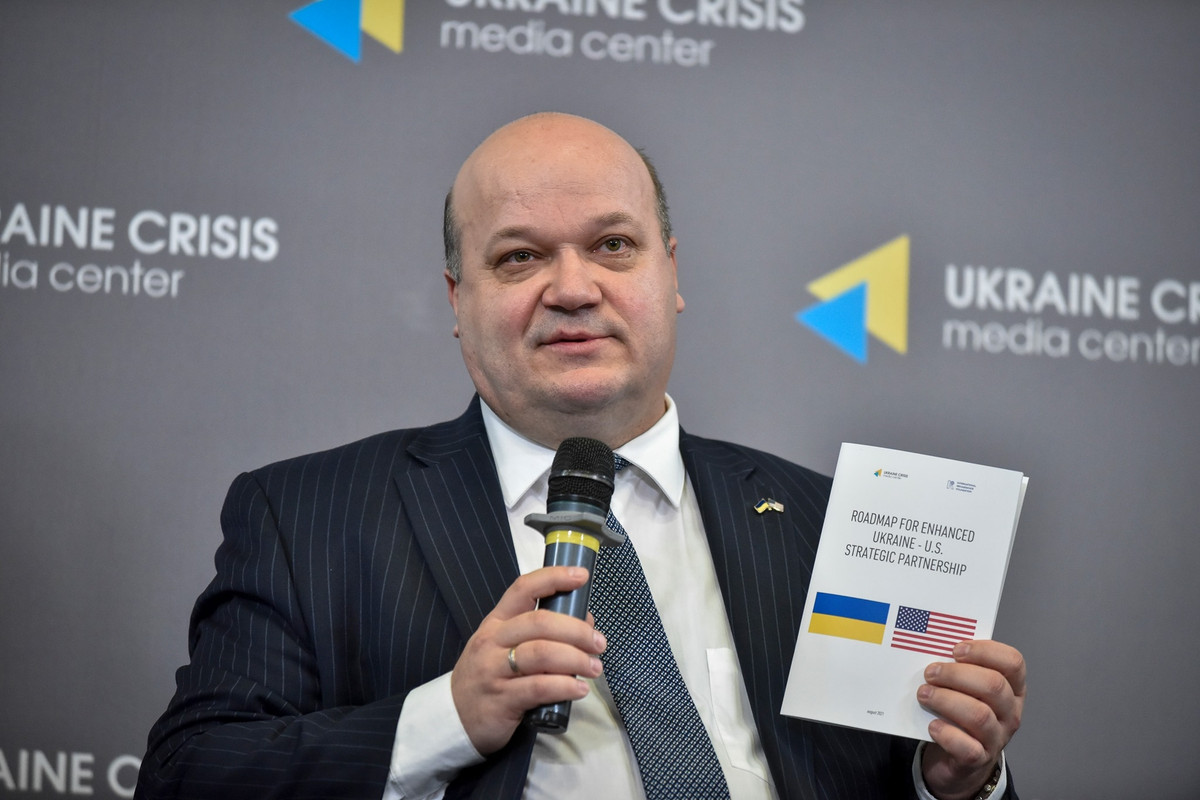
Valeriy Chalyi elaborates on why Mike Johnson’s election as Speaker of the US House of Representatives is not such a disaster for Ukraine.

The post Ukraine’s US Ambassador On Aid, the New House Speaker and What Happens Next first appeared on The News And Times – thenewsandtimes.com.


Categories
The News And Times – thenewsandtimes.com

How to Fix the Dysfunctional Humanitarian Aid System


e88f47341c285e1119d24ae348c5e436.jpg?w=1

Most international aid workers agree that the system is dysfunctional. But Ukraine, as a newcomer, could set an agenda that might help fix many entrenched problems.

The post How to Fix the Dysfunctional Humanitarian Aid System first appeared on The News And Times – thenewsandtimes.com.


Categories
The News And Times – thenewsandtimes.com

Government Seizure of Ukraine’s Major Telecom’s Assets: Everything You Need to Know


36dd44722d9817cf995c81486ebe4281.png?w=1

The assets seizure of Ukraine’s biggest telecom company might have a lasting impact on Ukraine’s investment scene — if not handled tactfully.

The post Government Seizure of Ukraine’s Major Telecom’s Assets: Everything You Need to Know first appeared on The News And Times – thenewsandtimes.com.


Categories
The News And Times – thenewsandtimes.com

@Xudozhnikipoeti: RT by @mikenov: Анна Ярмолюк. «Первый снег и последние яблоки». Масляная пастель. https://t.co/6riZnhQn8F


Анна Ярмолюк. «Первый снег и последние яблоки». Масляная пастель. pic.twitter.com/6riZnhQn8F

— Художники и Поэты (@Xudozhnikipoeti) October 29, 2023

The post @Xudozhnikipoeti: RT by @mikenov: Анна Ярмолюк. «Первый снег и последние яблоки». Масляная пастель. https://t.co/6riZnhQn8F first appeared on The News And Times – thenewsandtimes.com.


Categories
The News And Times – thenewsandtimes.com

ISW Russian Offensive Campaign Assessment, October 28, 2023


682fcb196ed6cce55f0bbdcbd112b04d.png?w=1

Latest from the Institute for the Study of War.

The post ISW Russian Offensive Campaign Assessment, October 28, 2023 first appeared on The News And Times – thenewsandtimes.com.


Categories
The News And Times – thenewsandtimes.com

Military briefing: Israel’s devastating bombing campaign


IDF seeks to take out Hamas’s leaders while keeping hostages alive and maintaining international support

The post Military briefing: Israel’s devastating bombing campaign first appeared on The News And Times – thenewsandtimes.com.