Categories
The News And Times – thenewsandtimes.com

How the AI Landscape Has Shifted Over the Past Year—And Where It Could Go Next


State of AI

Governments made a “lack of concrete progress” toward regulating artificial intelligence this year even as the question of the technology’s safety rocketed up the global agenda, according to the 2023 “State of AI” report, published Thursday.

The field of AI safety “shed its status as the unloved cousin of the AI research world and took center-stage [in 2023] for the first time,” the report said. But amid a lack of global consensus on the way forward for regulation, the developers of cutting-edge AI systems were “making a push to shape norms” by proposing their own regulatory models.

[time-brightcove not-tgx=”true”]

While last year it seemed that open-source efforts were taking the lead in AI, Big Tech reasserted its hold over the sector in 2023, the report said. This year, amid an ongoing shortage of powerful computer chips, the largest tech companies gained leverage both from their existing computing infrastructure and their large capital reserves, as the cash required to train large AI models continues to escalate.

“Last year we saw a lot of people assembling in Discord servers, we saw a lot of open source models, and it didn’t seem like Big Tech companies were doing all that much,” Nathan Benaich, the author of the report, tells TIME. “This year, it looks like a pretty significant snap back in the other direction, with pretty much every public tech company making moves to develop or integrate AI systems into their products. The open source world is still very vibrant and is rapidly trying to catch up with closed-source capabilities, but it doesn’t look immediately obvious how you’d 100% clone GPT-4.”

Now in its sixth year, the State of AI report has become a popular bellwether for the AI industry, pointing out trends and making predictions for the year ahead. This year it was compiled by Benaich, an investor at the firm Air Street Capital. In previous years Ian Hogarth, an investor who now leads the U.K. government’s AI safety taskforce, was a co-author.

Read More: The TIME100 Most Influential People in Artificial Intelligence

OpenAI’s GPT-4 remains the most powerful large language model (LLM) eight months on from its release, the report says, “beating every other LLM on both classic benchmarks and exams designed to evaluate humans.” However, the report points out, comparing cutting-edge AI systems is growing more difficult as they become more powerful and flexible. A “vibes-based” approach for evaluating LLMs is growing more common in the industry as formal tests—known as benchmarks—become less definitive, the report says.

In 2023, the culture of AI companies openly sharing their state-of-the-art research came to an end, the report says. OpenAI declined to share “any useful information” about the system architecture of GPT-4, according to the report, and Google and Anthropic came to similar decisions about their models. “As the economic stakes and the safety concerns are getting higher (you can choose what to believe), traditionally open companies have embraced a culture of opacity about their most cutting edge research,” the report says.

Read More: The A to Z of Artificial Intelligence

As it does every year, the report made some predictions for the year ahead. (Five of its nine predictions from last year, including estimates about the scale of investment in AI, turned out to be accurate.) Among the predictions for 2024: 

  • A Hollywood-grade production makes use of generative AI for visual effects.
  • A generative AI media company is investigated for its misuse during the 2024 U.S. election.
  • The GenAI scaling craze sees a group spend more than $1B to train a single large-scale model.
  • We see limited progress on global AI governance beyond high-level voluntary commitments.
  • An AI-generated song breaks into the Billboard Hot 100 Top 10 or the Spotify Top Hits 2024.
  • Problems with enforcement and interpretation mean that the E.U. AI Act does not achieve widespread adoption as a model of AI regulation.

The post How the AI Landscape Has Shifted Over the Past Year—And Where It Could Go Next first appeared on The News And Times – thenewsandtimes.com.

Categories
The News And Times – thenewsandtimes.com

Israel, Hamas at war: Live updates


2023-10-11T23:39:14Z

(Reuters) – Israel has formed an emergency unity government, with Prime Minister Benjamin Netanyahu sitting in a war cabinet with centrist former defence minister Benny Gantz.

?m=02&d=20231011&t=2&i=1647442068&r=LYNX

An aerial view shows damage caused following a mass infiltration by Hamas gunmen from the Gaza Strip, in Kibbutz Beeri in southern Israel, October 11, 2023. REUTERS/ Ilan Rosenberg

The move came as the Israeli military pounds Gaza to root out the Palestinian militant group Hamas, ahead of a possible ground offensive in the Palestinian coastal strip.

Most of the 2.3 million people in the Gaza Strip have no electricity and no water. And, with hundreds of Israeli strikes raining down on their tiny enclave, they have nowhere to run. With the strip’s only other border, to Egypt, blocked by Egyptian authorities, the people said they were trapped.

* Addressing American Jewish community leaders at the White House, U.S. President Joe Biden called the Hamas attack on Israel “the deadliest day for Jews since the Holocaust.”

* U.S. Secretary of State Antony Blinken will arrive in Israel on Thursday, in a show of solidarity.

* The UN Security Council will meet on Israel, Gaza on Friday.

* Israeli schools, which have been shuttered, will shift to remote learning on Sunday. The online studies “will focus first and foremost on emotional and social aspects, in order to strengthen resilience.

* Israeli shelling hit southern Lebanese towns in response to a fresh rocket attack by Hezbollah.

* Governments around the world have arranged repatriation flights from Tel Aviv as the war escalates.

* Hamas militants holding Israeli soldiers and civilians hostage have threatened to execute a captive for each home in Gaza hit without warning. There was no indication Hamas had carried out its threat.

* In Israel, one woman is still searching for news of six missing family members. “There’s a 9-month-old baby and a 3-year-old child. And my aunt has Parkinson’s disease….”I want them back. We all want our family back.”

* Gaza’s 75 years of woe from the end of British rule to the present day – a brief history.

* On the grass of the kibbutz in Beeri, Israel, bodies in white body bags were laid out in rows. “I thought I’d seen enough but nothing could prepare me for what happened there. The smell of bodies – as many times as I’ve showered this week – I can’t get that smell out,” a first responder said.

* “There are no wreaths left in Israel anymore,” said one of the many volunteers working to prepare funeral flowers for more than 1,200 Israelis killed since Hamas gunmen burst into Israel.

* Gazan rescuers pulled the body of a 4-year-old girl and other dead from the rubble of a municipal building where she and many others were sheltering. “They tried to escape death only to find it,” said volunteer Mohammad al Najjar.

* Israeli volunteers helped gravediggers at Israel’s main military cemetery as burials began for slain soldiers. “I decided that I’m going to do something for the people of Israel” said one.

* Hundreds of cars lie abandoned in the scramble to flee a massacre at an Israeli music festival where Hamas gunmen killed 260 people and took captives back into Gaza. The scene underlines the scale of the deadliest attack on Israel in decades.

* How a secretive Hamas commander masterminded the attack on Israel. A survivor of seven Israeli assassination attempts, the most recent in 2021, Mohammed Deif rarely speaks and never appears in public so when Hamas’s TV channel announced he was about to speak on Saturday, Palestinians knew something significant was afoot.

* Hamas waged a campaign of deception to pull off its stunning attack.

* What’s the Israel-Palestinian conflict about? The fighting between Israel and Hamas is the latest in seven decades of war and conflict. Here’s how it all got started.

* Initial U.S. intelligence reports show that key Iranian leaders were surprised by the unprecedented attacks on Israel by Hamas, according to a source.

* A surge in doctored images, mislabelled videos and graphic online violence related to the Israel-Hamas conflict prompted the EU to urge Big Tech to remove illegal content or risk legal penalties.

* Pope Francis called for the release of all hostages taken by Hamas militants. He said Israel has a right to defend itself after seeing “a feast day turn into a day of mourning” but was “very worried by the total siege in which Palestinians live in Gaza.”

* Oil prices fell as fears of disruption to supplies due to conflict in the Middle East receded a day after top OPEC producer Saudi Arabia pledged to help stabilise the market.

* Bank of Israel Governor Amir Yaron said he would extend his five-year term “given the emergency situation and the challenges to the Israeli economy at this tough time,” the central bank said.

* The cost of insuring Israel’s debt against default surged to the highest level since 2013.

* International airlines have suspended hundreds of flights to and from Tel Aviv following the attack. Here’s a list.

* U.S. Treasury Secretary Janet Yellen stuck to her view that the American economy is headed for a soft landing. “Of course the situation in Israel causes additional concerns. I’m not saying soft landing is an absolutely sure thing. But I continue to think it’s the most likely path.”

The post Israel, Hamas at war: Live updates first appeared on The News And Times – thenewsandtimes.com.

Categories
The News And Times – thenewsandtimes.com

EU Urges Big Tech to Tackle Terrorist Content After Hamas Attack


The European Union has expanded its warnings that tech companies must remove illegal content from their platforms, or risk facing severe legal penalties.

Following the militant Islamist group Hamas’ attack on Israel and Israel’s retaliatory airstrikes in the Palestinian enclave of Gaza, social media firms have seen a surge in misinformation related to the conflict, including doctored images and mislabeled videos, alongside images of graphic violence.

On Tuesday, EU industry chief Thierry Breton told Elon Musk to curb disinformation on his messaging platform X, warning it was being used to disseminate illegal content and false information in the wake of recent violence in the Middle East.

Breton issued a similar warning to Meta CEO Mark Zuckerberg on Wednesday, urging the company to ensure strict compliance with European law.

In his letters to Musk and Zuckerberg, Breton said their companies had 24 hours to inform the EU how they were stopping harmful content on their platforms.

Now, the European Commission, the EU’s executive branch, has sought to remind all social media companies they are legally required to prevent the spread of harmful content related to Hamas.

“Content circulating online that can be associated to Hamas qualifies as terrorist content, is illegal, and needs to be removed under both the DSA [Digital Services Act] and TCO [Terrorist Content Online Regulation,” a commission spokesperson told Reuters.

“The commission will fully apply the DSA and monitor the full implementation of the TCO. The commission urges online platforms to fully comply with EU rules.”

The recently implemented DSA requires large online platforms, including X and Meta’s Facebook, to remove illegal content and to take measures to tackle the risks to public security and civic discourse.

Any firm found in breach of the DSA faces a fine worth up to 6% of global turnover. Repeat offenders could even be banned from operating in Europe altogether.

It is unclear if Breton has sent similar messages to other social media companies designated under the DSA.

The post EU Urges Big Tech to Tackle Terrorist Content After Hamas Attack first appeared on The News And Times – thenewsandtimes.com.


Categories
The News And Times – thenewsandtimes.com

Palau’s President Wonders if US Is Committed to Promised Deal


The Republic of Palau is one of three Pacific Island nations negotiating a Compact of Free Association Agreement that would give Washington the right to deny access to other nations — including China — in exchange for U.S. economic assistance.

Palau is in line to receive $90 million if and when Congress approves an extension of its current 20-year compact, which expires next year. The country ran on a total budget of less than $150 million in fiscal year 2021, according to Palau government documents.

VOA spoke to Palau’s President Surangel Whipps Jr. days after the U.S. Congress passed a continuing resolution that avoided a U.S. government shutdown but failed to provide the funding for this strategic island chain.

This interview has been edited for brevity and clarity:

VOA: When you ran for office in 2020, you promised to be tough on China. What have you done to fulfill that promise?

Whipps: One of our goals is to build a more resilient economy that’s not so dependent on one partner, and especially a partner that’s sometimes unfriendly. So, we’ve worked with the United States to conclude our Compact of Free Association Agreement, which was really critical. Our Congress ratified it in July, and we were hoping that on October 1, the U.S. Congress would do the same, because that’s when it’s supposed to be implemented.

VOA: Palau has continued to recognize Taiwan, which Beijing claims as its own territory. What has that cost Palau?

Whipps: From 2016 to 2019, right before COVID, our tourism numbers from China dropped by more than 50%. We were blocked out of any type of marketing in the PRC because we continued to recognize Taiwan. [Tourism] is such a large part of our GDP. When they cut back, [our GDP] dropped by over 30%. In the U.S., that would be more severe than the Great Depression.

VOA: Palau’s government faces a budget shortfall of $37 million. How do you plan to address that?

Whipps: For the past three years, because tourism hasn’t recovered, we have been forced to get loans from the Asian Development Bank, financing government to keep it going, to keep workers going. This year’s budget was totally dependent on our agreement under the compact, because under the compact agreement, we would be receiving $90 million this year. Fifty million of that goes into the trust fund, but the other $40 million goes into paying off debts and economic assistance.

VOA: Would Palau have become solvent on October 1 if you had received that money?

Whipps: Absolutely.

VOA: The continuing resolution didn’t give you any extension. What was your reaction when you realized that?

Whipps: I think the most important image that it projects on Palau and the people of Palau is, when the U.S. commits to something, are they really committed?

VOA: When will Palau no longer be able to pay its bills?

Whipps: January 1.

VOA: The number we’re talking about here, over 20 years, is around $7 billion for all three compact states. Is this a good deal for American taxpayers in your view?

Whipps: For Palau, that’s $890 million. We didn’t believe that our value is truly realized by the United States. However, we understand that we have to have some compromise, and we have to move forward.

VOA: Palau is approximately 2,300 kilometers from Taiwan, right?

Whipps: Correct. We understand our strategic importance, but we also understand the value of democracy and freedom, and the rule of law. And we understand how we need to be a partner in ensuring peace and stability in the region. That peace will bring prosperity to all, and we need to work together and ensure that.

VOA: How much pressure are you under to prove that this U.S. partnership is worth it for Palauans?

Whipps: It’s a constant battle. I’ll just give you an example. There’s a new radar base being built in Palau. There’s been increased military exercises. So, one of the things [some people are saying] is, ‘Oh the president is inviting the military, and now we’re a target for China.’ It’s constant. And that’s why it’s so important that we fulfill our commitments, that we show solidarity.

VOA: What is your message to the U.S. Congress and the Biden administration?

Whipps: Thank you for the last almost 80 years of partnership. Palau is a free nation because of the 28,000 service men who, during World War II, helped Palau become an independent nation and a free nation. And that’s something that Palauan people don’t forget. We value that freedom, and we want to maintain that freedom. And let’s continue to work together, because we are stronger together and let’s not that malign influence infiltrate.

The post Palau’s President Wonders if US Is Committed to Promised Deal first appeared on The News And Times – thenewsandtimes.com.


Categories
The News And Times – thenewsandtimes.com

‘Azerbaijan Planned and Organized’ Depopulation of Artsakh, Says French Foreign Minister


Azerbaijan planned and organized the exodus of more than 100,000 Armenians from Nagorno-Karabakh, France’s Foreign Minister Catherine Colonna said during a question and answer session in the French Senate on Wednesday.

“No matter how it tries to portray the situation, yes, Azerbaijan planned and organized the exodus of more than 100,000 Armenians from Nagorno-Karabakh. This is a crime that cannot go unpunished,” the French foreign minister said.

Colonna said France will demand the adoption of a resolution within the framework of the UN Security Council that will create conditions for the return of Nagorno-Karabakh Armenians.

She stressed the need to protect the historical and cultural rights of the Armenians of Nagorno-Karabakh and insisted on permanent international presence in the region.

During a visit to Armenia last week, Colonna said Armenia needed to be able to defend itself two weeks after Azerbaijani forces invaded Nagorno-Karabakh despite the presence of Russian peacekeepers.

She said Paris has agreed to deliver military equipment to Armenia.

After visiting displaced Artsakh residents, including burn patients injured in a Stepanakert fuel depot station explosion, the minister pledged military support.

“I would like to publicly state that France has agreed on future contracts with Armenia which will allow the delivery of military equipment to Armenia so that it can ensure its defense. You’ll understand that I can’t go into more detail at the moment,” Colonna said.

Colonna’s pledge of military support to Armenia further angered Baku with President Ilham Aliyev of Azerbaijan complaining to European Council President Charles Michel last week about what he called the “anti-Azerbaijan” posturing by Paris and the EU.

Aliyev claimed that such a pledge from France will complicate peace efforts in the region.

The post ‘Azerbaijan Planned and Organized’ Depopulation of Artsakh, Says French Foreign Minister first appeared on The News And Times – thenewsandtimes.com.

Categories
The News And Times – thenewsandtimes.com

Baku Steps Up Claims on 8 Armenian Villages ‘Occupied By Armenia’


YEREVAN (Azatutyun.am)—Azerbaijan continued to accuse Armenia on Wednesday of occupying “eight Azerbaijani villages” amid growing fears in Yerevan that it could launch another military offensive after regaining control over Nagorno-Karabakh.

Azerbaijani President Ilham Aliyev demanded the “de-occupation” of those villages in a weekend phone call with European Council President Charles Michel. It followed Michel’s joint meeting with French President Emmanuel Macron, German Chancellor Olaf Scholz and Armenian Prime Minister Nikol Pashinyan held in Spain. Aliyev cancelled at the last minute his participation in those talks that were due to focus on an Armenian-Azerbaijani peace accord.

Aliyev referred to several small enclaves inside Armenia which were controlled by Azerbaijan in Soviet times and occupied by the Armenian army in the early 1990s. For its part, the Azerbaijani side seized at the time a bigger Armenian enclave comprising the village of Artsvashen and surrounding farmland and pastures.

Pashinyan responded to Aliyev’s demands in an interview with Armenian Public Television aired late on Tuesday. He pointed to the Artsvashen enclave and said Azerbaijani forces also control large swathes of agricultural land that belonged to several other Armenian border villages.

Pashinyan said the future of these contested lands should be decided through a delimitation of the Armenian-Azerbaijani border. He hinted that Yerevan is open to considering territorial swaps as part of that process.

The Azerbaijani Foreign Ministry dismissed Pashinyan’s comments on Wednesday, claiming that Azerbaijan had never occupied any Armenian territory. It said Armenia is thus trying to “justify the occupation of eight Azerbaijani villages.”

The ministry also made clear that Baku continues to reject the idea of using a 1975 Soviet military map for the border delimitation, which is advanced by Yerevan.

Michel, Macron and Scholz effectively backed the idea in a joint statement with Pashinyan issued after their October 5 talks. The statement cited the “urgent need to work towards border delimitation based on the most recent USSR General Staff maps that have been provided to the sides.”

The European leaders also voiced strong support for the “inviolability of the borders of Armenia” and called for “strict adherence to the principle of non-use of force and threat of use of force.” They appeared to allude to the fears that Azerbaijan could attack Armenia after recapturing Karabakh as a result of last month’s military offensive.

A senior Armenian diplomat claimed over the weekend that Azerbaijani troops could try in the coming weeks to open an exterritorial land corridor to Azerbaijan’s Nakhichevan exclave through Armenia’s southeastern Syunik province. He said the West should impose sanctions on Baku to prevent such an attack.

Foreign Minister Ararat Mirzoyan appeared to raise these concerns with a visiting U.S. regional envoy, Louis Bono, on Wednesday. Mirzoyan was cited by his press office as stressing the “need to deter encroachments on the territorial integrity and sovereignty of Armenia.”

The post Baku Steps Up Claims on 8 Armenian Villages ‘Occupied By Armenia’ first appeared on The News And Times – thenewsandtimes.com.

Categories
The News And Times – thenewsandtimes.com

Analysis | Why George Santos and Bob Menendez are unlikely to … – The Washington Post


The post Analysis | Why George Santos and Bob Menendez are unlikely to … – The Washington Post first appeared on The News And Times – thenewsandtimes.com.

Categories
The News And Times – thenewsandtimes.com

Georgia Today: Georgians show support to Israel; DA seeks high … – GPB News


The post Georgia Today: Georgians show support to Israel; DA seeks high … – GPB News first appeared on The News And Times – thenewsandtimes.com.

Categories
The News And Times – thenewsandtimes.com

NPR News: 10-11-2023 5PM EDT


NPR News: 10-11-2023 5PM EDT

The post NPR News: 10-11-2023 5PM EDT first appeared on The News And Times – thenewsandtimes.com.

Categories
The News And Times – thenewsandtimes.com

Senior Hamas Official Ali Baraka: We Have Been Secretly Planning The Invasion For Two Years; Russia Sympathizes With Us, Benefits From U.S. Embroilment In This War; Any Swap Deal Should Include Hamas Prisoners In Europe And The U.S.


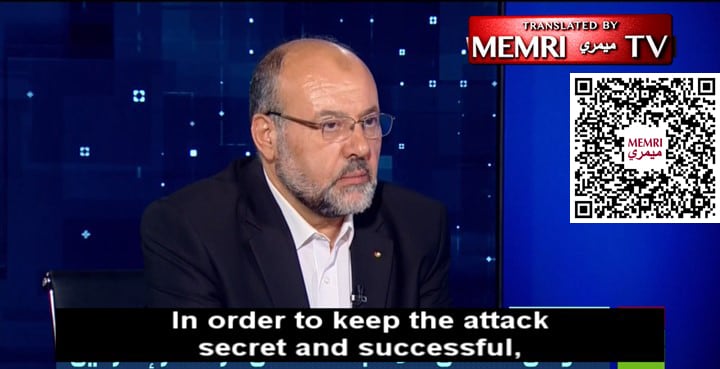
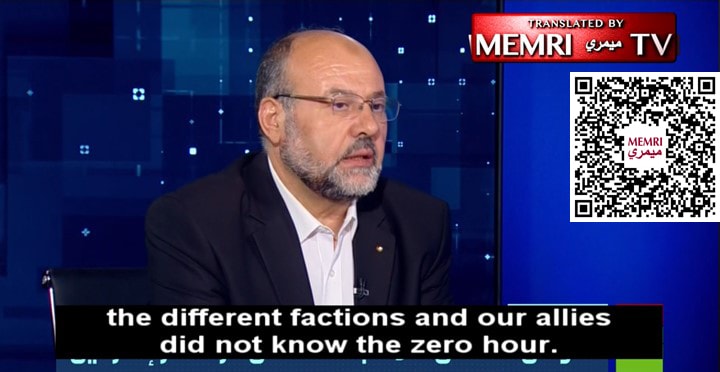
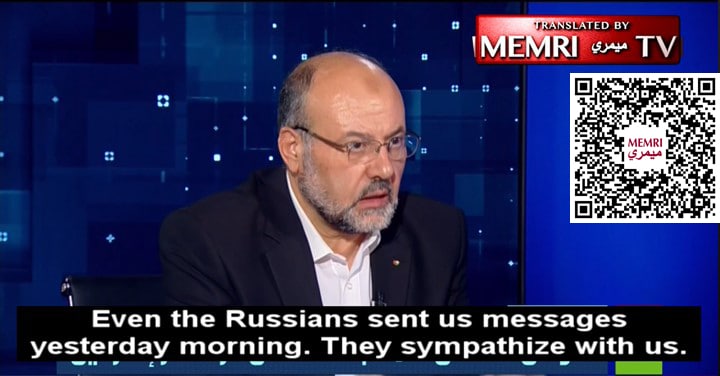
Senior Hamas official Ali Baraka said in an October 8, 2023 interview that aired on Russia Today TV that Hamas had been secretly planning the invasion of southern Israel for two years, even as it was making it seem like it was busy governing the Gaza Strip. He explained that this is the reason Hamas did not join the Palestinian Islamic Jihad in its previous round of fighting against Israel. He said that Hamas notified its allies in other Palestinian factions, in Hizbullah, in Iran, in Turkey, and in Russia only after the invasion started, and he stated that any prisoner exchange deal should involve Hamas prisoners held in the United States. Later in the interview, Baraka said that Hamas has a license from Russia to locally produce bullets for Kalashnikovs, that Russia sympathizes with Hamas, and that it is pleased with the war because it is easing American pressure on it with regard to the war in Ukraine.

To view the clip of senior Hamas official Ali Baraka, click here or below:

“We Made Them Think Hamas Was Busy With Governing Gaza, And That It Wanted To Focus On The 2.5 Million Palestinians [In Gaza]… All The While, Under The Table, Hamas Was Preparing For This Big Attack”

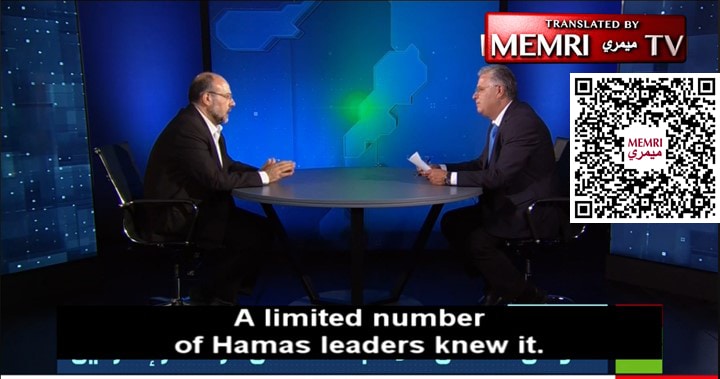
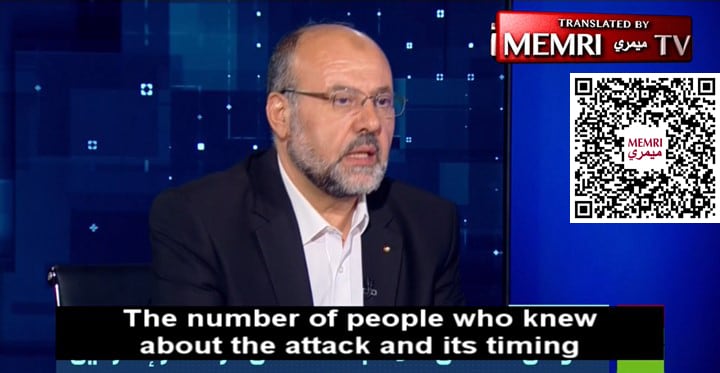
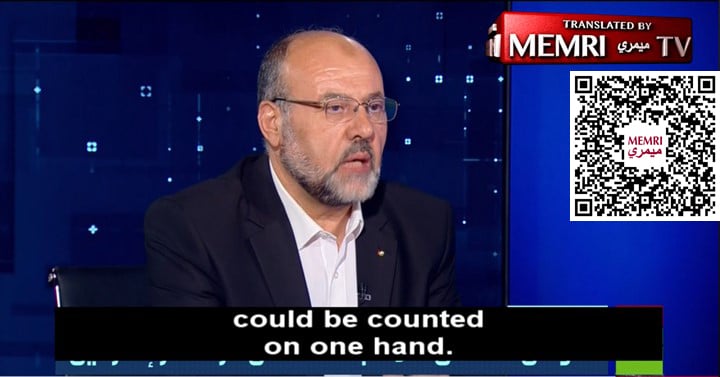
Ali Baraka: “The zero hour was kept completely secret. A limited number of Hamas leaders knew it. The number of people who knew about the attack and its timing could be counted on one hand.

[…]

“In the past couple of years, Hamas has adopted a ‘rational’ approach. It did not go into any war, and did not join the Islamic Jihad in its recent battle.”

[…]

Interviewer: “But all this was part of Hamas’s strategy in preparing for this attack.”

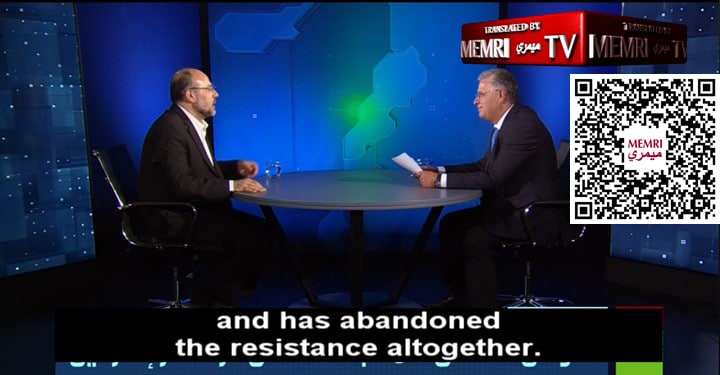
Baraka: “Of course. We made them think that Hamas was busy with governing Gaza, and that it wanted to focus on the 2.5 million Palestinians [in Gaza], and has abandoned the resistance altogether.

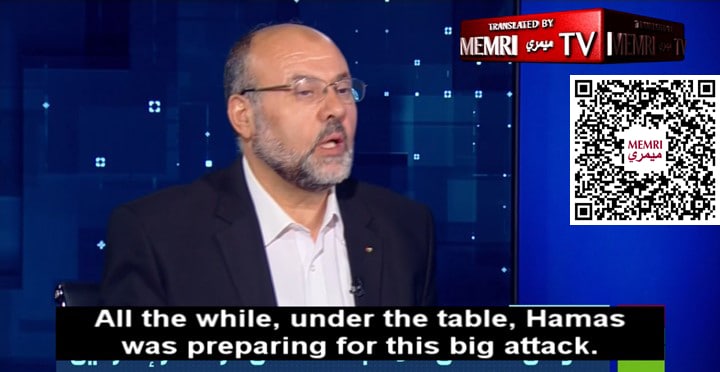
“All the while, under the table, Hamas was preparing for this big attack.

[…]

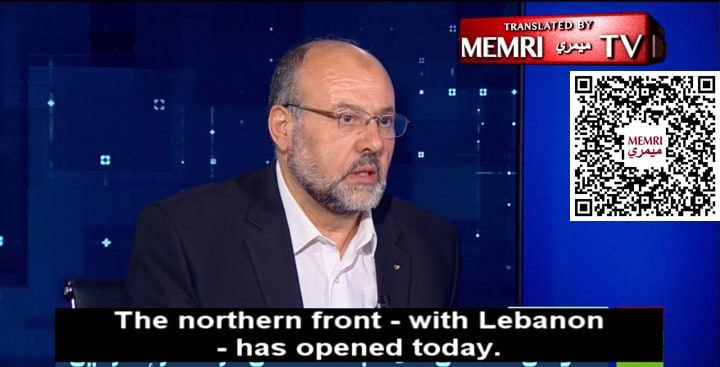
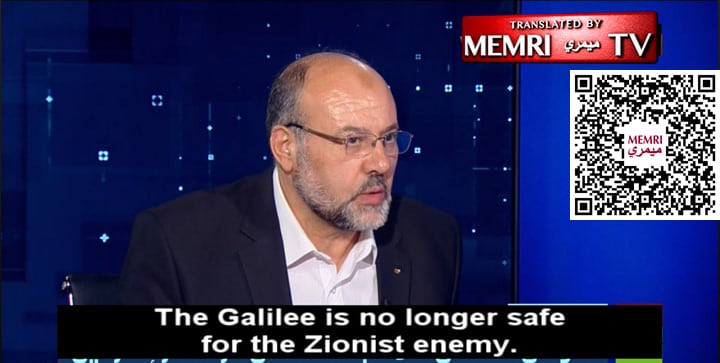
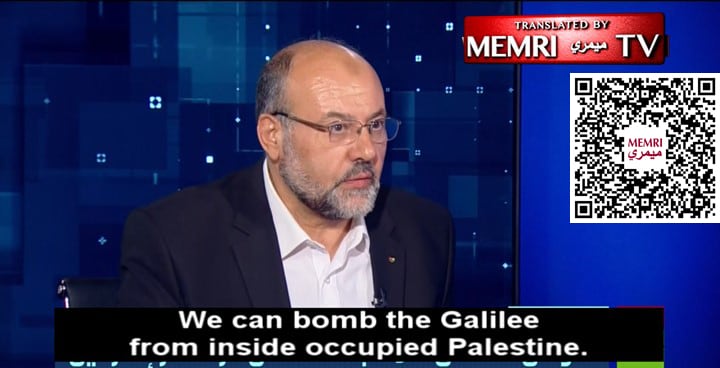
“The rockets of the resistance cover all of Palestine. Where would [Netanyahu] take [the Israelis who were attacked]? To Tel Aviv? We bombed Tel Aviv on the very first day of the attack. Does he want to take them to the Galilee? The northern front – with Lebanon – has opened today. The Galilee is no longer safe for the Zionist enemy. We can bomb the Galilee from inside occupied Palestine.

[…]

“In order to keep the attack secret and successful, the different factions and our allies did not know the zero hour. But after half an hour, all the Palestinian resistance factions were contacted as were our allies in Hizbullah and Iran. The Turks were also notified, and a meeting was held with them three hours later, at 9 am. We updated anyone who contacted us. Even the Russians sent a message and enquired, and they were updated about the situation and about the goals of the war.”

[…]

“We Demand That The U.S. Free Our Sons From Prisons”

Interviewer: “There are also Palestinian prisoners outside of Israel, in European countries.”

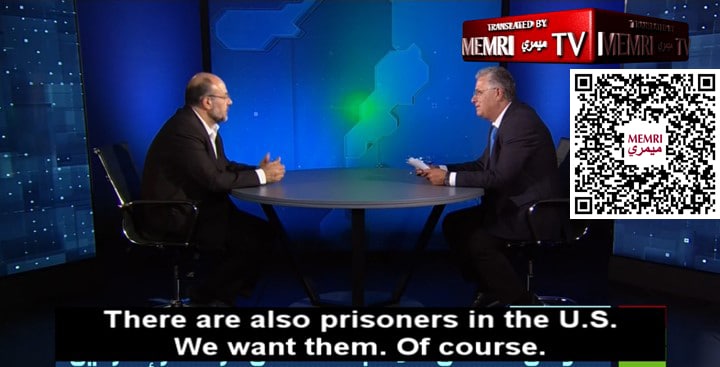
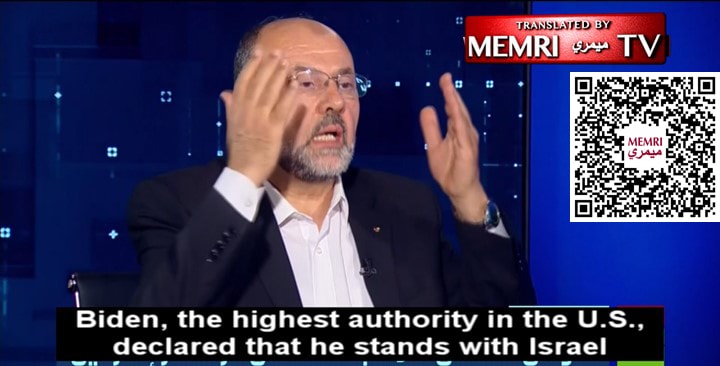
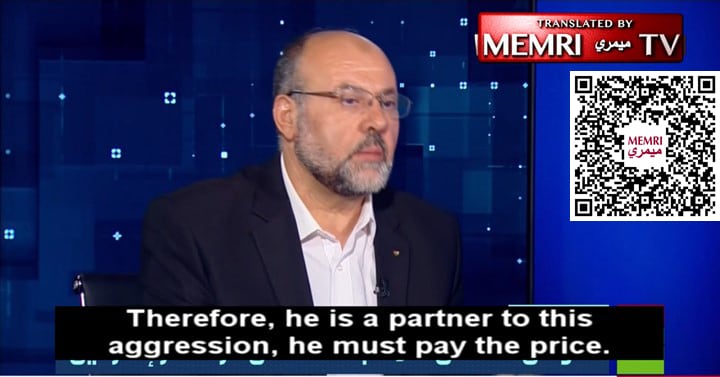
Baraka: “There are also prisoners in the U.S. We want them. Of course. There are Hamas members sentenced for life in the U.S. We want them too. Of course. We demand that the U.S. free our sons from prisons. The U.S. conducts prisoner swaps. Only recently, it did one with Iran. Why wouldn’t it conduct a prisoner swap with us? After all, it is participating in this war. Biden, the highest authority in the U.S., declared that he stands with Israel against Hamas and the Palestinian people. Therefore, he is a partner to this aggression, he must pay the price.

[…]

Iran Is Giving Us Weapons And Money; Hizbullah Stands By Us; Russia Sympathizes With Us, Is Happy That America Is Getting Embroiled In Palestine

“The Israelis are known to love life. We, on the other hand, sacrifice ourselves. We consider our dead to be martyrs. The thing any Palestinian desires the most is to be martyred for the sake of Allah, defending his land.

[…]

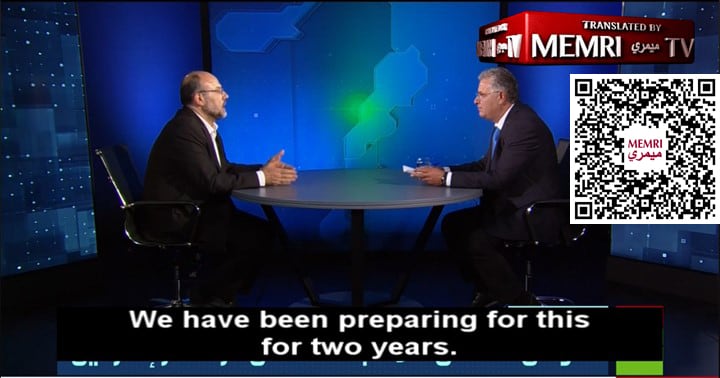
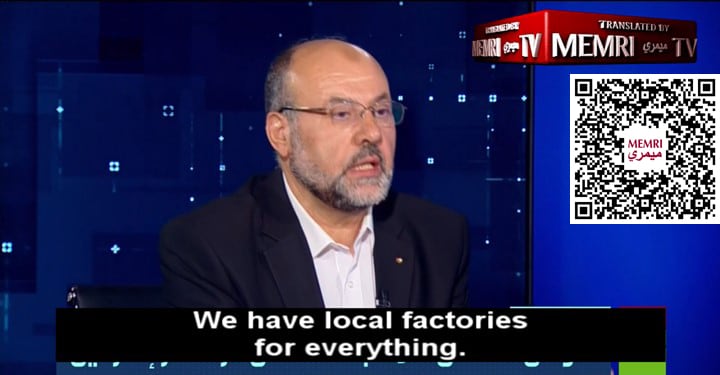
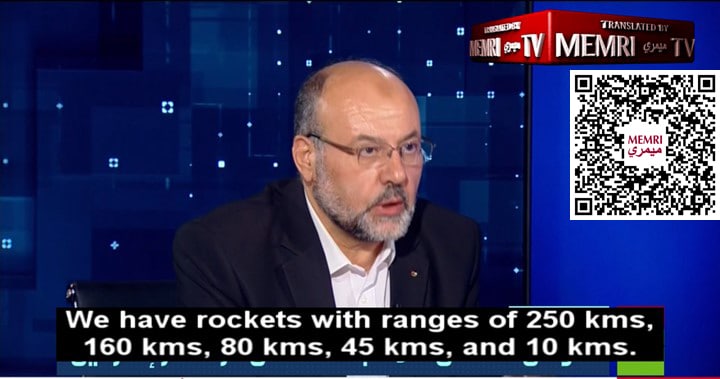
“We have been preparing for this for two years. We have local factories for everything. We have rockets with ranges of 250 kms, 160 kms, 80 kms, 45 kms, and 10 kms.

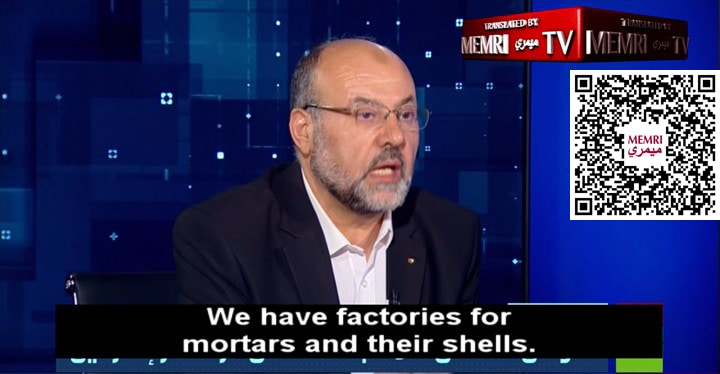
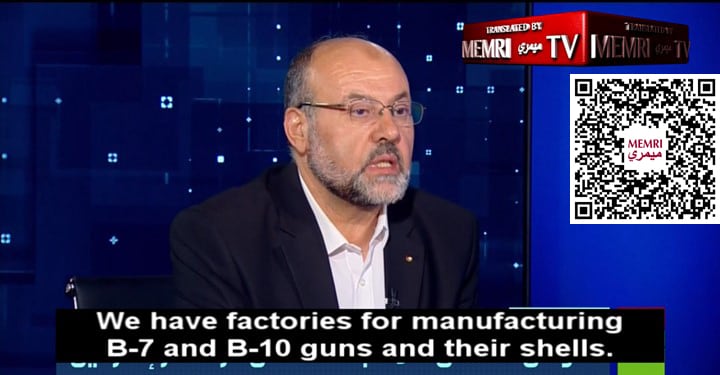
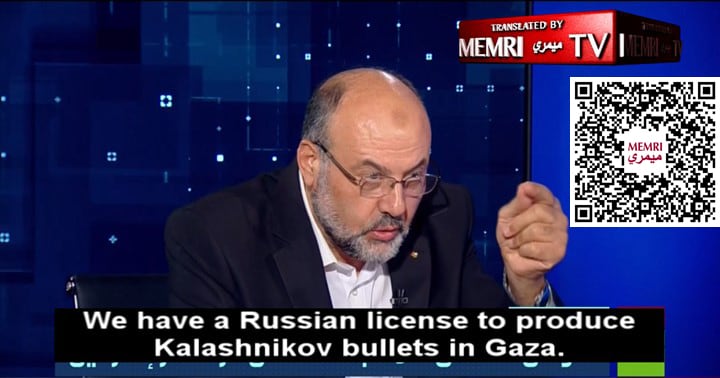
“We have factories for mortars and their shells. We have factories for manufacturing B-7 and B-10 guns and their shells. We have factories for manufacturing Kalashnikov rifles and their bullets. We have a Russian license to produce Kalashnikov bullets in Gaza.

[…]

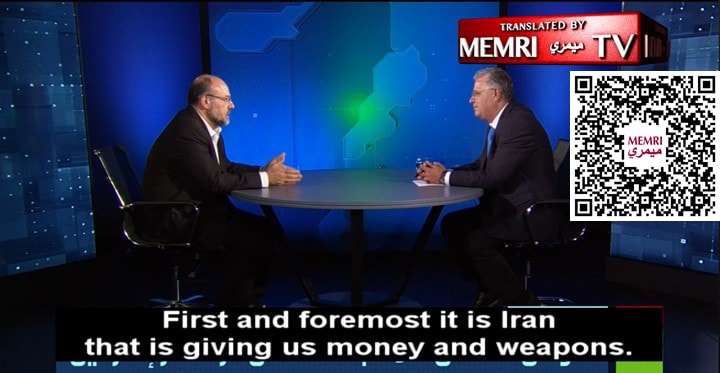
“Our allies are those that support us with weapons and money. First and foremost it is Iran that is giving us money and weapons. There is also Hizbullah, and the Arab and Islamic people who are standing by us. There are countries that support us politically. Even Russia sympathizes with us. Even the Russians sent us messages yesterday morning. They sympathize with us. Russia is happy that America is getting embroiled in Palestine. It alleviates the pressure on the Russians in Ukraine. One war eases the pressure in another war. So we are not alone on the battlefield.”

The post Senior Hamas Official Ali Baraka: We Have Been Secretly Planning The Invasion For Two Years; Russia Sympathizes With Us, Benefits From U.S. Embroilment In This War; Any Swap Deal Should Include Hamas Prisoners In Europe And The U.S. first appeared on The News And Times – thenewsandtimes.com.