Categories
The News And Times – thenewsandtimes.com

What we know about Andrey Troshev, the man Putin proposed as the new Wagner boss


Russian President Vladimir Putin has proposed to Wagner Group fighters that a senior mercenary named Andrey Troshev now command the private military group, according to comments the Russian leader made to the Kommersant newspaper.

Putin appears to have created a split between senior fighters from the Wagner mercenary group and its leader Yevgeny Prigozhin since its failed uprising last month – at least in terms of the narrative emerging from his comments to the Kommersant.

The paper was reporting on a meeting held by the Russian president five days after the Wagner rebellion collapsed at the end of June – a meeting attended by Prigozhin and several dozen senior Wagner combatants.

According to Kommersant, Putin told dozens of Wagner mercenaries in the meeting that among the multiple employment choices he offered to them, one included them continuing to fight under their direct commander, a man who goes by the call sign, ‘Sedoy,’ meaning ‘grey hair.’

“They could have all gathered in one place and continued to serve,” Putin said, “and nothing would have changed for them. They would be led by the same person who has been their real commander all along.”

“And what happened then?” the Kommersant reporter said in reply to Putin. “Many people nodded [affirmatively] when I said that,” Putin replied.

Sedoy is the call sign of Andrey Troshev, a retired Russian colonel and a founding member and Executive Director of the Wagner Group, according to sanctions documents published by the European Union and France.

European Union sanctions concerning the situation in Syria detail Troshev’s position as the chief of staff of the Wagner Group operations in Syria, which supported the Syrian regime.

Troshev was born in April 1953 in Leningrad, in the former Soviet Union, according to the EU sanctions from December 2021.

“Andrey Troshev is directly involved in the military operations of the Wagner Group in Syria. He was particularly involved in the area of Deir ez-Zor,” it added. “As such, he provides a crucial contribution to Bashar al-Assad’s war effort and therefore supports and benefits from the Syrian regime.”

United Kingdom sanctions from June 2022 also say “Andrey Nikolaevich Troshev was the Chief Executive of the Wagner Group. Therefore, he has supported the Syrian regime, was a member of a militia, and has repressed the civilian population in Syria.”

His associates include Wagner Group founder Dimitriy Utkin, who is also a former Russian GRU military intelligence officer, according to EU sanctions. Troshev is also associated with Wagner group commanders Aleksandr Sergeevich Kuznetsov and Andrey Bogatov.

‘Grey hair’ is also a former employee of the special rapid response detachment of the Russian Interior Ministry’s Northwestern Federal District, according to Russian online news outlet Fontanka. He is also a veteran of the wars in Chechnya and Afghanistan.

For his service in Afghanistan, Troshev was awarded two Orders of the Red Star – a Soviet Union decoration for exceptional service. For service in the operation in Chechnya, he was awarded two Orders of Courage and a medal of the Order of Merit for the Fatherland, 2nd degree, according to Russian media.

Troshev was among those invited to a reception at the Kremlin in December 2016. A photograph, believed to be from that 2016 reception, emerged in Russian media in 2017 and shows Putin alongside Troshev and Utkin, who are both wearing several medals.

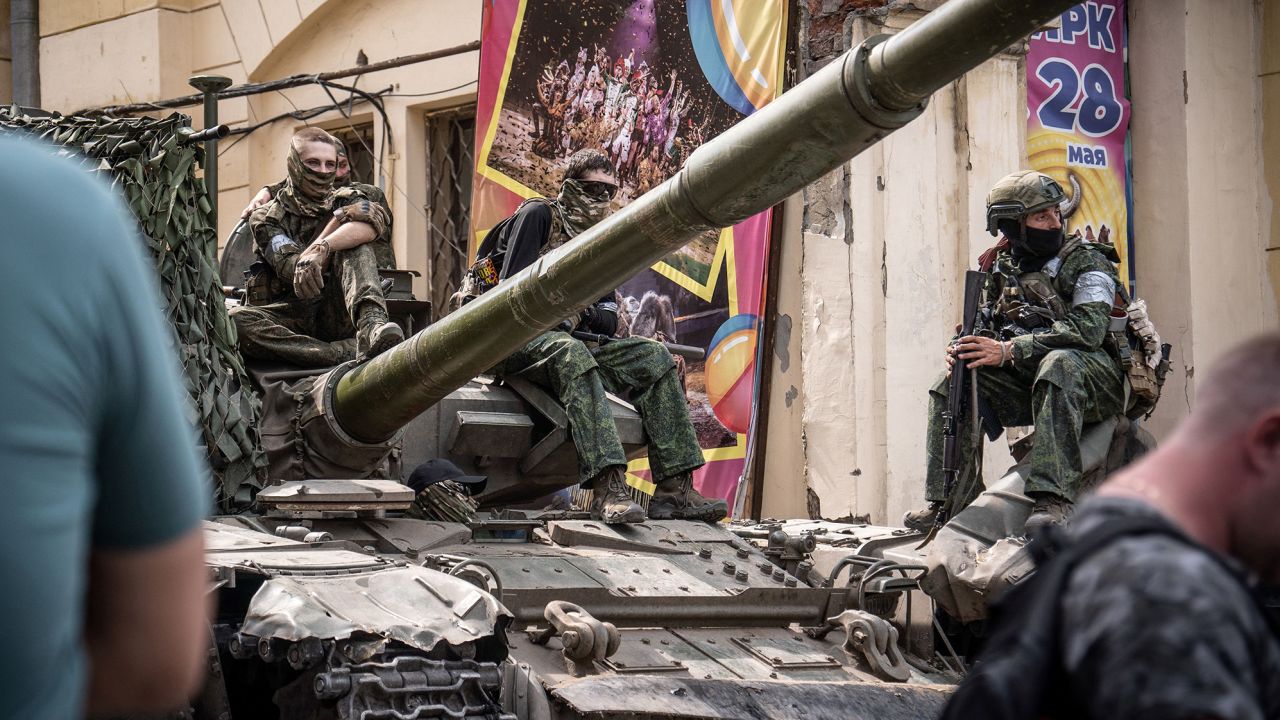
Members of Wagner group sit atop of a tank in a street in the city of Rostov-on-Don, on June 24, 2023.

Ukraine imposed sanctions against Troshev on February 26, 2023.

Meanwhile, the fate of Wagner boss Prigozhin remains unclear. Prigozhin had reportedly traveled to Belarus as part of a deal brokered by Belarusian President Alexander Lukashenko following the failed uprising, but the Belarusian president told CNN last week the Wagner leader is now in Russia.

Footage purporting to show a police raid on Prigozhin’s premises in St. Petersburg has also raised questions about his status. Prigozhin has not been seen in public since June 2.

The post What we know about Andrey Troshev, the man Putin proposed as the new Wagner boss first appeared on The News And Times – thenewsandtimes.com.


Categories
The News And Times – thenewsandtimes.com

What we know about Andrey Troshev, the man Putin proposed as the new Wagner boss


Russian President Vladimir Putin has proposed to Wagner Group fighters that a senior mercenary named Andrey Troshev now command the private military group, according to comments the Russian leader made to the Kommersant newspaper.

Putin appears to have created a split between senior fighters from the Wagner mercenary group and its leader Yevgeny Prigozhin since its failed uprising last month – at least in terms of the narrative emerging from his comments to the Kommersant.

The paper was reporting on a meeting held by the Russian president five days after the Wagner rebellion collapsed at the end of June – a meeting attended by Prigozhin and several dozen senior Wagner combatants.

According to Kommersant, Putin told dozens of Wagner mercenaries in the meeting that among the multiple employment choices he offered to them, one included them continuing to fight under their direct commander, a man who goes by the call sign, ‘Sedoy,’ meaning ‘grey hair.’

“They could have all gathered in one place and continued to serve,” Putin said, “and nothing would have changed for them. They would be led by the same person who has been their real commander all along.”

“And what happened then?” the Kommersant reporter said in reply to Putin. “Many people nodded [affirmatively] when I said that,” Putin replied.

Sedoy is the call sign of Andrey Troshev, a retired Russian colonel and a founding member and Executive Director of the Wagner Group, according to sanctions documents published by the European Union and France.

European Union sanctions concerning the situation in Syria detail Troshev’s position as the chief of staff of the Wagner Group operations in Syria, which supported the Syrian regime.

Troshev was born in April 1953 in Leningrad, in the former Soviet Union, according to the EU sanctions from December 2021.

“Andrey Troshev is directly involved in the military operations of the Wagner Group in Syria. He was particularly involved in the area of Deir ez-Zor,” it added. “As such, he provides a crucial contribution to Bashar al-Assad’s war effort and therefore supports and benefits from the Syrian regime.”

United Kingdom sanctions from June 2022 also say “Andrey Nikolaevich Troshev was the Chief Executive of the Wagner Group. Therefore, he has supported the Syrian regime, was a member of a militia, and has repressed the civilian population in Syria.”

His associates include Wagner Group founder Dimitriy Utkin, who is also a former Russian GRU military intelligence officer, according to EU sanctions. Troshev is also associated with Wagner group commanders Aleksandr Sergeevich Kuznetsov and Andrey Bogatov.

‘Grey hair’ is also a former employee of the special rapid response detachment of the Russian Interior Ministry’s Northwestern Federal District, according to Russian online news outlet Fontanka. He is also a veteran of the wars in Chechnya and Afghanistan.

For his service in Afghanistan, Troshev was awarded two Orders of the Red Star – a Soviet Union decoration for exceptional service. For service in the operation in Chechnya, he was awarded two Orders of Courage and a medal of the Order of Merit for the Fatherland, 2nd degree, according to Russian media.

Troshev was among those invited to a reception at the Kremlin in December 2016. A photograph, believed to be from that 2016 reception, emerged in Russian media in 2017 and shows Putin alongside Troshev and Utkin, who are both wearing several medals.

Members of Wagner group sit atop of a tank in a street in the city of Rostov-on-Don, on June 24, 2023.

Ukraine imposed sanctions against Troshev on February 26, 2023.

Meanwhile, the fate of Wagner boss Prigozhin remains unclear. Prigozhin had reportedly traveled to Belarus as part of a deal brokered by Belarusian President Alexander Lukashenko following the failed uprising, but the Belarusian president told CNN last week the Wagner leader is now in Russia.

Footage purporting to show a police raid on Prigozhin’s premises in St. Petersburg has also raised questions about his status. Prigozhin has not been seen in public since June 2.

The post What we know about Andrey Troshev, the man Putin proposed as the new Wagner boss first appeared on The News And Times – thenewsandtimes.com.


Categories
The News And Times – thenewsandtimes.com

What we know about Andrey Troshev, the man Putin proposed as the new Wagner boss


Russian President Vladimir Putin has proposed to Wagner Group fighters that a senior mercenary named Andrey Troshev now command the private military group, according to comments the Russian leader made to the Kommersant newspaper.

Putin appears to have created a split between senior fighters from the Wagner mercenary group and its leader Yevgeny Prigozhin since its failed uprising last month – at least in terms of the narrative emerging from his comments to the Kommersant.

The paper was reporting on a meeting held by the Russian president five days after the Wagner rebellion collapsed at the end of June – a meeting attended by Prigozhin and several dozen senior Wagner combatants.

According to Kommersant, Putin told dozens of Wagner mercenaries in the meeting that among the multiple employment choices he offered to them, one included them continuing to fight under their direct commander, a man who goes by the call sign, ‘Sedoy,’ meaning ‘grey hair.’

“They could have all gathered in one place and continued to serve,” Putin said, “and nothing would have changed for them. They would be led by the same person who has been their real commander all along.”

“And what happened then?” the Kommersant reporter said in reply to Putin. “Many people nodded [affirmatively] when I said that,” Putin replied.

Sedoy is the call sign of Andrey Troshev, a retired Russian colonel and a founding member and Executive Director of the Wagner Group, according to sanctions documents published by the European Union and France.

European Union sanctions concerning the situation in Syria detail Troshev’s position as the chief of staff of the Wagner Group operations in Syria, which supported the Syrian regime.

Troshev was born in April 1953 in Leningrad, in the former Soviet Union, according to the EU sanctions from December 2021.

“Andrey Troshev is directly involved in the military operations of the Wagner Group in Syria. He was particularly involved in the area of Deir ez-Zor,” it added. “As such, he provides a crucial contribution to Bashar al-Assad’s war effort and therefore supports and benefits from the Syrian regime.”

United Kingdom sanctions from June 2022 also say “Andrey Nikolaevich Troshev was the Chief Executive of the Wagner Group. Therefore, he has supported the Syrian regime, was a member of a militia, and has repressed the civilian population in Syria.”

His associates include Wagner Group founder Dimitriy Utkin, who is also a former Russian GRU military intelligence officer, according to EU sanctions. Troshev is also associated with Wagner group commanders Aleksandr Sergeevich Kuznetsov and Andrey Bogatov.

‘Grey hair’ is also a former employee of the special rapid response detachment of the Russian Interior Ministry’s Northwestern Federal District, according to Russian online news outlet Fontanka. He is also a veteran of the wars in Chechnya and Afghanistan.

For his service in Afghanistan, Troshev was awarded two Orders of the Red Star – a Soviet Union decoration for exceptional service. For service in the operation in Chechnya, he was awarded two Orders of Courage and a medal of the Order of Merit for the Fatherland, 2nd degree, according to Russian media.

Troshev was among those invited to a reception at the Kremlin in December 2016. A photograph, believed to be from that 2016 reception, emerged in Russian media in 2017 and shows Putin alongside Troshev and Utkin, who are both wearing several medals.

Members of Wagner group sit atop of a tank in a street in the city of Rostov-on-Don, on June 24, 2023.

Ukraine imposed sanctions against Troshev on February 26, 2023.

Meanwhile, the fate of Wagner boss Prigozhin remains unclear. Prigozhin had reportedly traveled to Belarus as part of a deal brokered by Belarusian President Alexander Lukashenko following the failed uprising, but the Belarusian president told CNN last week the Wagner leader is now in Russia.

Footage purporting to show a police raid on Prigozhin’s premises in St. Petersburg has also raised questions about his status. Prigozhin has not been seen in public since June 2.

The post What we know about Andrey Troshev, the man Putin proposed as the new Wagner boss first appeared on The News And Times – thenewsandtimes.com.


Categories
The News And Times – thenewsandtimes.com

‘Minions: The Rise of Gru’ Voice Cast: All the Stars Joining Steve Carell


The Minions are back again, and this time the small yellow creatures are taking their future boss Gru on a new adventure set before the events of Despicable Me.

Both a prequel to Despicable Me and a sequel to Minions, The Rise of Gru charts the eponymous character’s quest to becoming a villain worthy of joining a team of nefarious reprobates known as the Vicious 6.

Steve Carell and Pierre Coffin once again return to their title roles in the animated film franchise, and they are joined by an A-list cast of actors.

Minions: The Rise of Gru Voice Cast: All the Stars Joining Steve Carell

Minions: The Rise of Gru

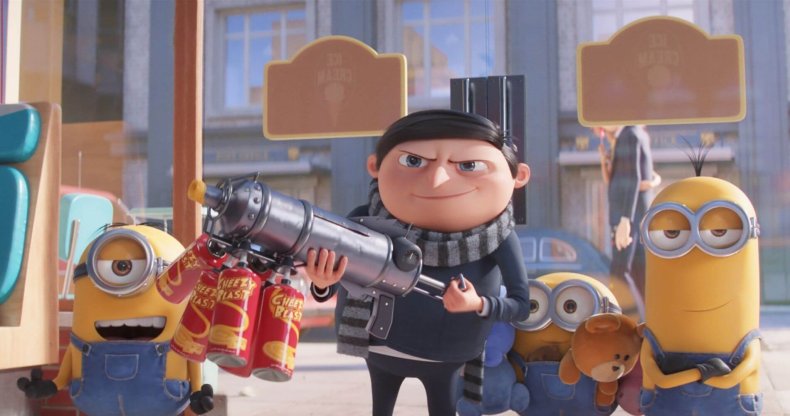
A still from “Minions: The Rise of Gru” featuring Gru and Minions Bob, Stuart and Kevin. Both Steve Carell and Pierre Coffin return to voice their respective characters from the “Despicable Me” franchise.
Universal Pictures

As previously mentioned, Carell and Coffin reprise their roles as Gru and the Minions, respectively, with the latter voicing quartet Kevin, Stuart, Bob and Otto in particular—but they’re not the only actors returning to the franchise.

Russell Brand reprises his role as Dr. Nefario, Gru’s future partner in crime, in the Minions sequel, while the iconic Julie Andrews has also come back to voice the villain’s mother Marlena once more.

Steve Coogan, who has voiced several characters in the Despicable Me franchise, also returns to voice Silas Ramsbottom, the director of the Anti-Villain League who appeared in the franchise’s second film.

The Vicious 6 are voiced by a number of iconic stars, with Michelle Yeoh playing member Master Chow, Jean-Claude Van Damme voicing the aptly named Jean Clawed, Dolph Lundgren lending his voice to Svengeance, and Taraji P. Henson voicing the group’s new leader Belle Bottom.

The villainous team is completed by Danny Trejo as Stronghold, Lucy Lawless as Nunchuck, and Alan Arkin as the Vicious 6’s former leader Wild Knuckles.

Other notable actors voicing characters in the kids film include comedians Will Arnett and Jimmy O. Yang, and Futurama star John DiMaggio.

Here is the Full Voice Cast for ‘Minions: The Rise of Gru’:

  • Steve Carell as Gru
  • Pierre Coffin as Kevin, Stuart, Bob, Otto, and the rest of the Minions

  • Taraji P. Henson as Belle Bottom
  • Michelle Yeoh as Master Chow
  • Jean-Claude Van Damme as Jean Clawed
  • Lucy Lawless as Nunchuck
  • Dolph Lundgren as Svengeance
  • Danny Trejo as Stronghold
  • Russell Brand as Dr. Nefario
  • Julie Andrews as Marlena Gru
  • Alan Arkin as Wild Knuckles
  • RZA as Biker
  • Jimmy O. Yang as Henchman #1
  • Kevin Michael Richardson as Henchman #2
  • John DiMaggio as Henchman #3
  • Michael Beattie as VNC Announcer and Guru Rick
  • Will Arnett as Mr. Perkins
  • Steve Coogan as Silas Ramsbottom
  • Colette Whitaker as Gru’s Teacher
  • Raymond S. Persi as Birthday Kid

Minions: The Rise of Gru will be released in theaters on Friday, July 1.

Minions: The Rise of Gru

The Minions from “Minions: The Rise of Gru” which will come out in theaters on Friday, July 1.
Universal Pictures

The post ‘Minions: The Rise of Gru’ Voice Cast: All the Stars Joining Steve Carell first appeared on The News And Times – thenewsandtimes.com.


Categories
The News And Times – thenewsandtimes.com

Ecuador presidential hopefuls pledge action on ports, where bananas hide cocaine


2023-10-11T11:10:22Z

Presidential candidates in Ecuador are pledging to use the military to crack down on drug exports from the country’s ports, where over half of banana shipments flagged as suspicious and searched by authorities hide packages of cocaine.

Cocaine is also increasingly found in shipments of tuna, as well as hidden in hollowed-out pineapples and stashed amid sugar, police say.

The security situation in Ecuador has sharply deteriorated in recent years, one factor in South America’s migrant exodus. The outgoing government has blamed an uptick in murders, prison violence and other crime on the growing presence of drug gangs.

Police have seized some 50 tonnes of drugs so far this year at the country’s two principal ports.

The 6,500 containers of bananas which leave Ecuador – the world’s top banana exporter – each week, many bound for Europe, are a top target for smugglers, then national anti-narcotics director Pablo Ramirez told Reuters last month.

The two presidential candidates in the upcoming Oct. 15 election – business heir Daniel Noboa and leftist Luisa Gonzalez – have said something needs to be done. Both have promised to militarize ports and airports to fight the drug trafficking. Alongside the economy, security is a top concern, voters say.

Gonzalez, a protege of former leftist President Rafael Correa, who led the first round but is now polling slightly behind her rival, said during a televised debate earlier this month she would use the military to retake control of ports and prisons, though she did not give details of her plan.

Meanwhile, Noboa, whose father is banana magnate Alvaro Noboa, has said he will use technology to support military protection of exports on highways and install scanners at toll stations and ports.

The current government of President Guillermo Lasso has struggled to make headway against the gangs.

It said last month it would increase oversight after it detected that some 36,000 hectares (90,000 acres) of land in Ecuador registered as banana farms in the export registration system do not even exist.

Scanners installed by the government at seven ports and airports in Quito and Guayaquil are set to begin working in November. Lasso also agreed to hold joint anti-drug operations with the U.S. Coast Guard, but the deal must be ratified by Ecuador’s congress.

The banana exporters’ association says it spends nearly $100 million a year on security equipment and inspections of about 40% of shipments.

“We are victims of organized crime, we are making a big effort,” said association director Jose Hidalgo.

In many cases shipments found to contain drugs have to be thrown out, though the association would not give an estimate of its industry’s losses.

The percentage of searched banana shipments which contained cocaine has fallen this year, but it is still very high – at 57% in 2023, from 70% in 2022, according to police figures.

There is evidence some drugs may be being displaced elsewhere, with the amount of searched tuna shipments containing drugs rising to 9% from 3%.

Drugs can be hard to spot amid the thousands of containers, especially creatively-hidden narcotics like those stuffed in hollowed-out pineapples.

Police estimate that about 70% of smuggled cocaine is introduced into banana shipments either at farms or during transport to ports, but traffickers also sometimes add drugs to sealed or refrigerated containers at the ports or once boats are at sea, Ramirez said.

Traffickers are also now sending drugs to more locations outside of usual destinations in the United States and Europe, he said.

“In May we had two destinations that we hadn’t had before… Sierra Leone and Hong Kong,” Ramirez said.

Related Galleries:

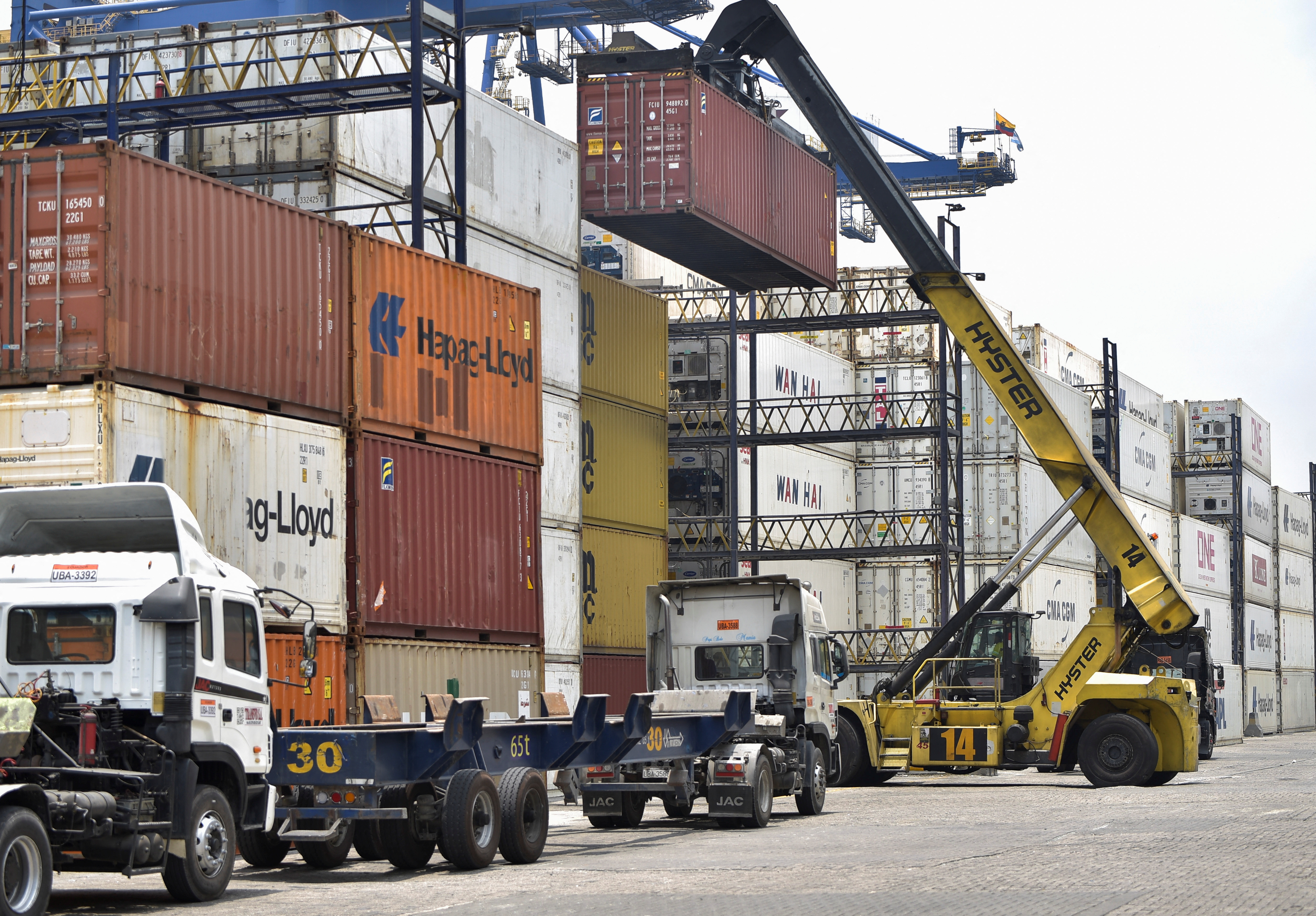
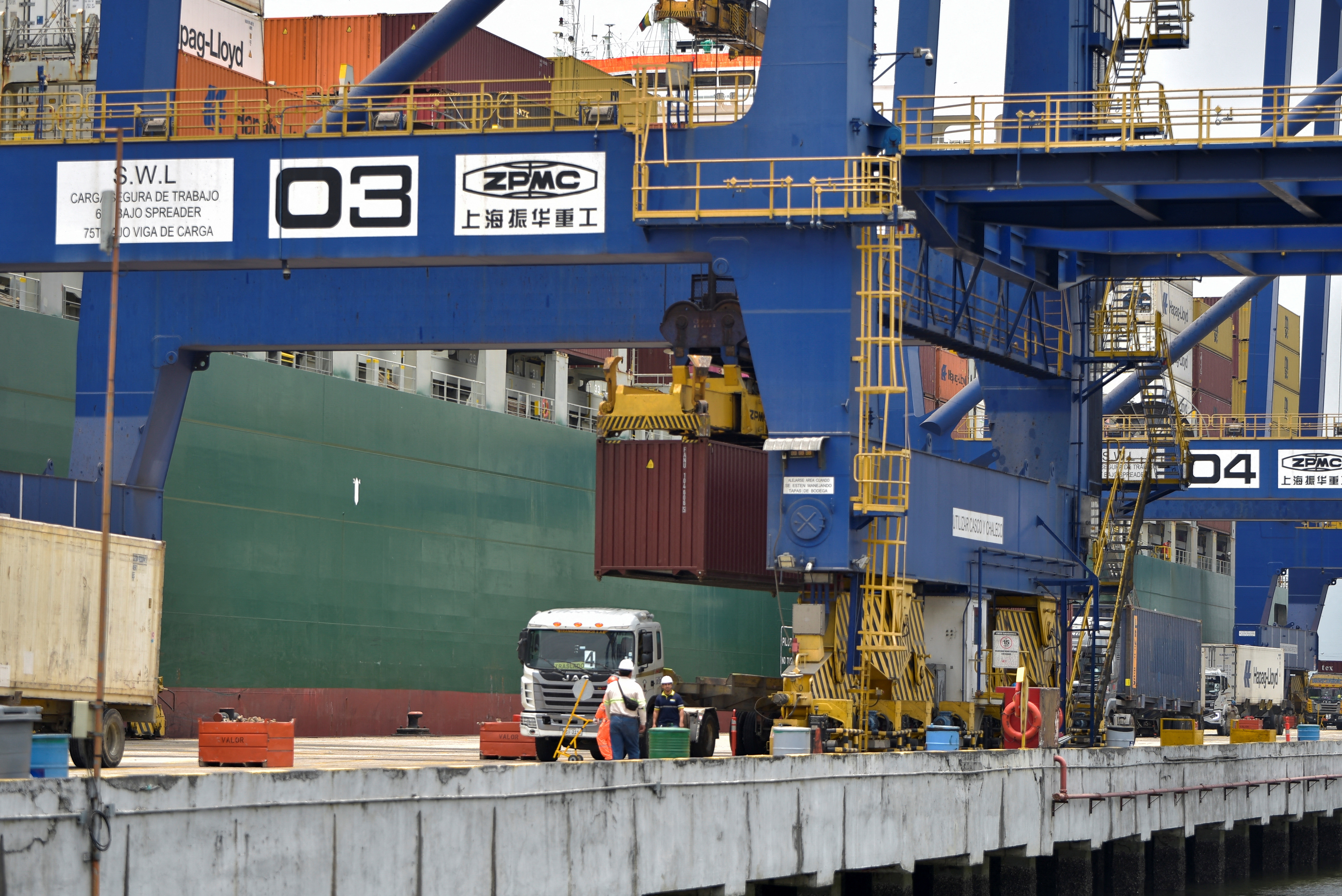
Containers are being transported at the port terminal, in Guayaquil, Ecuador October 4, 2023. REUTERS/Vicente Gaibor del Pino/File photo

Containers are being transported at the port terminal, in Guayaquil, Ecuador October 4, 2023. REUTERS/Vicente Gaibor del Pino/Fiel Photo

Containers are being transported at the port terminal, in Guayaquil, Ecuador October 4, 2023. REUTERS/Vicente Gaibor del Pino/File Photo


The post Ecuador presidential hopefuls pledge action on ports, where bananas hide cocaine first appeared on The News And Times – thenewsandtimes.com.


Categories
The News And Times – thenewsandtimes.com

Ukraine accuses two men of helping guide missile that killed dozens in Hroza village


2023-10-11T11:18:38Z

Ukraine’s domestic intelligence service on Wednesday accused two villagers who fled to Russia of helping guide a missile strike that killed dozens of people, mostly civilians, at a soldiers’ wake in the Ukrainian village of Hroza.

The Oct. 5 strike was the deadliest attack in Ukraine this year, and one of the worst since Russia invaded in February 2022. Ukrainian prosecutors put the death toll at 55, and a local official told Reuters a sixth of the northeastern village’s population of about 300 people had been killed.

Moscow denies targeting civilians in its full-scale invasion, a position it repeated in response to a question at a Kremlin briefing about the strike on Hroza.

Kremlin spokesman Dmitry Peskov told the briefing that Russia strikes Ukraine’s military infrastructure, as well as concentrations of troops and the Ukrainian military leadership.

The Security Service of Ukraine (SBU) said in a statement on the Telegram messaging app that the two suspects, who were brothers, worked for Russian occupation authorities when Moscow controlled the village for several months in 2022.

The SBU said the men fled to Russia shortly before Ukraine regained control of the village in September last year. After this, the agency said the men continued to work for Russia by building a network of informants in Ukraine.

When Reuters visited the village last Friday, two residents said that SBU officials had visited the village and checked residents’ phones after the attack.

According to the SBU, the brothers started gathering information on the wake in Hroza at the beginning of October.

“Under the guise of friendly conversations and correspondence in the messenger (service), the traitors asked people for information about the deployment of the Defence Forces and mass events in the region,” the SBU said.

The agency posted images which appeared to show Russian passports and other documents belonging to the men, as well as screenshots of messenger conversations where the men obtained information about the wake.

Reuters could not independently verity the information.

The post Ukraine accuses two men of helping guide missile that killed dozens in Hroza village first appeared on The News And Times – thenewsandtimes.com.


Categories
The News And Times – thenewsandtimes.com

Russian campaigner defends right to disagree with Putin at trial over “fascism“ article


2023-10-11T11:23:43Z

Veteran rights campaigner Oleg Orlov urged a Moscow court on Wednesday to acquit him of discrediting the armed forces by speaking out against the war in Ukraine, saying Russians had the right to disagree with their president.

Orlov, 70, was defending himself in a case based on a November 2022 article in which he wrote that Russia under President Vladimir Putin had descended into fascism.

“Where is it defined that our commander-in-chief (Putin) always rightly understands not only the interests of Russia, but the interests of its citizens?” Orlov asked in his closing speech at a trial which began in June.

“And if the ideas of a part of Russia’s citizens about their own interests don’t match those of the commander-in-chief, don’t they have the right to talk about this?”

“But in that case, the president is no longer a president, but a spiritual and secular leader… Or are Russia’s top officials now infallible, like the Pope?”

In its own summing-up, the prosecution said that citizens had duties as well as rights such as freedom of speech, and these included the duty to obey laws,

It said it was impermissible to carry out “provocations aimed at splitting civil society”.

Based on Orlov’s age and state of health, however, the prosecution said it was seeking a fine of 250,000 roubles ($2,500) rather than the prison sentence of up to three years that it could have sought under laws passed soon after Russia’s invasion of Ukraine last year.

The judge was expected to pass sentence later on Wednesday.

Orlov is one of Russia’s best known and most respected rights advocates. Since 1999, he has been one of the leaders of Memorial, which won a share of the Nobel Peace Prize in 2022, a year after being banned and dissolved in Russia.

Since its invasion of Ukraine, Moscow has intensified a long-running crackdown on all forms of political dissent and made it an offence to “discredit” the armed forces or deviate from government accounts of the war it describes as a “special military operation”.

Among other prominent figures to be jailed this year, opposition politician Vladimir Kara-Murza was sentenced to 25 years in April for treason and spreading “false information” about the war in Ukraine.

Russia’s best known opposition figure, Alexei Navalny, was sentenced to an additional 19 years in August on a range of charges relating to “extremist” activity, on top of the 11-1/2 year term he was already serving.

The post Russian campaigner defends right to disagree with Putin at trial over “fascism“ article first appeared on The News And Times – thenewsandtimes.com.


Categories
The News And Times – thenewsandtimes.com

In wake of attack on Israel, Biden will join WH roundtable with Jewish leaders to discuss Israel


President Joe Biden will join a roundtable with Jewish leaders at the White House on Wednesday to discuss Hamas’ attack on Israel and combatting antisemitism. The meeting, led by Doug Emhoff, the Jewish husband of Vice President Harris, and senior administration officials was originally organized chiefly to discuss the implementation of the U.S. National Strategy to Counter Antisemitism, which was released in May — and Biden was not slated to attend. But Saturday’s attack, in which more than 1,200 Israeli civilians were killed and more than 100 Israelis taken hostage, prompted a revision in the agenda and Biden’s decision to join the conversation.

Biden, who has already delivered forceful remarks in support of Israel, is expected to reiterate them at the roundtable, according to a White House official who spoke anonymously to share details of the agenda.

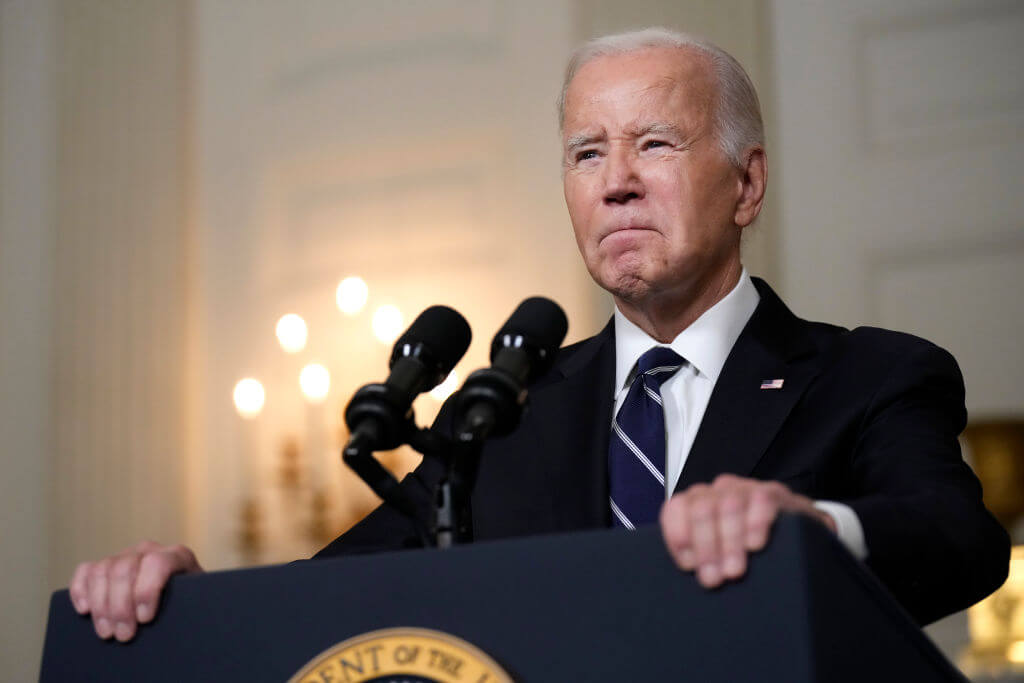
President Joe Biden on the Hamas terrorist attacks in Israel on Oct. 10, 2023. Photo by Drew Angerer/Getty Images

Since the attack, Biden has talked with Prime Minister Netanyahu three times to express sympathy and pledge U.S. assistance. He also spoke to Jordan’s King Abdullah II about Israel’s conflict with Hamas, which has now also taken the lives of at least 900 Palestinians. Harris on Sunday spoke with Israeli President Michael Herzog. And Biden on Monday organized a joint statement of support for Israel from the United States, France, Germany, Italy and the United Kingdom.

The plan to combat antisemitism

The White House official said that the roundtable, in addition to Biden and Emhoff, will include several officials who have worked on the strategy to counter antisemitism. They include Neera Tanden, Biden’s domestic policy adviser; Liz Sherwood-Randall, the president’s assistant for homeland security; and Steve Benjamin, the White House’s director of public engagement. Sherwood-Randall and Tanden’s predecessor, Susan Rice, were co-chairs of the interagency task force that developed the plan

Emhoff often speaks about combating domestic antisemitism on behalf of the administration. He played a pivotal role in the planning and rollout of the national plan and since its release has been traveling the country speaking about it — meeting with government officials and interfaith leaders, and speaking to Jewish students. He addressed several congregations during the High Holidays. 

“This coming year,” Emhoff told Jewish leaders at a pre-Rosh Hashanah reception at the vice president’s residence last month, “I’m committed to doing even more, pushing back even more, building more coalitions and bringing more people together in this fight with us, in this fight that affects all of us.”

What’s next?

Wednesday’s discussion will follow the administration’s recent announcement that it had instructed eight federal agencies to extend civil rights protections to victims of antisemitism and religious discrimination. The directive covers the departments of Agriculture, Health and Human Services, Homeland Security, Housing and Urban Development, Interior, Labor, Treasury and Transportation. 

The White House shared a spreadsheet of more than two dozen public appearances Emhoff has made to highlight the fight against antisemitism and showcase his Jewish heritage since Harris won the vice presidency in 2020. They include remarks at the United Nations, the installment of mezuzahs at the vice president’s residence, and hosting Rosh Hashanah celebrations and Passover Seders.

In January, Emhoff traveled to Auschwitz for International Holocaust Remembrance Day and to the town in Poland his grandparents fled 120 years ago to escape religious persecution.

He made his most recent remarks on the issue during a chat on Yom Kippur with the rabbis of Congregation Adas Israel in Washington, D.C. 

Tanden, who joined the White House after Rice’s departure, has also taken a prominent role in the implementation of the national plan. During a Q&A session after Biden’s annual Rosh Hashanah call with Jewish leaders, Tanden said that more than two dozen agencies are already carrying out the plan and that they have a May 2024 deadline to complete their assigned tasks. 

The post In wake of attack on Israel, Biden will join WH roundtable with Jewish leaders to discuss Israel appeared first on The Forward.

The post In wake of attack on Israel, Biden will join WH roundtable with Jewish leaders to discuss Israel first appeared on The News And Times – thenewsandtimes.com.


Categories
The News And Times – thenewsandtimes.com

How the GRU spy agency targets the west, from cyberspace to Salisbury


In Russia’s shadow war with the west, one intelligence agency keeps making headlines.

The GRU, or main intelligence directorate, of the Russian army, has been accused of spearheading several of Russia’s most notorious operations in recent years. They include the 2014 seizure of Crimea using undercover soldiers called “little green men”, the hacking theft of emails from the Democratic National Committee and Hillary Clinton, and even the planning of a failed coup in Montenegro.

A British security source told the Guardian on Monday that the nerve agent attack on the former double agent Sergei Skripal was also ordered by the intelligence agency. The British government is poised to submit an extradition request to Moscow for two Russians suspected of carrying out the Salisbury attack that left one person dead and three injured, including Skripal and his daughter.

One of the three main Russian intelligence agencies, less has been written about the GRU (now officially called the GU, or Main Directorate of the General Staff of the Russian Armed Forces) than its sister agencies, particularly the Soviet-era KGB or its modern successor the FSB, the spy agency once headed by Vladimir Putin.

Known for operating under a wartime mentality and a willingness to take risks, experts say the culture of the GRU has been influenced by its inclusion of Spetsnaz special forces and experience in war zones, including Syria and Ukraine.

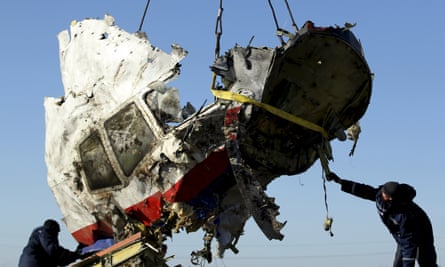
Wreckage from Malaysian airlines flight MH17.Some sources have linked GRU agents to the downing of Malaysian airlines flight MH17. Photograph: Antonio Bronic/Reuters

Open source researchers have claimed that a GRU officer supervised the transport of anti-aircraft weapons to eastern Ukraine when the Malaysian jetliner flight MH17 was shot down there, killing 298 people.

“The GRU regards itself as a war-fighting instrument. Yes, it gathers conventional intelligence … but its culture is much more military,” said Mark Galeotti, an expert on Russian security issues and the country’s intelligence agencies. “Although only a minority of GRU officers are Spetsnaz, it has an impact when part of your service are commandos.”

Besides special forces, the spy agency manages more traditional intelligence-gathering operations around the world, as well as signals intelligence.

Vladimir Rezun, a GRU officer who defected to the UK in the 1970s, wrote in his history of the agency (written under the pen name Viktor Suvorov) that it was largely tasked with preventing the collapse of the Soviet Union from without, as opposed to the KGB, which had a prominent role in thwarting internal threats.

While the KGB became notorious, the GRU largely operated in obscurity. “In the people’s consciousness, everything that is dark, underground and secret is connected with the KGB but not at all with the GRU,” he wrote.

Traditionally, Galeotti noted, the GRU answered for “uncontrolled spaces”. While in the past that has meant areas like civil wars, it may also apply to zones like cyberspace now.

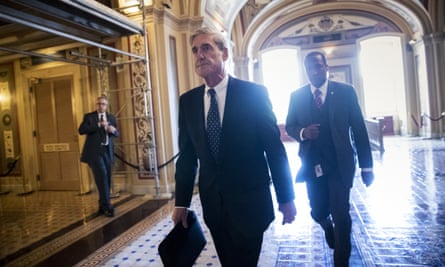
US special counsel Robert MuellerUS special counsel Robert Mueller recently linked the GRU to meddling in the 2016 US presidential election. Photograph: J Scott Applewhite/AP

Several Russian intelligence agencies were involved in hacking operations before the 2016 US presidential elections, but only the GRU was identified in an 11-count indictment released last month by the United States special counsel Robert Mueller’s investigation. The hack was perpetrated by staff employees of several Moscow-based units traditionally tied to signal intelligence.

The interests of Russia’s intelligence agencies regularly overlap, as have their methods. As Christopher Andrew wrote in The Mitrokhin Archive: The KGB in Europe and the West, his study of notes on KGB files smuggled out of Russia, the agency “offered its allies lethal nerve toxins and poisons which were fatal on contact with the skin for use during ‘special actions’”.

While the GRU has largely been shrouded in secrecy, there have been occasional contacts with the west.

Peter Zwack, a retired US army brigadier general, wrote about a series of meetings before the Sochi Olympics with the head of the GRU, Igor Sergun, who died unexpectedly of a heart attack in January 2016. “I found him soft-spoken, unassuming, complex, erudite and nuanced,” he said of their meetings, which largely focused on counter-terrorism efforts.

“I learned that even as Sergun relentlessly directed global intelligence operations against our interests, he — paradoxically — also viewed constant confrontation with the US and west as not in Russia’s best long-term interest,” Zwack wrote.

Those meetings ended after Russia’s invasion of Ukraine.

The post How the GRU spy agency targets the west, from cyberspace to Salisbury first appeared on The News And Times – thenewsandtimes.com.


Categories
The News And Times – thenewsandtimes.com

What’s ahead for the Wagner Group in Africa and the Middle East?


2023-07-17T173245Z_1295261558_RC2F42AQD4

Predictions of the end of the Wagner Group’s operations in Africa and the Middle East in the aftermath of its ill-fated rebellion in Russia are premature. More likely, Wagner’s Middle East and Africa operations will persist: They still serve multiple interests of the Russian state and can be separated from Wagner’s Ukraine and Russia operations. Already, Russian Foreign Minister Sergei Lavrov has stated that Wagner’s operations in Africa will continue. But Wagner’s operations in Africa are likely to endure under a new leadership and structure.

Wagner’s footprint and Russian interests

Ukraine aside, the Wagner Group has sent mercenary deployments to Syria, Libya, Mozambique, Mali, the Central African Republic, and Sudan. Unconfirmed rumors have been swirling about Wagner’s presence in the Democratic Republic of the Congo. Wagner also maintains logistical, support, smuggling, and money laundering affiliates and subsidiaries in the United Arab Emirates. Through a vast network of intermediaries and shell companies, its business, commodity-extraction, and disinformation operations span even more countries.

There are several reasons why Wagner’s operations outside of Ukraine and Russia are unlikely to be liquidated even as the fate of Wagner’s disgraced boss, Yevgeny Prigozhin, remains far from resolved:

First, Wagner-Ukraine operations have been substantially separate from its Africa and Middle East operations. Early in the spring of 2022, the Wagner Group withdrew some of its forces from Syria and Libya and deployed them to Ukraine. But since the summer of 2022, Wagner has not significantly reduced its personnel or equipment in Africa or the Middle East.

Second, Wagner’s operations in Africa remain highly valuable for Russia, which uses them for extending its strategic influence and access to important raw commodities. The Wagner Group’s protection of gas and oil fields in Syria, on behalf of the Bashar al-Assad regime, for example, plays into Russia’s global energy coercion games. At least four Russian companies linked to Wagner have exploration permits for Syrian gas and oil fields.

Moreover, Wagner’s business schemes also establish smuggling networks that bring liquidity to the sanctioned Russian regime, such as through gold and diamond smuggling. The intensifying U.S. sanctions on Wagner in Africa and the Middle East have hampered Wagner’s operations but have not eviscerated them, especially as Wagner has long been involved in various clandestine and illegal economies as well, such as antiquities smuggling.

Third, there have been prior instances of the reshuffling of Russian private security companies in the Middle East when they fell afoul of various Russian intelligence services. In 2013, a Russian private security company, the Slavonic Corps, led by Dmitry Utkin, the notorious former Russian special operations forces officer, was sent to Syria to fight ISIS on behalf of the Assad regime. Yet in an inglorious retreat, they were not only chased out of Syria but also arrested in Moscow. Still, Utkin and various commanders and members of the Slavonic Corps were later allowed to form cadres under the Wagner Group. (Utkin, who hasn’t been heard from for several weeks, is now likely a prime target of the Kremlin’s ire.)

The Wagner Group has found itself frequently at odds with either the Russian Federal Security Service, known by its abbreviation FSB, or the Russian military during its deployment to Syria. Those long-running tensions reached a peak in 2018 when, despite the establishment of deconfliction mechanisms between the Russian and U.S. militaries, the United States bombed Wagner’s deployments, killing scores. Prigozhin, Utkin, and the Wagner Group blamed the Russian military for throwing them under the bus on purpose.

Yet however much the Russian military and intelligence services already wanted to cut Wagner to size, the Kremlin had no desire to remove its useful tool of influence.

Furthermore, both the FSB and the GRU, the Russian military intelligence agency, have had complex linkages and influence over Wagner’s overseas operations. Like the Kremlin, they also make money from Wagner’s business operations, whether these operations feed their pockets or parts of their institutional budgets. Prigozhin has used money from Russian state contracts, amounting to some $20 billion, to fund his mercenary, media, and business ventures abroad. The interconnected management of state funding and Prigozhin’s (semi-)private ventures also implies highly interconnected interests for a wide array of influential regime actors. Thus, like in Russia, some of Wagner’s businesses may be shut down, but others will be merely reshuffled. But neither the Kremlin nor the intelligence services want to lose the Wagner income and tool, even if they want to control it better.

Restructuring, not liquidation

Rather than fully liquidating Wagner in Africa and the Middle East, Russian intelligence services will purge Wagner’s structures to weaken affinities to Prigozhin and strengthen ties to the Kremlin. Such a restructuring would mimic the seeming preference of Russian President Vladimir Putin with respect to Wagner in Russia and Ukraine — rolling some cadres under the Russian military, disarming others, and allowing others yet to operate in the existing semi-independent format, but under a new leadership and with Prigozhin’s power minimized.

Such restructuring has started in Syria where Russian forces, assisted by the Assad regime, surrounded Wagner bases and interrogated and removed some Wagner operatives. That the Kremlin would prioritize reasserting control of Wagner in Syria is not surprising: That’s where Gen. Sergey Surovikin, who is close to Prigozhin and hasn’t been seen since the rebellion, led Russia’s brutal and indiscriminate air campaign on behalf of the Assad regime and had close connections with Wagner forces. Wagner’s forces in Syria could most augment the Wagner threat to the Kremlin. But it is noteworthy that the Assad regime did not hesitate in supporting the Russian state against Wagner.

Beyond purges, the Wagner Group in Africa may be renamed and broken up into multiple separate entities. Chopping up Wagner this way would give the Russian state better control over the proxy, even as the network’s murkiness would persist, and rival Kremlin and Russian intelligence and security services could clash with one another in mercenary and business ventures.

Under better control, Russia will likely tolerate and retain Russian private security companies operating abroad. Unlike in Syria, where the Russian military has had an official presence since 2017, sending official “military advisors” to African countries, instead of private proxies, poses various legal and diplomatic inconveniences for Russia and the African countries.

In Ukraine, since December 2022, far before Wagner’s June rebellion, the Russian military has had strong incentives to transfer Wagner forces to the control of the Russian military — to tighten command, eliminate an independent force, and neutralize an increasingly unrestrained and troublesome Prigozhin. Abroad, the Russian state wants tighter control over Wagner operations too, but without the official state label.

Buyer beware: No easy way out

Nor do the African and Middle Eastern countries that have signed up with Wagner have an easy capacity to fire it. Mali is a prime example. After succumbing to Russia and Wagner’s influence and having kicked the French military out of the country in 2022 and the U.N. peacekeeping mission in June 2023, Mali is dependent more than ever on Wagner’s forces. All the more so that the U.N. Security Council accepted Mali’s request and voted to end the mission.

Focused far more on securing access to Mali’s gold mines, the 1,000-2,000 Wagner contractors have not been particularly effective in suppressing the jihadis in Mali’s north. In fact, from counterinsurgency and counterterrorism perspectives, their brutality has backfired. But the junta has no immediate alternative.

Besides, Wagner’s principal sell in Africa has become its praetorian guard service for authoritarian regimes as well as elected governments — like in the Central African Republic (CAR). There, Wagner provides security to the president and trains the country’s army. Besides making money from mining, timber extraction, and a beer company, Wagner advisors have developed vast influence over the CAR state, furthering Wagner and Russian interests at the expense of the public good.

Similarly, in the context of ongoing intense fighting in Sudan, Gen. Mohamed Hamdan “Hemedti” Dagalo, the head of the Rapid Support Forces, a key opposition group, is unlikely to forgo Wagner’s intelligence and other support. The support may be limited in terms of weapons and ammunition, but it would still be costly for Hemedti to give it up.

Wagner’s rebellion in Russia likely shook the confidence of African regimes that the Wagner Group is a reliable partner. Yet even an African government as dependent and almost subservient to Wagner as that of the CAR has sided with Russia, not Wagner, in the rebellion’s fallout.

But Wagner’s revolt also showed its daring confidence in mounting an uprising as well as its linkages to various poles of power in the Russian military and intelligence services. Even as these connections are purged and reconfigured within Russia, Africa, and the Middle East, they can still be useful for African governments as they try to play Russia against the West and actors within Russia against each other.

Nonetheless, various African delegations heading to St. Petersburg at the end of July for the Russia-Africa Summit will likely have questions about the future of Wagner’s Africa operations and the extent of Russia’s backing, even as strengthening economic relations is the official billing of the conference.
The post What’s ahead for the Wagner Group in Africa and the Middle East? first appeared on The News And Times – thenewsandtimes.com.