The News And Times Information Network – Blogs By Michael Novakhov – thenewsandtimes.blogspot.com
The post Moscow KGB – the Alma Mater of the modern Global Terrorism first appeared on The News And Times – thenewsandtimes.com.
 The Ocean Avenue News - oceanavenuenews.com
The post Moscow KGB – the Alma Mater of the modern Global Terrorism first appeared on The News And Times – thenewsandtimes.com.

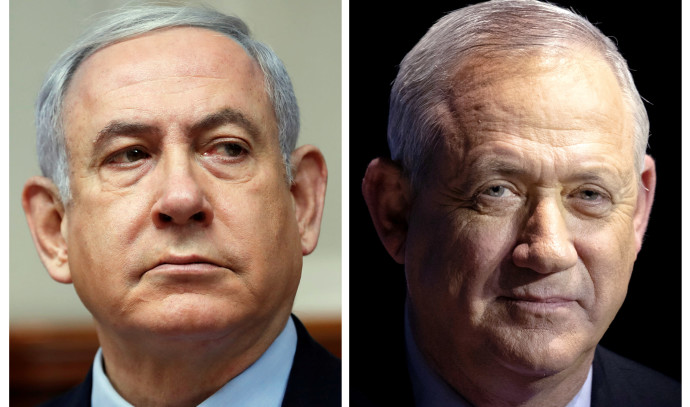
Israel forms emergency gov’t for Hamas war, Gantz to join Netanyahu
An emergency government was formed on Wednesday afternoon after Prime Minister Benjamin Netanyahu and National Unity leader Benny Gantz met at the IDF headquarters in Tel Aviv earlier in the morning.
The meeting lasted half an hour after which lawyers representing the Likud and National Unity stayed behind to finalize the details.
As part of the deal, Gantz and fellow party member Gadi Eisenkot will be sworn in as ministers and will join a war cabinet with Netanyahu and Defense Minister Yoav Gallant.
There has been a widespread call for an emergency government in Israel since Netanyahu declared war on Hamas on Saturday following their massive attack on Israel that morning.
Gantz was immediately joined by opposition leader Yair Lapid and Yisrael Beyteny leader Avigdor Liberman in saying that they would be willing to join an emergency government. Coalition members also expressed support for the move.
Israeli soldiers patrol in the southern Israeli city of Sderot, October 11, 2023 (credit: FLASH90/CHAIM GOLDBERG)
Netanyahu and Gantz have held multiple meetings over the past few days to discuss the details of the emergency government, but five days in, no such thing had been formed.
One point of contention is a war cabinet suggested by Gantz that would include Netanyahu, Gallant, and two other coalition representatives together with Gantz and Eisenkot, both of whom are former IDF chiefs of staff.
Gantz’s plan would exclude Finance Minister Bezalel Smotrich and National Security Minister Itamar Ben-Gvir – a move that the latter took issue with.


Vladimir Putin has long projected friendly ties to Israel. But his silence since Saturday’s assault illustrates how the war in Ukraine has strained the relationship between the two countries.
Russian President Vladimir Putin has proposed to Wagner Group fighters that a senior mercenary named Andrey Troshev now command the private military group, according to comments the Russian leader made to the Kommersant newspaper.
Putin appears to have created a split between senior fighters from the Wagner mercenary group and its leader Yevgeny Prigozhin since its failed uprising last month – at least in terms of the narrative emerging from his comments to the Kommersant.
The paper was reporting on a meeting held by the Russian president five days after the Wagner rebellion collapsed at the end of June – a meeting attended by Prigozhin and several dozen senior Wagner combatants.
According to Kommersant, Putin told dozens of Wagner mercenaries in the meeting that among the multiple employment choices he offered to them, one included them continuing to fight under their direct commander, a man who goes by the call sign, ‘Sedoy,’ meaning ‘grey hair.’
“They could have all gathered in one place and continued to serve,” Putin said, “and nothing would have changed for them. They would be led by the same person who has been their real commander all along.”
“And what happened then?” the Kommersant reporter said in reply to Putin. “Many people nodded [affirmatively] when I said that,” Putin replied.
Sedoy is the call sign of Andrey Troshev, a retired Russian colonel and a founding member and Executive Director of the Wagner Group, according to sanctions documents published by the European Union and France.
European Union sanctions concerning the situation in Syria detail Troshev’s position as the chief of staff of the Wagner Group operations in Syria, which supported the Syrian regime.
Troshev was born in April 1953 in Leningrad, in the former Soviet Union, according to the EU sanctions from December 2021.
“Andrey Troshev is directly involved in the military operations of the Wagner Group in Syria. He was particularly involved in the area of Deir ez-Zor,” it added. “As such, he provides a crucial contribution to Bashar al-Assad’s war effort and therefore supports and benefits from the Syrian regime.”
United Kingdom sanctions from June 2022 also say “Andrey Nikolaevich Troshev was the Chief Executive of the Wagner Group. Therefore, he has supported the Syrian regime, was a member of a militia, and has repressed the civilian population in Syria.”
His associates include Wagner Group founder Dimitriy Utkin, who is also a former Russian GRU military intelligence officer, according to EU sanctions. Troshev is also associated with Wagner group commanders Aleksandr Sergeevich Kuznetsov and Andrey Bogatov.
‘Grey hair’ is also a former employee of the special rapid response detachment of the Russian Interior Ministry’s Northwestern Federal District, according to Russian online news outlet Fontanka. He is also a veteran of the wars in Chechnya and Afghanistan.
For his service in Afghanistan, Troshev was awarded two Orders of the Red Star – a Soviet Union decoration for exceptional service. For service in the operation in Chechnya, he was awarded two Orders of Courage and a medal of the Order of Merit for the Fatherland, 2nd degree, according to Russian media.
Troshev was among those invited to a reception at the Kremlin in December 2016. A photograph, believed to be from that 2016 reception, emerged in Russian media in 2017 and shows Putin alongside Troshev and Utkin, who are both wearing several medals.
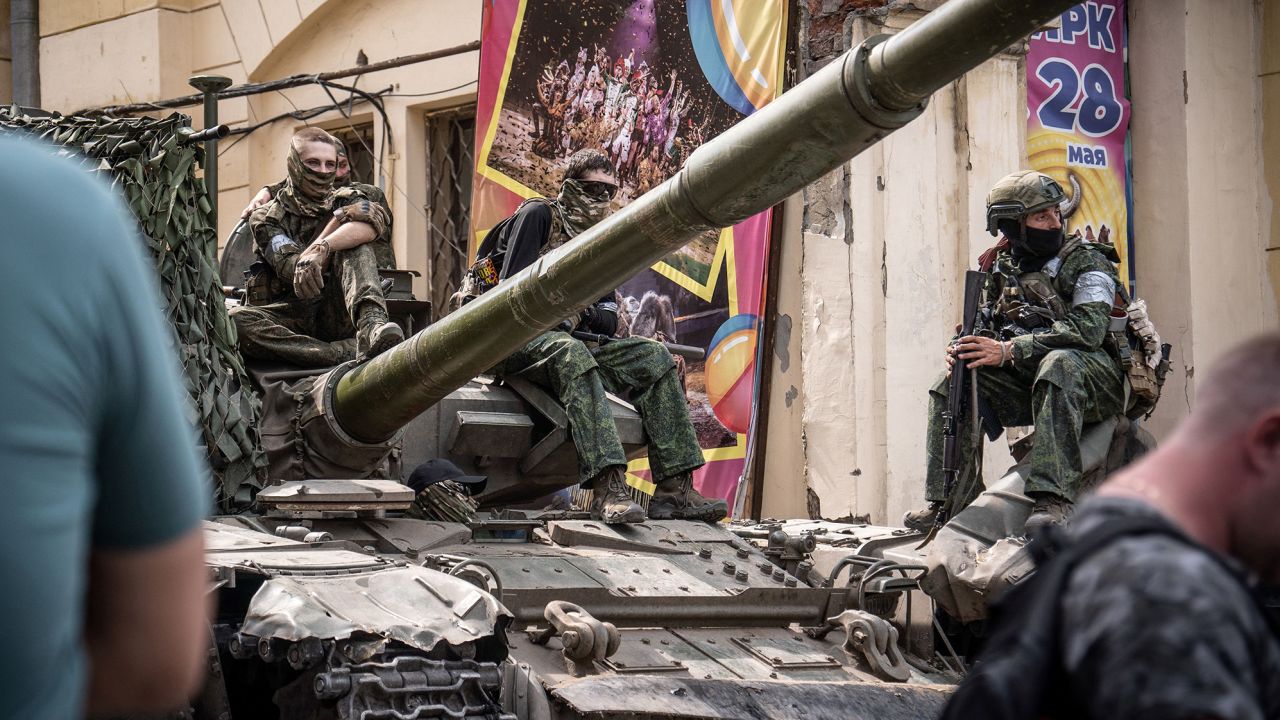
Ukraine imposed sanctions against Troshev on February 26, 2023.
Meanwhile, the fate of Wagner boss Prigozhin remains unclear. Prigozhin had reportedly traveled to Belarus as part of a deal brokered by Belarusian President Alexander Lukashenko following the failed uprising, but the Belarusian president told CNN last week the Wagner leader is now in Russia.
Footage purporting to show a police raid on Prigozhin’s premises in St. Petersburg has also raised questions about his status. Prigozhin has not been seen in public since June 2.
The Minions are back again, and this time the small yellow creatures are taking their future boss Gru on a new adventure set before the events of Despicable Me.
Both a prequel to Despicable Me and a sequel to Minions, The Rise of Gru charts the eponymous character’s quest to becoming a villain worthy of joining a team of nefarious reprobates known as the Vicious 6.
Steve Carell and Pierre Coffin once again return to their title roles in the animated film franchise, and they are joined by an A-list cast of actors.

A still from “Minions: The Rise of Gru” featuring Gru and Minions Bob, Stuart and Kevin. Both Steve Carell and Pierre Coffin return to voice their respective characters from the “Despicable Me” franchise. Universal Pictures
As previously mentioned, Carell and Coffin reprise their roles as Gru and the Minions, respectively, with the latter voicing quartet Kevin, Stuart, Bob and Otto in particular—but they’re not the only actors returning to the franchise.
Russell Brand reprises his role as Dr. Nefario, Gru’s future partner in crime, in the Minions sequel, while the iconic Julie Andrews has also come back to voice the villain’s mother Marlena once more.
Steve Coogan, who has voiced several characters in the Despicable Me franchise, also returns to voice Silas Ramsbottom, the director of the Anti-Villain League who appeared in the franchise’s second film.
The Vicious 6 are voiced by a number of iconic stars, with Michelle Yeoh playing member Master Chow, Jean-Claude Van Damme voicing the aptly named Jean Clawed, Dolph Lundgren lending his voice to Svengeance, and Taraji P. Henson voicing the group’s new leader Belle Bottom.
The villainous team is completed by Danny Trejo as Stronghold, Lucy Lawless as Nunchuck, and Alan Arkin as the Vicious 6’s former leader Wild Knuckles.
Other notable actors voicing characters in the kids film include comedians Will Arnett and Jimmy O. Yang, and Futurama star John DiMaggio.
Minions: The Rise of Gru will be released in theaters on Friday, July 1.

The Minions from “Minions: The Rise of Gru” which will come out in theaters on Friday, July 1. Universal Pictures
“Hamas terrorists bound, burned, and executed children,” Prime Minister Benjamin Netanyahu proclaimed in a speech Monday, condemning the perpetrators of Saturday’s terror.
“They are savages. Hamas is ISIS.”
The comparison to the notorious terrorist organization ISIS underscored the gravity of the situation and the global threat that Netanyahu believes Hamas poses. Just as the international community rallied together to combat the menace of ISIS, the prime minister implored the forces of civilization to unite once more, supporting Israel’s efforts to dismantle Hamas.
But is Hamas ISIS?
Dr. Harel Chorev of the Moshe Dayan Center for Middle Eastern Studies at Tel Aviv University said that Hamas and ISIS share ideological foundations and revere the same philosophical figures that developed them: Abdullah Azzam and Sayyid Qutb.
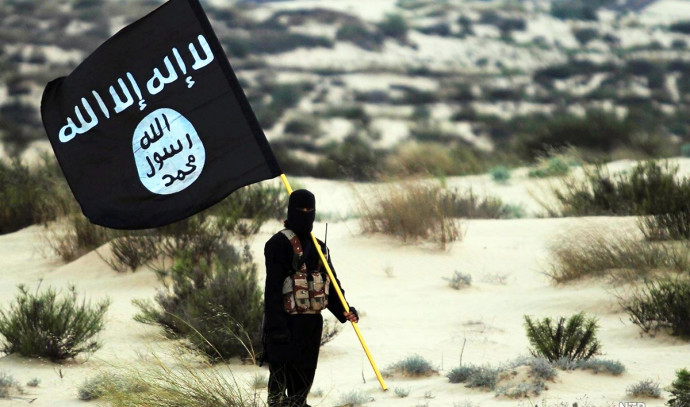
An ISIS member carries and Islamic State flag in Syria. (credit: NDLA)
Azzam, born in the Palestinian West Bank during the 1950s under Jordanian rule, is often regarded as pivotal in developing contemporary global jihadism. A deep-seated hatred towards Israel marked his early years, particularly intensified when his family was compelled to flee across the Jordan River following Israel’s victory in the 1967 Six-Day War.
Azzam’s writings and lectures on “al-Qaida al-Sulba” (the Firm Foundation) laid the groundwork for the emergence of the al-Qaida terrorist organization. He recruited Osama Bin Laden to run the organization.
Additionally, Azzam was a central figure in Hamas’s genesis, contributing to its founding charter’s authorship. He is best known for his reinterpretation of Islamic history and modern Western philosophy to provide ideological justifications for the fantastical ideologies driving global Islamist militant movements.
Sayyid Qutb was an Egyptian ideologue who established the theoretical basis for radical Islamism.
Centered on these philosophers’ ideologies, Hamas and ISIS subscribe to a profoundly paranoid and apocalyptic perspective, in which they propagate the belief that “Crusaders and Zionists” were conspiring for centuries to destroy Islam.
“They are running a holy war against their enemies,” explained Chorev.
However, the similarities between ISIS and Hamas are not only in philosophy but action, Chorev said. Here are four more things they have in common:
As per Chorev’s analysis, both ISIS and Hamas employ dehumanizing rhetoric against individuals who do not adhere to their interpretation of Islam – Christians and Jews, as well as Muslims they consider “not good Muslims.” Their vehemently anti-Western stance is interconnected with this dehumanization, as is their explicit and overt expression of antisemitism.
“You can see it in their incitement on social networking,” Chorev said, illustrating his point by referencing an incident following the tragic murder of Alter Shlomo Lederman, a 20-year-old yeshiva student who was deliberately targeted at a Ramot bus stop earlier this year. He noted that Hamas had released a cartoon depicting Lederman’s face, complete with his fur hat, portrayed as part of a Palestinian maqluba dish, with a family gathered around, consuming it.
“They see their enemies not as human enemies,” Chorev said.
Both ISIS and Hamas are known to treat non-Muslim women as “sex toys,” said Chorev.
Following the recent attacks, videos circulated of the terrorists glorifying Allah for sending them “sex slaves.” Israeli actress and advocate Noa Tishby shared footage released online by Hamas in which you can see several girls paraded through Gaza’s city streets, some half-naked and others with blood gushing from between their legs.
View this post on Instagram
Similar stories have been shared by Yazidi women and girls who were abducted by ISIS and often sold into sexual slavery.
Both ISIS and Hamas celebrate becoming a “shaheed” or martyr for the Islamic faith. According to Chorev, when terrorists are apprehended in Israel there are often accounts of them expressing a willingness to die or even a desire for it, sometimes sharing that, “My family would be proud of me.”
He said, “This is hard, even impossible, for a typical Westerner to understand. How could someone desire his death? But it is the great common denominator between ISIS and Hamas.”
According to Chorev, the two organizations have at least one more thing in common:
By December 2017, the ISIS caliphate had relinquished control over 95% of its territory. Then, in 2019, the final vestiges of the physical ISIS caliphate met their end when the US-backed Syrian Democratic Forces declared triumph following the Battle of Baghuz Fawqani in March 2019, effectively pushing the group into dormancy.
“ISIS was the boss for quite some time until the West decided to destroy it,” Chorev concluded. “Hamas can be destroyed, too.”
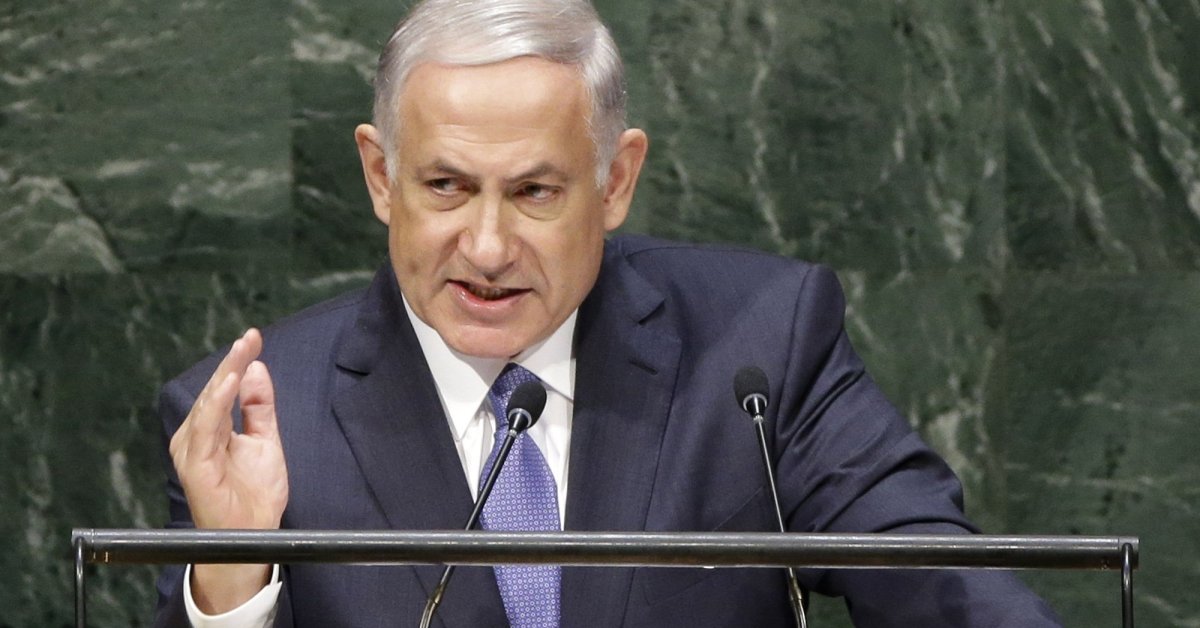
Israeli Prime Minister Benjamin Netanyahu pushed back Monday against Palestinian leader Mahmoud Abbas’ claims that Israel was waging a “genocide” against Palestinians, and called on world leaders to treat Palestinian militant group Hamas as indistinct from the Islamic State of Iraq and Greater Syria (ISIS).
Speaking at the United Nations General Assembly, Netanyahu refuted claims by Abbas and others that his military had committed war crimes during the 50-day war in the Gaza Strip this summer, citing the lengths to which the Israeli Defense Force went to warn civilians to evacuate targeted areas.
“Israel dropped fliers, made phone calls, sent text messages, broadcast warnings in Arabic, all to allow civilians to evacuate targeted areas,” Netanyahu said, arguing that Israel took all available precautions to protect civilian lives, while Hamas deliberately fired rockets from areas where children live and play. “Israel was using its missiles to protect its children, Hamas was using children to protect its missiles,” he added.
He said that the fact that Hamas’s deliberate placement of rockets in civilian communities were the “real war crimes.”
The Israeli Prime Minister also spoke about the growing “cancer” of militant Islam, comparing the situation in Israel with that in Iraq and Syria. “ISIS and Hamas are branches of the same poisonous tree,” he said. “When it comes to their ultimate goals, Hamas is ISIS and ISIS is Hamas. And what they share in common, all militant Islamists share in common.”
The conflict, which ended in August, left 2,100 Palestinians dead and 73 Israelis dead, according to the BBC. The UN said that most of the Palestinian dead were civilians. “This last war against Gaza was a series of absolute war crimes carried out before the eyes and ears of the entire world, moment by moment,” Abbas said last week.
Netanyahu said criticism in Europe of Israel’s treatment of Palestinian civilians often amounts to thinly-veiled anti-Semitism. “We hear mobs today in Europe call for the gassing of Jews, we hear some national leaders compare Israel to the Nazis,” he said. “This is not a function of Israel’s policy, this is a function of diseased minds. That disease has a name, it’s called anti-Semitism, and it’s spreading in polite society.”
The president also warned that Iran was undergoing a “manipulative charm offensive” in order to lift sanctions and continue with plans to build a nuclear weapon. “It’s one thing to confront militant Islamists on pickup trucks… its another thing to confront militant Islamists armed with weapons of mass destruction,” he said. “Would you let ISIS enrich uranium? Then you shouldn’t let the Islamic state of Iran do them either.”
A UN Council tasked with negotiating with Iran on its nuclear program has not made much progress in recent weeks, according to the LA Times. They hope to reach an agreement to limit Iran’s nuclear program to non-military uses in exchange for lifting oil sanctions.
Netanyahu urged the world’s leaders not to trust what he called the “world’s most dangerous regime.” “To say Iran doesn’t practice terrorism is like saying Derek Jeter never played shortstop for the New York Yankees,” he said.
Write to Charlotte Alter at charlotte.alter@time.com.

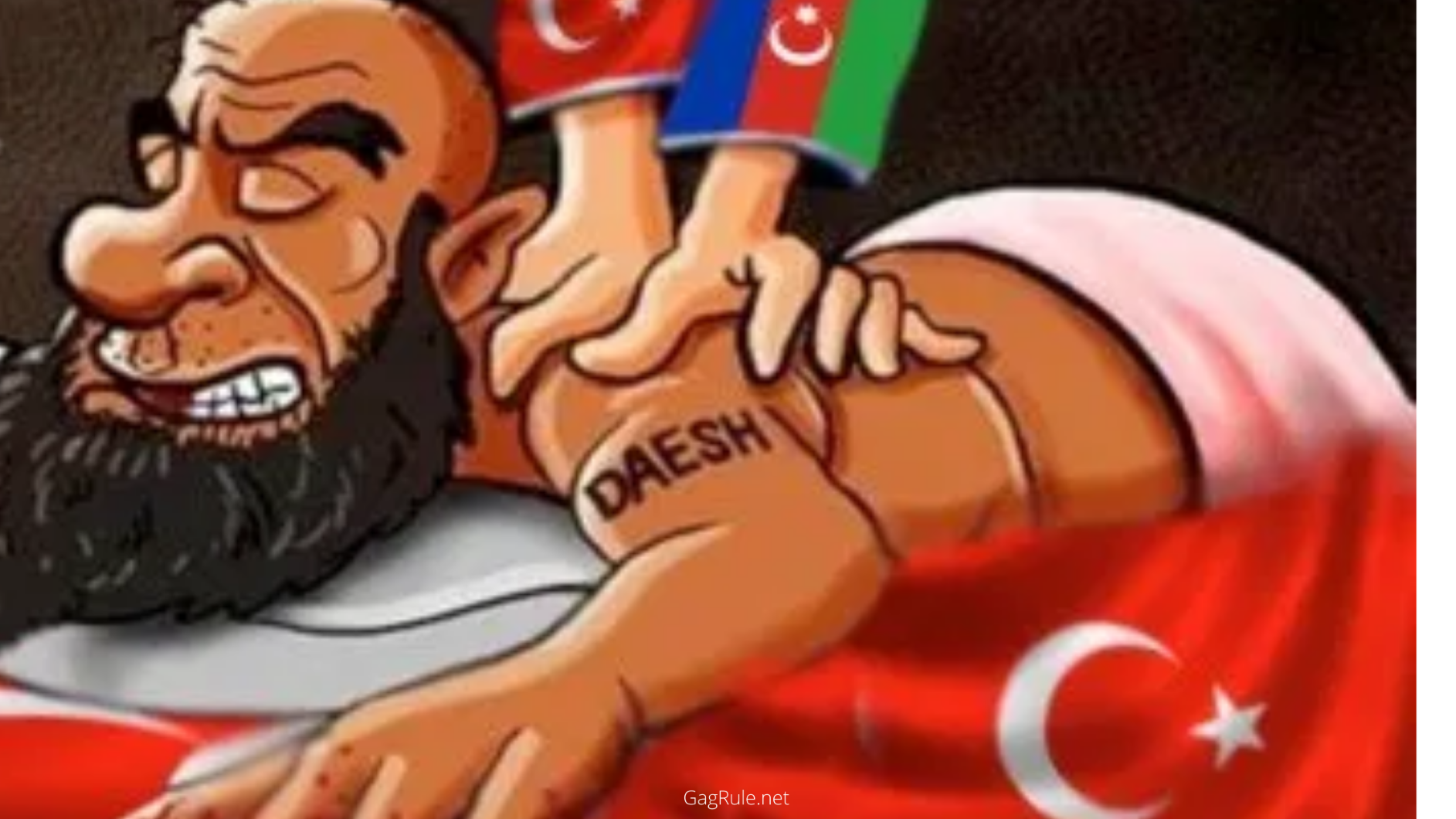
There is now abundant evidence that Azerbaijan is using Syrian jihadist mercenaries transported by Turkey from the areas it controls in Syria to fight against Armenians in Artsakh.
The question is why Azerbaijan, a majority-Muslim but ostensibly secular country run by dictator Ilham Aliyev on shaky footing, would want to have jihadists in his country. The question is all the more befuddling when considering that Azerbaijan has spent billions on its military over the past decade, achieving superiority in the quantity of armaments over Armenia and, also, in the size of their standing army: over 365,000 soldiers with active duty and reserve troops.
So, why mercenaries?
The answer lies in the fact that despite the decade-long propaganda that portrays Azerbaijan as a phoenix newly infused with strength and resolve due to a continuous stream of oil wealth, most citizens of Azerbaijan have little heart for a long war, especially for a place they have never been to and know little about; Aliyev’s dictatorial government knows this.
During the Artsakh Liberation War from 1988 to 1994, many Azerbaijanis were known to flee from the battlefield – a phenomenon seen during this war, as well – and return to their towns and villages to hide, requiring the leadership to recruit people by threat of force.
Additionally, it was well-documented that many of the fighters on the Azerbaijani side were from among the country’s minority groups – Lezgins, Talysh, and Meskheti Turks – along with Soviet Ukrainian soldiers, recently unemployed, who were hired as mercenaries, mostly to round out the Azerbaijani air force.
The experience with Islamic jihadists is also not new. In the first war, Chechen rebels led by the infamous Shamil Basayev and Afghan mujaheddin, led by the infamous Khattab, fresh off their victory over Soviet forces, were paid to come and fight.
It was difficult to hide the losses that Azerbaijan was suffering in that first war amid the internal political discord and general disarray of the collapsing Soviet Union. Warring political factions were happy to exploit the military failures of their opponents to try to secure power.
However, by the April War of 2016, the first large-scale attack on Artsakh since the ceasefire was signed, Azerbaijan was a tightly-controlled dictatorship with a smooth propaganda operation and internal institutions to keep a lid on the flow of information. So, although the April War lasted only four days, an estimated 1,000 soldiers were killed. This was immediately covered up to prevent discord and to this day, Azerbaijan claims that only 31 of their soldiers died.
The fact is that Aliyev understands that the higher the death toll in a war his people do not want to fight, the greater the likelihood that there will be internal unrest. The solution to this problem is to hire mercenaries.
The main benefit of using the mercenaries is that when they die, they aren’t sent back to Azerbaijani towns where people will be able to guess the devastation that Azerbaijan is suffering on the battlefield. Naturally, this lowers the number of dead soldiers being returned to families in Azerbaijan.
So, despite the 365,000 Azerbaijani soldiers at its disposal (over twice the size of Artsakh’s civilian population), the government of the country chooses to hire cheap and, in their eyes, expendable Syrian jihadists whose deaths will soften the blow of realizing how many soldiers are dying in the war with Artsakh. Effectively, these mercenaries act as cannon fodder for battles with Armenians.
Aliyev, nevertheless, seems to understand he is playing with fire in the Land of Fire and can’t afford to bring too many of these jihadists to the country lest they spread radical Islam and destabilize his rule. Thus far, he has brought only a few thousand of these jihadists but the longer the war goes, the more soldiers will die and it will be increasingly difficult to cover up the losses of his own soldiers.
Whether Aliyev chooses to bring in more jihadists or to send more Azerbaijanis to their deaths, his choices are limited and untenable. It is only a matter of time before the people lose their heart, the jihadists start making inroads, or political enemies take advantage of the instability created by his decisions.
In Russia’s shadow war with the west, one intelligence agency keeps making headlines.
The GRU, or main intelligence directorate, of the Russian army, has been accused of spearheading several of Russia’s most notorious operations in recent years. They include the 2014 seizure of Crimea using undercover soldiers called “little green men”, the hacking theft of emails from the Democratic National Committee and Hillary Clinton, and even the planning of a failed coup in Montenegro.
A British security source told the Guardian on Monday that the nerve agent attack on the former double agent Sergei Skripal was also ordered by the intelligence agency. The British government is poised to submit an extradition request to Moscow for two Russians suspected of carrying out the Salisbury attack that left one person dead and three injured, including Skripal and his daughter.
One of the three main Russian intelligence agencies, less has been written about the GRU (now officially called the GU, or Main Directorate of the General Staff of the Russian Armed Forces) than its sister agencies, particularly the Soviet-era KGB or its modern successor the FSB, the spy agency once headed by Vladimir Putin.
Known for operating under a wartime mentality and a willingness to take risks, experts say the culture of the GRU has been influenced by its inclusion of Spetsnaz special forces and experience in war zones, including Syria and Ukraine.
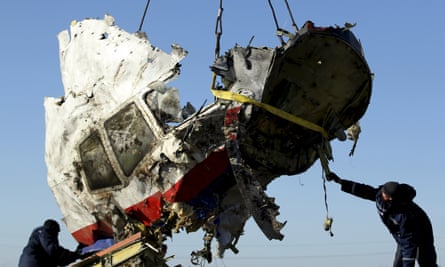 Some sources have linked GRU agents to the downing of Malaysian airlines flight MH17. Photograph: Antonio Bronic/Reuters
Open source researchers have claimed that a GRU officer supervised the transport of anti-aircraft weapons to eastern Ukraine when the Malaysian jetliner flight MH17 was shot down there, killing 298 people.
“The GRU regards itself as a war-fighting instrument. Yes, it gathers conventional intelligence … but its culture is much more military,” said Mark Galeotti, an expert on Russian security issues and the country’s intelligence agencies. “Although only a minority of GRU officers are Spetsnaz, it has an impact when part of your service are commandos.”
Besides special forces, the spy agency manages more traditional intelligence-gathering operations around the world, as well as signals intelligence.
Vladimir Rezun, a GRU officer who defected to the UK in the 1970s, wrote in his history of the agency (written under the pen name Viktor Suvorov) that it was largely tasked with preventing the collapse of the Soviet Union from without, as opposed to the KGB, which had a prominent role in thwarting internal threats.
While the KGB became notorious, the GRU largely operated in obscurity. “In the people’s consciousness, everything that is dark, underground and secret is connected with the KGB but not at all with the GRU,” he wrote.
Traditionally, Galeotti noted, the GRU answered for “uncontrolled spaces”. While in the past that has meant areas like civil wars, it may also apply to zones like cyberspace now.
 US special counsel Robert Mueller recently linked the GRU to meddling in the 2016 US presidential election. Photograph: J Scott Applewhite/AP
Several Russian intelligence agencies were involved in hacking operations before the 2016 US presidential elections, but only the GRU was identified in an 11-count indictment released last month by the United States special counsel Robert Mueller’s investigation. The hack was perpetrated by staff employees of several Moscow-based units traditionally tied to signal intelligence.
The interests of Russia’s intelligence agencies regularly overlap, as have their methods. As Christopher Andrew wrote in The Mitrokhin Archive: The KGB in Europe and the West, his study of notes on KGB files smuggled out of Russia, the agency “offered its allies lethal nerve toxins and poisons which were fatal on contact with the skin for use during ‘special actions’”.
While the GRU has largely been shrouded in secrecy, there have been occasional contacts with the west.
Peter Zwack, a retired US army brigadier general, wrote about a series of meetings before the Sochi Olympics with the head of the GRU, Igor Sergun, who died unexpectedly of a heart attack in January 2016. “I found him soft-spoken, unassuming, complex, erudite and nuanced,” he said of their meetings, which largely focused on counter-terrorism efforts.
“I learned that even as Sergun relentlessly directed global intelligence operations against our interests, he — paradoxically — also viewed constant confrontation with the US and west as not in Russia’s best long-term interest,” Zwack wrote.
Those meetings ended after Russia’s invasion of Ukraine.
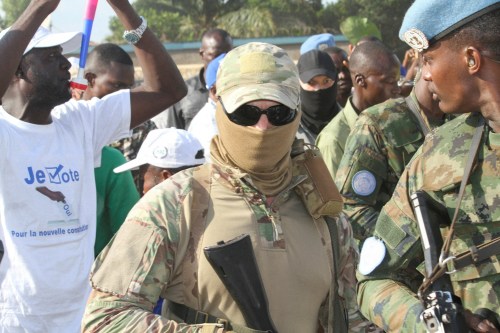
Predictions of the end of the Wagner Group’s operations in Africa and the Middle East in the aftermath of its ill-fated rebellion in Russia are premature. More likely, Wagner’s Middle East and Africa operations will persist: They still serve multiple interests of the Russian state and can be separated from Wagner’s Ukraine and Russia operations. Already, Russian Foreign Minister Sergei Lavrov has stated that Wagner’s operations in Africa will continue. But Wagner’s operations in Africa are likely to endure under a new leadership and structure.
Ukraine aside, the Wagner Group has sent mercenary deployments to Syria, Libya, Mozambique, Mali, the Central African Republic, and Sudan. Unconfirmed rumors have been swirling about Wagner’s presence in the Democratic Republic of the Congo. Wagner also maintains logistical, support, smuggling, and money laundering affiliates and subsidiaries in the United Arab Emirates. Through a vast network of intermediaries and shell companies, its business, commodity-extraction, and disinformation operations span even more countries.
There are several reasons why Wagner’s operations outside of Ukraine and Russia are unlikely to be liquidated even as the fate of Wagner’s disgraced boss, Yevgeny Prigozhin, remains far from resolved:
First, Wagner-Ukraine operations have been substantially separate from its Africa and Middle East operations. Early in the spring of 2022, the Wagner Group withdrew some of its forces from Syria and Libya and deployed them to Ukraine. But since the summer of 2022, Wagner has not significantly reduced its personnel or equipment in Africa or the Middle East.
Second, Wagner’s operations in Africa remain highly valuable for Russia, which uses them for extending its strategic influence and access to important raw commodities. The Wagner Group’s protection of gas and oil fields in Syria, on behalf of the Bashar al-Assad regime, for example, plays into Russia’s global energy coercion games. At least four Russian companies linked to Wagner have exploration permits for Syrian gas and oil fields.
Moreover, Wagner’s business schemes also establish smuggling networks that bring liquidity to the sanctioned Russian regime, such as through gold and diamond smuggling. The intensifying U.S. sanctions on Wagner in Africa and the Middle East have hampered Wagner’s operations but have not eviscerated them, especially as Wagner has long been involved in various clandestine and illegal economies as well, such as antiquities smuggling.
Third, there have been prior instances of the reshuffling of Russian private security companies in the Middle East when they fell afoul of various Russian intelligence services. In 2013, a Russian private security company, the Slavonic Corps, led by Dmitry Utkin, the notorious former Russian special operations forces officer, was sent to Syria to fight ISIS on behalf of the Assad regime. Yet in an inglorious retreat, they were not only chased out of Syria but also arrested in Moscow. Still, Utkin and various commanders and members of the Slavonic Corps were later allowed to form cadres under the Wagner Group. (Utkin, who hasn’t been heard from for several weeks, is now likely a prime target of the Kremlin’s ire.)
The Wagner Group has found itself frequently at odds with either the Russian Federal Security Service, known by its abbreviation FSB, or the Russian military during its deployment to Syria. Those long-running tensions reached a peak in 2018 when, despite the establishment of deconfliction mechanisms between the Russian and U.S. militaries, the United States bombed Wagner’s deployments, killing scores. Prigozhin, Utkin, and the Wagner Group blamed the Russian military for throwing them under the bus on purpose.
Yet however much the Russian military and intelligence services already wanted to cut Wagner to size, the Kremlin had no desire to remove its useful tool of influence.
Furthermore, both the FSB and the GRU, the Russian military intelligence agency, have had complex linkages and influence over Wagner’s overseas operations. Like the Kremlin, they also make money from Wagner’s business operations, whether these operations feed their pockets or parts of their institutional budgets. Prigozhin has used money from Russian state contracts, amounting to some $20 billion, to fund his mercenary, media, and business ventures abroad. The interconnected management of state funding and Prigozhin’s (semi-)private ventures also implies highly interconnected interests for a wide array of influential regime actors. Thus, like in Russia, some of Wagner’s businesses may be shut down, but others will be merely reshuffled. But neither the Kremlin nor the intelligence services want to lose the Wagner income and tool, even if they want to control it better.
Rather than fully liquidating Wagner in Africa and the Middle East, Russian intelligence services will purge Wagner’s structures to weaken affinities to Prigozhin and strengthen ties to the Kremlin. Such a restructuring would mimic the seeming preference of Russian President Vladimir Putin with respect to Wagner in Russia and Ukraine — rolling some cadres under the Russian military, disarming others, and allowing others yet to operate in the existing semi-independent format, but under a new leadership and with Prigozhin’s power minimized.
Such restructuring has started in Syria where Russian forces, assisted by the Assad regime, surrounded Wagner bases and interrogated and removed some Wagner operatives. That the Kremlin would prioritize reasserting control of Wagner in Syria is not surprising: That’s where Gen. Sergey Surovikin, who is close to Prigozhin and hasn’t been seen since the rebellion, led Russia’s brutal and indiscriminate air campaign on behalf of the Assad regime and had close connections with Wagner forces. Wagner’s forces in Syria could most augment the Wagner threat to the Kremlin. But it is noteworthy that the Assad regime did not hesitate in supporting the Russian state against Wagner.
Beyond purges, the Wagner Group in Africa may be renamed and broken up into multiple separate entities. Chopping up Wagner this way would give the Russian state better control over the proxy, even as the network’s murkiness would persist, and rival Kremlin and Russian intelligence and security services could clash with one another in mercenary and business ventures.
Under better control, Russia will likely tolerate and retain Russian private security companies operating abroad. Unlike in Syria, where the Russian military has had an official presence since 2017, sending official “military advisors” to African countries, instead of private proxies, poses various legal and diplomatic inconveniences for Russia and the African countries.
In Ukraine, since December 2022, far before Wagner’s June rebellion, the Russian military has had strong incentives to transfer Wagner forces to the control of the Russian military — to tighten command, eliminate an independent force, and neutralize an increasingly unrestrained and troublesome Prigozhin. Abroad, the Russian state wants tighter control over Wagner operations too, but without the official state label.
Nor do the African and Middle Eastern countries that have signed up with Wagner have an easy capacity to fire it. Mali is a prime example. After succumbing to Russia and Wagner’s influence and having kicked the French military out of the country in 2022 and the U.N. peacekeeping mission in June 2023, Mali is dependent more than ever on Wagner’s forces. All the more so that the U.N. Security Council accepted Mali’s request and voted to end the mission.
Focused far more on securing access to Mali’s gold mines, the 1,000-2,000 Wagner contractors have not been particularly effective in suppressing the jihadis in Mali’s north. In fact, from counterinsurgency and counterterrorism perspectives, their brutality has backfired. But the junta has no immediate alternative.
Besides, Wagner’s principal sell in Africa has become its praetorian guard service for authoritarian regimes as well as elected governments — like in the Central African Republic (CAR). There, Wagner provides security to the president and trains the country’s army. Besides making money from mining, timber extraction, and a beer company, Wagner advisors have developed vast influence over the CAR state, furthering Wagner and Russian interests at the expense of the public good.
Similarly, in the context of ongoing intense fighting in Sudan, Gen. Mohamed Hamdan “Hemedti” Dagalo, the head of the Rapid Support Forces, a key opposition group, is unlikely to forgo Wagner’s intelligence and other support. The support may be limited in terms of weapons and ammunition, but it would still be costly for Hemedti to give it up.
Wagner’s rebellion in Russia likely shook the confidence of African regimes that the Wagner Group is a reliable partner. Yet even an African government as dependent and almost subservient to Wagner as that of the CAR has sided with Russia, not Wagner, in the rebellion’s fallout.
But Wagner’s revolt also showed its daring confidence in mounting an uprising as well as its linkages to various poles of power in the Russian military and intelligence services. Even as these connections are purged and reconfigured within Russia, Africa, and the Middle East, they can still be useful for African governments as they try to play Russia against the West and actors within Russia against each other.
Nonetheless, various African delegations heading to St. Petersburg at the end of July for the Russia-Africa Summit will likely have questions about the future of Wagner’s Africa operations and the extent of Russia’s backing, even as strengthening economic relations is the official billing of the conference.

JERUSALEM, Oct 9 (Reuters) – Israeli Prime Minister Benjamin Netanyahu on Monday said atrocities committed by Hamas during its attack on Israel mirrored those carried out by the jihadist group Islamic State.
Netanyahu in broadcast remarks recounted how some Israelis were killed during the Hamas incursion, saying tied-up children were executed. This, he said, was on par with brutal killings carried out by Islamic State, also known as ISIS.
“The atrocities committed by Hamas have not been seen since ISIS atrocities. Bound children executed along with their families. Young men and women shot in the back, executed. Other horrors I won’t describe here,” Netanyahu said.
“We have always known who Hamas is. Now the entire world knows. Hamas is ISIS. And we will defeat it just like the enlightened world defeated ISIS. This vile enemy wanted war and it will get war,” he said. (Reporting by Ari Rabinovitch and Maayan Lubell; Editing by Mark Porter)
Our Standards: The Thomson Reuters Trust Principles.

Israeli Prime Minister Benjamin Netanyahu likened Hamas to ISIS in a fiery speech Monday night, in which he vowed that the Jewish nation’s retaliation against the terrorist organization for the killing and kidnapping of civilians “will reverberate with them for generations.”
“We have only started striking Hamas,” the 73-year-old world leader said in televised remarks, as rockets continued to rain down on the Gaza Strip.
He claimed that Israel is in a fight “for our home, a war to ensure our existence — a war that we will win.
“What we will do to our enemies in the coming days will reverberate with them for generations,” Netanyahu continued, before going on to speak about the horrors Israeli citizens have had to face over the past four days.
“The atrocities carried out by Hamas have not been seen since the atrocities of ISIS — children bound and executed with the rest of their families, young girls and boys shot in the back, executed, and other atrocities that I will not describe here,” he said.
“Hamas terrorists bound, burned, and executed children. They are savages,” Netanyahu declared. “Hamas is ISIS.
Israeli Prime Minister Benjamin Netanyahu compared Hamas to ISIS in a televised speech Monday night.@IsraeliPM / X
“We have always known who Hamas is,” he continued, speaking of the Israeli people. “Now, the entire world knows who Hamas is, and we will defeat it just like the enlightened world defeated ISIS.”
Netanyahu concluded by saying: “This vile enemy wanted war, and it will get war.”
The Israeli prime minister also reportedly told US President Biden the country has no choice but to unleash an all-out ground operation in Gaza.
“We have to go in. We can’t negotiate now,” Netanyahu told Biden, according to three unidentified sources familiar with the conversation who spoke about it with Axios.
He said Israel had to respond to the atrocities committed by Hamas with force because a country can’t show weakness in the Middle East.
Netanyahu reportedly told US President Biden Israel has no choice but to unleash an all-out ground operation in Gaza.REUTERS Netanyahu’s speech came as rockets continued to rain down on Gaza.REUTERS
“We need to restore deterrence,” Netanyahu reportedly told the US president, who decided not to try to convince him to escalate to a ground operation, the sources said.
As of Tuesday, the four-day war has already claimed at least 1,600 lives, as Israel saw gun battles in the streets and neighborhoods in Gaza reduced to rubble.
Hamas had also abducted up to 150 civilians, including women and children, who were forcibly taken from their homes.
As of Tuesday, the four-day war has already claimed at least 1,600 lives.REUTERS
It warned on Monday that it would start executing those hostages.
“Every targeting of our people without warning will be met with the execution of the civilian hostages,” the terrorist organization’s Ezzedine al-Qassam Brigades said in a statement.
Just a few hours later, Abu Obaida — the brigades’ spokesperson — told Al Jazeera: “We have decided to put an end to this, and as of now, we declare that any targeting of our people in their homes without prior warning will be regrettably faced with the execution of civilians we are holding.”
The exact number of hostages being held by Hamas is not known, but on Tuesday the Israel Defense Forces announced it notified 50 families whose loved ones are being held hostage in the Gaza Strip.
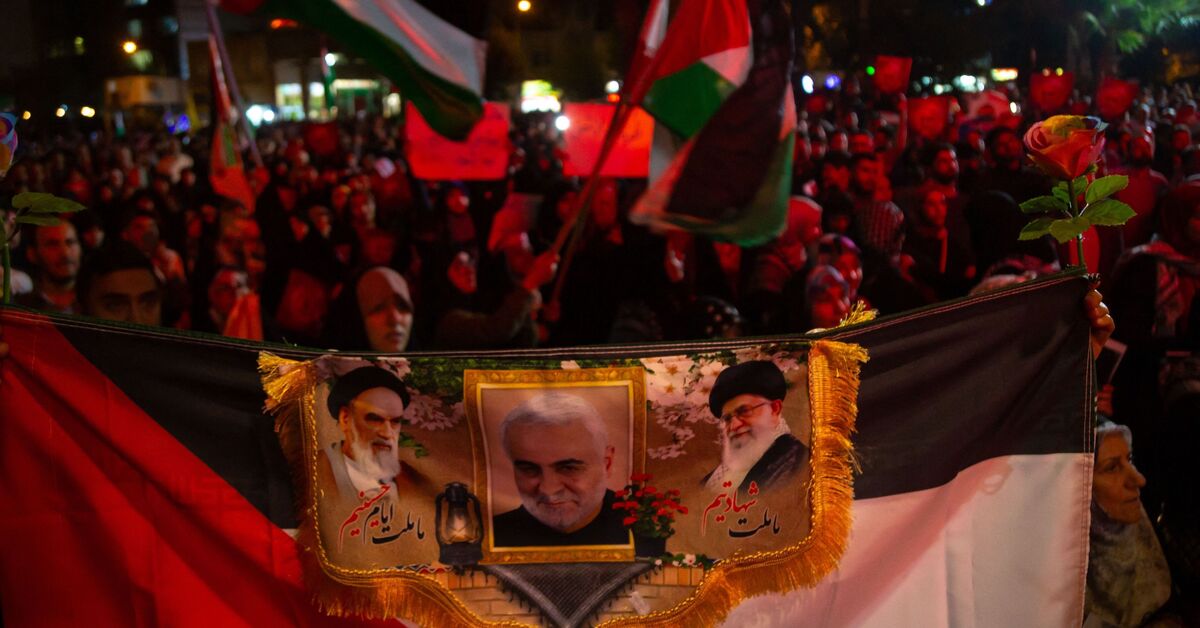
TEHRAN — Iran’s Supreme Leader Ayatollah Ali Khamenei threw generous praise at the militant Palestinian movement Hamas for a wave of deadly attacks and hostage taking well inside Israel over the weekend, that has left so far more than 1,000 Israelis dead.
Addressing cadets at a Tehran military academy on Tuesday, Khamenei hailed Hamas for the “epic” victory and the “destructive earthquake” it inflicted upon Israel.
“We do kiss the foreheads and the arms of the smart masterminds and the Palestinian youths,” the Iranian leader said as reported by his official website.
Khamenei maintained that for years to come, Israel will have to reel from the “irreparable” devastation it was dealt by the Palestinians militants. Using his signature rhetoric against Iran’s arch-foe, Khamenei described Israel as a “usurper” and a “tyrannical,” “ignorant” and “monstrous” entity.
The Iranian leader, who holds the final say in the country’s foreign policy and military affairs, warned that an even “bigger calamity” awaits Israel should it continue “committing crimes” against the Palestinians.
Yet the 84-year-old cleric denied his country’s involvement. “The supporters of the [Israeli] regime and the regime itself have in the past few days kept saying nonsense, including that the Islamic Republic was behind the move,” he said. “They are miscalculating,” he added, reasserting, “Of course, we do defend Palestine and its struggle.”
Khamenei was responding to arguments from Israeli officials and Western media reports that Iran was directly involved in the attacks or at last gave the green light to the Palestinian militants, whom it has been funding and arming for much of the past four decades. Hamas officials have made contradictory comments as to whether they were backed by Tehran in the attacks.
Earlier on Monday, the United States warned the Islamic Republic and its main proxy in Lebanon, Hezbollah, to stay out of the ongoing conflict. And amid speculation that Iran could be targeted if the conflict escalates and spreads, Iran’s Foreign Ministry spokesperson Nasser Kanaani declared on Monday that Tehran’s response to any “stupid” move will be devastating.
The lightning operation that caught the world by surprise occurred four days after Khamenei openly expressed his unease with normalization efforts between the Arab world and Israel. The last Arab state to have expressed such willingness was Saudi Arabia, which without naming, Khamenei advised that such rapprochement would be “betting on the losing horse.”
As prospects of further Arab-Israeli reconciliation appeared complicated amid the escalating conflict, the deputy speaker of the Iranian Parliament, Mojtaba Zolnouri, expressed hope that following the Hamas attacks, “the issue of recognizing Israel by the regional countries will be shelved forever.”
From the early hours into the Hamas operation, Iran’s state media organs have been applauding the “glorious triumph,” extensively publishing footage of Israelis being kidnapped and dragged away. To them, the attacks exposed Israel’s vulnerabilities and shattered the Jewish state’s “myth of invincibility,” as they saw the beginning of the end of Israel and “the moment of truth” promised by Khamenei.
In the latest, the official X (Twitter) account of the Iran newspaper — the leading media platform of the government in Tehran — drew strong criticism among many Iranians after posting a controversial cartoon.
The design featured what appeared to be a Palestinian youth posing with the victory sign while holding a balloon that read “1K,” presumably a reference to the mounting casualties on the Israeli side.
“We just hit the 1,000 mark,” the paper read.
Armenia is ready to hold a meeting in the “3+3” format (Azerbaijan, Armenia, Iran, Russia, Georgia, and Türkiye), Armenia’s Prime Minister Nikol Pashinyan said in an interview with the Public TV Channel, Report informs via News.am.
The post Putin stabbed Israel in the back! Israel forms emergency gov’t for Hamas war, Gantz to join Netanyahu … first appeared on The News And Times – thenewsandtimes.com.

TEL AVIV (JTA) — Al Hambra Deli, a neighborhood cafe and wine bar in Jaffa, would usually expect to be bustling on this Thursday night, the beginning of the Israeli weekend. Located on Jerusalem Boulevard., one of the city’s main arteries, it’s right on the path of Tel Aviv’s recently opened light-rail system, and not far from a soccer stadium.
But this week, its doors have been shuttered. A sign greets passersby: “Beloved neighborhood, half of us are in the army and half are protecting our homes. We love you and are waiting to return, Staff.”
It’s a mood felt throughout the city and others in Israel’s crowded central region: Five days after an attack by Hamas killed and wounded thousands in the country’s south, streets in Tel Aviv and Jerusalem are chillingly quiet aside from sirens warning of incoming rockets. Schools are closed and residents are yearning for ways to help as they cope with the physical and emotional fallout of the massacre and the war Israel is now fighting against Hamas in Gaza.
Earlier this week, supermarket shelves emptied out as authorities recommended that Israelis stock up on three days’ worth of food. Shufersal, the country’s largest grocery chain, set limits on purchases of bread, bottled water, milk and eggs.
Details of the atrocities in the south continue to emerge, and 300,000 Israelis have been called up for reserve duty. Rockets continue to target Israeli cities, and Israeli airstrikes hit Gaza, as the country girds for what will likely be a prolonged conflict.
“We live in a permanent state of fear,” said Inès Forman, 29, a French-Israeli writer, describing the last week in Tel Aviv. “I feel anxiety and fear in my body every second that I am awake.”
Forman has committed herself to spreading news on social media about Saturday’s massacre. Many of the Instagram posts on her profile are about art or literature, but the images she’s shared over the past 24 hours are of a different kind: widely circulated clips of reporters describing the scenes they’ve encountered in towns on the Gaza border, and photos and video condemning Hamas and its supporters.
“We are working on fighting fake news… basically all day” she says of her new routine, keeping a schedule that involves waking up and starting at “five or six until very late at night. Yesterday, I finished at around one” in the morning.
On Thursday, Forman attended the afternoon funeral of her friend’s younger sister, Shira Eylon, 23, who was presumed captured until her body was discovered in the woods on Wednesday amongst those who were murdered at the massacre at the music festival outside Kibbutz Re’im.
“My beautiful and pure fairy — today you received wings. I love you forever,” her older sister wrote on Instagram, announcing her death.
“There is not anyone who doesn’t have a loved one who’s either been killed, someone who they know, a friend or a loved one, or injured, or taken captive” said Melanie Landau, a 50-year-old Australian-Israeli therapist living in the Baqa neighborhood of Jerusalem. “So many people are on the front line and just worried about their loved ones.”
Many residents have left Tel Aviv, traveling abroad or to an area of Israel farther from Gaza, and have listed their apartments on spreadsheets coordinating housing for refugees from areas in Israel’s north and south that have been evacuated. Several people described the normally crowded city as a “ghost town.”
Some Tel Aviv residents have relocated within the city. Lotte Beilin, a 30-year old British-Israeli news producer, is staying in a friend’s apartment because her own building is older and doesn’t have a bomb shelter. The city streets are “so quiet you can hear a pin drop.”
There are more “uplifting” moments too, Landau said, adding that “the sort of resilience and strength of the human spirit” has been on display this week.
Throughout the country, many efforts are underway to collect needed supplies for the hundreds of thousands of soldiers who arrived at their bases lacking some critical resources.
Lee Mangoli, a 32-year-old Canadian-Israeli yoga teacher in Tel Aviv, recalled that “on Sunday we started to come out of shock and I realized I needed to take action to help myself.” She met with a friend and started collecting food and other “basic amenities” like shampoo and socks for soldiers.
Very quickly, she says that their small project “exploded with money coming in from abroad… and we are dealing with a lot of requests from a lot of different bases that cost money.”
While there have not been any issues raising funds, her group has run into difficulties sourcing the supplies. “We are not finding the goods anymore. UPS and Fedex are not delivering to Israel” and certain much-requested items like Leatherman utility knives have been nearly impossible to locate. “I could buy 200 and have soldiers to give them to but nobody has them,” she said.
For others such as Becky Schneck, 36, a physical therapist and mother of four young children, the burden of her husband’s call-up to reserve duty on Saturday, in addition to the closure of schools until further notice, has been too overwhelming to consider volunteering for the war effort.
“I am so busy, I don’t even want to think about it too much,” she said. “I do not have the emotional capacity to deal with everything going on in my house and also everything going on in the country.” Neighbors in her community of Tzur Hadassah, outside Jerusalem, have stepped up to deliver food to families like hers.
While Masa Israel, an umbrella group for gap year programs, said shortly after the massacre that none of its 5,700 fellows were harmed, at least one program has closed — the Yahel Social Change Fellowship, which engages its participants in social action and volunteering across Israel.
“With a heavy heart, the Yahel board and staff have made the difficult decision to temporarily suspend the Yahel Social Change Fellowship until things calm down here,” announced Yahel’s executive director, Dana Talmi.
Others are pressing on. At the Pardes Institute for Jewish Studies in Jerusalem, staff “are doing the best we can… [going] into overdrive to support our students as much as humanly possibly,” said Meesh Hammer-Kossoy, the dean of students. “Pardes is pretty serious about running” in spite of the war. Of the approximately 80 students studying year-long, 18 have joined classes via Zoom from abroad.
“We are resolutely gathering for regular prayer and trying to study as best as we can,” she said.
Landau said that many Israelis are engaged in “a battle of consciousness.”
“There are a lot of people getting overexposed to a lot of the imagery and I think that is part of the battle,” she said. “Not to lose faith in humanity and not to be pulled in by that.”
This article originally appeared on JTA.org.
The post In Tel Aviv and Jerusalem, residents volunteer and keep kids at home as streets and supermarket shelves empty out appeared first on The Forward.
The post In Tel Aviv and Jerusalem, residents volunteer and keep kids at home as streets and supermarket shelves empty out first appeared on The News And Times – thenewsandtimes.com.

A senior Ford executive said Thursday the automaker is “at the limit” of what it can spend on higher wages and benefits for the United Auto Workers, and warned the union’s strike at the company’s most profitable factory could harm workers and slash profits.
“We have been very clear that we are at the limit,” Kumar Galhotra, head of Ford’s combustion vehicle unit, said during a conference call Thursday. “We stretched to get to this point. Going further will hurt our ability to invest in the business.”
Ford is open to reallocating money within its current offer in further bargaining with the union to secure an agreement, Galhotra said. Ford is also working with the UAW on a way to bring workers at joint-venture electric vehicle battery plants into the UAW-Ford agreement, he said.
UAW President Shawn Fain on Wednesday ordered a strike at Ford’s Kentucky Truck factory after Ford negotiators did not present a richer contract proposal.
UAW negotiators turned their attention on Thursday to talks with Chrysler parent Stellantis (STLAM.MI), union President Shawn Fain said, confirming a Reuters report.
“Here’s to hoping talks at Stellantis today are more productive than Ford yesterday,” Fain wrote on social media. Stellantis did not immediately comment.
The standoff between the UAW and Ford could soon affect thousands of workers who are not among the nearly 34,000 Detroit Three workers Fain has ordered to walk off the job since Sept. 15.
About 4,600 Ford workers could be idled because their jobs depend on production of Super Duty pickups and large Lincoln and Ford SUVs at Kentucky Truck, said Ford manufacturing vice president Bryce Currie.
Already, 13,000 workers at Ford suppliers have been furloughed because of earlier UAW walkouts at two Ford assembly plants, Ford supply chain chief Liz Door said. The shutdown of Kentucky Truck, Ford’s largest factory, could push a fragile supply chain “toward collapse,” she said.
Fain and other UAW officials have countered that Ford, General Motors and Stellantis can afford to increase pay for UAW workers beyond the 20% to 23% they have offered, end lower wage tiers for lower seniority and temporary workers, and restore defined benefit pensions lost in 2007 if they rein in share buybacks and cut excessive executive pay.
The walkout at Kentucky Truck was a sharp escalation in the UAW’s slow-building campaign of strikes, and sent a warning to Stellantis and General Motors (GM.N), whose wage and benefits offers fall short of Ford’s, based on summaries the automakers and the UAW have released.
Fain has scheduled a video address for Friday at 10 a.m. EDT (1400 GMT). In past weeks, Fain has used Friday addresses to order additional walkouts, or announce progress in bargaining.
Fain has yet to tip his hand as to what actions he will take Friday, if any.
Some analysts saw Fain’s decision to shut down Ford’s Kentucky Truck plant, which builds Super Duty pickups and Lincoln Navigator SUVs, as a sign that the endgame could be starting in the nearly month-long round of coordinated walkouts at the Detroit Three.
“Pressure was always needed to force a deal,” Evercore ISI analyst Chris McNally wrote in a note on Thursday.
White House press secretary Karine Jean-Pierre said the administration was closely monitoring the economic impact of the widening strike and still hoped both sides will reach a “win-win agreement.”
Last Friday, Fain said if needed, the UAW would strike the GM assembly plant in Arlington, Texas, that builds Cadillac Escalade, Chevy Suburban and other large, high-priced SUVs. GM’s Flint, Michigan, heavy-duty truck assembly plant is another potential strike target.
High-profit targets at Stellantis include the automaker’s Ram pickup truck factories in Sterling Heights and Warren, Michigan, as well as two Jeep SUV factories in Detroit.
“This puts everybody on notice,” said Sam Fiorani, vice president of global vehicle forecasting at AutoForecast Solutions. “If they haven’t brought anything new to the table since last week, GM and Stellantis should be worried.”
Analysts at Wells Fargo estimated that Ford will lose about $150 million per week in core profit from the Kentucky plant strike.
Ford officials said on Thursday that cutting a deal that does not allow the company to survive makes no sense and that striking the Kentucky truck plant would also hurt the UAW’s profit-sharing checks.
In a sign of the strike’s expanding impact, Delta Air Lines (DAL.N) said on Thursday it is feeling a pinch from the automotive and entertainment labor strikes. Delta President Glen Hauenstein said the UAW strike has curtailed a “significant” amount of business in Detroit.
Automakers have more than doubled initial wage hike offers, agreed to raise wages along with inflation and improved pay for temporary workers, but the union wants higher wages still, the abolishment of a two-tier wage system and the expansion of unions to battery plants.
The UAW has room to expand its walkouts and increase the pressure on the Detroit Three to offer bigger wage gains, richer retirement packages and more assurances that new electric vehicle battery plants will be unionized.
Even with 8,700 workers at Ford’s Kentucky Truck plant now on strike, less than a quarter of the 150,000 UAW workers at the Detroit Three automakers are now on strike. However, thousands more have been furloughed from jobs at operations that are not on strike because automakers said the walkouts made their work unnecessary.
Ford said on Thursday that it already had 13,000 layoffs at its suppliers and that 4,600 of its own workers could be laid off at other plants.
Ford warned that workers at a dozen other factories could be sent home because of the truck plant walkout. Officials said new layoffs stemming from the Kentucky strike could begin in the coming days.
Its Kentucky truck plant, the company’s most profitable operation, generates $25 billion in annual sales, about a sixth of Ford’s global automotive revenue.
Fain and other UAW officials called a meeting with Ford at on Wednesday evening and demanded a new offer, which Ford did not have, a Ford official said.
“You just lost Kentucky Truck,” Fain said, according to the Ford official and a union source, speaking on condition of anonymity because the talks are not public.
Ford said the decision was “grossly irresponsible.”
Fain has said his aim is to keep the automakers off-balance by taking targeted action rather than a full strike.
The Detroit automakers will report third-quarter financial results between Oct. 24 and Oct. 31, and the UAW could use what are expected to be robust profits to press their case for a richer contract.
Before Wednesday’s Ford announcement, the union had ordered walkouts at five assembly plants, including two Ford assembly plants, at the three companies and 38 parts depots operated by GM and Stellantis.
The post Ford says it is “at the limit“ with UAW contract offer first appeared on The News And Times – thenewsandtimes.com.
Kensington’s temporary open street on Beverley Road has officially been transformed into a permanent pedestrian plaza.
Since 2022, Mayor Eric Adams’ administration has worked in conjunction with community partners to host weekend open streets on the westernmost block of Beverley Road between East Second Street and Church Avenue in Kensington. On Oct. 11, the stretch was transformed into a colorful, permanent plaza that adds approximately 5,600 square feet of space to the existing Kensington Plaza, which sits adjacent to the road.
The Beverley Road plaza is part of the Department of Transportation’s car-free public Open Streets initiative that aims to make more public spaces accessible to New Yorkers to promote economic development, support schools, provide additional ways for New Yorkers to interact with one another, and create more space for cultural programming. Beverley Road’s new open street transformation marks the 65th DOT art project to be implemented during the Adams’ administration.
“Every New Yorker deserves safe, accessible, and vibrant public spaces, and through our Open Streets program we are working with communities to bring these lasting benefits to neighborhoods across the city,” said NYC DOT Commissioner Ydanis Rodriguez on Wednesday. “As we continue to launch new Open Street locations, we are working to deliver permanent upgrades to existing locations like Beverley Road and coupling these projects with community art where possible.”
 The plaza is decorated with a colorful mural designed by Ukrainian artist Misha Tyutyunik. Photo courtesy of NYC DOT
The transformation of the block created 9,400 square feet of unified pedestrian space, with shortened pedestrian crossings on Church Avenue, East Second Street and Beverley Road.
The space also incorporated new loading zones on East Second Street for businesses and residences, and will eventually include granite blocks, planters, umbrellas, moveable furniture and more to brighten up the space and keep vehicles out.
“I am so thrilled to announce the expansion of Kensington Plaza today,” said Council Member Shahana Hanif on Wednesday. “Creating this extended open space in Kensington has been in the works for years. Unlike nearly every other neighborhood in District 39, Kensington has few public pedestrian spaces, so the inclusion of East Second Street and Beverley Road is a welcome addition. Creating accessible public spaces like the new Kensington Plaza is safer for pedestrians, good for small businesses, cuts down on our community’s greenhouse gasses, and will make our neighborhood stronger.”
Hanif also recently helped a local mosque secure an open street on Friday afternoons for outdoor prayer.
The new space has been decorated with an asphalt mural, “A Conversation on Beverley,” designed by Brooklyn-based Ukrainian artist Misha Tyutyunik, via the DOT’s art program. The program partners with community-based artists and nonprofit organizations to display art on DOT projects for up to eleven months.
“As an immigrant from Soviet Ukraine, I have always seen art as a global language,” Tyutyunik said. “The composition for ‘A Conversation on Beverley’ mural is distilled from the feedback sourced from community engagement workshops, where local residents were asked to imagine their community through symbols, words and colors. The result is a design that highlights connectivity, community, peace, love and diversity through the subtly interlaced imagery of faces, fresh fruit, homes, flowers, sun, moon and stars, utilizing vibrant colors and abstraction, to paint a vivid slice of local life.”
The post Beverley Road open street transformed into permanent pedestrian plaza first appeared on The News And Times – thenewsandtimes.com.
Outside the old Meghri train station in southern Armenia, a rusting locomotive, emblazoned with a fading emblem of the Soviet Union, sits on the tracks, as if still waiting for the passengers who stopped coming long ago, The Washingon Post reports.
The station’s overgrown courtyard and dilapidated waiting rooms were once filled with Armenians, Azerbaijanis and visitors from across the Soviet Union, traveling between Baku and Yerevan, or Moscow and Tehran. A modest cafeteria sold tea and snacks, and in summer, fruit sellers on the platform hawked persimmons and pomegranates, grown locally in the orchards that hug the valley.
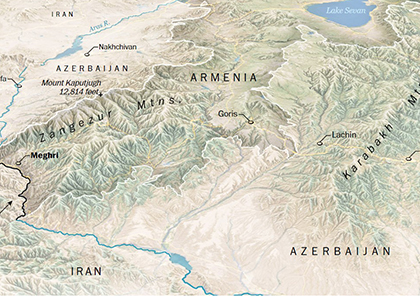
Meghri sits at a strategic crossroads that regional powers, including Azerbaijan, Iran, Turkey and Russia, are competing to access — prompting fears it could soon be at the center of a new war.
Located just north of the Aras River and the Iranian border, Meghri is hemmed in by Azerbaijani territory. To the east lies Azerbaijan proper, whose border with Armenia has been shut since 1991. Roughly six miles to the west lies Nakhchivan, a landlocked Azerbaijani exclave that Baku has long dreamed of connecting to its mainland. A sliver of Nakhchivan borders Turkey.
Azerbaijan calls Meghri, and the rest of Armenia’s Syunik province, the Zangezur corridor. Azerbaijani President Ilham Aliyev and other officials have described opening this corridor as a top objective — one that is now in direct focus following Baku’s recapture of the long-disputed territory of Nagorno-Karabakh.
The Zangezur corridor is a broken link in a longer, potentially highly lucrative east-west route called the “Middle Corridor” that would connect China and Central Asian countries to Turkey via Azerbaijan.
Yerevan pledged to open transport routes to Baku as part of a 2020 cease-fire after a brief war in Nagorno-Karabakh. But since then, Armenian officials have balked, saying that any such arrangement would effectively be the occupation of Armenian territory.
Betrayed by Moscow, which failed to prevent Azerbaijan’s military operation in Nagorno-Karabakh, Armenia now wants full control of the route. And it no longer wants Moscow’s security forces, who have guarded Meghri’s borders since the 1970s, involved.
Azerbaijan, meanwhile, is pressuring Yerevan for unfettered access to the corridor, aiming to reopen the old Soviet railroad from Baku to Nakhchivan, as well as a highway for cars. It has already begun constructing infrastructure in preparation for the route.
Aliyev has signaled that Baku would use force to seize the corridor if the 2020 deal is not upheld. “We will implement the Zangezur corridor, whether Armenia wants it or not,” he said in 2021.
“I think the threat of a flare-up is very real,” said Stefan Meister, a South Caucasus expert at the German Council on Foreign Relations. “The Azerbaijanis have a maximalist approach. … If they can take it, they will do it.”
Thomas de Waal, a senior fellow at Carnegie Europe who specializes in the region, said there are “two competing visions for the same east-west route,” with Armenia backed by the West, and Azerbaijan, Russia and Turkey aligned together.
“It is more likely that Baku and Moscow will jointly use all their pressure points on the Armenian government to coerce them to accept their plan,” de Waal said. “So this is shaping up into a real contest.”
Turkey and Russia, which would benefit from expanding transport links crossing Armenian territory, have backed Aliyev’s plans. Russia, especially, wants this southern route to circumvent Western sanctions. Moscow has been using Azerbaijan to continue selling oil despite import bans and a price cap regime coordinated by the Group of Seven nations.
But Iran, a powerful ally of Armenia and its only friendly neighbor, has strongly opposed the project, averse to any alterations to its border with Armenia. The proposed plan would hinder, if not disconnect, free trade and traffic between the two countries. It could also reduce profits from Iran’s gas contracts with Turkey and Azerbaijan.
Azerbaijan’s lightning offensive in Nagorno-Karabakh last month, which prompted more than 100,000 of the region’s ethnic Armenian residents to flee, has raised concerns that Baku — which has stepped up its hawkish rhetoric — may use force to get its way in the transit corridor dispute.
A crumpled old railway map lies on the floor of the main building of the abandoned Meghri train station. When active, the railway connected Meghri to Yerevan, traveling through Nakhchivan. (Anush Babajanyan/VII)
It was war between Azerbaijan and Armenia that originally shuttered the Meghri station.
At its peak during the Soviet era, the station had 70 employees. Armenian and Azerbaijani residents lived side by side. One year, even one deputy mayor of Meghri was Azerbaijani.
But in 1992, with Armenia and Azerbaijan at war over Nagorno-Karabakh, revenge attacks escalated. A group of Azerbaijanis hijacked the train running from Yerevan to Kapan as it passed through Nakhchivan and took 12 wagons full of mostly Armenian passengers hostage for a week.
As official negotiations stalled, a group of men from Meghri took matters into their own hands. Climbing the high mountain paths to a radar station, they bribed a Russian border guard to let them cross into Nakhchivan. Then, disguised as Russians, they kidnapped a local man — a relative of an Azerbaijani official — who was exchanged for the 14 remaining passenger-hostages. Baku and Yerevan later signed an accord to safeguard passenger transport.
The next year, however, a rumor spread that Azerbaijanis had abducted a busload of Armenian passengers farther north. A lynch mob of angry Armenian residents gathered at the Meghri station. Thinking that Baku had violated the accord, Arman Davtyan, the deputy station director, halted the train.
“I gave the order to the duty officer to stop the incoming train,” Davtyan said in a recent interview, a smile twitching at the corners of his mouth, “and by doing this, I very nearly risked an international crisis.”
After two days of talks to ensure locals would not ambush the passengers, the train departed from the station — one of the last to ever leave Meghri. The station closed a few months later, in 1993, along with the whole line from Baku to Nakhchivan.
The post Washington Post: After Nagorno-Karabakh, Azerbaijan eyes a strategic strip of Armenia first appeared on The News And Times – thenewsandtimes.com.

The Hamas massacre that took place over the weekend was not the result of decades of “occupation.” Israel left Gaza in 2005, uprooting families and wrenching the country into an impassioned debate along the way. Not a settler, nor single IDF soldier, nor any type of Israeli personnel has remained in the Gaza Strip.
[time-brightcove not-tgx=”true”]
No, this massacre was a function of hate—the kind of toxic intolerance in its purest form.
It was years in the making, and just as it took sophisticated military and logistical planning, it also took years of ideological planting—sowing seeds of antisemitism. Indeed, one cannot look at what Hamas did without understanding their thinking about Jews.
Hamas and its co-conspirators in the Muslim world had been vilifying Jews for decades, starting with their founding charter, which is full of antisemitic bile. They constructed an entire architecture of antisemitism that spanned the world and spanned spheres from academia to religion, politics and culture. There were many people who should have been pushing for a just resolution to the Israeli-Palestinian conflict, but instead had adopted an ideology of hate that did not see Jews as worthy of a piece of land or even as equal contestants in a historical struggle. It saw them as subhuman.
Read More: Israelis Dread This Nightmare Will Never End
From the pulpits of mosques to the pages of op-eds to the stands of bookstores across the Arab world, the Protocols of the Elders of Zion, Hitler’s Mein Kampf and other timeless fictions and hateful works were peddled, updated, and perfected to the point that large swathes of the public stopped seeing Zionists or Israelis or Jews as human long ago. School children are taught to hate Israel, Jews are demonized as part of official curriculum, and “summer camps” involve learning how to fire automatic weapons and kidnap Israelis.
And this is how the massacre took place.
A world in which you see an entire tribe of people as lesser—as roaches, as vermin—this is how you justify gunning down hundreds of unarmed teenagers at a concert, how you rationalize men going house to house and murdering parents at point blank range in front of their children, how you legitimize intentionally setting houses on fire with infirm, elderly people trapped inside, unable to escape; how you explain kidnapping toddlers still not old enough to speak and mocking them in front of the camera; how you excuse desecrating corpses, stepping on their faces while grinning for the camera.
This is not normal, not by any standards.
However, it is normal in a historical context. There have been other times over the centuries where one people saw the other as anything but human. From Europeans and American slave traders who enslaved the people of an entire continent, to genocides in Rwanda and Cambodia, and, of course, in Nazi Germany.
The Third Reich constructed a vast edifice of empire predicated on the core idea of answering the “Jewish Question.” It expanded into all spheres, not just military, but arts, industry, faith, and more, instrumentalizing these sectors to pursue their objective of eradicating the world of the Jewish people. For years, their neighbors in Europe ignored the facts or underestimated their ambition or dismissed their stated goals. It took the combined forces of the Allied powers and the horrifying, singular discovery of the concentration camps, to awaken the conscience of the West, or at least force it to reckon with the price of its inertia and ignorance.
Few thought such an egregious moral failure could replicate itself. No one imagined it might be possible for the world to miss such a moment once again. I know what I would do, ordinary people have told themselves, trying to appease their consciences.
Think again.
And yet, even with the sight of brutalized, raped women being paraded across Gaza by gleeful militants and hooted at by cheering crowds, we see rallies across America and in European capitals extolling the resistance and denying the inhumanity so obvious that it boggles the mind and chills the soul. We see students at our most prestigious and famous university, Harvard, blaming Israel for the massacre of its own citizens. At ADL, we are tracking dozens of demonstrations and countless op-eds blaming Israel for this massacre of its own people at the hands of hooligans with automatic weapons, men funded and trained in the dark arts of death by the Islamic Republic of Iran.
If we are to move forward and address such moral corruption, it will not be achieved after a single military maneuver in Gaza. As we saw in the wake of the World War II, we need a philosophical and psychological reckoning, a wholesale cleansing of the ideology of antisemitism and hate that leads people to ridicule life and applaud death.
We need a modern day “de-Nazification” that seeks to find a political solution to the Israeli-Palestinian impasse. It must address the absolute moral rot at the core of the anti-Zionism that fueled the Hamas massacre, that fills the sermons of countless imams across the Muslim world, that informs the college students praising the massacre as “decolonization,” that tells activists that it’s reasonable to pull up swastikas on their cellphones when they see a Jewish person.
This is the real and long-term fight. In the short term, the difficult challenge for the Israeli military will be targeting the Hamas infrastructure—operation centers, where they store their materiel, where their Gaza leadership is hiding out—while making all efforts to limit civilian casualties. But it will take decades to rid the world of the disease of antizionism that has settled in like a permanent plague.
The process must start now.
The post Let’s Be Honest About the Hate That Drove the Hamas Attack first appeared on The News And Times – thenewsandtimes.com.

[time-brightcove not-tgx=”true”]
In the current line of thinking among many American conservatives, Palestinian militants’ horrific attack on Israeli civilians over the weekend can be at least slightly blamed on President Joe Biden’s policies. In this telling, a substantial measure of that fault has to do with the administration’s attempts to address climate change, though how exactly that connection works is a bit fuzzy.
That, at least, was one takeaway from ex-House Speaker Kevin McCarthy’s (R-Calif.) comments to reporters on Monday in the bloody aftermath of the Hamas attacks on Israel. The remarks contained many of the national security jabs one might expect—the President being, in McCarthy’s description, soft on Iran, weak on border security, and generally terrible at projecting U.S. strength abroad.
We’ll leave the dissection of some of those criticisms to our colleagues in Washington D.C. We will also leave aside the question of any role decades of unstinting and bipartisan U.S. support for Israel may have played in perpetuating the conflict, as the Israeli Defense Forces lays siege to a Palestinian enclave of 2.2 million that Israel’s prime minister has vowed to reduce to “rubble.” Instead, we’ll focus on one of McCarthy’s critical points: that Biden’s green policies have come at the expense of America’s national security interests and those of its allies, and—as the former speaker appeared to imply—indirectly created the conditions for the Hamas attacks.
“President Biden has said previously that he believes the number one threat America is facing is climate change. That is not true,” McCarthy said, going on to list terrorism, border security, energy production and Iranian, Russian, and Chinese power as greater threats. “Rather [than] focus on his Green New Deal, he should focus on protecting the American people,” he said.
Basically, McCarthy’s argument seemed to be that America and its allies are safer when the U.S. produces more oil. By “attacking” American oil production, Biden has empowered hostile petro-states like Iran and Russia.
A version of this story also appears in the Climate is Everything newsletter. To sign up, click here.
You can imagine U.S. environmental progressives saying to themselves, “would that it were!” Biden’s stance on new drilling has been, in essence, a balancing act between pacifying green advocates furious over his decision in March to permit a massive new oilfield in Alaska, and the political reality that high prices at the gas pump tend to be a one-way ticket to a one-term presidency. McCarthy omitted the fact that U.S. oil production is on track to set new records this year and next, despite an urgent mandate from the world’s scientists to cut fossil fuel emissions. Rather than squeezing oil production, Biden’s climate strategy has hinged on creating financial incentives for green energy and manufacturing. Perhaps the biggest bitter pill Democrats had to swallow when passing last summer’s Inflation Reduction Act was to allow even more oil drilling in exchange for desperately-needed green subsidies.
Beyond that, there’s good national security justification for cutting carbon emissions (Not to mention the imperative to help avert untold human misery around the world and potential civilization-level catastrophe). Unchecked global warming will swamp the U.S. with climate refugees, batter coastlines with mega-storms, and threaten food supplies, infrastructure, and even military bases overseas, and altogether make the world a more violent, unstable place. It’s also just obviously a good move, geopolitically speaking, for the U.S. to invest in building up its capacity to manufacture batteries and wind and solar energy, rather than allowing China to corner the global market. With the costs of those technologies falling, doubling down on fossil fuels would be akin to investing in horses back when the world was transitioning to petroleum.
None of that, though, will likely dissuade conservatives from attempting to use climate action as a cudgel to batter Democrats in the lead up to next year’s election. The strategy, it seems, is to paint a connection between emissions cuts and any current crisis, as if any attention the government spares for our biosphere must necessarily come at the expense of something else. But, as National Security Council Coordinator for Strategic Communications John Kirby told FOX News on Monday, with the vast resources of the federal government, not to mention a $816.7 billion defense budget, we’re perfectly capable of doing more than one thing at once. “We are a big enough, and powerful enough, and effective enough nation to be able to look after all these disparate national security threats,” Kirby said. “And one of them absolutely is climate change.”
The post Kevin McCarthy is Blaming Biden’s Climate Policy for the Attacks in Israel first appeared on The News And Times – thenewsandtimes.com.

NEW YORK — Sen. Bob Menendez (D-N.J.) was charged in a superseding federal indictment on Thursday with conspiracy by a public official to act as a foreign agent, intensifying the legal peril facing the veteran lawmaker as he continues to resist calls to resign.
Federal prosecutors charged Menendez, 69, and his wife Nadine with bribery last month, alleging that they accepted cash and gifts totaling hundreds of thousands of dollars in exchange for attempting to assist the Egyptian government.
The senator, his wife and three associates — Wael Hana, Fred Daibes and Jose Uribe — were charged with conspiracy to commit bribery and conspiracy to commit honest services fraud. The Menendezes also were charged with conspiracy to commit extortion as a public official.
Now they and Hana face an additional count for allegedly conspiring to have Menendez act as an illegal foreign agent on behalf of the Egyptian government, while he was serving as a U.S. senator with access to sensitive intelligence as the former head of the Senate’s Foreign Relations Committee.
The couple and Hana all pleaded not guilty in U.S. District Court in Manhattan after the initial indictment. Menendez also gave up his committee chairmanship temporarily, in accordance with Democratic Senate rules.
The indictment described Menendez accepting gold bars, cash and a Mercedes in exchange for his cooperation with Hana, who was the senator’s U.S.-based go-between with Egyptian officials.
This is a developing story. It will be updated.
The post N.J. Sen. Bob Menendez charged with conspiring to act as foreign agent first appeared on The News And Times – thenewsandtimes.com.
, which Kyrgyzstan is hosting. Leaders of Azerbaijan, Belarus, Kazakhstan, Tajikistan, Turkmenistan and Uzbekistan will also attend the summit.
Armenian Prime Minister Nikol Pashinyan will skip it, as Yerevan’s relationship with Moscow has frayed amid mutual accusations.
It is the first time this year that Putin has travelled outside Russia and Russian-held territories of Ukraine. Earlier this year, he visited the partially occupied Ukrainian regions of Donetsk, Luhansk and Kherson, as well as the annexed Crimean Peninsula.
In March, the ICC issued an arrest warrant for Putin over the deportation of children from Ukraine. Countries that have signed and ratified the Rome Statute, which created the ICC, are now bound to arrest the Russian leader if he sets foot on their soil.
The move caused Putin to skip an economic summit in South Africa in August and further strained Moscow’s ties with Armenia after it moved to ratify the Rome Statute earlier this month, even as Armenian officials sought to assure the Kremlin that the Russian leader would not be arrested if he entered the country.
The Kremlin has said that Russia doesn’t recognise the jurisdiction of the ICC and considers the warrant null and void.
Kyrgyzstan is not a signatory of the Rome Statute. In Central Asia, only Tajikistan is. Putin travelled to both countries last year after the invasion of Ukraine and amid increasing international isolation. He also visited other Central Asian nations in 2022, as well as Armenia, Belarus, China, India and Iran.
Later this month, Putin is expected to travel to China again. Last month, he also accepted an invitation to visit North Korea, although it remains unclear when that might happen.
The post Russian President Putin arrives in Kyrgyzstan on rare trip abroad first appeared on The News And Times – thenewsandtimes.com.