With the combined efforts of Shin Bet, Israeli domestic intelligence, Mossad, its external spy agency and all the assets of the Israel Defense Forces, it is frankly astounding that nobody saw this coming.
Day: November 11, 2023
EXPLAINER
Dozens killed, hundreds injured after Hamas sends rockets, fighters in to Israel, which has started bombing Gaza.
Published On 7 Oct 20237 Oct 2023
Israel and Hamas seem to be on the brink of another conflict after a surprise attack on Saturday involving aerial, sea and ground operations, initiated by the Palestinian group from the Gaza Strip. Israel responded with a heavy bombardment of the blockaded coastal enclave.
Here is what to know:
list of 3 itemslist 1 of 3list 2 of 3list 3 of 3end of list
- The Palestinian armed group Hamas has launched “Operation Al-Aqsa Flood” against Israel in the most serious escalation since Israel and Hamas fought an 11-day war in 2021.
- Hamas said it had fired 5,000 rockets, while Israel confirmed that the group’s fighters had entered its territory.
- Daniel Hagari, an Israeli army spokesman, said that the group attacked from land, sea and air.
- The first round of rockets was fired at 6:30am local time (03:30 GMT).
- The Israeli army also said it launched “Operation Iron Swords” against the Hamas group in the Gaza Strip.
- The early-morning attacks occurred on Simchat Torah, a holiday which falls towards the conclusion of the weeklong Jewish festival known as Sukkot, or the Feast of Tabernacles.
- The rockets were fired as far north as Tel Aviv. Hamas also sent fighters into southern Israel.
- Israeli media said that gunmen had opened fire on passers-by in the town of Sderot, and footage circulating on social media appeared to show clashes in city streets as well as gunmen in jeeps roaming the countryside. One report claimed Hamas fighters had taken control of multiple Israeli civilian population centres, where residents were begging for help from their government.
- The Israeli army says dozens of fighter jets were carrying out attacks on Hamas targets in the Gaza Strip.
- Currently, the gun battles are taking place in and around the towns of Kfar Aza, Sderot, Sufa, Nahal Oz, Magen, Be’eri, and the Re’im military base, the Times of Israel reported.

How many casualties in Israel and Palestine?
- Medical sources in Gaza said at least 160 Palestinians were killed and more than 1,000 wounded.
- Israeli health officials said at least 40 Israelis have been killed and 750 wounded in Hamas attacks.
Why did Hamas attack Israel?
- Hamas spokesperson Khaled Qadomi has told Al Jazeera that the group’s military operation is in response to all the atrocities the Palestinians have faced over the decades.
- “We want the international community to stop atrocities in Gaza, against Palestinian people, our holy sites like Al-Aqsa. All these things are the reason behind starting this battle,” he said.
- “This is the day of the greatest battle to end the last occupation on Earth,” Mohammed Deif, the Hamas military commander said, adding that 5,000 rockets were launched.
- “Everyone who has a gun should take it out. The time has come,” Deif said, according to reports.
- Hamas called on “the resistance fighters in the West Bank” as well as “our Arab and Islamic nations” to join the battle, in a statement posted on Telegram.

What is the Israeli government saying?
- The Israeli army warned Israelis who live near Gaza to stay in their homes or head to shelters.
- Israeli Prime Minister Benjamin Netanyahu says his country is in a war it “will win”.
- Israeli Defence Minister Yoav Gallant said Israel “will win this war.” Hamas, he said, had made a “grave mistake this morning and launched a war against the State of Israel”.
What is the latest on the ground?
- Israeli media reported gunbattles between bands of Palestinian fighters and security forces in towns in southern Israel. Israel’s police chief said there were “21 active scenes” in southern Israel
- Al Jazeera’s Walid al-Omari, bureau chief in Ramallah, says Israeli forces surrounded a house in the Ofakim settlement and negotiations are under way with Palestinian fighters who are allegedly holding hostages.
- The Israeli Ministry of Education says all kindergartens and schools will remain closed across the country on Sunday, expanding a previously announced decision.
- The Ministry of Health in Gaza has issued a call for blood donations at hospitals in the besieged enclave.
- Follow all the latest updates in our page.
What are the international reactions so far?
- The Czech government has condemned Hamas for launching “terrorist attacks” on Prague’s traditional ally Israel.
- The European Union’s foreign chief, Josep Borrell, expressed solidarity with Israel.
- The French foreign ministry said France condemned the “terrorist attacks under way against Israel and its population” and that France expressed its full solidarity with Israel.
-
The UK “unequivocally condemns” a surprise attack by Palestinian group Hamas on Israel on Saturday, Foreign Secretary James Cleverly said.
-
Egypt warned of “grave consequences” from an escalation in a statement from the foreign ministry carried by the state news agency on Saturday. It called for “exercising maximum restraint and avoiding exposing civilians to further danger”.
- Lebanese group Hezbollah issued a statement on Saturday saying it was closely following the situation in Gaza and was in “direct contact with the leadership of the Palestinian resistance”.
Source: Al Jazeera and news agencies
Israeli ambassador Naor Gilon on Sunday accused Iran of having a hand in organising the deadly terror attacks that have killed hundreds of people and said the support of countries such as India is needed for Israel’s actions to prevent further atrocities.

The surprise attacks by Hamas militants from Gaza on Saturday, including rocket barrages and assaults on towns, killed around 600 Israelis and injured 2,000 more. More than 250 Palestinians were killed as Israeli defence forces targeted Hamas targets in Gaza.
We’re now on WhatsApp. Click to join.
“It’s clear to us that Iran is involved with it. We know for sure about the supplying of weapons, training, and I will not exclude even organising or helping organise this specific attack,” Gilon told a media briefing in Delhi. “Our evidence is very clear…we know of many attempts of Iran to supply weapons to Hamas.”
In an apparent reference to Israel’s efforts to normalise ties with Arab countries through the Abraham Accords, Gilon said the “huge and significant change” being made to West Asia by Israel could be one of the reasons why “countries like Iran and other extremists are trying to derail” this process.
Noting that Israel’s neighbours too perceive Hamas as a “terror organisation”, he said there is convergence of interests and all countries should continue working together against extremism.
Gilon emphasised the importance of support for Israel’s actions from countries such as India but made it clear his country hasn’t sought any specific assistance from the Indian side.
Israel, he said, will need the “very strong support of our Indian friends and India as a very influential country in the world, as a country that knows terrorism and understands the crisis”. He added: “It will be very important for us, to give us the ability to do what we need to do in order to make sure that Hamas will not be able to continue doing atrocities.”
Prime Minister Narendra Modi denounced the terror attacks on Saturday and said India stands in solidarity with Israel. “Deeply shocked by the news of terrorist attacks in Israel…We stand in solidarity with Israel at this difficult hour,” Modi posted on X.
The Israeli envoy ruled out the possibility of mediation at the current juncture, saying it was “time to take action against terror”. He added, “Mediation maybe will come, maybe will not come in future…now it’s time for action.”
Asked about countries such as China that have not specifically condemned the violence and instead highlighted the need for talks leading to the two-state solution, Gilon said Israel expects all countries to speak out against the attacks.
“We expect all countries in the world to, first and foremost, condemn the unprovoked murder and kidnapping of hundreds of Israeli civilians, women, men, elderly, children. This is unacceptable…Terror is terror is terror, anything else but condemnation is justifying the terrorism,” he said.
Gilon acknowledged that the situation has been complicated because the attackers have taken Israeli hostages. “The ability of Israel to inflict pain on an organisation like Hamas is endless. The only thing that is stopping us is not Hamas, it’s the human population that we try, in any way, not to hit,” he said.
Israeli authorities are compiling lists of foreigners and Israelis in areas that were attacked, and have also been contacted by different embassies about missing people, Gilon said. While the attackers had entered some 20 communities on Saturday, they are now present in only a few pockets, where they have been surrounded by Israeli troops.
Meanwhile, India’s representative office in Palestine has issued a public notice in view of the security situation and asked Indian nationals in the region to directly contact the office to address any emergency or assistance. It provided numbers for two 24-hour emergency helplines: Jawwal 0592-916418 and WhatsApp +970-59291641.
The Indian embassy in Israel had issued an advisory on Saturday, urging Indians to exercise caution and avoid movement. There were no immediate reports of any Indian casualties in the fighting. There are some 18,000 Indian citizens in Israel, including 900 students.
A group of 27 Indians from Meghalaya, caught in the conflict zone while on a pilgrimage, safely crossed the border into Egypt through the efforts of the external affairs ministry and the Indian mebassy, Meghalaya chief minister Conrad Sangma posted on X.
Air India suspended all flights between New Delhi and Tel Aviv till October 14 to ensure the safety of passengers and crew, an airline spokesperson said.
SHARE THIS ARTICLE ON
- ABOUT THE AUTHOR
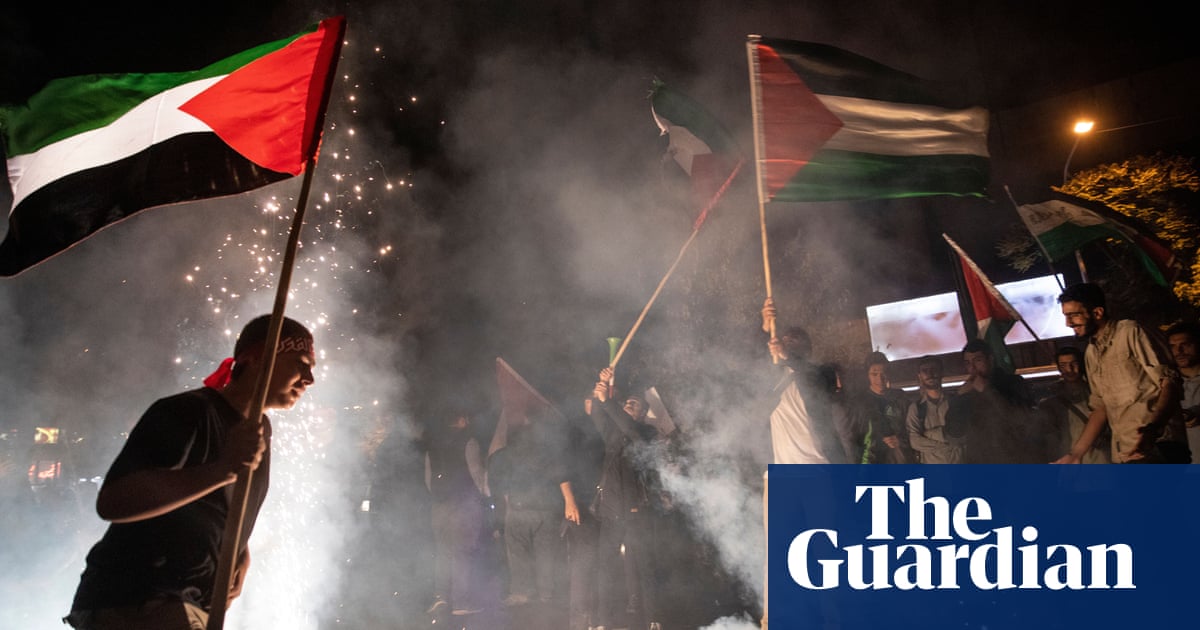
As the death toll rises, and the security consequences multiply, Israel is pointing its finger of accusation at Tehran for orchestrating the attacks by Hamas. The attacks may have been born of anger, specifically at the months-long behaviour of the Netanyahu coalition, including the provocations at al-Aqsa mosque, but Iran and the forces it supports have a longer-term strategic goal: to thwart the US-led effort to achieve a normalisation of relations between Saudi Arabia and Israel, a move that would entrench the US in the Middle East – and in Iran’s eyes deprive the Palestinians of their last influential sponsor.
Iran’s goal is to denormalise the region, and make it near-impossible for Saudi Arabia to strike a deal. Israel, by contrast, wants to shrink the Palestinian conflict diplomatically so it gradually becomes an irrelevance, a historical curio such as the Yom Kippur war. The aid it drip-feeds to Gaza via Qatar is one leg of this strategy.
In a speech earlier this week, Iran’s supreme leader, Ayatollah Ali Khamenei, sent a thinly coded warning to Riyadh that any Gulf state that backed the US was backing the wrong horse. “The definitive stance of the Islamic Republic is that the governments which prioritise the gamble of normalisation with the Zionist regime will incur losses,” he said in remarks carried by Iran’s state-run and semi-official media. “As the Europeans say, they are betting on a losing horse. Today, the situation of the Zionist regime is not one that should motivate closeness to it; they shouldn’t make this mistake.”
He was joined on Friday by the head of Islamic Jihad, Ziad al-Nakhala, who said: “Those who rush towards normalisation with the Zionist project must know, and they do know, that this is their acknowledgment that Palestine is not ours, and that Jerusalem with its mosque is not ours.”
Saudi Arabia, its economy expected to shrink this year according to the World Bank due to oil production cutbacks, has been desperate for foreign investment and craves Israel’s technological dynamism. The United Arab Emirates’ trade with Israel doubled to $2.56bn in 2022 after striking a free trade deal with the country. But Riyadh, now a member of the growing transactional diplomatic tendency, also wants new US defence guarantees, similar if not better to those given to Bahrain in September, and access to civilian nuclear power. It also needs something tangible about the restart of Israeli-Palestinians talks. Antony Blinken, the US secretary of state, was due to discuss all this with Crown Prince Mohammed bin Salman in a regional tour next week.
Now with the start of what could become a regional war, the risk calculations have changed. Hamas has shown its firepower and extended its base beyond Gaza. Far from the conflict shrinking it has been broadened. Riyadh’s initial response to the Hamas assault, a group with which it has few contacts, was the first critical clue of how Riyadh viewed the diplomatic consequences. It was not encouraging for Israel, and nor, given the inflamed passions, could it afford to be.
The Saudi Arabian ministry of foreign affairs noted the unprecedented situation between certain Palestinian factions and the occupation forces and called for restraint on all sides. But it then recalled “its repeated warnings of the dangers of the explosion of the situation as a result of the continued occupation, the deprivation of the Palestinian people of their legitimate rights and the repetition of the systematic provocations against its sanctities [holy sites]”. It urged the international community to restart a credible peace process based on a two-state solution.
Qatar was even less equivocal, saying Israel was “solely responsible for the ongoing escalation due to its continuous violations of the rights of the Palestinian people, including the recent repeated incursions into the al-Aqsa Mosque under the protection of the Israeli police”.
Since then, the Saudi foreign minister has been speaking with Blinken, the EU high representative, Josep Borrell, and every counterpart in the Gulf. The fruits of those talks will be reflected when the UN security council meets in emergency session and hears repeated calls for restraint. But many diplomats privately acknowledge they are paying a price for allowing the Middle East crisis slip to the back of their agenda.
The real diplomatic work will be done in private. In the short term, Turkey and Egypt will act as the mediators. Egypt, itself facing elections in two months, cannot afford mayhem in Gaza. The initial Hamas aim will be to make Israel think twice about the scale of its retribution. The Hamas al-Qassam brigades spokesperson Abu Ubaida said: “The number of [Israeli] prisoners is many times greater than what Benjamin Netanyahu announced, and they are present in all axes in the Gaza Strip, and what happens to the people of the Gaza Strip will happen to them, and beware of miscalculation.”
Hezbollah has also sent a message via Egypt to Israel about the potential consequences of a full-blown assault on Gaza. The US for its part is urging Israel to de-escalate, hold off on a ground assault and rely on measures such as cutting the supply of Gaza’s electricity to force Hamas to negotiate. Inside Israel there are also voices calling for calm, saying that after such a security lapse a unity government is required that will allow Netanyahu to end his disastrous reliance on extremists to stay in power. With the lives of so many hostages at stake, retribution will have to be carefully calibrated.
Netanyahu’s political survival skills are well-known, but it will be hard to avoid blame for such a self-evident intelligence fiasco. Golda Meir was gone as prime minister within six months of the Yom Kippur war, giving way to Menachem Begin and eventually the Camp David agreement with Egypt’s Anwar Sadat in 1978. Right now, it is hard to envisage a repeat of such an optimistic chain of events.
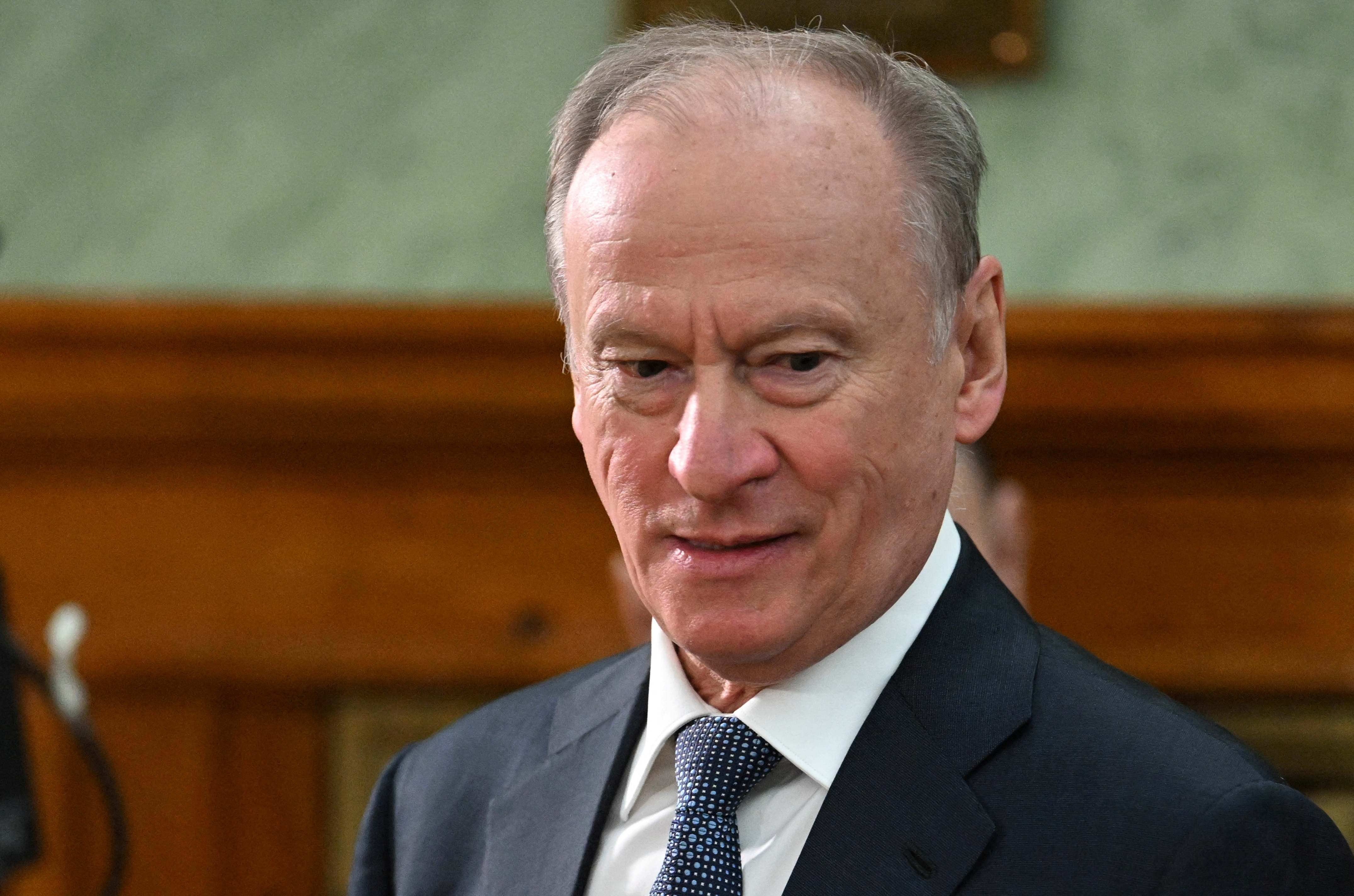
Russia’s Security Council Secretary Nikolai Patrushev attends a meeting of the collegium of the Prosecutor General’s office in Moscow, Russia, March 15, 2023. Sputnik/Pavel Bednyakov/Pool via REUTERS Acquire Licensing Rights
MOSCOW, Sept 15 (Reuters) – A top Russian security official said in an article published on Friday that Moscow had “neutralised” hundreds of foreign spies in recent years.
Nikolai Patrushev, the secretary of Russia’s Security Council, wrote in Russia’s foreign intelligence agency’s house magazine:
“In recent years, hundreds of employees of foreign intelligence services, as well as other persons involved in organising intelligence and subversive activities against our country and our strategic partners, have been identified and neutralised”.
Patrushev, a close ally of Russian President Vladimir Putin, is a former director of the Federal Security Service (FSB) and is seen as a key advocate of hardline, hawkish policies within the Kremlin.
Writing by Felix Light
Editing by Andrew Osborn/Guy Faulconbridge
Our Standards: The Thomson Reuters Trust Principles.

BAFL 38.56 Increased By ▲ 0.35 (0.92%)
BIPL 17.60 Increased By ▲ 0.20 (1.15%)
BOP 3.95 Increased By ▲ 0.04 (1.02%)
CNERGY 3.40 Increased By ▲ 0.08 (2.41%)
DFML 16.99 Increased By ▲ 0.75 (4.62%)
DGKC 48.26 Increased By ▲ 0.76 (1.6%)
FABL 24.89 Increased By ▲ 0.91 (3.79%)
FCCL 12.12 Increased By ▲ 0.13 (1.08%)
FFL 6.51 Increased By ▲ 0.06 (0.93%)
GGL 9.90 Increased By ▲ 0.34 (3.56%)
HBL 94.05 Increased By ▲ 0.06 (0.06%)
HUBC 87.45 Increased By ▲ 0.46 (0.53%)
HUMNL 5.54 Increased By ▲ 0.04 (0.73%)
KEL 2.46 Increased By ▲ 0.18 (7.89%)
LOTCHEM 27.48 Decreased By ▼ -0.02 (-0.07%)
MLCF 32.75 Increased By ▲ 0.49 (1.52%)
OGDC 95.50 Increased By ▲ 0.10 (0.1%)
PAEL 11.99 Increased By ▲ 1.00 (9.1%)
PIBTL 4.00 Increased By ▲ 0.12 (3.09%)
PIOC 97.03 Increased By ▲ 2.52 (2.67%)
PPL 73.93 Increased By ▲ 0.33 (0.45%)
PRL 16.43 Increased By ▲ 0.68 (4.32%)
SILK 1.00 No Change ▼ 0.00 (0%)
SNGP 46.48 Decreased By ▼ -0.12 (-0.26%)
SSGC 9.28 Increased By ▲ 0.06 (0.65%)
TELE 7.51 Increased By ▲ 0.09 (1.21%)
TPLP 12.43 Increased By ▲ 0.18 (1.47%)
TRG 90.13 Increased By ▲ 1.13 (1.27%)
UNITY 25.50 Increased By ▲ 0.48 (1.92%)
WTL 1.30 No Change ▼ 0.00 (0%)

Save
KYIV — The cluttered car carrying a mother and her 12-year-old daughter seemed barely worth the attention of Russian security officials as it approached a border checkpoint. But the least conspicuous piece of luggage — a crate for a cat — was part of an elaborate, lethal plot. Ukrainian operatives had installed a hidden compartment in the pet carrier, according to security officials with knowledge of the operation, and used it to conceal components of a bomb.
Four weeks later, the device detonated just outside Moscow in an SUV being driven by the daughter of a Russian nationalist who had urged his country to “kill, kill, kill” Ukrainians, an explosion signaling that the heart of Russia would not be spared the carnage of war.
The operation was orchestrated by Ukraine’s domestic security service, the SBU, according to officials who provided details, including the use of the pet crate, that have not been previously disclosed. The August 2022 attack is part of a raging shadow war in which Ukraine’s spy services have also twice bombed the bridge connecting Russia to occupied Crimea, piloted drones into the roof of the Kremlin and blown holes in the hulls of Russian naval vessels in the Black Sea.
These operations have been cast as extreme measures Ukraine was forced to adopt in response to Russia’s invasion last year. In reality, they represent capabilities that Ukraine’s spy agencies have developed over nearly a decade — since Russia first seized Ukrainian territory in 2014 — a period during which the services also forged deep new bonds with the CIA.
The missions have involved elite teams of Ukrainian operatives drawn from directorates that were formed, trained and equipped in close partnership with the CIA, according to current and former Ukrainian and U.S. officials. Since 2015, the CIA has spent tens of millions of dollars to transform Ukraine’s Soviet-formed services into potent allies against Moscow, officials said. The agency has provided Ukraine with advanced surveillance systems, trained recruits at sites in Ukraine as well as the United States, built new headquarters for departments in Ukraine’s military intelligence agency, and shared intelligence on a scale that would have been unimaginable before Russia illegally annexed Crimea and fomented a separatist war in eastern Ukraine. The CIA maintains a significant presence in Kyiv, officials said.
The extent of the CIA’s involvement with Ukraine’s security services has not previously been disclosed. U.S. intelligence officials stressed that the agency has had no involvement in targeted killing operations by Ukrainian agencies, and that its work has focused on bolstering those services’ abilities to gather intelligence on a dangerous adversary. A senior intelligence official said that “any potential operational concerns have been conveyed clearly to the Ukrainian services.”
Many of Ukraine’s clandestine operations have had clear military objectives and contributed to the country’s defense. The car bombing that killed Daria Dugina, however, underscored Ukraine’s embrace of what officials in Kyiv refer to as “liquidations” as a weapon of war. Over the past 20 months, the SBU and its military counterpart, the GUR, have carried out dozens of assassinations against Russian officials in occupied territories, alleged Ukrainian collaborators, military officers behind the front lines and prominent war supporters deep inside Russia. Those killed include a former Russian submarine commander jogging in a park in the southern Russian city of Krasnodar and a militant blogger at a cafe in St. Petersburg, according to Ukrainian and Western officials.
Ukraine’s affinity for lethal operations has complicated its collaboration with the CIA, raising concerns about agency complicity and creating unease among some officials in Kyiv and Washington.
Even those who see such lethal missions as defensible in wartime question the utility of certain strikes and decisions that led to the targeting of civilians including Dugina or her father, Alexander Dugin — who officials acknowledge was the intended mark — rather than Russians more directly linked to the war.
“We have too many enemies who are more important to neutralize,” said a high-ranking Ukraine security official. “People who launch missiles. People who committed atrocities in Bucha.” Killing the daughter of a pro-war firebrand is “very cynical,” the official said.
Others cited broader concerns about Ukraine’s cutthroat tactics that may seem justified now — especially against a country accused of widespread war atrocities — but could later prove difficult to rein in.
“We are seeing the birth of a set of intelligence services that are like Mossad in the 1970s,” said a former senior CIA official, referring to the Israeli spy service long accused of carrying out assassinations in other countries. Ukraine’s proficiency at such operations “has risks for Russia,” the official said, “but it carries broader risks as well.”
“If Ukraine’s intelligence operations become even bolder — targeting Russians in third countries, for example — you could imagine how that might cause rifts with partners and come into serious tension with Ukraine’s broader strategic goals,” the official said. Among those goals is membership in NATO and the European Union.
This article is based on interviews with more than two dozen current and former Ukrainian, U.S. and Western intelligence and security officials who spoke on the condition of anonymity citing security concerns as well as the sensitivity of the subject. The pressure on Kyiv to score victories against Russia and find ways to deter further aggression create incentives to exaggerate the record and capabilities of Ukraine’s services. The Post vetted key details with multiple sources including Western officials with access to independent streams of intelligence.
The CIA declined to comment.
SBU and GUR officials describe their expanding operational roles as the result of extraordinary circumstances. “All targets hit by the SBU are completely legal,” the agency’s director, Vasyl Malyuk, said in a statement provided to The Post. The statement did not specifically address targeted killings but Malyuk, who met with top CIA and other U.S. officials in Washington last month, said Ukraine “does everything to ensure that fair punishment will ‘catch up’ with all traitors, war criminals and collaborators.”
Current and former U.S. and Ukrainian officials said both sides have sought to maintain a careful distance between the CIA and the lethal operations carried out by its partners in Kyiv. CIA officials have voiced objections after some operations, officials said, but the agency has not withdrawn support.
“We never involved our international partners in covert operations, especially behind the front lines,” a former senior Ukrainian security official said. SBU and GUR operatives were not accompanied by CIA counterparts. Ukraine avoided using weapons or equipment that could be traced to U.S. sources, and even covert funding streams were segregated.
“We had a lot of restrictions about working with the Ukrainians operationally,” said a former U.S. intelligence official. The emphasis was “more on secure communications and tradecraft,” and pursuing new streams of intelligence inside Russia “rather than ‘here’s how you blow up a mayor.’ I never got the sense that we were that involved in designing their ops.”
Even so, officials acknowledged that boundaries were occasionally blurred. CIA officers in Kyiv were made aware of some of Ukraine’s more ambitious plans for strikes. In some cases, including the bombing of the Kerch Bridge, U.S. officials registered concerns.
Ukraine’s spies developed their own lines about which operations to discuss and which to keep under wraps. “There were some things that maybe we wouldn’t talk about” with CIA counterparts, said a second Ukraine security official involved in such missions. He said crossing those boundaries would lead to a terse reply from Americans: “We don’t want any part of that.”
The CIA’s deep partnership with Ukraine, which persisted even when the country became embroiled in the impeachment scandal surrounding President Donald Trump, represents a dramatic turn for agencies that spent decades on opposing sides of the Cold War. In part because of that legacy, officials said, it was only last year that the CIA removed Ukraine from the agency’s “non-fraternization” list of countries regarded as such security risks that contact with their nationals for agency employees is forbidden without advance permission.
The CIA-Ukraine collaboration took root in the aftermath of 2014 political protests that prompted Ukraine’s pro-Russian President Viktor Yanukovych to flee the country, followed by Russia’s annexation of Crimea and its arming of separatists in the eastern regions of Donetsk and Luhansk.
The initial phases of cooperation were tentative, officials said, given concerns on both sides that Ukraine’s services were still heavily penetrated by the FSB — the Russian agency that is the main successor to the KGB. To manage that security risk, the CIA worked with the SBU to create an entirely new directorate, officials said, one that would focus on so-called “active measures” operations against Russia and be insulated from other SBU departments.
The new unit was prosaically dubbed the “Fifth Directorate” to distinguish it from the four long-standing units of the SBU. A sixth directorate has since been added, officials said, to work with Britain’s MI6 spy agency.
Training sites were located outside Kyiv where handpicked recruits were instructed by CIA personnel, officials said. The plan was to form units “capable of operating behind front lines and working as covert groups,” said a Ukrainian official involved in the effort.
The agency provided secure communications gear, eavesdropping equipment that allowed Ukraine to intercept Russian phone calls and emails, and even furnished disguises and separatist uniforms enabling operatives to more easily slip into occupied towns.
The early missions focused on recruiting informants among Russia’s proxy forces as well as cyber and electronic eavesdropping measures, officials said. The SBU also began mounting sabotage operations and missions to capture separatist leaders and Ukrainian collaborators, some of whom were taken to secret detention sites.
But the operations soon took a lethal turn. Over one three-year stretch, at least half a dozen Russian operatives, high-ranking separatist commanders or collaborators were killed in violence that was often attributed to internal score-settling but in reality was the work of the SBU, Ukraine officials said.
Among those killed was Yevgeny Zhilin, the leader of a pro-Russian militant group in eastern Ukraine, who was gunned down in 2016 in a Moscow restaurant. A year later, a rebel commander known as ‘Givi’ was killed in Donetsk as part of an operation in which a woman who accused him of rape was enlisted to plant a bomb at his side, according to a former official involved in the mission.
Ukrainian officials said the country’s turn to more lethal methods was driven by Russian aggression, atrocities attributed to its proxies and desperation to find ways to weaken a more powerful adversary. Many also cited Russia’s own alleged history of conducting assassinations in Kyiv.
“Because of this hybrid war we faced an absolutely new reality,” said Valentyn Nalyvaichenko, a member of Ukraine’s parliament who served as SBU director in 2015, when the Fifth Directorate was created. “We were forced to train our people in a different way.”
He declined to elaborate.
Transforming Ukrainian military intelligence
Even while helping to build the SBU’s new directorate, the CIA embarked on a far more ambitious project with Ukraine’s military intelligence service.
With fewer than 5,000 employees, the GUR was a fraction of the size of the SBU and had a narrower focus on espionage and active measures operations against Russia. It also had a younger workforce with fewer holdovers from Soviet times, while the SBU was still perceived as penetrated by Russian intelligence.
“We calculated that GUR was a smaller and more nimble organization where we could have more impact,” said a former U.S. intelligence official who worked in Ukraine. “GUR was our little baby. We gave them all new equipment and training.” GUR officers “were young guys not Soviet-era KGB generals,” the official said, “while the SBU was too big to reform.”
Even recent developments have seemed to validate such concerns. Former SBU director Ivan Bakanov was forced out of the job last year amid criticism that the agency wasn’t moving aggressively enough against internal traitors. The SBU also discovered last year that Russian-made modems were still being used in the agency’s networks, prompting a scramble to unplug them.
From 2015 on, the CIA embarked on such an extensive transformation of the GUR that within several years “we had kind of rebuilt it from scratch,” the former U.S. intelligence official said. One of the main architects of the effort, who served as CIA station chief in Kyiv, now runs the Ukraine Task Force at CIA headquarters.
The GUR began recruiting operatives for its own new active measures department, officials said. At sites in Ukraine and, later, the United States, GUR operatives were trained on skills ranging from clandestine maneuvers behind enemy lines to weapons platforms and explosives. U.S. officials said the training was aimed at helping Ukrainian operatives protect themselves in dangerous Russian-controlled environments rather than inflicting harm on Russian targets.
Some of the GUR’s newest recruits were transfers from the SBU, officials said, drawn to a rival service flush with new authorities and resources. Among them was Vasyl Burba, who had managed SBU Fifth Directorate operations before joining the GUR and serving as agency director from 2016 to 2020. Burba became such a close ally of the CIA — and perceived Moscow target — that when he was forced from his job after President Volodymyr Zelensky’s election the agency provided him an armored vehicle, officials said. Burba declined to comment for this article.
The CIA helped the GUR acquire state-of-the-art surveillance and electronic eavesdropping systems, officials said. They included mobile equipment that could be placed along Russian-controlled lines in eastern Ukraine, but also software tools used to exploit the cellphones of Kremlin officials visiting occupied territory from Moscow. Ukrainian officers operated the systems, officials said, but everything gleaned was shared with the Americans.
Concerned that the GUR’s aging facilities were likely compromised by Russian intelligence, the CIA paid for new headquarters buildings for the GUR’s “spetsnaz” paramilitary division and a separate directorate responsible for electronic espionage.
The new capabilities were transformative, officials said.
“In one day we could intercept 250,000 to 300,000 separate communications” from Russian military and FSB units, said a former senior GUR official. “There was so much information that we couldn’t manage it ourselves.”
Troves of data were relayed through the new CIA-built facility back to Washington, where they were scrutinized by CIA and NSA analysts, officials said.
“We were giving them the ability — through us — to collect on” Russian targets, the former GUR official said. Asked about the magnitude of the CIA investments, the official said: “It was millions of dollars.”
In time, the GUR had also developed networks of sources in Russia’s security apparatus, including the FSB unit responsible for operations in Ukraine. In a measure of U.S.-Ukraine trust, officials said, the CIA was permitted to have direct contact with agents recruited and run by Ukrainian intelligence.
The resulting intelligence windfall was largely hidden from public view, with intermittent exceptions. The SBU began posting incriminating or embarrassing communications intercepts, including one in which Russian commanders were captured discussing their country’s culpability in the 2014 shoot-down of a Malaysian Airlines passenger jet.
Even so, officials said the intelligence obtained through the U.S.-Ukraine cooperation had its limits. The Biden administration’s prescient warnings about Russian President Vladimir Putin’s determination to topple the Kyiv government, for example, were based primarily on separate streams of intelligence Ukraine wasn’t privy to initially.
In some ways, officials said, Ukraine’s own collection efforts fed the skepticism that Zelensky and others had about Putin’s plans because they were eavesdropping on military and FSB units that themselves were not informed until the eve of the war. “They were getting an accurate picture from people who were also in the dark,” one U.S. official said.
Targeting Moscow with drones
Russian forces never succeeded in taking Kyiv. But both GUR structures that the CIA funded were among dozens of key installations targeted in Russian strikes in the war’s first days, according to officials who said the facilities survived and continue to function.
Ukraine’s new intelligence capabilities proved valuable from the start of the war. The SBU, for example, obtained intelligence on high-value Russian targets, enabling strikes that killed several commanders and narrowly missed Russia’s top-ranked officer, Valery Gerasimov.
Over the past year, the security services’ missions have increasingly centered on targets not only behind enemy lines but well into Russia.
For the SBU, no target has been a higher priority than the Kerch Bridge that connects the Russian mainland to the annexed Crimean Peninsula. The bridge is a key military corridor and also carries such symbolic significance to Putin that he presided over its inauguration in 2018.
The SBU has hit the bridge twice over the past year, including an October 2022 bombing that killed five people and put a gaping hole in westbound traffic lanes.
Zelensky initially denied Ukrainian responsibility. But SBU director Malyuk described the operation in extraordinary detail in an interview earlier this year, acknowledging that his service had placed a powerful explosive inside a truck hauling industrial-size rolls of cellophane.
Like other SBU plots, the operation involved unwitting accomplices, including the truck driver killed in the explosion. “We went through seven circles of hell keeping so many people in the dark,” Malyuk said in an interview about the operation, which he said hinged on the susceptibility of “ordinary Russian smugglers.”
U.S. officials who had been notified in advance raised concerns about the attack, officials said, fearing Russian escalation. Those misgivings had presumably dissipated by the time the SBU launched a second strike on the bridge nine months later using naval drones that were developed as part of a top secret operation involving the CIA and other Western intelligence services.
Malyuk’s highly public account of the operation defies typical intelligence tradecraft but serves Kyiv’s need to claim successes and reflects an emerging rivalry with the GUR. Kyrylo Budanov, Ukraine’s military intelligence chief, has made a habit of touting his agency’s achievements and taunting Moscow.
The two services overlap operationally to some degree, though officials said the SBU tends to pursue more complex missions with longer lead-times while the GUR tends to work at a faster tempo. Ukraine officials denied that either agency was directly involved in the September 2022 attack on the Nord Stream 2 pipeline in the Baltic Sea, though U.S. and other Western intelligence agencies have concluded that Ukraine was linked to the plot.
The GUR has used its own fleet of drones to launch dozens of attacks on Russian soil, including strikes that have penetrated Russian air defenses to hit buildings in Moscow. Among them was a May 2023 operation that briefly set fire to a section of roof in the Kremlin.
Those strikes have involved both long-range drones launched from Ukrainian territory, as well as teams of operatives and partisans working inside Russia, officials said. Motors for some drones were purchased from Chinese suppliers with private funding that couldn’t be traced to Ukrainian sources, according to an official who said he was involved in the transactions.
GUR has also ventured into assassinations, officials said.
In July, a former Russian submarine commander, Stanislav Rzhitsky, was shot four times in the chest and back in Krasnodar where he reportedly worked as a military recruiting officer. Rzhitsky, 42, was known to use the fitness app Strava to record his daily running routes, a practice that may have exposed his location.
The GUR issued a coy statement deflecting responsibility but citing precise details about the circumstances of Rzhitsky’s death, noting that “due to heavy rain the park was deserted” and there were no witnesses. Officials in Kyiv confirmed the GUR was responsible.
Even while acknowledging responsibility for such actions, Ukrainian officials claim the moral high ground against Russia. The SBU and GUR have sought to avoid harm to innocent bystanders even in lethal operations, officials said, while Russia’s scorched-earth raids and indiscriminate strikes have killed or injured thousands of civilians.
Security officials said that no major operation by the SBU or GUR proceeds without clearance — tacit or otherwise — from Zelensky. A spokesperson for Zelensky did not respond to requests for comment.
Skeptics nevertheless worry Ukraine’s use of targeted killings and drone strikes on Moscow high-rises help neither its cause against Russia nor its longer-term aspirations to join NATO and the E.U.
A senior Ukrainian official who worked closely with Western governments coordinating support for Ukraine said that attacks on noncombatants and bombings of Moscow buildings feed Putin’s false narrative that Ukraine posed a growing danger to ordinary Russians. “It plays into his lies that Ukrainians are coming for them,” the official said.
That view appears to be in the minority. Others see the attacks as boosting morale among besieged Ukrainians and achieving a degree of vigilante accountability for alleged Russian war crimes that many Ukrainians are skeptical will ever lead to adequate sanctions from the United Nations and international courts.
The car bombing that killed Dugina last year continues to stand out as one of the more extreme cases of lethal revenge — one that not only targeted noncombatants but involved a Ukrainian woman and a presumably unwitting pre-teenage girl.
Russian authorities had barely finished clearing the debris when the FSB identified Natalia Vovk, 42, as the principal suspect. She had entered Russia from Estonia in July, according to the FSB, took an apartment in the same complex as Dugina, and spent weeks conducting surveillance before slipping back into Estonia with her daughter after the explosion occurred.
The FSB also identified an alleged accomplice who Russia alleged had provided Kazakh license plates for Vovk to use on her vehicle, a Mini Cooper, while traveling in Russia; helped assemble the explosive; and fled to Estonia before the attack.
Ukraine authorities said Vovk was motivated in part by Russia’s siege of her home city, Mariupol. They declined to comment on the nature of her relationship to the SBU or her current whereabouts.
The attack was intended to kill Dugin as he and his daughter departed a cultural festival where the pro-war ideologue, sometimes branded as “Putin’s brain,” had delivered a lecture. The two were expected to travel together, but Dugin stepped into a different vehicle. Vovk also attended the festival, according to the FSB.
At the time, Ukraine vigorously denounced involvement in the attack. “Ukraine has absolutely nothing to do with this, because we are not a criminal state like Russia, or a terrorist one at that,” said Mykhailo Podolyak, an adviser to Zelensky.
Officials acknowledged in recent interviews in Kyiv, however, that those denials were false. They confirmed that the SBU planned and executed the operation, and said that while Dugin may have been the principal target, his daughter — also a vocal supporter of the invasion — was no innocent victim.
“She is the daughter of the father of Russian propaganda,” a security official said. The car bombing and other operations inside Russia are “about narrative,” showing enemies of Ukraine that “punishment is imminent even for those who think they are untouchable.”
Shane Harris in Washington and Mary Ilyushina in Riga, Latvia, contributed to this report.
Understanding the Russia-Ukraine conflict
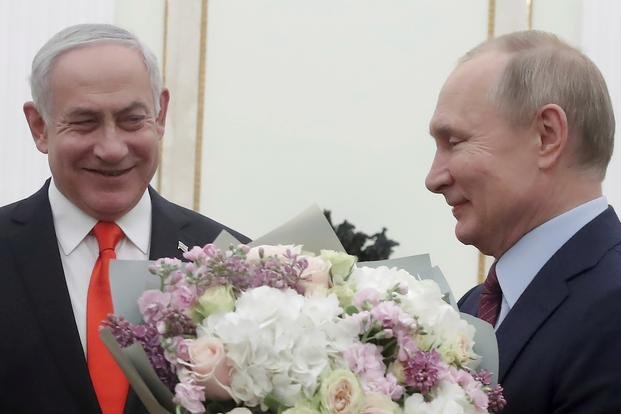
The Israel-Hamas war has forced Russia into a delicate balancing act, with Moscow urging a quick end to the fighting without apportioning blame.
The careful stand is due to Russia’s long ties to Israel, the Palestinians and other regional players, and it reflects the Kremlin’s hope to expand its clout in the Middle East by playing peacemaker.
Russia also tried to cast the hostilities as a failure of U.S. policy, and it hopes they will be a distraction for Washington and its allies from keeping up military support for Ukraine.
A look at the Kremlin’s messaging about the war and its relations with those in the region:
What is Russia saying about the war?
President Vladimir Putin said the war was rooted in the inability to create a sovereign Palestinian state in line with U.N. resolutions that he called a “gross injustice.” He noted that Israel’s settlement policies have exacerbated the situation.
Putin called it a reflection of what he called a glaring failure of the Washington’s peacemaking efforts, charging the U.S. has focused on offering economic “handouts” to Palestinians while paying little attention to their fundamental issues related to statehood.
He urged the Israeli government and Hamas not to target civilians and emphasized that every effort must be made to quickly end the war, saying an escalation would raise grave risks.
The carefully calibrated statements by Putin and his lieutenants reflect an effort by Moscow to maintain good ties with both Israel and the Palestinians. Kremlin spokesman Dmitry Peskov emphasized that Moscow must maintain a “balanced approach” and talk to both parties, noting that it should allow Russia to help broker a settlement.
While jockeying as a potential peacemaker, Moscow also hopes the fighting will distract Washington and its allies from the war in Ukraine and eventually erode Western support for Kyiv.
Peskov even taunted Ukrainian President Volodymyr Zelenskyy, saying he must feel jealous about how the U.S. is now forced to focus on military assistance to Israel.
How has Moscow’s Mideast policy evolved?
Throughout the Cold War, Moscow strongly backed the Palestinians and other allies in the Arab world against Israel, giving them military and political support.
The Soviet Union broke diplomatic ties with Israel after the 1967 Arab-Israeli war. Moscow’s policies began to shift as Soviet leader Mikhail Gorbachev reshaped foreign policy and relations with Israel were restored shortly before the 1991 collapse of the USSR.
In the decade after the Soviet breakup, Russia’s global influence ebbed amid an economic meltdown and political turmoil that forced the Kremlin to turn inward.
After Putin took power, he sought to revive old Middle Eastern alliances while maintaining warm ties with Israel. Russia joined a quartet of Middle East peacemakers along with the United States, the European Union and the United Nations, but it played a minor role in efforts, compared with the U.S.
In 2015, Moscow sent its warplanes and troops to its old ally, Syria, teaming with Iran to shore up President Bashar Assad’s regime amid a civil war. The Russian intervention allowed Assad to reclaim control over most of the country and helped expand Moscow’s clout in the Middle East.
How close are Russia and Israel?
After the Soviet breakup, Russia and Israel have steadily expanded trade and other contacts and strengthened their security ties.
More than 1 million people from Russia and other parts of the former Soviet Union have moved to Israel, a development that Russian and Israeli officials described as a major factor in cementing ties.
Moscow’s relations with Israel remained strong amid Russia’s operations in Syria even as the Israeli military frequently attacked Iranian forces that had teamed up with Russian troops in the country.
Even though Russian and Israeli militaries maintained deconfliction channels amid the fighting in Syria, a Russian reconnaissance aircraft was shot down in 2018 by Assad’s forces responding to an Israeli airstrike, killing all 15 people aboard, an incident that briefly strained ties.
Putin’s invasion of Ukraine has posed a major test for Russian-Israeli relations. Israeli authorities have walked a fine line, voicing support for Kyiv but refusing to provide it with weapons. Many Israelis were angered by Putin’s claim that Zelenskyy, a Jew, was actually a neo-Nazi. The Russian president also has praised Israeli mediation efforts early in the fighting.
Israeli Prime Minister Benjamin Netanyahu explained his government’s reluctance to send military equipment to Kyiv by emphasizing the need to maintain security contacts with Moscow in Syria and voicing concern the weapons supplied to Ukraine could end up in Iranian hands, a statement that angered Ukrainian officials.
How did Russian-Palestinian ties evolve?
During the Cold War, Moscow was the Palestinians’ main backer, offering them political, economic and military support. The Soviet Union provided generous subsidies, helped train Palestinian forces and provided them with weapons.
While those ties weakened after the Soviet Union’s collapse as the Kremlin focused on domestic challenges, Putin has moved to revive them.
Moscow has repeatedly hosted Palestinian leader Mahmoud Abbas, but also has reached out to Hamas. Several Hamas leaders have visited Moscow, including Ismail Haniyeh, who held talks with Russian Foreign Minister Sergey Lavrov in September 2022.
Where do Russia and Iran cooperate?
The leaders of Iran’s 1979 Islamic Revolution denounced the Soviet Union as a “lesser Satan” as opposed to “the great Satan” — the United States. But after the the Soviet collapse, Russia and Iran forged close ties. Moscow built Iran’s first nuclear power plant and deepened ties with Tehran as its tensions with the West soared.
Relations with Iran grew even closer amid the Syrian war when they teamed up to back Assad’s government.
Amid the war in Ukraine, Iran has provided Moscow with hundreds of Shahed exploding drone s that the Russian military has used against Ukraine’s energy facilities and other key infrastructure. Iran also has reportedly shared its drone technology with Russia, which built a facility to produce them.
In return, Moscow is expected to offer Iran advanced fighter jets and other modern weapons.
What other alliances has Moscow sought?
As part of efforts to expand its global clout, Russia has moved to bolster ties with Iran’s main regional rival, Saudi Arabia.
Even though Russia backed Syria’s Assad while the Saudis were backing his foes, Moscow and Riyadh have managed to narrow their differences on Syria and expand cooperation on other issues.
Putin has forged strong personal ties with Saudi Crown Prince Mohammed bin Salman, and the two edged closer as U.S.-Saudi relations became mired in disputes in recent years.
Putin’s ties with bin Salman paved the way for an OPEC+ deal to cut oil output that was spearheaded by Moscow and Riyadh and helped bolster sagging oil prices to the benefit of oil producing countries.