Michael Daw (1948 – 2025) – Obituary Legacy.com
Categories
 The Ocean Avenue News - oceanavenuenews.com
After selling for $12.5 million in 2022, the Brooklyn Heights dwelling perhaps best known as the “Moonstruck” house is back on the market. The most recent buyer of 19 Cranberry St. was an LLC, with the New York Post reporting at the time that comedian Amy Schumer and her husband, chef Chris Fischer, were the buyers.
The 19th century house within the Brooklyn Heights Historic District has a few hundred years of history behind its walls, but the fact that its exterior played a supporting role in the 1987 film has remained the bit of trivia that sticks. It was portrayed as the home of the multi-generational Castorini family, and the surrounding area figured prominently in the movie along with stars Cher, Nicholas Cage, and Olypmia Dukakis. For film buffs, the interior won’t look familiar, as those scenes were filmed elsewhere.
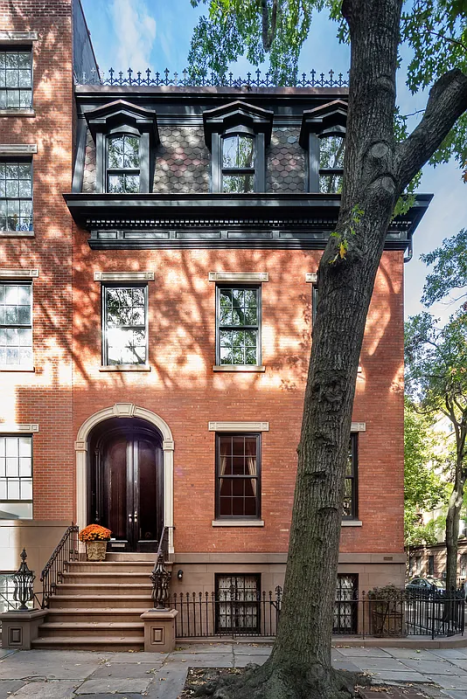
For real estate buffs, the interior will look familiar as many of the previous listing photos are the same. A parlor and some bedrooms have been restaged since 2021, but otherwise the photos are identical.
An exterior restoration project on the 26-foot-wide brick house, set on the prominent corner of Cranberry and Willow streets, was already completed before it last sold. The LPC approved reno included work on the mansard roof, the brownstone stoop, and the ironwork fence. That mansard roof, complete with cresting, is a later 19th century addition to the circa 1830s house, bringing a Second Empire touch to the original Federal-style house.

While the fictional Castorini family may be the one many associate with the property, some of the real owners who lived there over the building’s 180-plus years have some equally dramatic stories. The most extreme might be the 1880s scandal and drawn-out lawsuit over the house’s ownership after Dr. Herman Richardt was accused of having “complete control and mastery” over the mind of owner Catharine A. Valentine, resulting, her family alleged, in her handing over the deed to 19 Cranberry Street. The case was followed extensively in the press as competing interests fought for the property and the guardianship of her son, who was removed from her care over claims of an “illicit relationship.”
In more positive recent history, in 1961 the house was purchased by Edward and Francesca Rullman. An architect, Edward Rullman was chairman of the Brooklyn Heights Association’s Design Advisory Council and was active in the movement to designate the Brooklyn Heights Historic District. His decision to sell the house in 2008 after years of restoring it and more than 50 others in the neighborhood made the New York Times, with Mr. Rullman telling the paper, “We got 100 times what we paid for it back in 1961.”
The subsequent buyers undertook the major exterior and renovation mentioned in the listing. In addition to the exterior restoration, the work included a new steel infrastructure and the addition of a gym and wine cellar in a excavated cellar.

The single-family dwelling has the kitchen on the garden level, double parlors above, and two floors of bedroom space. Laundry is in the cellar.
On the parlor level are pocket doors between the double parlors, crown moldings, and two dark marble mantels with working fireplaces. Downstairs, the kitchen has a warm, aged look with vintage wood cabinets salvaged from an Ohio mansion to go along with exposed beams, a wood-burning stove, wide-plank floorboards, and a banquette. There’s also a garden-facing wood-lined library with built-in bookshelves and a wood-burning stove.

Above the parlor floor is a bedroom suite with study, dressing room, and bath. The latter continues the vintage look with marble floors, a freestanding glass shower, and separate soaking tub. Three more bedrooms and another full bath — this one covered in penny tile and with a walk-in shower and marble corner sink — make up the top floor. The house also has a laundry room and central air, according to the listing.
There is a driveway on the Willow Street side entrance to the property, and the floor plan shows a car parking space takes up less than a third of the backyard. That rear yard, formerly paved, now has artificial grass.
Modlin Group and Corcoran have a co-exclusive on the property and it is listed at $14 million.
This story first appeared on Brooklyn Paper’s sister site Brownstoner.
New York City’s “bodega cats” are beloved fixtures in the Big Apple — but they’re on the wrong side of the law.
The post Bodega cats make New Yorkers’ hearts purr, even if they violate state regulations appeared first on Brooklyn Eagle.
Trump’s tariffs have scrambled your nest egg. https://t.co/IT1iFZrXP2
— Governor Kathy Hochul (@GovKathyHochul) April 3, 2025
NYPD Commissioner Jessica Tisch and Mayor Eric Adams looked to take a victory lap Thursday over what they called an “historic” low in shootings mere hours after Hizzoner announced he would be running for reelection as an independent.
Stats from the NYPD found that the first three months of 2025 saw the lowest number of shootings in recorded history. This is accompanied, they say, by the second-lowest number of murders in history amongst major falls in other crimes, including felonies in the transit system.
Shootings fell by 23.1% during the first quarter of 2025, the NYPD reported, with 140 incidents taking place compared to 182 incidents taking place in the same time period during 2024, while murders declined by 34.4%, with 63 murders compared to last year’s 96. Index crime also went down 10.9%.
Robberies dropped by 22.8%, with 3,074 incidents this year vs. 3,981 last year; grand larcenies declined by 13.7% (10,226 vs. 11,855); auto theft was down 11.9% (2,773 vs. 3,148); burglary fell by 4.4% (3,043 vs. 3,184), and felony assault tumbled by 2.7% (6,361 vs. 6,535).

While Police Commissioner Tisch also patted the department on the back, celebrating the more than 21,000 firearms being taken off the streets over the past three years, she says the crime reduction has not been an easy process. Railing against bail reform and the discovery laws, she argued that cops are battling an epidemic of repeat offenders.
“Every New Yorker should know that they (the crime statistics) could be even better. We are still up above 2018 high levels, and there are several reasons why,” the top cop said. “Most notably, 2018 was the last full year before drastic changes to our state’s criminal justice system took effect. These changes had wide-ranging consequences, and over the past seven years, one thing has become very clear: New York City does not have a certain high level, but we do have a surging recidivism problem.”
The commissioner noted that more than a third of individuals arrested in the first quarter of 2025 wound up back in handcuffs within weeks of their apprehension and release.
“Looking at just the first quarter, 39% of the people arrested this quarter were arrested at least twice in the same three-month period,” she added, alleging that the recidivism rate is up nearly 50% since 2018.
NYPD Chief of Crime Control Strategies Michael LiPetri went further still. According to his data, 30% of all shoplifting crimes are the work of just 350 people who together have over 2300 arrests.
Another concern for the NYPD is youth involvement in shootings.
LiPetri reported that the number of youths injured by shootings were up 133% in the first quarter of 2025 compared to 2018 while the number of young perpetrators involved in shootings has climbed by 112%.
Youngsters arrested for possessing firearms have also increased by 94%.
“Within two years of that gun arrest, 25% of that population will be involved in the shooting prior, to 2018, that’s less than seven,” LiPetri.

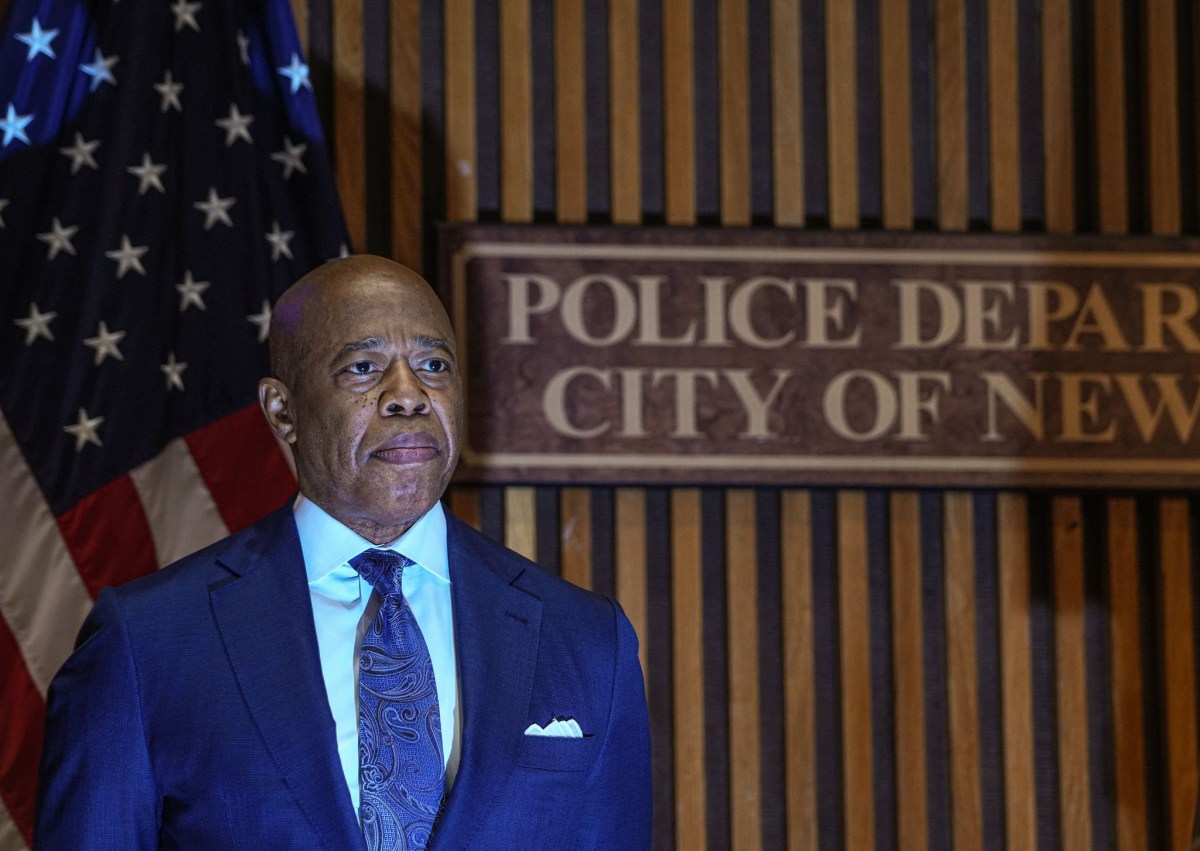
Even with concerns about recidivism and shootings, Mayor Adams touted the progress made by the NYPD and his administration in dropping crime around the city — seemingly laying the groundwork for his reelection campaign in the process.
“When you look at 2025 first quarter crime data reflects our resounding success for what we have accomplished,“ Adams said. “New York City remains the safest big city in America bar none; the numbers prove that this is what we said over and over again.”
Mayor Adams pledged to continue working to decrease crime despite his less-than-stellar standing in recent polls. He charged that the city will spend as much money as necessary to keep crime low and lower it even further.
“I don’t want to hear those defunding police characters tell us, how much are we spending? Whatever we need to spend to save the lives of New Yorkers and to keep the city safe, we’re going to spend that,” he said.
He will be running against Councilmember Inna Vernikov. https://t.co/q76vzhmCcG
— Brooklyn Eagle (@BklynEagle) April 3, 2025
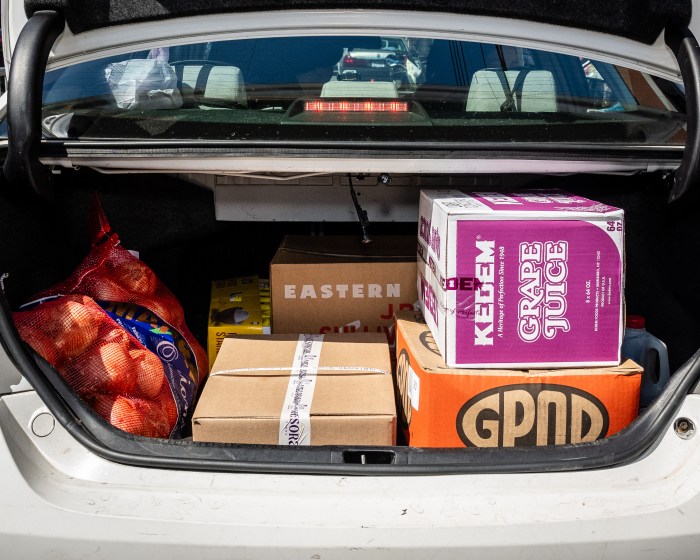
Ahead of Passover, which begins at sundown on April 12, the Met Council’s Borough Park hub distributed thousands of pounds of groceries to food-insecure community members so they can celebrate the liberation of the Jewish people from Egyptian slavery with dignity.
According to the UJA Federation of New York, 36% of Jewish households in Brooklyn live at or near the poverty line. Borough Park has one of the city’s highest Jewish poverty rates, and nearly 50% of Jewish households in Brooklyn Hub’s immediate neighborhoods earn less than $50,000 annually. The Met Council distributed food — including Passover staples like matzah, chicken, fish, grape juice, eggs, oil, and fresh produce — to more than 250,000 New Yorkers.
Avi Spitzer, managing director of Met Council’s Brooklyn Hub, told Brooklyn Paper that this year’s distribution was more important than ever given the high cost of food, particularly eggs. Eggs are an essential food item during Passover as they symbolize the cycle of rebirth and renewal, he explained.
“[For] families, especially large families, day-to-day living is hard enough,” Spitzer said. “It’s further impacted over the holiday [when] the people that need [food] most don’t always have what they need. So they can at least go into the holiday with a clear mind knowing that they can put food on the table, feed their children, and they can have a joyous holiday.”
According to Hannah Lupien, managing director of Food Programs at the Met Council, the Borough Park distribution event was one of the organization’s largest.
The hub distributed food to more than 800 families over three days. The Met Council was a crucial lifeline for the families the organization serves, Lucien said, especially during Passover, one of the priciest Jewish holidays regarding food.
While this week’s distribution was for large families who picked up cases of food by car, the org is planning another event next week for smaller families and seniors who aren’t picking up full, large cases of food.
City Council Speaker and Democratic mayoral candidate Adrienne Adams toured the Brooklyn Hub’s 13,600-square-foot facility and helped with the distribution on April 2.
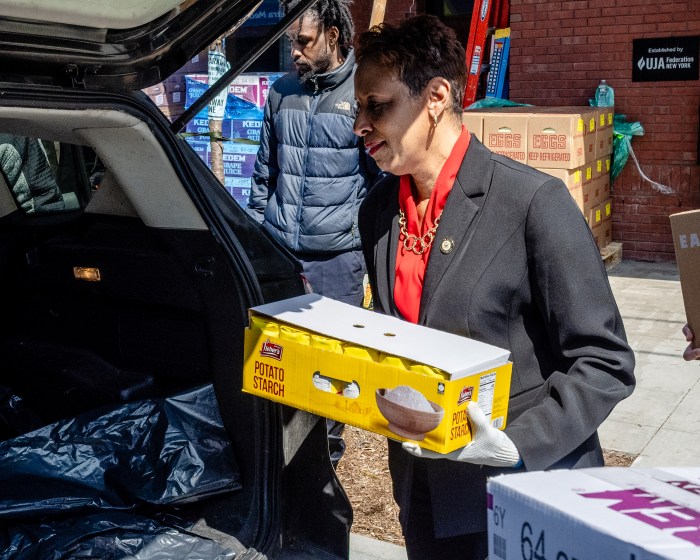
After loading cars with Passover provisions alongside Met Council CEO David Greenfield and Council Member Susan Zhuang, Adams told Brooklyn Paper that, given exorbitant food prices, the Met Council was going the “extra mile” for New Yorkers to ensure they were “happy and healthy.”
“Met Council takes care of the people the way that the people deserve to be taken care of. And, my goodness, food distribution in a time like this, particularly for Passover now, it just makes an amazing difference in the lives of 1000s, and we thank them,” Adams said.
Greenfield added that the food distribution was possible thanks to the Adams’ assistance.
“Under the Speaker’s leadership, the Council has been giving more resources to help New Yorkers in need than ever before, and we’ve been doing this for 50 years,” he said.

Greenfield explained that the Speaker and the City Council had provided more resources because they understood the economic situation.
“So we’re especially grateful to the Speaker for making lives a little more affordable for New Yorkers, and we’re really grateful for her leadership and everything that she’s done for the city of New York,” Greenfield said.
Zhuang, whose district includes Borough Park, thanked the Met Council for ensuring that working-class New Yorkers and low-income families had food on the table.
“Every single year, [Met Council] are doing food deliveries before Passover. They actually help put the joy on the family table,” Zhuang said. “[Food] is very expensive right now; putting food on the table, especially for middle-income families, working-class families, is very important.”

