Do #FBI agents lie; why, and how often? thenewsandtimes.blogspot.com/2025/04/do-fbi… Copilot: There have been cases where FBI agents have been found to have provided false testimony or engaged in deceptive practices. For example, reports have surfaced about FBI agents testifying falsely in forensic…
Making it easier to build affordable housing in New York City and opening local partisan primaries to voters of any party are just two of the ideas being floated by a local panel that voters may get to decide on this November.
The panel — known as a “Charter Revision Commission” — outlined the proposals prepared by its staff in a preliminary report gleaned from several months of public hearings.
Mayor Eric Adams convened the 13-member group late last year to review the City Charter — the city’s constitution — with an eye toward addressing the Big Apple’s historic housing crisis, in which available apartments are scarce and rents have skyrocketed.
However, after hearing from roughly 400 New Yorkers in over 16 hours of testimony at hearings across the five boroughs, along with written comments from another 450 people, the commission is also looking to tackle a variety of issues beyond housing. It is exploring ways to boost turnout in local elections, make the five boroughs more resilient to climate change, and pay nonprofits contracted with the city faster.
“This preliminary staff report is an ambitious document that presents proposals to ensure that New York City remains an engine of opportunity, prioritizing inclusivity for all New Yorkers, especially as we seek to make housing more accessible and affordable across all five boroughs,” said Richard Buery, Jr., commission chair and CEO of the anti-poverty organization Robinhood.
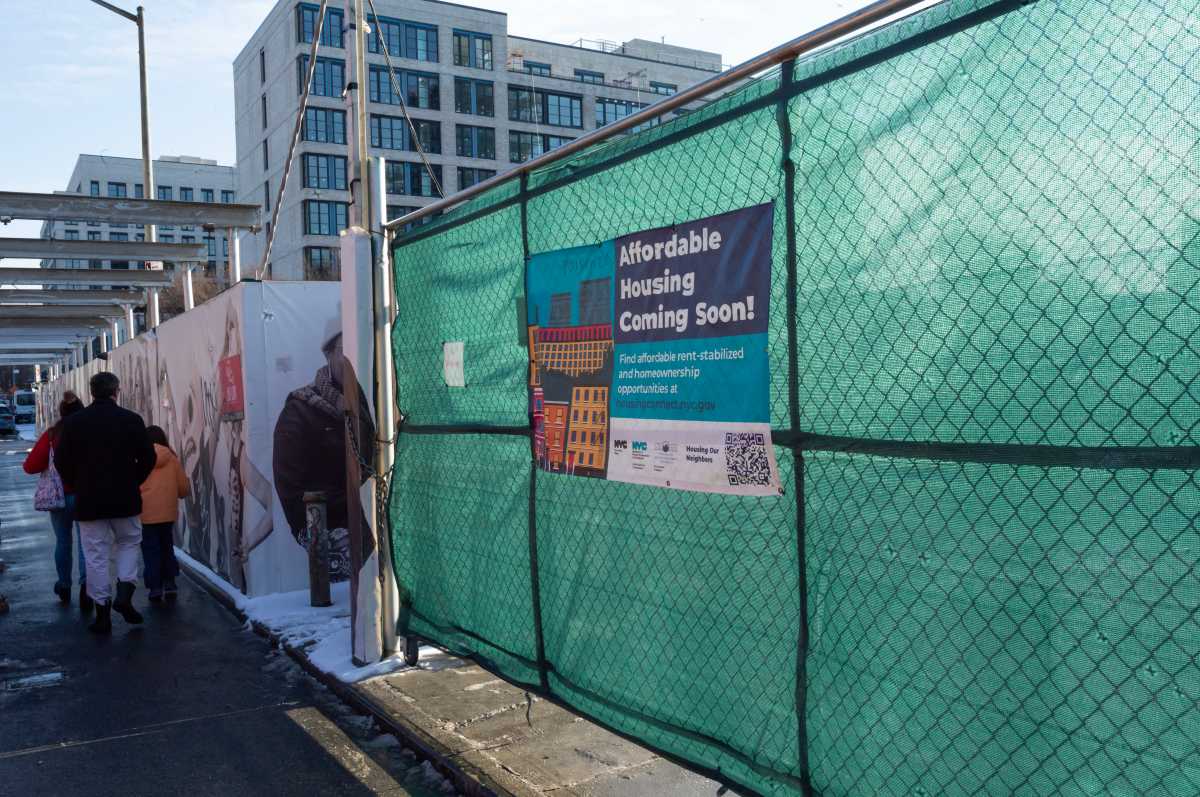
Views of the Gowanus neighborhood, where dozens of large affordable housing construction projects along the Gowanus Canal on Dec. 24, 2024 in Brooklyn.Photo by Andrew Lichtenstein/Corbis via Getty Images
The preliminary report is hardly the last step in the commission’s process of drafting proposals that could go before city voters in the November general election. The panel will continue to hold public hearings over the next couple of months to receive input on its preliminary report, debate it, and ultimately draft final proposals.
It will then vote on which measures, if any, make it onto the ballot.
To facilitate the construction of more housing, the commission is considering changing the City Charter to create a “fast-track” process for certain categories of residential development—including small and affordable projects—outside of the city’s onerous Uniform Land Use Review Procedure (ULURP).
According to testimony heard by the commission, the change is necessary because ULURP is such a lengthy and expensive process that only large-scale developments have the resources to go through it. This effectively shuts out smaller projects and makes it harder to build much-needed affordable housing.
Additionally, the commission is considering amending the charter to take a citywide approach to housing construction rather than the neighborhood-focused planning under ULURP. The current process allows local council members to have the final say on whether projects get built in their districts, often stymying development.
The panel is exploring ideas like developing a citywide assessment of how much housing is needed and where it should be built, and empowering higher-level officials like borough presidents and the City Council speaker to have more power over where new construction takes place.
Get out the vote
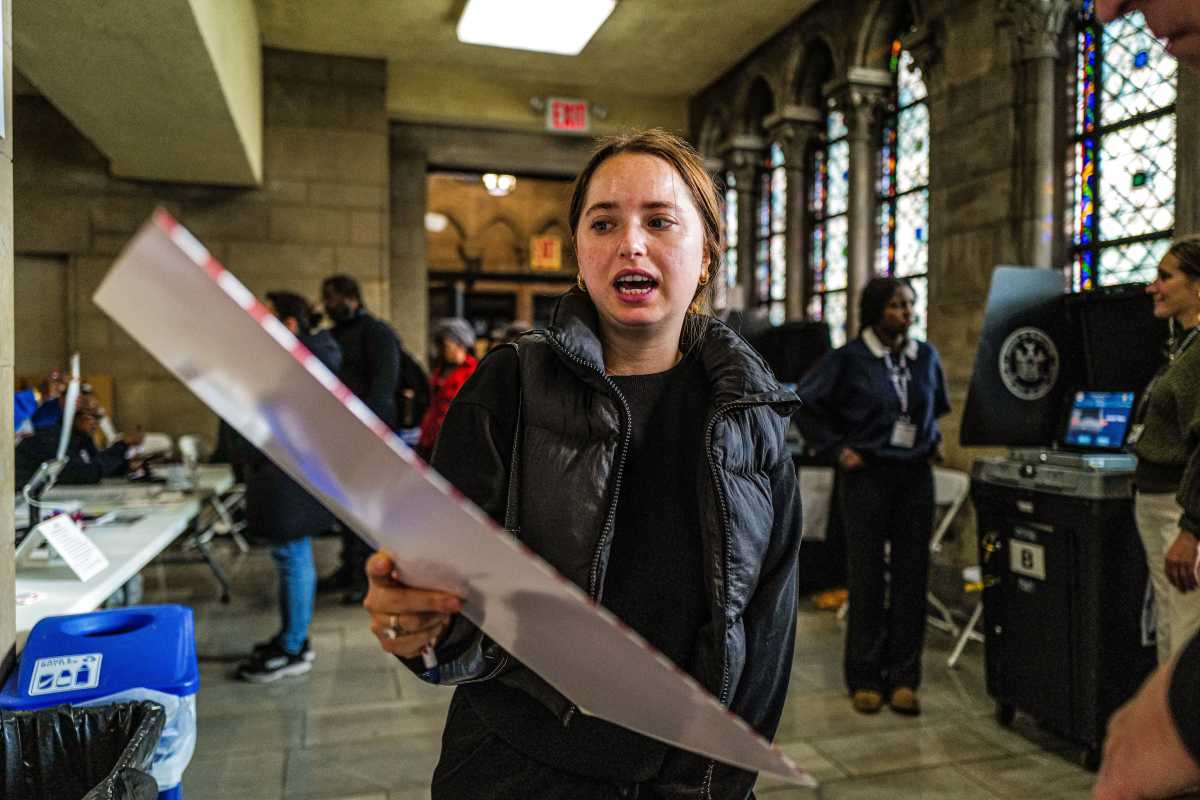
A voter with their covered ballot at Riverside Church in Harlem on Nov. 5, 2024.Photo by Dean Moses
To combat traditionally low turnout in city elections, the commission is considering changing the structure of New York’s primary system and moving local contests from odd to even-numbered years.
The panel is considering changing the city’s current “closed primary” system, in which only those registered to a political party can vote in that party’s primary. Instead, it proposed opening both parties’ ranked-choice primaries to voters regardless of affiliation, including those who are not registered to either party and often get shut out of primaries.
It is also considering shifting city elections from odd to even-numbered years, bringing them in line with presidential, Congressional, and state elections.
Good government groups, such as Citizens Union, believe both moves would enfranchise far more voters and dramatically increase turnout.
“An open primary system – with top two general elections – will give New York City’s more than one million independent voters the voice they deserve in deciding who leads our city,” said Citizens Union Chair John Avlon. “Holding city elections in even-numbered years will significantly increase voter turnout — especially among young people and communities of color.”
‘I am sorry for the moments when we failed to meet the high expectations we rightfully set for our community,’ says university president Garber Collin Anderson (Free Beacon) Harvard University, in the midst of its funding fight with the Trump administration, released its long-awaited anti-Semitism report on Tuesday. It provides a scathing account of life at […]
Trump Touts “America First” Agenda in Michigan, Slams Elites and Promises Auto Jobs Revival (TJV NEWS) Former President Donald Trump struck a familiar populist tone on Tuesday during his first 100 days speech, taking direct aim at globalist elites and the political establishment for “bleeding America dry.” Speaking before a packed crowd in Macomb County, […]
Harvey Weinstein accuser Miriam Haley told a Manhattan jury disturbing details of how the hulking film mogul sexually assaulted her in his Soho loft, and how she calculated the safest thing she cou…