Israel, Ukraine, and the American weapons – Google Search https://t.co/fAWTZOWMIg
The United States has provided substantial military aid to both Ukraine and Israel, leading to concerns about depleting U.S. weapons stockpiles and potential strain on the defense industry. While… pic.twitter.com/ri85dG8rCU— Michael Novakhov (@mikenov) May 1, 2025
Day: May 1, 2025
Israel, Ukraine, and the American weapons – Google Search https://t.co/fAWTZOWMIg
The United States has provided substantial military aid to both Ukraine and Israel, leading to concerns about depleting U.S. weapons stockpiles and potential strain on the defense industry. While… pic.twitter.com/ri85dG8rCU— Michael Novakhov (@mikenov) May 1, 2025
“Russia – Ukraine War” collection on Google: https://t.co/Wa7Ma7McP9
— Michael Novakhov (@mikenov) May 1, 2025
Two top City Hall administration officials said on Thursday that Mayor Eric Adams’ newly released executive budget does not put additional funds into reserves ahead of President Trump’s tariffs and broad funding cuts because they do not anticipate that it would spark a “doomsday scenario” for the city’s economy.
First Deputy Mayor Randy Mastro and Budget Director Jacques Jiha insisted their forecasts show an economic slowdown rather than a full-blown recession, despite rising fears that Trump’s moves could cause the latter. The city has already experienced Trump’s administration cutting $100 million of US Centers for Disease Control and Prevention funding for its Health Department and moving to claw back all of the federal migrant crisis aid it recieved under former President Joe Biden.
The mayor’s $115 billion Fiscal Year 2026 executive budget, while flush with recurring spending on popular city programs, does not add any new funds to the city’s $8.5 billion in reserves — money it sets aside and can tap during an economic crisis. The move prompted immediate backlash from city officials and budget watchdogs concerned that Adams’ administration is completely ignoring an imminent threat.
Nevertheless, Jiha insisted the city’s current level of reserves is “adequate” and puts the city in a “very good position” to deal with any economic uncertainty from Washington. He did indicate that a doomsday scenario could entail the city losing $8 to $10 billion over the next two years.
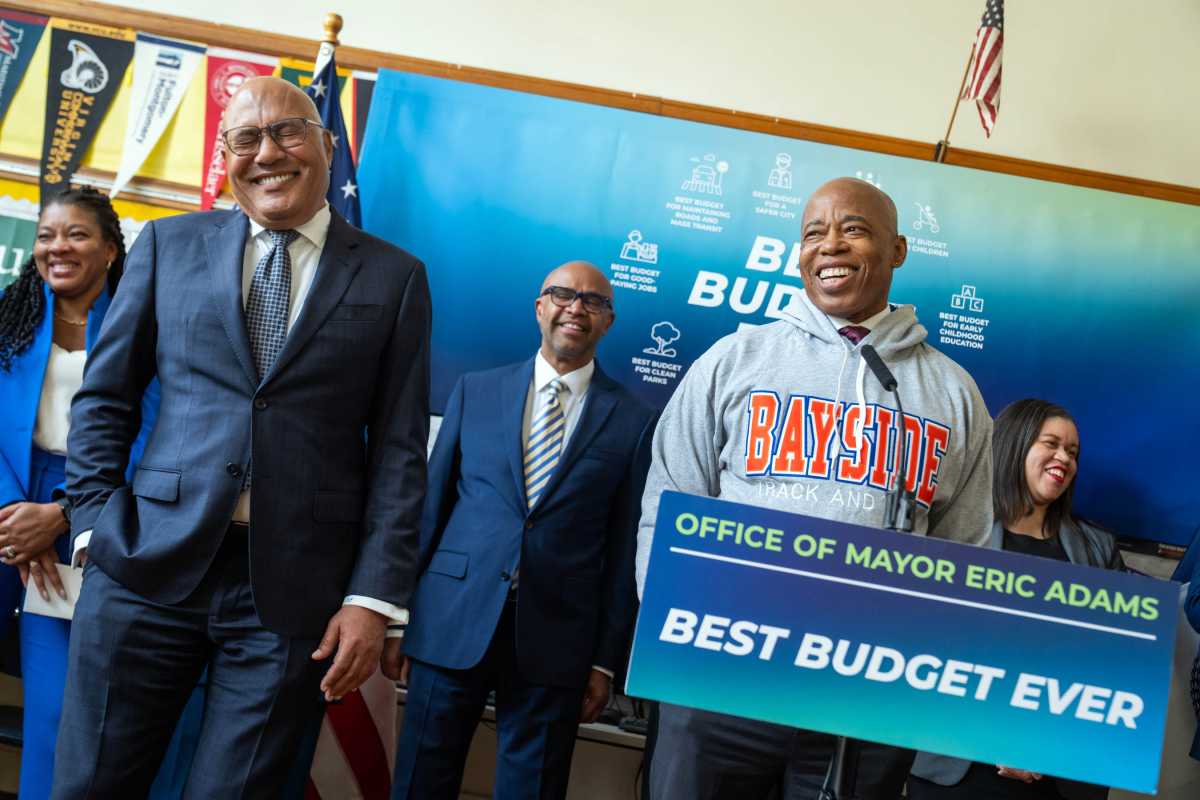
Mastro even suggested that anyone pushing the administration to prepare for a major economic downturn is a “pessimist.”
“Some people, the pessimists, political opportunists, they see the glass as half-empty, they’re predicting the worst for New York City,” Mastro said. “We see the glass as half-full, coming off of a record revenue year where hundreds of millions were able to be rolled over into this year.”
In his defense, Mayor Adams said that while he sees the prudence of the city squirreling away money to soften the blow of an economic downturn, it should not stop the city from investing more money into vital programs.
“That recession cannot take away from investing in our children’s future, cannot take away in housing, cannot take away in public safety,” Adams said. “If we sit back and just have a doomsday scenario, recession is coming, recession is coming, then so we’re not going to deal with these issues that people are facing right now, then it would be irresponsible of us.”
‘A fantasyland’ budget from Adams?
However, city officials, including comptroller Brad Lander, who is running against Adams in the Democratic mayoral primary, contended that the mayor’s budget ignores the reality of the situation.
“Eric Adams’ Executive Budget is from a fantasyland where Trump’s tariffs aren’t increasing the likelihood of an economic downturn and federal budget cuts aren’t looming,” Lander said in a statement. “By refusing to put more money into reserves and prepare for the reality we are facing, Adams is once again failing to protect New Yorkers.”
Manhattan Borough President Mark Levine, in a social media post, described the move as “delusional” and said it left the city “more vulnerable.”
Andrew Rein, president of the Citizens Budget Commission watchdog group, chided the mayor for not taking the opportunity to add a combined $3 billion to the city’s reserves in order to prepare for economic headwinds. Instead, Rein said Adams increased spending to an “unaffordable level.”
Yet City Council Speaker Adrienne Adams and Finance Chair Justin Brannan, both frequent critics of the mayor’s fiscal management, said they believe the city’s reserves are in a “good place.” But Brannan indicated that they “remain concerned.”
“I think there needs to be a balance of making sure we have enough money set aside and keeping our powder dry,” Brannan told reporters during a Thursday news conference. “We’ve already seen hundreds of millions of dollars that have been clawed back by Washington that are affecting our most vulnerable New Yorkers, first and foremost. So we have to make sure that that money is being deployed into those communities.”


Categories
Агамян Карен «Утро». 1980 г.
Агамян Карен «Утро». 1980 г. pic.twitter.com/qPCGZTVLiP
— Художники и Поэты (@Xudozhnikipoeti) May 1, 2025

Lawyers of the world, unite!
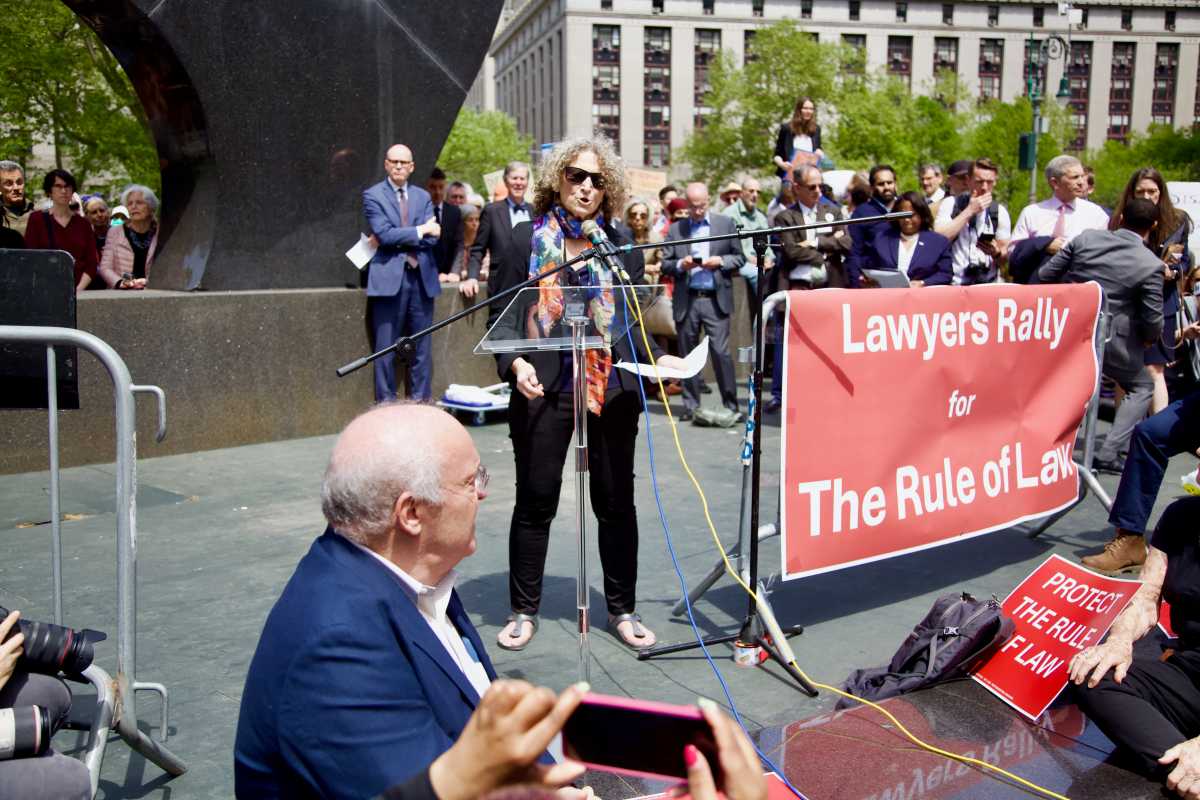
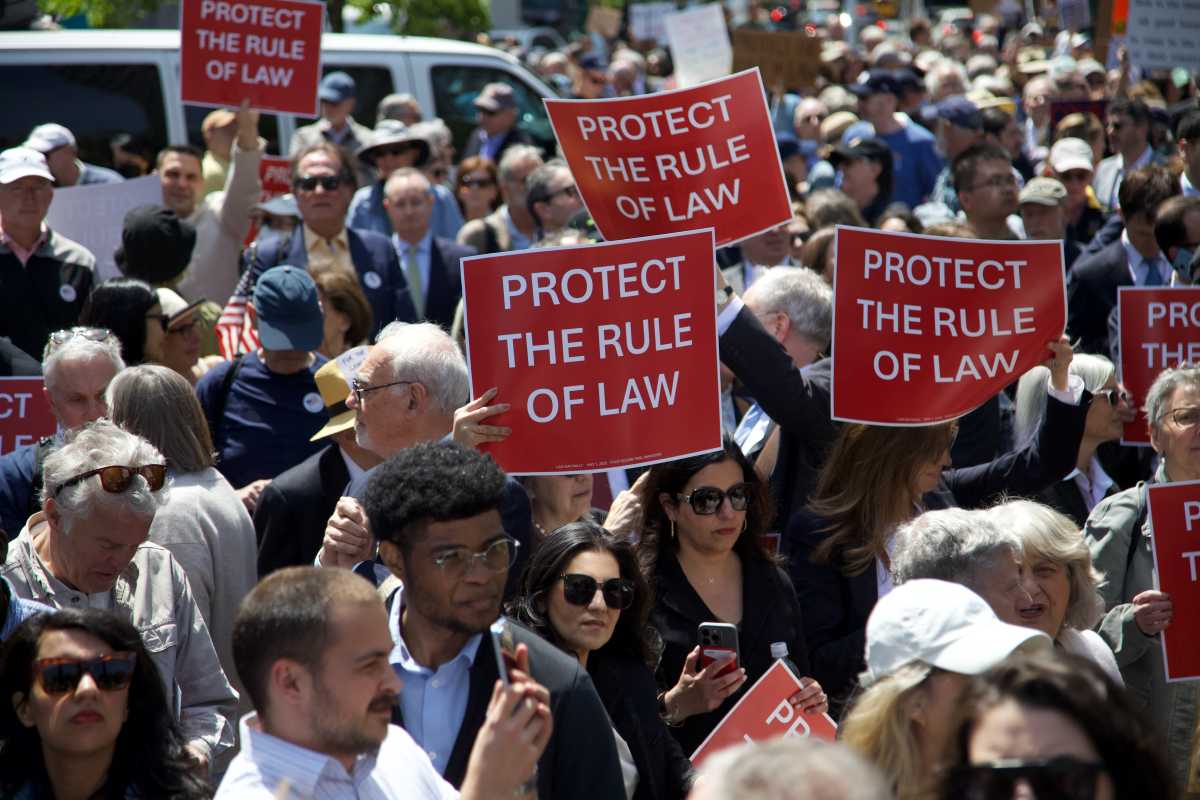
Hundreds of attorneys converged upon Foley Square on National Law Day in what they described as a non-partisan demonstration against President Trump’s attacks against the independence of the legal industry and judiciary.
The organizers of the May 1 protest, sponsored by the New York City Bar Association, took the opportunity of Law Day — a holiday established by President Eisenhower in 1958 as a national day to celebrate the rule of law — a chance to encourage fellow lawyers to continue the fight against the Trump administration’s campaign to test the limits of the constitutional order.
“We must put partisanship to the side and strive to work together to protect and maintain the rule of law in this beautiful, multiracial experiment — this democracy — the United States of America,” exhorted Sheila S. Boston, a former NYC Bar Association president and a trial lawyer with Arnold & Porter, who emceed the rally.
Boston defined the rule of law as the mechanism that “supports the equality of all citizens by the law and prevents the arbitrary use of power by the government.”
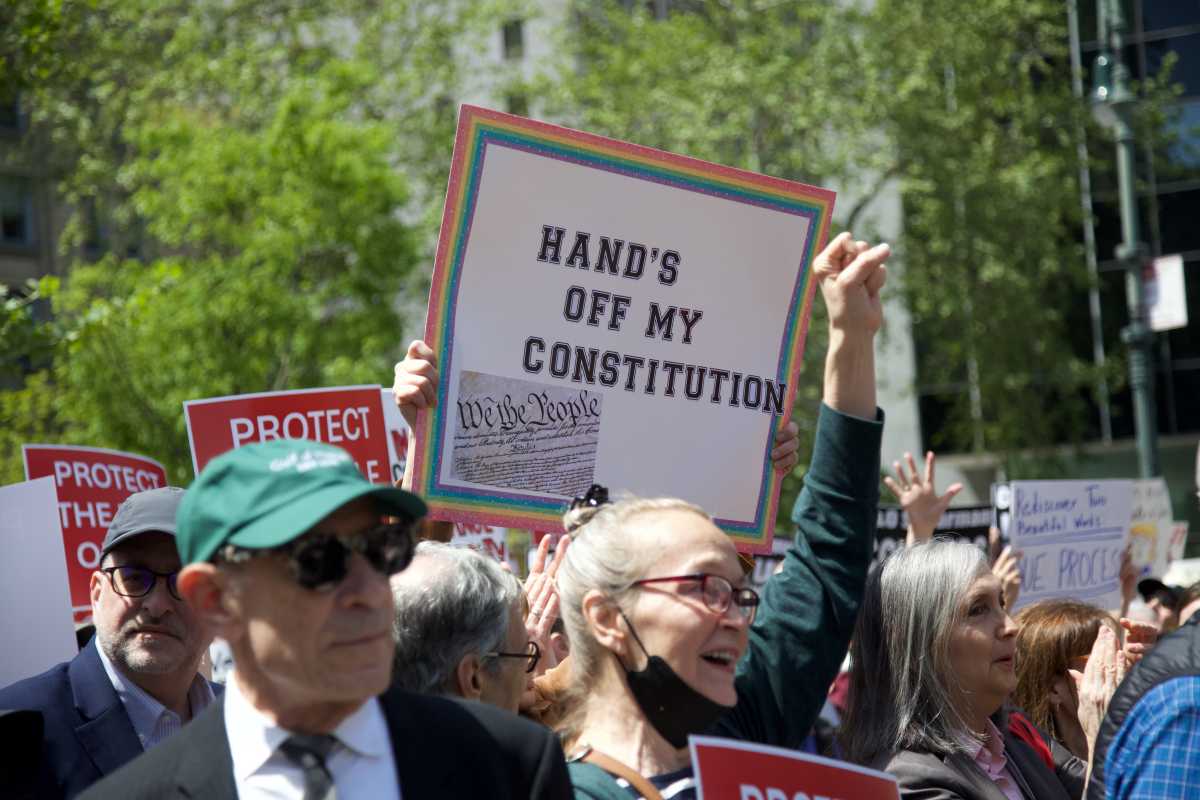
Since Trump took office, his Administration has failed to comply with court orders related to a range of issues, publicly railed against judges whose decisions he disagreed with and targeted corporate law firms with executive orders.
“Most of us probably didn’t think these things could actually happen, at least not in any serious or large-scale way. But we are here because they are happening and we lawyers must be the first responders,” said Adrienne Koch, president of the New York County Lawyers Association.
Across the country, lawyers organized demonstrations at courthouses in protest of the current Trump administration’s overreach. A website dedicated to the “Law Day of Action,” organized by the nonprofit group Lawyers for Good Government, listed more than 100 such demonstrations.
Thursday’s rally at Foley Square brought together the state and city bar associations with several prominent lawyers who recently advocated for the legal profession’s independence.
Steve Banks, a former New York City social services commissioner, resigned as the leader of the pro bono practice at Paul, Weiss, Rifkind, Wharton & Garrison, after the white-shoe law firm struck a deal with President Trump to lift his executive order limiting its ability to represent clients with business before the federal government in return for pro bono legal work.
“Pro bono is about representing people of limited means and organizations that serve people of limited means. It’s defending public rights,” said Banks. “The essence of pro bono is representing the less powerful against the more powerful. That’s why protecting the rule of law matters because that’s the way the less powerful confront the more powerful.”
No matter what your skills or work context, Banks said, every lawyer must consider what they can do to uphold the rule of law in this “break-the-glass” moment.
Donna Lieberman, the executive director of the New York Civil Liberties Union, spoke about how the civil rights organization, has doubled down launching lawsuits against the administration on behalf of individuals and institutions who are “who are in the crosshairs of the attack on democracy” — first and foremost, on behalf of immigrants.
As President Trump has unleashed a campaign of immigration enforcement that is testing the limits of executive power and has challenged or ignored the decisions of federal judges trying to restrain him, the ACLU has hit back with a series of legal challenges.
“We’ve sued on behalf of U.S. citizens wrongly and illegally picked up by the US deportation machine who suddenly find themselves snatched from their families, pulled out of schools and research labs, stripped of life-saving medical care, abducted off the street and thrown into prisons,” Lieberman said.
Lieberman vowed to resist the evasion of due process for both U.S. citizens and non-citizens alike.
“The cruelty, the inhumanity of it is hard to fathom. The pain is staggering, but there is also hope. There are victories to be had and that we’ve already had today. We can celebrate the release of Columbia University student Mohsen Mahdawi,” she said, before calling for the release of Mahmoud Khalil and Rümeysa Öztürk — both whom are being held in ICE custody for charges linked to pro-Palestinian activism.
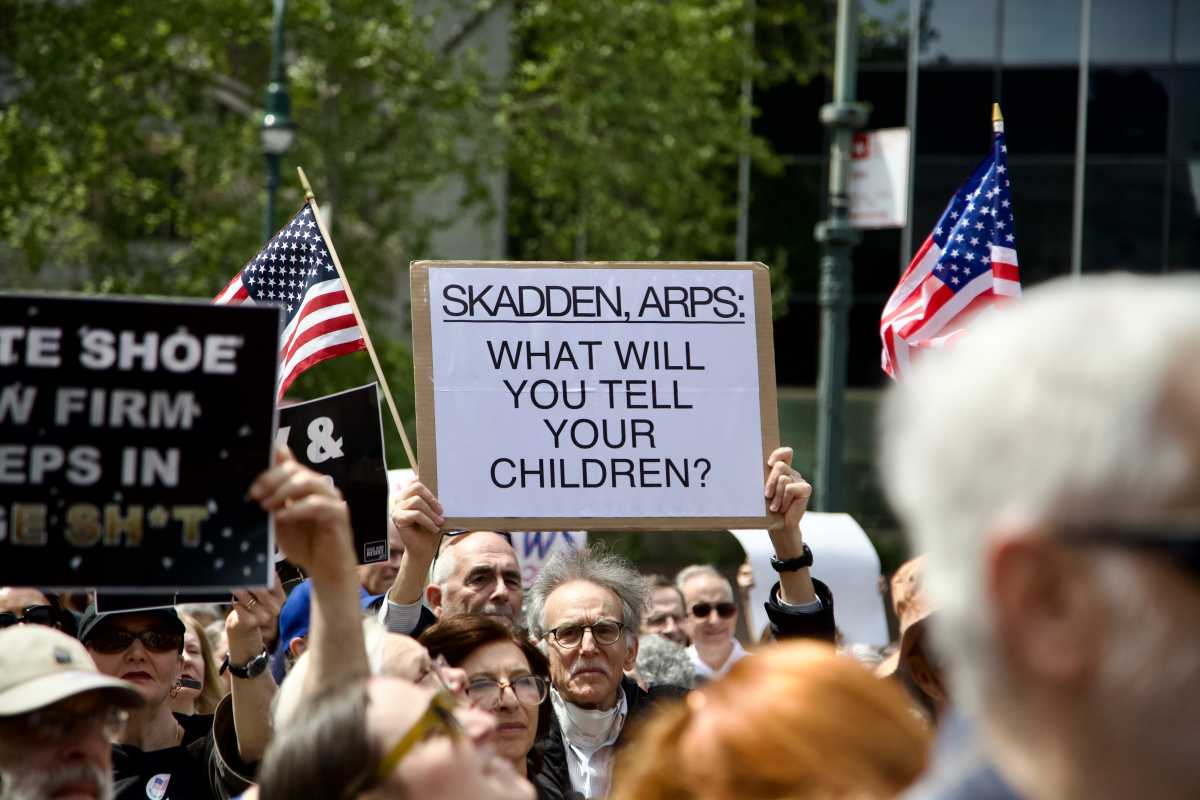
Thomas Sipp, a young lawyer who resigned from Skadden, Arps, Slate, Meagher, & Flom after the elite law firm began talks to strike a deal with Trump over another executive order, said that he left his job out of a sense of “hope for the rule of law and everything that protects.”
Sipp, who moved to the U.S. from Japan when he was 10 and was raised by a single mother who “barely spoke English,” said that he felt compelled to fight for America’s legal ideals in honor of the immigrant experience.
“Hope alone is never going to be enough. Hope is meaningless unless it leads to courage. Courage to do what’s right in the face of difficult decisions,” Sipp said.
Your family is my fight, and our budget is going to make life more affordable for families all across our state. pic.twitter.com/yJTiV7JLrv
— Governor Kathy Hochul (@GovKathyHochul) May 1, 2025