STATE SENATOR ANDREW GOUNARDES (D-26) is denouncing as “irresponsible” a proposal to block states from regulating artificial intelligence.
The post State lawmakers denounce GOP bill to forbid regulation of AI models appeared first on Brooklyn Eagle.
 The Ocean Avenue News - oceanavenuenews.com
STATE SENATOR ANDREW GOUNARDES (D-26) is denouncing as “irresponsible” a proposal to block states from regulating artificial intelligence.
The post State lawmakers denounce GOP bill to forbid regulation of AI models appeared first on Brooklyn Eagle.
Police officers shot and killed a knife-wielding man in Brooklyn on Tuesday afternoon while responding to a domestic dispute, sources familiar with the investigation reported.
Sources with immediate knowledge of the police-involved shooting say officers initially rushed to 108 Christopher Ave. in Brownsville, within the confines of the 73rd Precinct, just before 3:30 p.m. on May 13 after a woman called 911 for help.
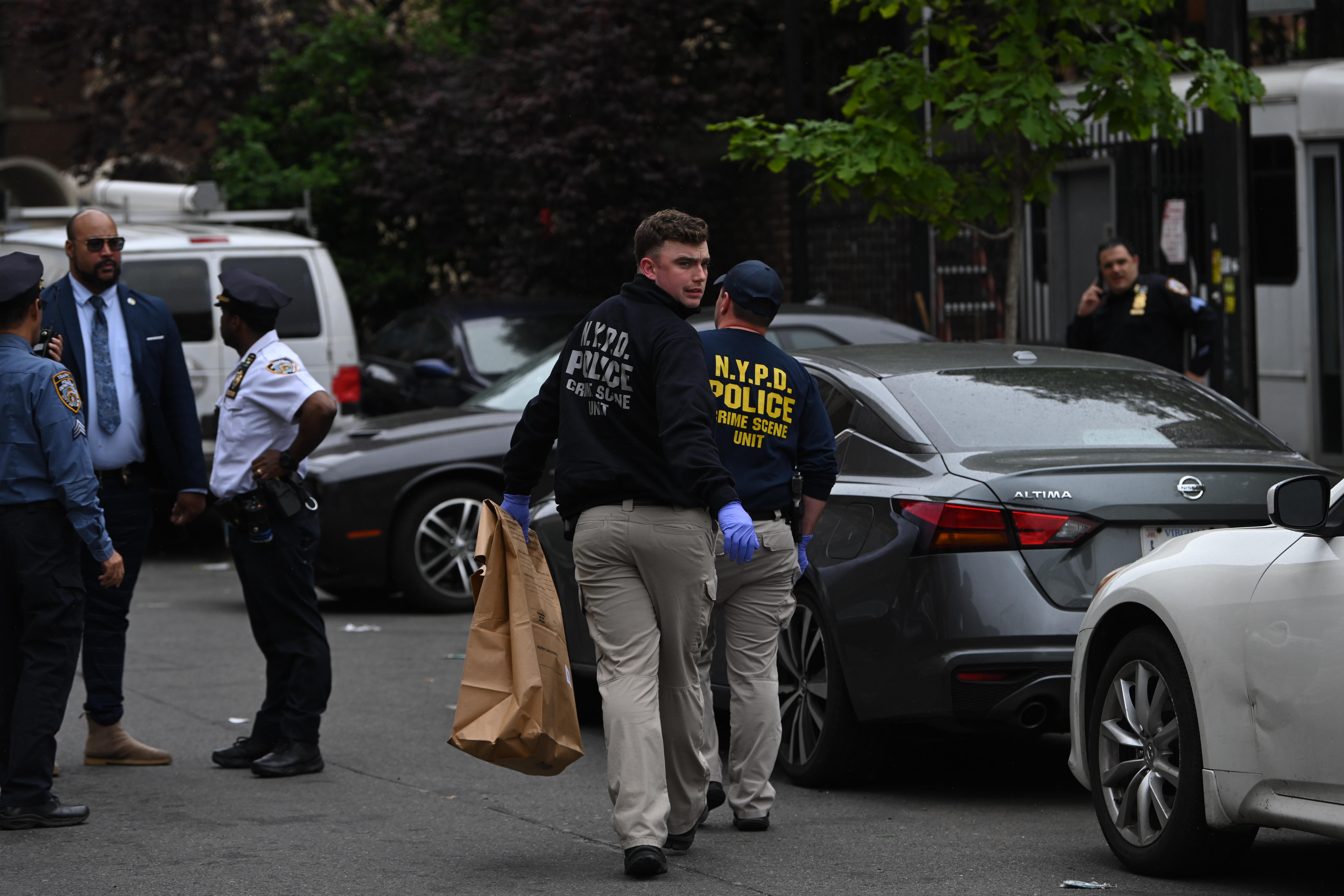


Sources familiar with the preliminary investigation said the officers entered the apartment building and were confronted by a man holding a knife.
The suspect refused to drop the weapon, according to the sources — prompting police to deploy a Taser, which proved to be ineffective. Seconds later, officers opened fire, striking the man in the chest.
The suspect was rushed to Brookdale Hospital, where is pronounced dead. No officers were injured during the altercation.
Authorities are asking people to stay clear of the area as they investigate. Police are expected to release more details in the coming hours.
Check back with amNY.com later for updates.

A FEDERAL JUDGE IN RHODE ISLAND HAS ISSUED AN ORDER HALTING the Trump administration from dismantling some federal agencies.
The post Federal judge grants injunction that halts dismantling of federal agencies appeared first on Brooklyn Eagle.
Mayor Eric Adams zeroed in on his dismissed corruption indictment on Tuesday — blasting investigators who alleged in recently-released court documents that he concealed the location of his personal cellphone, and claiming that his dyslexia caused him to forget the phone’s passcode.
“I’m dyslexic, I forget numbers, that’s a byproduct,” Hizzoner said at his weekly off-topic press conference on May 12 while explaining the forgotten password. He added that he “always gives numbers to my staff.”
In this case, Adams claims he forgot the passcode after changing it so as to prevent his staff from going into his phone and deleting potential evidence after his top campaign fundraiser had her home raided by federal agents on Nov. 2, 2023, according to the court filings. He told federal agents through his attorneys that he changed the passcode from four to six digits and that the new one read “936639,” according to court records, a code that turned out to be incorrect.
The mayor made the comments in response to amNewYork’s question regarding 1,700 pages of documents that the Justice Department released last week after being ordered to do so by Manhattan Federal Judge Dale Ho — the judge who oversaw Adams’ case.
The newly revealed records included affidavits, search warrants, and exhibits of evidence against the mayor, which were part of his federal corruption case that Ho dropped last month at the behest of the Trump DOJ.
The agents sought to take Adams’ phones because they believed the devices contained evidence of his communications surrounding illegal straw donations from Turkish nationals that were a central part of the charges against him. He allegedly solicited and accepted the illegal donations along with unreported foreign gifts in exchange for official favors.
Adams also bristled on May 13 at an FBI agent’s allegations in one of the newly revealed affidavits that he may have lied about the location of his personal cellphone when federal law enforcement personnel asked him to turn over his electronic devices following an event near Washington Square Park on Nov. 6, 2023.
The agent wrote that while Adams claimed to have left the phone at City Hall when the FBI searched him, location data associated with the phone appeared to show it traveling north from City Hall to 29th Street at that time. After that point, it stopped providing location data, which the agent wrote meant the phone was either turned off, placed in airplane mode, or that its battery had died.
“Location information for Adams’ Personal Cellphone is inconsistent with the representations Adams made,” the agent wrote.
However, when asked about the agent’s assertions on Tuesday, Adams was defiant in denying his account.
“If someone stated that I had a phone on me based on the GPS data, they’re liars,” Adams said. “The GPS data clearly pings and shows you where phones are; they had the evidence that they did not have.”
The mayor charged that federal investigators were attempting to “humiliate me, to embarrass me, to display me [sic]” in their investigation. He pointed to another revelation in the court filings that they were considering seizing the mayor’s phones at the finish line of the 2023 New York City Marathon, but ultimately decided against it.
“I don’t see why no one is factoring in, they wanted to take my phones at the goddamn marathon, folks,” he said.
Adams continues to point to Ho’s decision to drop the case as proof that he did nothing wrong, even though the judge wrote that his ruling had nothing to do with the substance of the charges.
Additionally, Ho appeared to side with allegations that Adams’ attorney made a “bargain” with Trump’s DOJ to drop his case—exchanging his cooperation with the president’s immigration crackdown for scuttling his charges.
NY ATTORNEY GENERAL LETITIA JAMES IS SUING THE DOT for conditioning transportation funding on cooperation with immigration enforcement.
The post Lawsuit against USDOT alleges ultimatum tying transportation needs to immigration agenda appeared first on Brooklyn Eagle.
In New York’s group homes, the work is a labor of love, but for many caregivers, the love isn’t enough to make ends meet.
The direct support professional (DSP) workforce — essential workers who care for people with intellectual and developmental disabilities (I/DD) — is facing a labor crisis.
According to a report by the New York Disability Advocates, a statewide coalition of more than 300 nonprofit organizations serving over 130,000 New Yorkers with I/DD, nonprofit providers care for 85% of individuals with I/DD, yet 20,000 direct care positions remain vacant. As a result, 38% of nonprofit providers have been forced to reduce services or programs. The statewide annual workforce turnover rate of 30% costs nonprofit agencies an estimated $100 million each year.
Harvard Public Health reports the trend is expected to continue. In a 2024 article, the publication projected that 4.6 million home care jobs will go unfilled by 2032.
The causes of the shortage are multifaceted. In addition to low wages, limited advancement opportunities, and poor working conditions, the job is often physically and emotionally demanding. The COVID-19 pandemic further exacerbated the crisis.
Joseph Riley, CEO and executive director of the Guild for Exceptional Children, told Brooklyn Paper that the organization’s workforce has dropped from more than 530 employees in 2019 to 460.

The Guild for Exceptional Children, based in Bay Ridge, serves children, adults and seniors with intellectual and developmental disabilities. Its services include day habilitation programs, a full-day pre-K, early childhood education and residential care. While the Guild still has vacancies, it cannot serve additional individuals with I/DD due to the ongoing staffing shortage.
“We have a lot of open shifts. We’re not comfortable with that staffing level because what it means is the existing staff is working more overtime,” Riley said. “We have some vacancies that we’d like to serve some additional people, but [the staffing shortage] limits our capacity to do that because we want to make sure that we have safe staffing levels in place.”
Riley believes that, in addition to low pay, many people are drawn to remote work, further contributing to the shortage.
“I think a lot of people got used to the idea that they can work without going to work,” he said. “I think a lot of people got used to the idea that they can work without going to work.”
In January, the New York State Office for People With Developmental Disabilities increased reimbursement rates for nonprofit residential and day service providers it licenses, allowing them to offer more competitive wages.
At the Guild for Exceptional Children, the starting salary is $17.82 an hour. However, nonprofits still struggle to compete with state-operated programs, where hourly wages are roughly $10 higher.
“It’s demanding work, and the compensation doesn’t mirror the work that the employees have to do,” Jennifer Hinds-Moore, the Guild’s director for human resources, told Brooklyn Paper. “State agencies pay employees much more than employees in our type of nonprofit agency, so it’s just very difficult to be able to attract and then retain employees.”
Benefits at the Guild for Exceptional Children include health, dental and life insurance, a 401(k), referral and hiring bonuses and employee discounts. To attract new employees, the Guild is launching several pilot programs in the coming months, including a tuition reimbursement initiative and an employee recognition award system.
“Those are some new initiatives that we’re hoping will continue to draw appeal and longevity,” Riley said. “So there are a lot of things we do right. I think if our reimbursement was better, we’d be able to offer more money to staff, which I think would help.”
Families do not pay to place their loved ones in group homes. In fact, many residents do not even have family available to care for them. Their medical needs are typically paid for by government programs such as Medicaid, which provides health insurance and access to long-term care for nearly 7 million New Yorkers.
Manhattan Assembly Member Rebecca Seawright, chair of the assembly’s aging committee and former chair of the people with disabilities committee, said retaining staff at nonprofit-run group homes would be improved if the salaries were higher.
Last month, she reintroduced A7604, a bill to provide wage enhancements for DSP workers.
“New York’s delicate infrastructure of care for people with disabilities and/or older adults rests on the shoulders of nonprofit direct service professionals,” she said, adding that they deliver 85% of services to most New Yorkers with I/DD.
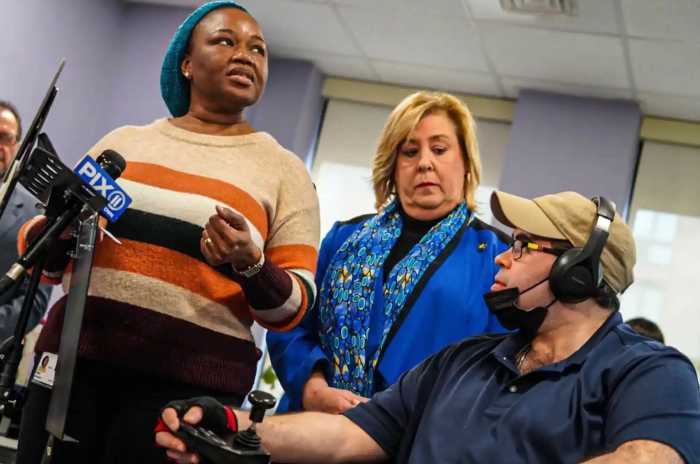
Seawright explained that most nonprofit-based DSPs earn 30% less than their government-funded peers and echoed what many others in the nonprofit sector have said: Low pay and hard work have led to a turnover rate of nearly 30%.
“This disparity goes against our values of equity and fair play while degrading the quality of care for our most vulnerable loved ones and neighbors,” she said. “I also advocated for a cost-of-living adjustment and will continue to fight for our DSPs, the compensation they deserve, and to stabilize the system of care.”
Jennifer O’Sullivan, director of communications for the NYS Office for People with Developmental Disabilities (OPWDD), said that the state’s DSPs are the heart of the agency’s service system, supporting 130,000 people with developmental disabilities every day.
“Under Gov. Kathy Hochul’s leadership, the OPWDD remains focused on growing the number of direct support professionals statewide and improving retention,” she said, adding that the agency remains focused on expanding the direct support professional workforce and improving retention through increased investment and its DSP recruitment campaign, “More Than Work.”
Since 2022, she explained, NYS has made more than $3.9 billion available to nonprofit providers to support investments in the workforce and decrease pay disparity. This funding includes about $1.4 billion in one-time federally approved bonuses, nearly $1.3 billion through four consecutive initiatives that recognize inflationary pressures, and over $340 million through state-funded bonus initiatives.
“Most recently, the governor has invested $850 million to fund rate increases for certified providers, the bulk of which are intended to be used to increase salaries,” O’Sullivan said.
With reporting by Barbara Russo-Lennon
Although most eyes are on the upcoming Democratic Primary on June 24, many voters in South Brooklyn can vote in a special election.
The post ✰PREMIUM<br>Brooklyn’s Senate District 22 special election is on May 20! Here’s what you need to know appeared first on Brooklyn Eagle.

