New York’s law is poised to take effect later this year. https://t.co/vCECsqMl2y
— Brooklyn Eagle (@BklynEagle) June 18, 2025
Day: June 18, 2025
Did Khamenei escape into exile to Oman on Iran’s President’s plane? – Google Search https://t.co/hTwnhcVWal https://t.co/P3MmUoBFnl.
— Michael Novakhov (@mikenov) June 18, 2025
Did Khamenei escape into exile to Oman on Iran’s President’s plane? – Google Search https://t.co/hTwnhcVWal https://t.co/P3MmUoBFnl.
— Michael Novakhov (@mikenov) June 18, 2025
New York’s law, which Democratic Gov. Kathy Hochul signed late last year, is poised to take effect later this year.
The post Musk’s X sues New York over requirement to show how social media platforms handle problematic posts appeared first on Brooklyn Eagle.
Step into Coney Island on a summer day and you’ll hear it — screams from the Cyclone, music blasting from boardwalk speakers. Walk down Surf Avenue and you’ll see a different kind of spectacle: Sideshows by the Seashore. Inside, you’ll see performers twirling fire or hammering nails into themselves.
For many performers, the show is more than entertainment — it’s a powerful expression of identity and self-empowerment.
That’s the world Aaron Smith explores in his new book, “Natural Born! Circus, Sideshow and the Art of Being Human.” The book highlights “the misunderstood performers in the entertainment industry” within the sideshow scene, with its beating heart in Coney Island, the longtime home of America’s last permanent ten-in-one sideshow.
“I always tell people, Coney’s not just where the sideshow survived. It’s where it evolved,” Smith told Brooklyn Paper. “There’s a hierarchy in circus life, and at Coney Island, disabled performers — ‘naturals,’ as they call themselves — sit at the very top.”
Smith would know. Before becoming a journalist, he spent a year in the circus himself, selling cotton candy for Ringling Brothers and helping raise the big top for the Big Apple Circus. Years later, the pandemic allowed him to return to that world, this time with a notepad in hand.
While researching sideshows, he noticed an organization that “offered a membership discount to people who were ‘natural-born.’”
“I found that they were referring to disabled sideshow performers. I was surprised to learn that there are people still doing this today,” he said. “I thought, ‘I’m going to write a book about them and I’m going to do it right now.”
He then spent four years interviewing 20 natural-born sideshow performers across the country, many with strong ties to the storied stages of Coney Island.
Among them is Mat Fraser, a prominent modern sideshow performer born with thalidomide-induced phocomelia, a condition that shortened his arms and left him without thumbs. He performed for years at Coney Island before launching a television career with roles in “American Horror Story.”
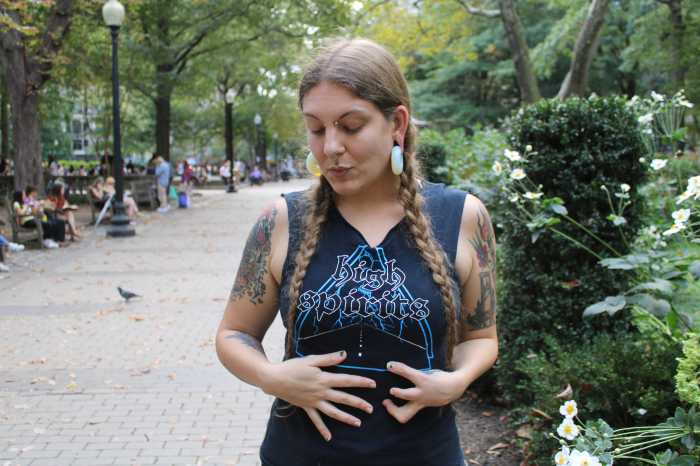
Then there’s Nati Amos, a New York-based medical technician born with amniotic band syndrome. Her act includes spinning flaming staffs and lying on beds of nails while cinderblocks are smashed across her torso. Smith devotes an entire chapter to her story, titled “The Patchwork Girl.”
While these acts are dangerous and painful, Smith said the performers emphasize that they are 100% voluntary.
“I would always ask people if they’re being exploited — they all said it was 100% voluntary,” he said. “In the past, there has been exploitation of disabled people in circuses and sideshows. These performers have total ownership of the act.”
In its current form, Coney Island’s sideshow scene dates back to the 1980s, when carnival showman John Bradshaw helped revive it. But its traditions are more than 100 years old, and Sideshows by the Seashore continues to draw crowds each summer.
“Coney Island is the only stationary sideshow there year after year,” Smith said. “You can go in there, buy a ticket and it’s a constantly revolving show.”
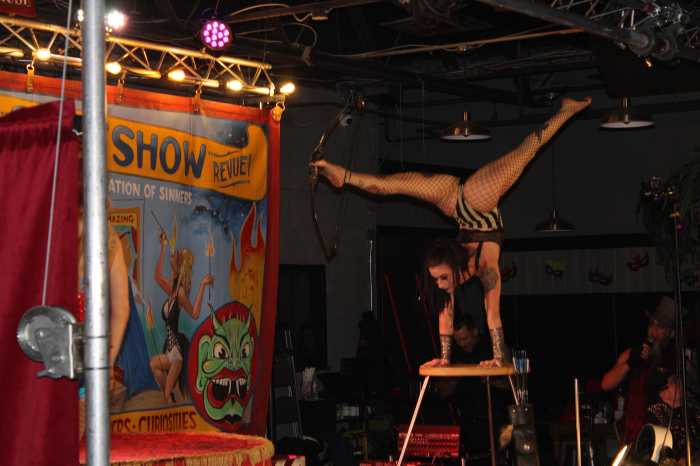
He believes “Natural Born!” is both a written record of natural-born performers’ lives and an invitation for audiences to learn more.
“If someone reads this book and then goes to Coney Island, I want them to be open-minded about going to the sideshow,” he said. “It’s not about gawking at disabled people. Because all of the performers have to be able to do something, whether it’s swallowing swords or breathing fire. They’re doing something most people can’t do.”
For more information on “Natural Born! Circus, Sideshow and The Art of Being Human,” click here.


Pedro “Papo” Serrano, leader of the OZP Trinitarios set, sentenced to over 15 years for a 2021 gang shooting that injured three rivals.
The post Trinitarios gang leader sentenced to more than 15 years in prison for triple shooting in Queens appeared first on Brooklyn Eagle.
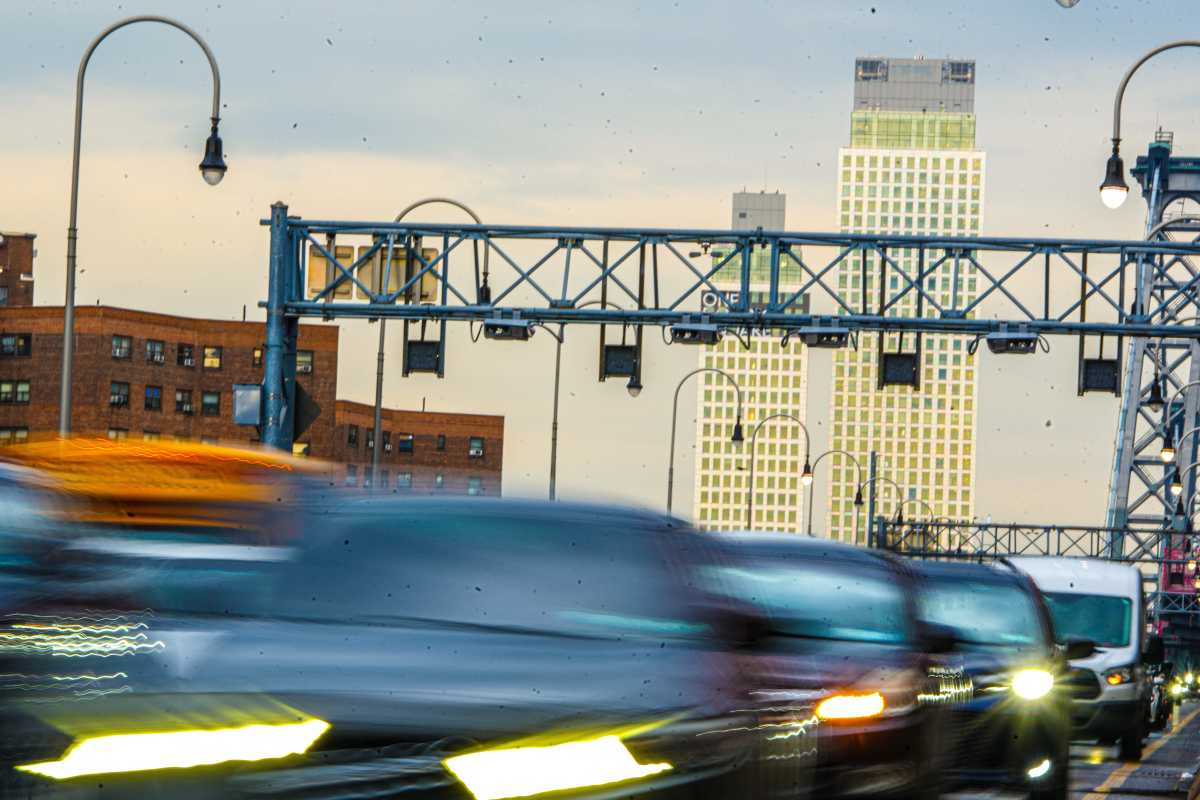
Congestion pricing is having a ripple effect across the tri-state area with less traffic on streets in Manhattan and beyond, according to new data from a major tri-state area research group on Wednesday.
A Regional Plan Association (RPA) report published on June 18 shows that congestion pricing has reduced traffic delays not only within the Manhattan Congestion Relief Zone (CRZ) south of 60th Street — where vehicles are charged a base toll of $9 — but also outside the area.
A look at the analysis shows that there are 25% fewer traffic jams in Manhattan, 10% in the Bronx, and 14% in parts of New Jersey.
“Our analysis shows that, contrary to pessimistic expectations, the congestion pricing program is not causing traffic to be diverted outside the CRZ. Instead, as more people choose transit, trips to Manhattan by car are averted, resulting in less, not more traffic in the Bronx, Bergen County and all around the region,” said Rachel Weinberger, vice president of research strategy at RPA. “We see a reduction in traffic jams and increased overall time savings both within and outside the zone.”
However, it is not extra-smooth sailing for everyone. Traffic has been “largely unaffected” on Staten Island since congestion pricing launched on Jan. 5, according to the analysis. The borough showed a traffic delay decrease of only 5%, which is significantly lower than that in other metro regions.
State Sen. Jessica Scarcella-Spanton, who represents parts of Staten Island and Brooklyn, is opposed to congestion pricing, and cited the “program’s blatant environmental impact” on Staten Island’s North Shore.
“This community already experiences asthma and respiratory illness rates far above the city average, along with disproportionately high emergency room visits tied to those conditions,” she said. “Yet, despite these glaring health disparities, the program continues to operate, knowingly worsening air quality and increasing pollution in our neighborhoods. I will continue to fight against any policy that prioritizes convenience in one part of the city at the cost of my constituents’ health, safety and quality of life.”
However, MTA Chair and CEO Janno Lieber said the report validates what the agency and congestion pricing supporters have been saying about the program.
“It reduced congestion dramatically,” Lieber said on Wednesday during an unrelated press conference. “It has improved drive times for people who are driving. It has improved travel time for a lot of people who are getting into the city on buses, whether they are coming from New Jersey or Long Island, or on our express bus system.”
He also described a calmer environment on city streets.
“It has improved safety by cutting down on the number of car crashes, made for less honking, a more livable city for people who live near those neighborhoods, and I’m hearing from parents who live around places like the Midtown Tunnel or the Lincoln or the Holland Tunnels, [saying], ‘I am not scared walking my kids to school anymore. The road rage has subsided,'” the transit honcho said.
To produce the report’s findings, researchers compared traffic delays from the end of April to the same period in 2024. They also compared traffic delays in the months before congestion pricing’s implementation, following the calendar from Nov. 10, 2024, to April 26 of this year.
GPS was a big help in gathering information. Researchers collected data from Waze thanks to a “partnership program” the GPS app has with public-sector partners. The app keeps a database of traffic alerts that RPA was able to access to do the research.
The research uncovered that traffic delays in the region outside of Manhattan are 9% lower than would be expected without congestion pricing. Traffic delays in 12 municipalities in New Jersey’s Bergen County were also down a whopping 14%.
“RPA’s latest research shows congestion pricing is delivering clear benefits, saving people time and the aggravation of being stuck in traffic,” said Kate Slevin, executive vice president of the RPA, said, “The research provides more evidence that the congestion pricing program is working to reduce traffic, both within the five boroughs of New York and within Bergen, Hudson, Essex, and Union Counties in New Jersey.
As of May 28, congestion pricing has generated $215.7 million year to date, keeping the MTA on target with its projections.
The MTA has said congestion pricing tolls will pay for improvements to the city’s public transportation system, including updated signaling on segments of busy train lines, new electric buses, structural repairs and the Second Avenue Subway extension into East Harlem.
But the program still faces challenges from the federal government. The U.S. Department of Transportation has maintained that the tolls are unlawful since there is no toll-free way to enter the CRZ in Manhattan.
The future of the program remains in the hands of the federal court.
BREAKING:
The United States is evacuating its citizens and embassy staff from Israel by air and sea. pic.twitter.com/9QVyLSvGXO
— Globe Eye News (@GlobeEyeNews) June 18, 2025