Zelenskiy: Ukrainian constitution makes trading land impossible – Google Search https://t.co/WJbsW6PW04
AI Overview
.Volodymyr Zelenskyy has repeatedly stated that the Ukrainian Constitution makes it impossible to trade or give up Ukrainian territoryThis stance is rooted in… pic.twitter.com/7abTGcsIGQ— Michael Novakhov (@mikenov) August 17, 2025
Day: August 17, 2025

Premier League fans are in for an early treat as Premier League giants Manchester United and Arsenal open the new season with a battle of the beasts on Sunday.
The post How to Watch Manchester United vs Arsenal: Live Stream Premier League, TV Channel first appeared on Brooklyn NY – bklyn-ny.com.
NYC Orders Sunset Community Garden to Vacate Ridgewood Site Amid Anti-Israel Controversy
By: Ariella Haviv
The operators of the Sunset Community Garden in Ridgewood, Queens, have been ordered to vacate their city-owned lot by September 3, following months of controversy over what city officials and community members have described as blatant political activity in violation of their agreement with the Parks Department. According to reporting by The New York Post, the decision represents a significant escalation in a saga that has become a flashpoint for debates surrounding free expression, antisemitism, and the use of public spaces.
As The New York Post reported, the Sunset Community Garden began as a seemingly innocuous project in September 2023. Located on an underutilized parcel of land adjacent to Grover Cleveland High School, the garden was initially envisioned as a community-driven, non-political green space that would provide Ridgewood residents with a small oasis amid the dense urban sprawl of northern Queens.
But by spring 2024, city officials had become increasingly alarmed at what they described as the overt politicization of the space. In May, the Parks Department formally revoked the garden’s license, citing a breach of contract. The decision was based on allegations that the operators had not only veered from their stated mission of community-building but had also used the garden as a platform to promote divisive and explicitly anti-Israel rhetoric.
Organizers contested the revocation, obtaining a temporary restraining order from a state court in June that allowed them to remain on the site pending further litigation. That order, however, has since been lifted, clearing the way for the city to proceed with eviction before the September 3 deadline. As the report in The New York Post noted, the expiration of the restraining order was widely anticipated, given the mounting evidence that the group had failed to adhere to the non-political terms of their license.
At the heart of the controversy is the allegation that the Sunset Community Garden became, in effect, a hub for anti-Israel activism. The New York Post report detailed how the garden’s organizers reportedly required attendees to pledge support for Palestine in order to participate in certain activities.
In addition, a prominent section of the site was branded “Poppies 4 Palestine,” an area featuring imagery and messaging explicitly tied to pro-Palestinian causes. For many community members — particularly Jewish residents in Queens — this shift represented a betrayal of the garden’s founding principles. Instead of serving as an inclusive space for gardening, education, and recreation, critics argue, the garden morphed into a political enclave alienating those unwilling to align with its ideological agenda.
The matter has sparked particular concern in light of the broader rise in antisemitic incidents across New York City, as reported in The New York Post in recent months. Critics of the garden’s activities have pointed out that what may be framed as solidarity with Palestine often veers into rhetoric that is explicitly hostile toward Israel and, by extension, Jewish communities in New York.
The situation intensified earlier this summer when the organizers rebranded the site as Jardin de Santa Cecilia in honor of trans activist Cecilia Gentili. The rebranding included the creation of altars and memorial spaces, further blurring the lines between community gardening and political or ideological activism.
While some supporters described these additions as a reflection of Ridgewood’s diverse and progressive character, detractors — including many who spoke with VIN News — argued that the changes represented yet another departure from the garden’s original mission. The introduction of politicized shrines, coupled with continued anti-Israel messaging, they said, further cemented the garden’s transformation into a space defined by activism rather than community service.
Despite the Parks Department’s revocation of the license and the lifting of the restraining order, the matter is far from resolved. The garden’s operators have filed a federal discrimination lawsuit against the city, alleging that the revocation constitutes unlawful targeting based on their political beliefs. That case is pending in federal court and could extend the dispute for months, if not years.
City officials, however, have maintained that the issue is not about suppressing speech but rather about enforcing the terms of a legal agreement. According to documentation reviewed by The New York Post, the license under which the Sunset Community Garden operated explicitly prohibited the use of the space for political purposes. By engaging in activities that officials say contravened this agreement, the organizers effectively voided their right to continue using the site.
The controversy has deeply divided Ridgewood residents. Some community members, interviewed by The New York Post, expressed support for the garden, viewing it as a grassroots space where marginalized voices could find expression. For these supporters, the eviction represents what they perceive as government overreach and censorship.
Others, however, welcomed the Parks Department’s decision. “This was supposed to be for the neighborhood, not for politics,” one local resident told The New York Post, emphasizing that the garden’s politicization had alienated many in the Jewish community and beyond. “When you start demanding people pledge support for Palestine, that’s not gardening — that’s indoctrination.”
Local Jewish organizations have been particularly vocal, with some pointing to the Sunset Community Garden as emblematic of how anti-Israel rhetoric can seep into civic spaces under the guise of progressive activism. The report in The New York Post noted that these groups have called on city leaders to remain vigilant in ensuring that public property is not misused for activities that foster division or antisemitism.
The eviction order comes against the backdrop of heightened tensions in New York City around Israel and the Hamas, pro-terror cause. In the aftermath of the October 7, 2023, Hamas attack on Israel and the subsequent conflict in Gaza, pro-Hamas demonstrations surged throughout the city. Many of these demonstrations veered into inflammatory rhetoric or confrontations that heightened fears among Jewish New Yorkers.
Incidents of antisemitism in the city — ranging from harassment on public transportation to vandalism of synagogues — have risen dramatically over the past year. For many observers, the Sunset Community Garden case is not an isolated matter but part of this broader wave of politicized hostility.
With the September 3 deadline looming, the Parks Department has begun preparing for the practical logistics of reclaiming the site. According to the information provided in The New York Post report, city officials are weighing whether the land should revert to its original status as a school-affiliated green space or whether it should be repurposed for other public uses.
Meanwhile, the pending federal lawsuit ensures that the legal battle will continue to draw attention, potentially serving as a test case for how courts interpret the balance between free expression and contractual obligations on public land.
For now, however, the city appears determined to move forward with the eviction. “The license was revoked months ago, and the operators have had ample time to comply,” a Parks Department spokesperson told The New York Post. “We are enforcing the terms of the agreement, nothing more.”
The saga of the Sunset Community Garden encapsulates the fraught intersection of civic engagement, political activism, and rising concerns about antisemitism in New York City. What began as a modest effort to bring neighbors together around a shared green space has become a symbol of division and a cautionary tale about the misuse of public resources.
Whether the garden’s organizers will find vindication in court remains to be seen, but their eviction from the Ridgewood lot marks a turning point in a controversy that has gripped the neighborhood for nearly a year.
The post NYC Orders Sunset Community Garden to Vacate Ridgewood Site Amid Anti-Israel Controversy appeared first on The Jewish Voice.
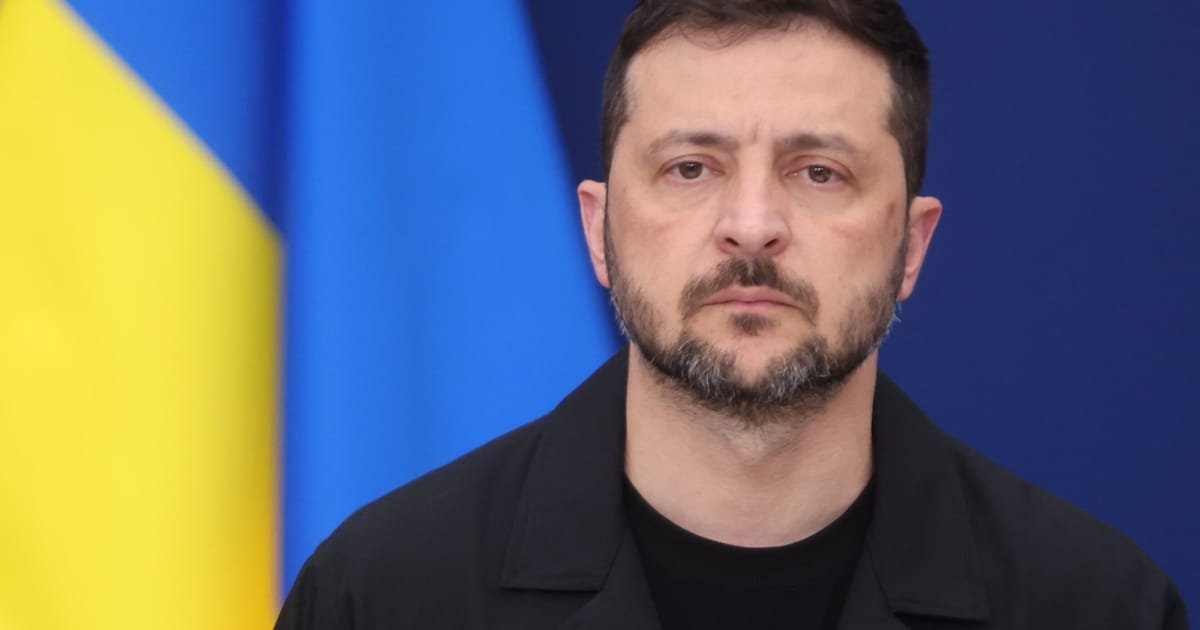
Turley: This is NOT welcome news for Hunter Biden – YouTube https://t.co/hkabRnqZnj
— Michael Novakhov (@mikenov) August 17, 2025
Turley: This is NOT welcome news for Hunter Biden – YouTube https://t.co/hkabRnqZnj
— Michael Novakhov (@mikenov) August 17, 2025
By: Fern Sidman
On August 9, 2025, the Israel Defense Forces (IDF), operating under the direction of the Israel Security Agency (ISA), carried out a precision strike in the Khan Yunis area that eliminated Nasser Musa, a senior Hamas operative who served as Head of Hamas’ Military Control Department within the group’s Rafah Brigade, Israel National News (INN) reported on Friday.
According to IDF and ISA intelligence cited in the INN report, Musa’s position placed him at the center of Hamas’ military readiness efforts in Rafah. His responsibilities included overseeing the operational preparedness and combat exercises of the Rafah Brigade — the very units that have coordinated and executed attacks against both IDF personnel and Israeli civilians during the ongoing war. Military officials noted that Musa’s role was critical in ensuring that Rafah-based terrorist cells remained combat-ready and capable of launching assaults on Israeli territory.
The INN report detailed that Musa was not only a senior commander but also a close associate of Mohammad Sabaneh, the Rafah Brigade commander who was killed in an IDF operation in May 2025. Sabaneh’s death was a significant blow to Hamas’ command hierarchy in Rafah, and Musa’s elimination further erodes the operational leadership of the brigade.
Over the course of his career within Hamas, Musa occupied a range of strategic positions in the Rafah Brigade, including assignments in military intelligence and the observation array. These roles placed him in control of both the information-gathering apparatus and the surveillance systems that enabled Hamas to monitor IDF movements and plan coordinated attacks.
By removing Musa from the battlefield, the IDF has disrupted a key node in Hamas’ operational network, limiting the Rafah Brigade’s ability to coordinate with other Hamas units across Gaza and to prepare its forces for further aggression.
Military sources quoted by INN emphasized that Musa’s elimination will have an immediate and tangible effect on the Rafah Brigade’s operational capabilities. The brigade has played a pivotal role in southern Gaza’s resistance operations, both in launching rocket fire at Israel and in planning ambushes against advancing IDF troops.
As Head of the Military Control Department, Musa oversaw training regimens, tactical drills, and coordination between various combat units. His absence is expected to reduce Hamas’ ability to maintain a consistent state of readiness and to implement complex military maneuvers in Rafah and beyond.
The strike on Musa was part of a broader, ongoing campaign targeting Hamas and other terrorist organizations across the Gaza Strip. As INN reported, on Thursday the IDF also struck a structure in Khan Yunis used by terrorists to store rockets intended for launch against the State of Israel and IDF forces. Intelligence provided jointly by the IDF and ISA guided this operation, which aimed to preempt rocket attacks by destroying weapons before they could be deployed.
IDF troops remain engaged in active operations in Khan Yunis, where they have located and dismantled multiple terrorist structures. These facilities often serve as weapons storage depots, command centers, or fortified positions from which militants can engage Israeli troops. In addition to demolishing infrastructure, IDF forces in the area have eliminated terrorist cells, neutralizing immediate threats to both military and civilian targets.
While Khan Yunis remains a focal point of IDF operations, the INN report noted that significant military actions are also underway in both southern and northern Gaza. In the south, IDF troops have dismantled dozens of military infrastructure sites and carried out precision strikes from the air to eliminate enemy combatants. These air operations are aimed at both fixed positions and mobile terrorist units attempting to regroup after earlier losses.
In the northern Gaza Strip, IDF troops continue defensive operations to protect Israeli communities adjacent to the border. These areas have faced persistent threats from tunnel shafts, which terrorists have used to infiltrate Israeli territory or launch surprise attacks. The IDF has destroyed numerous tunnel entrances, denying Hamas and other groups the ability to exploit these underground networks.
Khan Yunis and Rafah have long been considered strongholds of Hamas activity in southern Gaza. Rafah, in particular, has been a central hub for the movement of weapons, fighters, and funds due to its proximity to the Egyptian border. The Rafah Brigade operates as a semi-autonomous military formation within Hamas’ armed wing, the Izz ad-Din al-Qassam Brigades, with its own command structure, intelligence units, and logistical networks.
According to the information provided in the INN report, dismantling the leadership and infrastructure of the Rafah Brigade is viewed by Israeli defense officials as critical to reducing Hamas’ overall operational capacity. The loss of senior commanders like Musa not only disrupts immediate combat operations but also undermines long-term strategic planning within the brigade.
The elimination of Nasser Musa reflects the increasingly integrated approach between the IDF and the ISA in conducting targeted strikes. Intelligence from the ISA — often gathered through surveillance, informants, and signal interception — has been instrumental in identifying high-value targets and planning precision operations. The IDF then leverages this intelligence to execute strikes that minimize collateral damage while maximizing operational impact.
By combining intelligence and operational assets, Israel has been able to systematically dismantle Hamas’ command-and-control network. This strategy is designed to create cascading effects: removing key leaders, disrupting coordination, and forcing Hamas units into reactive rather than proactive positions.
Musa’s death compounds a series of losses for Hamas’ military leadership in recent months. The group has seen multiple senior operatives killed, including brigade commanders, intelligence chiefs, and specialist operatives responsible for rocket production and tunnel engineering.
The Rafah Brigade, already weakened by the death of Sabaneh in May, now faces an even greater leadership vacuum. This loss will likely slow the brigade’s ability to reorganize, rearm, and mount complex attacks, particularly at a time when the IDF continues to exert sustained military pressure across multiple fronts.
Despite these successes, Israeli defense officials caution that Hamas retains significant capabilities and remains determined to continue its campaign against Israel. The destruction of rocket storage sites and the elimination of commanders, while essential, must be paired with ongoing vigilance to prevent the group from regenerating its assets.
The IDF’s ongoing operations in Khan Yunis, Rafah, and northern Gaza are therefore not only punitive strikes but also preventive measures aimed at keeping the threat level manageable. This multi-pronged campaign — targeting leadership, infrastructure, and active combatants — reflects Israel’s strategic doctrine of continuous pressure to deny the enemy freedom of action.
The elimination of Nasser Musa marks another significant milestone in the IDF’s campaign to degrade Hamas’ military capabilities in southern Gaza. As Israel National News has reported, the precision strike that removed him from the battlefield deprives the Rafah Brigade of an experienced strategist, disrupts operational coordination, and further erodes the morale of Hamas fighters in the region.
Coupled with the destruction of weapons storage facilities, the dismantling of terrorist infrastructure, and the neutralization of active cells, these actions form part of a sustained and deliberate strategy to protect Israeli civilians and soldiers alike.
While the broader conflict continues to evolve, operations like the August 9 strike demonstrate the IDF’s ability to identify, target, and eliminate high-value threats with surgical precision — a capability that remains central to Israel’s defense posture against Hamas and other terrorist organizations entrenched in the Gaza Strip.
The post IDF Eliminates Senior Hamas Commander in Khan Yunis, Further Crippling Rafah Brigade’s Operational Network appeared first on The Jewish Voice.
