ESPN’s major deal with the NFL will face regulatory reviews from at least two federal agencies.
 The Ocean Avenue News - oceanavenuenews.com
After serving as a controversial migrant shelter, the huge former factory and warehouse complex at 47 Hall Street in Clinton Hill will be redeveloped as mixed income housing with a new skyscraper and adaptive reuse of existing factory buildings, some of which were originally home to the Mergenthaler Linotype Company.
The rezoning needed to build the project, which will include around 611 apartments, kicked off public review early this year. On Thursday, Aug. 14 the full City Council approved the rezoning.
At an Aug. 6 Subcommittee on Zoning and Franchises meeting, council members required the development team behind the proposal, RXR, build using option one of the Mandatory Inclusionary Housing program. That option requires 25% of the total apartments built, or 153 units, are made available to families earning an average of 60% of Area Median Income. Currently, that would be around $87,480 for a family of three. At 60% of AMI, a two-bedroom would rent for $2,187 a month. The remaining 458 apartments will be market rate.
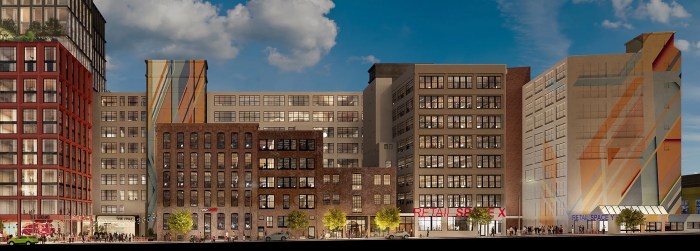
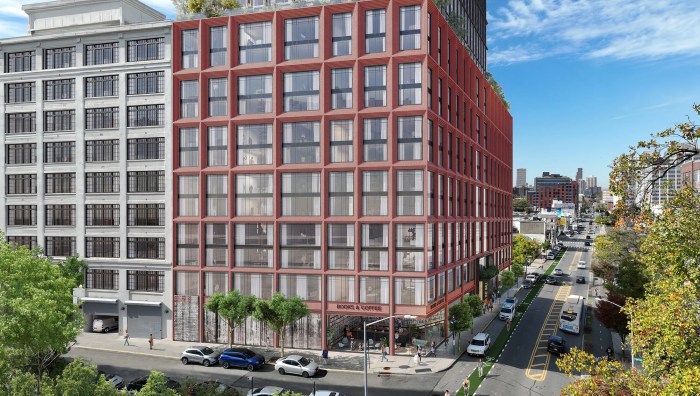
At a Committee on Land Use meeting later that day, Council Member Crystal Hudson said that with the rezoning, 47 Hall Street has the chance to “finally maximize its potential and secure additional housing in the high demand neighborhood of Clinton Hill.” Before the property’s reuse as a migrant shelter, it was slated to become a high-end boutique hotel, but that never came to pass.
As well as the more than 600 residential units, 150 of which Hudson said would be “permanently affordable,” she said the project will create 530 construction jobs and 350 permanent jobs on site.
“It will also include publicly accessible open space and retail spaces targeted toward local businesses. This project will convert an existing commercial facility into a residential one, ensuring we are using all tools at our disposal to tackle our housing crisis, and adding to the more than 17,000 units from office conversions in the pipeline across the five boroughs. While this project did not bring everything we wanted, I look forward to working with my colleagues across all levels of government, to secure greater labor participation in all projects, including in my own district,” she said.
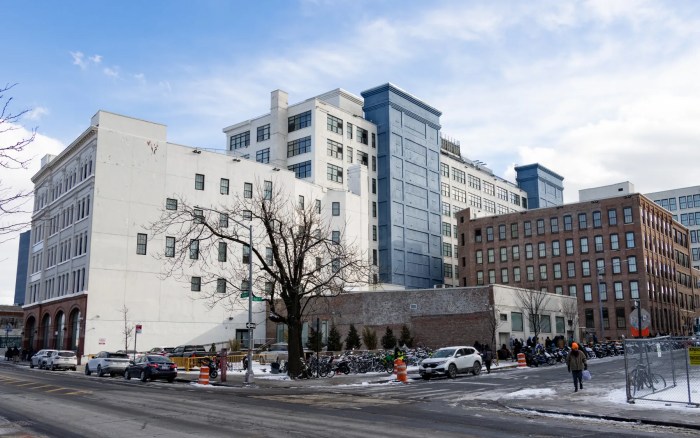
The 10-building commercial site near the Brooklyn Navy Yard sits occupies an entire block, totaling 2.6 acres, in Clinton Hill. New York-based developer RXR is behind the plan, which calls for demolishing two of 10 existing buildings, replacing them with a new 21-story building, and refurbishing eight others for residential, retail, small commercial, and self-storage use.
The block, which is currently zoned for commercial and industrial use, is bounded by Flushing Avenue, Ryerson Street, Park Avenue, and Hall Street. The rezoning will change it from M1-2 zoning to M1-5 and M1-6A/R8. RXR previously restored the 10 commercial buildings in a major renovation project that finished in 2019, but struggled to find tenants in a market altered by Covid.
In 2023, the city signed signed a contract to use 47 Hall Street, the address for the entire block, as a Humanitarian Emergency Response and Relief Center shelter for migrants, along with a second building on Ryerson Street not owned by RXR. The two shelters have been controversial in the neighborhood due to their size and crimes that happened nearby. In January, the city announced the Clinton Hill migrant shelter complex would close in June of this year.
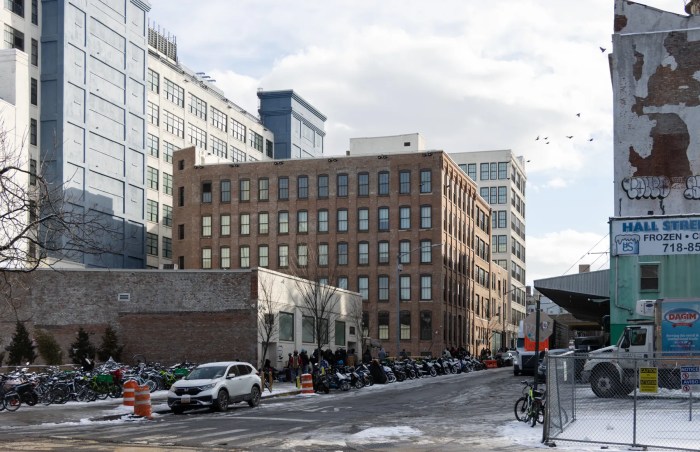
While none of the buildings on the site are protected by New York City landmarking, nine of the 10 are listed on the National Register of Historic Places for the Wallabout Industrial Historic District. One of those would be demolished as part of the plan.
To build the new 21-story building that will front Flushing Avenue and run from Hall to Ryerson street, the developers will demolish the five-story Romanesque Revival brick building at 248-252 Flushing Avenue, on the corner of Flushing Avenue and Ryerson Street. It was designed by Theobald Engelhardt for the B.A. Jurgens grocery warehouse and built in the 1890s. They also plan to demolish a noncontributing single-story brick building at the southeast corner of Flushing Avenue and Hall Street.
The reinforced-concrete factory building at 14-42 Ryerson Street, slated for residential conversion, was built in 1927 and designed by Herman Foughner for the Mergenthaler Linotype Company, according to the National Register of Historic Places.
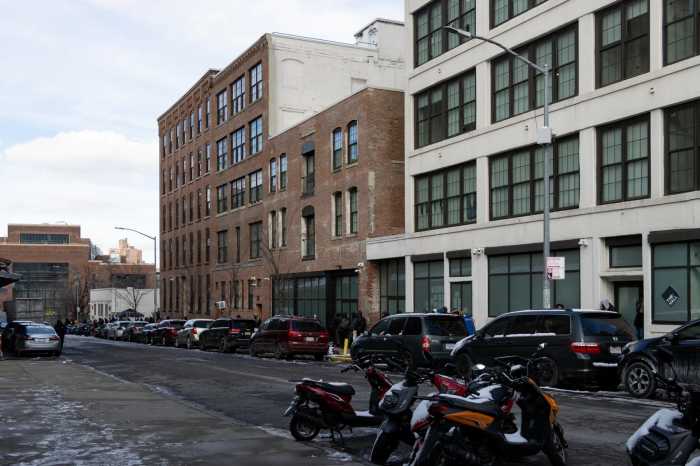
The two buildings on the corner of Ryerson Street and Park Avenue will be used for self storage, plans show. These include the nine-story reinforced concrete factory building at 307-313 Park Avenue, which was designed by Albert Kahn and built in 1907 for the Mergenthaler Linotype Company, as well as the early 20th century extension to that building at 299-305 Park Avenue. The latter was designed by Albert Kahn, Herman Foughner, and P. R. Moses and built for the Trussed Concrete Building Company.
The remaining five buildings that run along Hall Street will be mixed retail and commercial, and include smaller maker spaces. These include four buildings built for the Mergenthaler Linotype Company: an early 20th century one-story concrete structure at 297 Park Avenue; the 1917 eight-story reinforced concrete factory building at 39-43 Hall Street designed by Herman Foughner; a three-story building at 33-37 Hall Street built between 1900 and 1910 as a factory, garage, and stable; and a five-story brick building at 31 Hall Street dating from 1895. A fifth building, 23-29 Hall Street, is a five-story brick factory building created using mill construction for fire resistance in the early 20th century.
According to the development team, the project will be built in phases, with completion targeted for 2030.
This story first appeared on Brooklyn Paper’s sister site Brownstoner
The Retribution Presidency – Google Search https://t.co/CbXDZOIzAC
AI Overviewhttps://t.co/HvRgZTum9w
. The term refers to his campaign promise and subsequent actions to use the power of the government to seek revenge against those he perceives as his enemies.The phrase “The… pic.twitter.com/ELpFJK9iek— Michael Novakhov (@mikenov) August 26, 2025
https://t.co/8glaS1HKFFhttps://t.co/HvRgZTtOjY
The Retribution Presidency#NewsAndTimes #NT #TNT #News #Times #World #USA #POTUS #DOJ #FBI #CIA #DIA #DOD #ODNI #Trump #TrumpNews #TRUMPISTAN #Israel #Mossad #Netanyahu #Ukraine #NewAbwehr #OSINT #Putin #Russia #GRU #Путин #Россия… https://t.co/qjocnZTbIf pic.twitter.com/1f2gfVt09h— Michael Novakhov (@mikenov) August 26, 2025
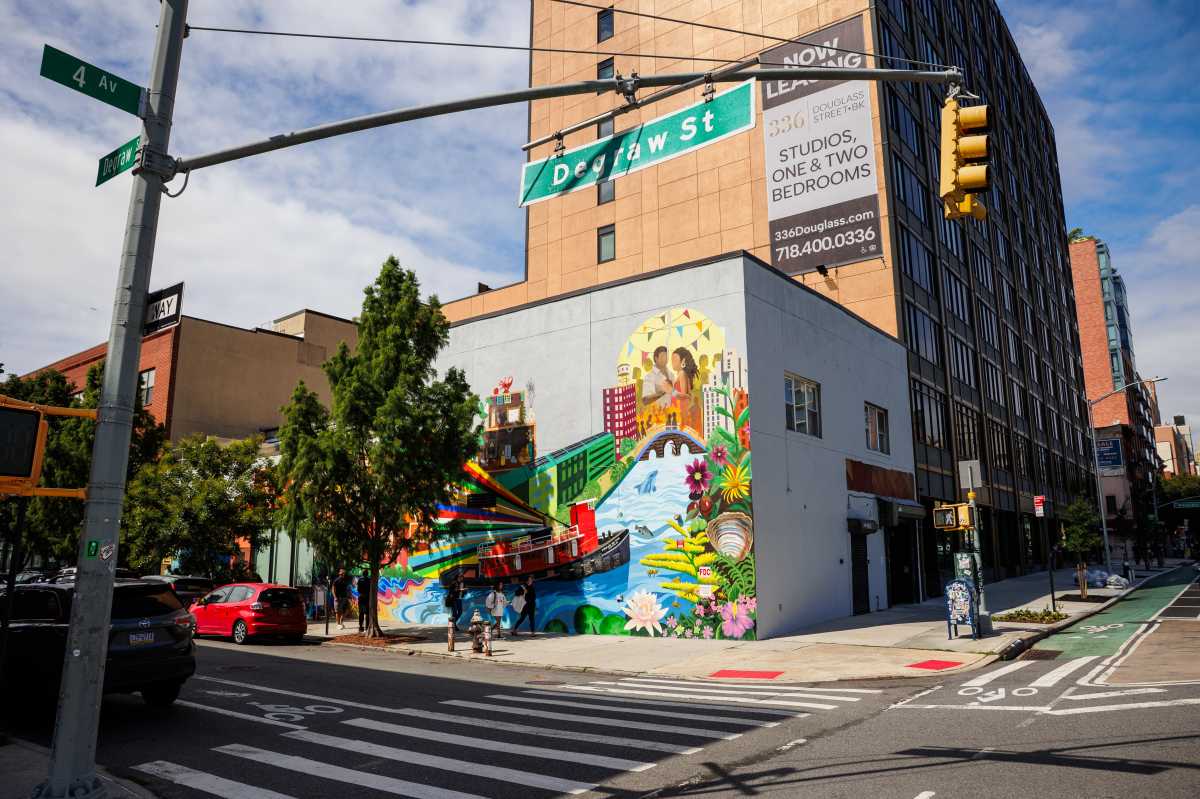
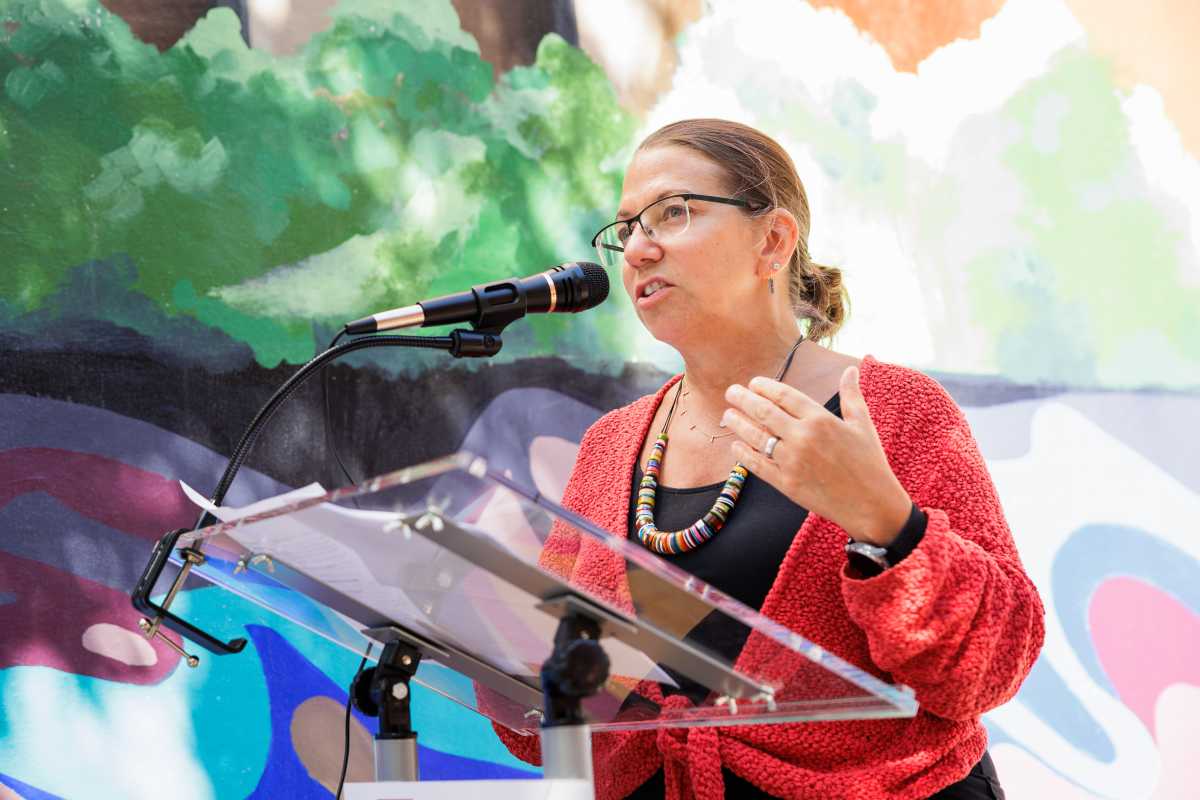
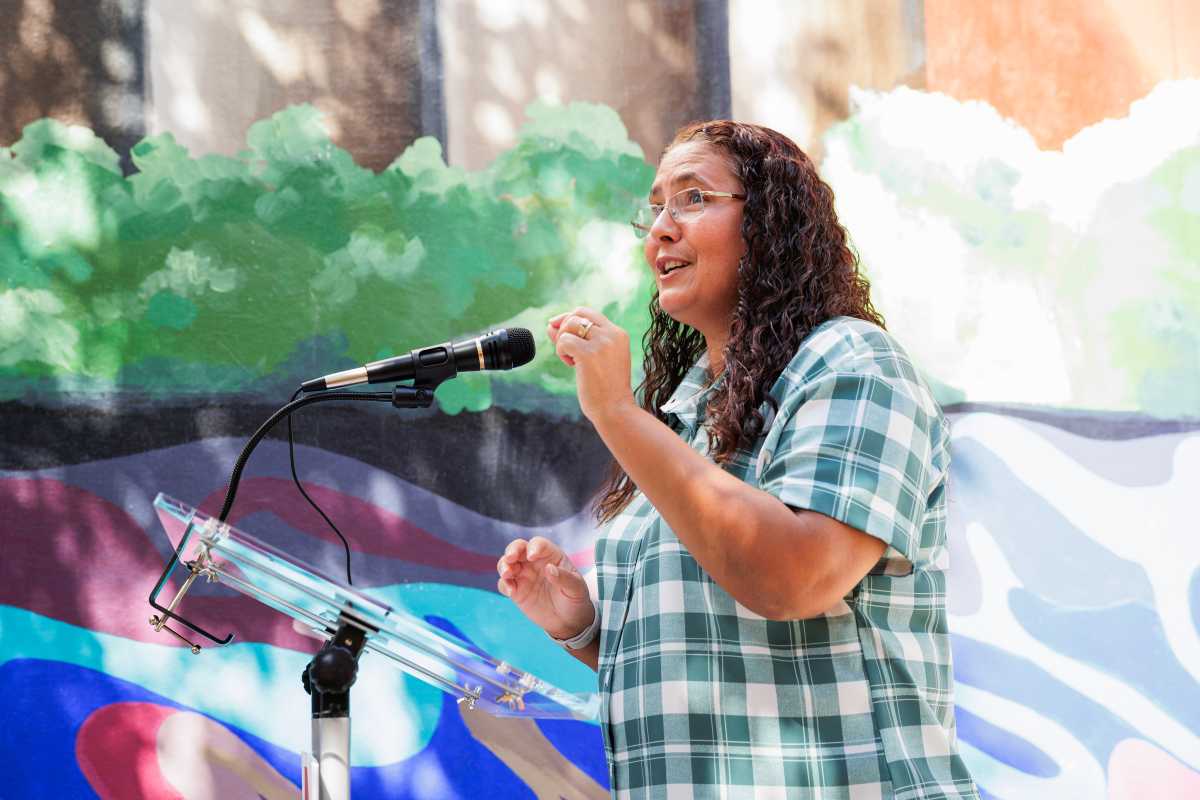
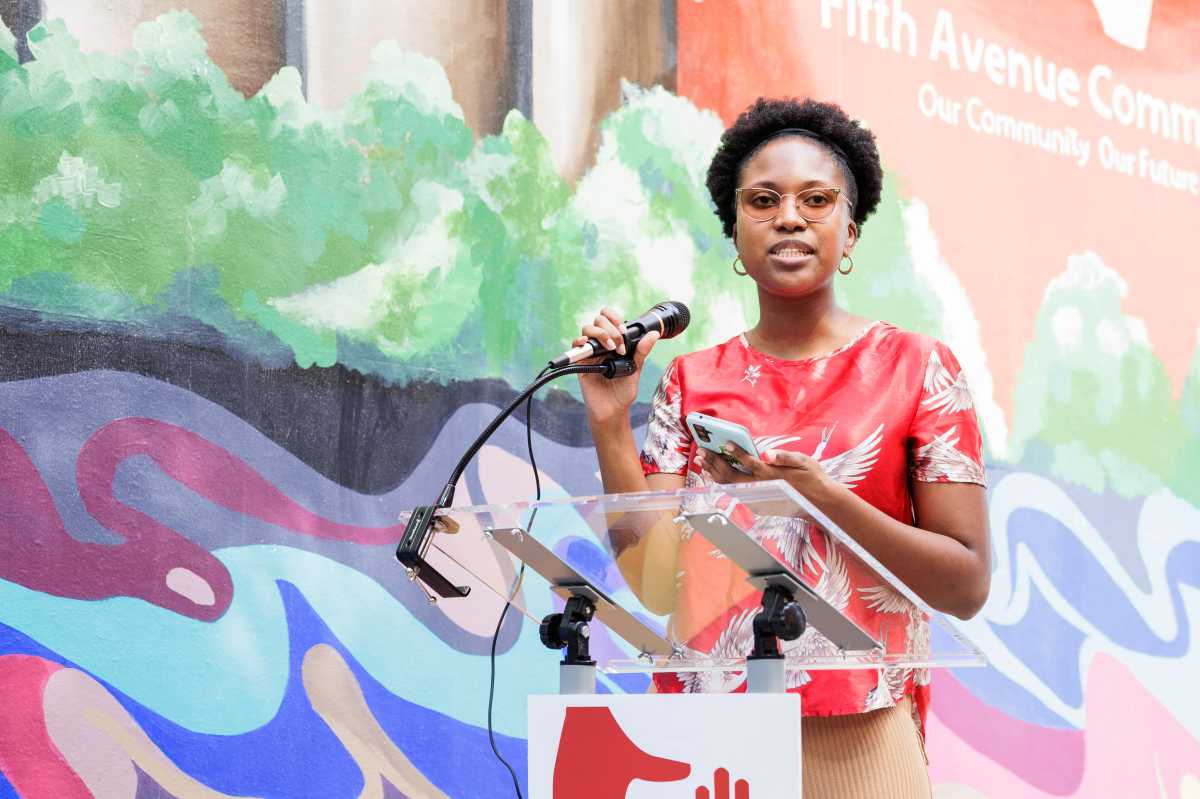
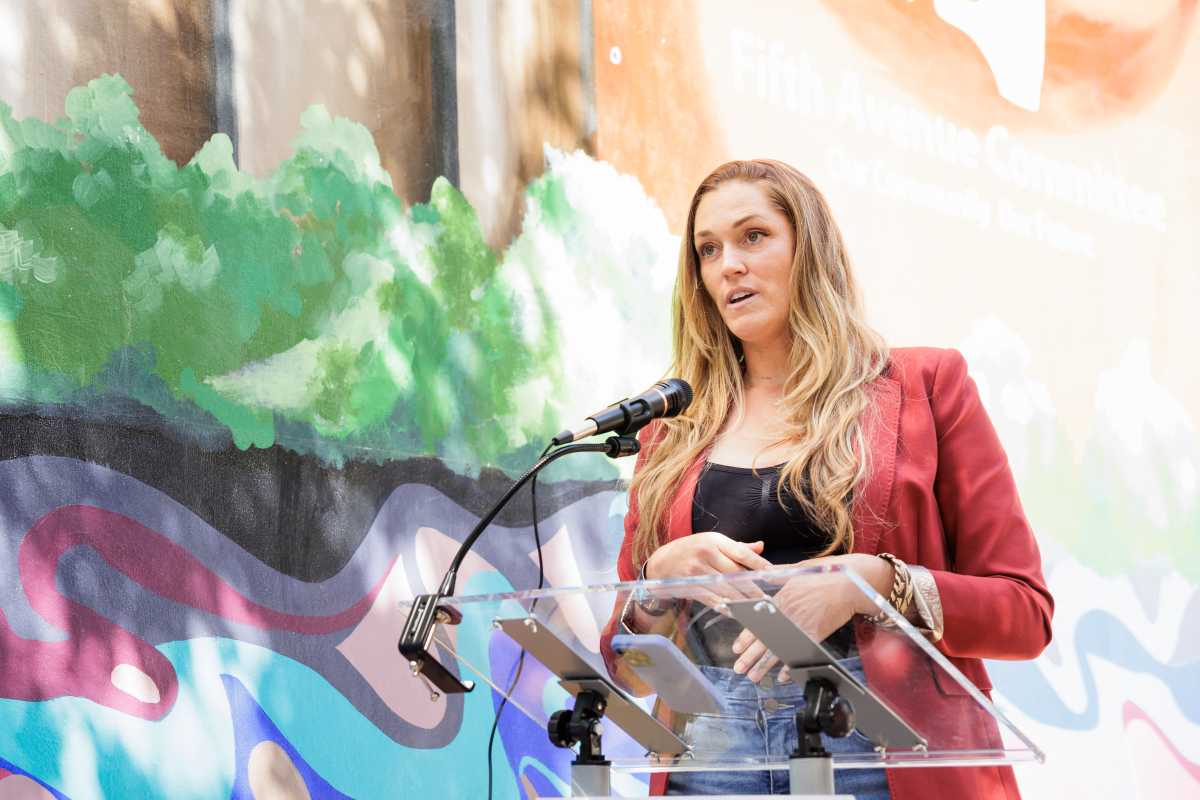
The walls of the Fifth Avenue Committee’s Center for Community Development on DeGraw Street now pulse with new life.
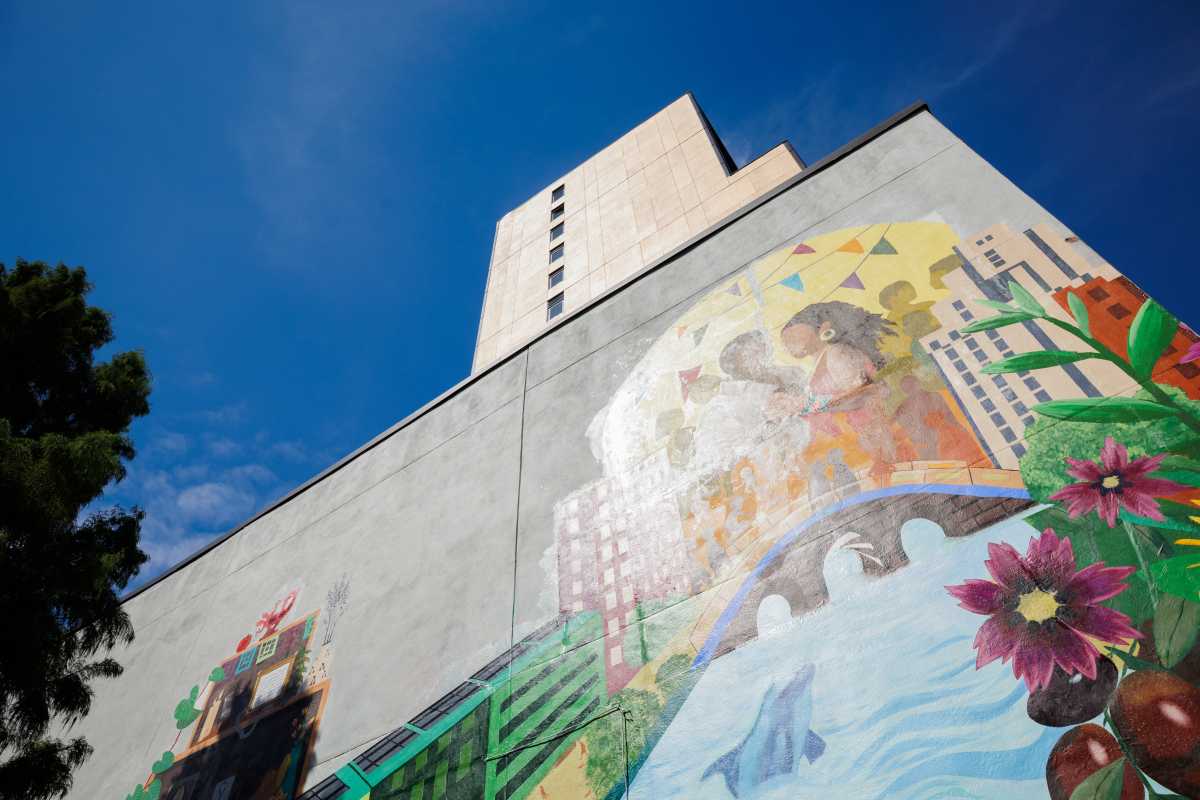
On Thursday, Aug. 21, FAC and Groundswell Community Mural Project unveiled “The Heartbeat of Gowanus,” a large-scale community mural created by lead artists Kristy McCarthy and Yolande Delius in collaboration with 13 youth artists from Groundswell’s Voices Her’d Visionaries program, local leaders and neighborhood residents.
The mural, spanning the building’s facade, pays tribute to the resilience and advocacy of Gowanus organizers and residents who have shaped the neighborhood through decades of struggle and transformation. It was created after months of research, interviews, a community listening session and on-the-street interviews with locals.
“Over the 21 years that the prior mural was here and then to today, this neighborhood has gone through so many transformations and transitions and obviously we’re at another moment of transformation for Gowanus,” said Michelle de la Uz, executive director of FAC. “When your reflections are grounded in history, when your reflections are grounded in values, when your reflections are grounded in what you want the community to be, and then you’re directly in communication with local leaders … that’s very, very powerful.”
Groundswell’s Executive Director Yvonne Martinez Brathwaite echoed de la Uz, noting that the work embodies both memory and vision.
“This mural stands as a powerful reflection of the environmental and social justice struggles faced by the Gowanus community and of the resilience and leadership, especially of women and youth, that continue to shape a more just future,” she said. “It’s more than a mural, it’s a collected vision for equity, solidarity and sustainability brought to life by the community itself.”
McCarthy, one of the lead artists, described the process as deeply collaborative and rooted in listening.
“From all our research, the thing that we really saw was that everybody wants to honor the history and the rich legacy of the neighborhood of Gowanus and the community here that’s been fighting for justice for many generations,” she said.
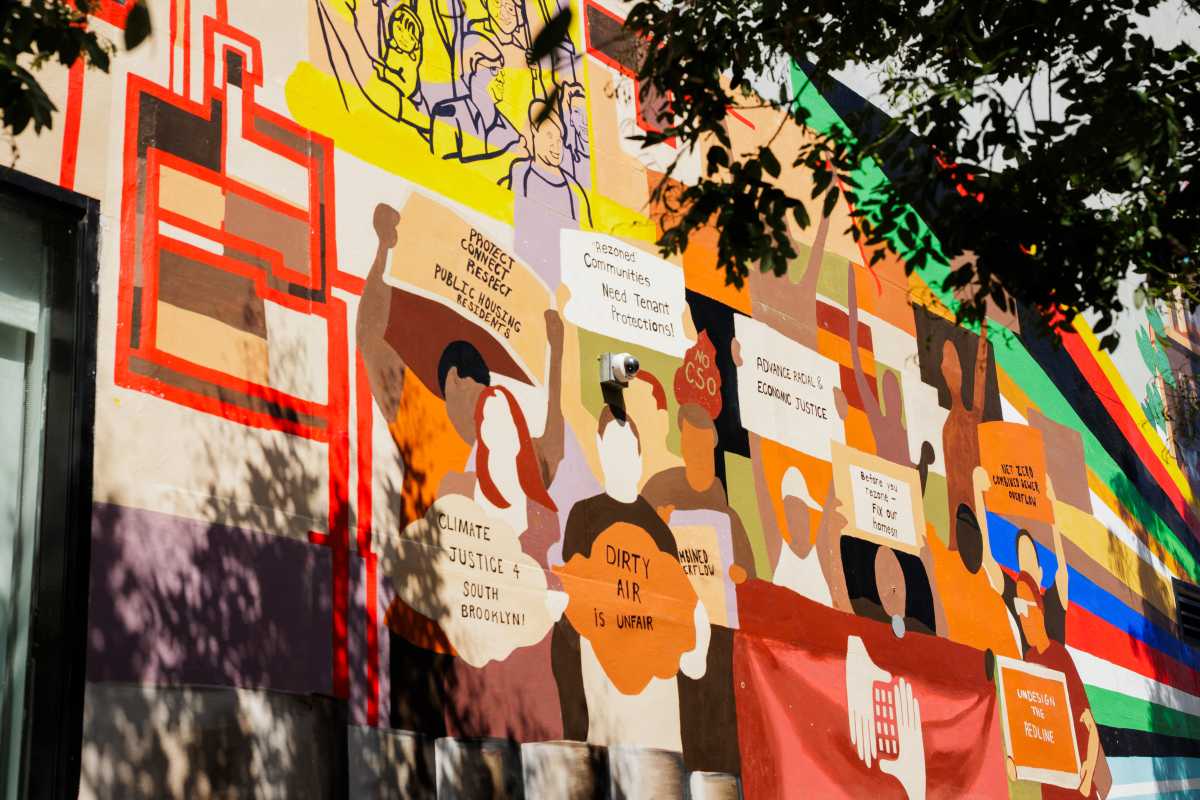
The mural’s imagery moves through time: beginning with the Lenape people who first lived on the land, transitioning into the industrial era, then highlighting struggles against redlining and disinvestment, before arriving at present-day protests for justice. At its foundation is the Gowanus Canal — depicted first as polluted waters, then transforming into clean blue currents that carry a tugboat named “Turning the Tides,” symbolizing hope, resilience and the working-class fabric of the neighborhood.
For youth artist Ashanti Benons, the experience was both personal and transformative.
“Not only did I get to work on art all day, but I got to explore a new part of New York City that I had never visited before and immersed myself in its history and culture,” she said. “Beyond the research, I feel like the experience of creating this mural was a major turning point in my own art. I finally understood how to blend skin tones and I painted my first ever acrylic portrait … so I was really proud of myself for that.”
Her growth as an artist, however, was only part of what she took away from the project.
“For me, I would say this mural represents the power of community collaboration and art to create change,” she said.
City Council Member Shahana Hanif also attended the unveiling, underscoring the mural’s political and social resonance.
“This mural is a movement that demonstrates the work of women and BIPOC people in this community and particularly the working class fight to ensure that the future of Gowanus is clean air, affordable housing and one that’s equitable,” Hanif said. “We’re headed towards resilience, we’re headed towards ensuring that this community is welcoming and inclusive … and that we get to honor it with art.”
“The Heartbeat of Gowanus” is one of more than 700 Groundswell murals citywide.
The Retribution Presidency – Google Search https://t.co/CbXDZOIzAC
AI Overview
. The term refers to his campaign promise and subsequent actions to use the power of the government to seek revenge against those he perceives as his enemies.The phrase “The Retribution Presidency”…— Michael Novakhov (@mikenov) August 26, 2025
The retribution Presidency of Donald Trump – Google Search https://t.co/2qQmOilFYN
Президентство Дональда Трампа, основанное на принципах возмездия pic.twitter.com/9VSVaR534Q— Michael Novakhov (@mikenov) August 26, 2025
The Retribution Presidency
https://t.co/8glaS1Iivd
The Retribution Presidency#NewsAndTimes #NT #TNT #News #Times #World #USA #POTUS #DOJ #FBI #CIA #DIA #DOD #ODNI #Trump #TrumpNews #TRUMPISTAN #Israel #Mossad #Netanyahu #Ukraine #NewAbwehr #OSINT #Putin #Russia #GRU #Путин #Россия #Bloggers #Opinions… pic.twitter.com/BjJ0HCppmT— Michael Novakhov (@mikenov) August 26, 2025
The Retribution Presidency – Google Search https://t.co/CbXDZOIzAC
AI Overview
. The term refers to his campaign promise and subsequent actions to use the power of the government to seek revenge against those he perceives as his enemies.The phrase “The Retribution Presidency”…— Michael Novakhov (@mikenov) August 26, 2025
The Retribution Presidency – Google Search https://t.co/CbXDZOIzAC
AI Overviewhttps://t.co/HvRgZTum9w
. The term refers to his campaign promise and subsequent actions to use the power of the government to seek revenge against those he perceives as his enemies.The phrase “The… pic.twitter.com/ELpFJK9iek— Michael Novakhov (@mikenov) August 26, 2025