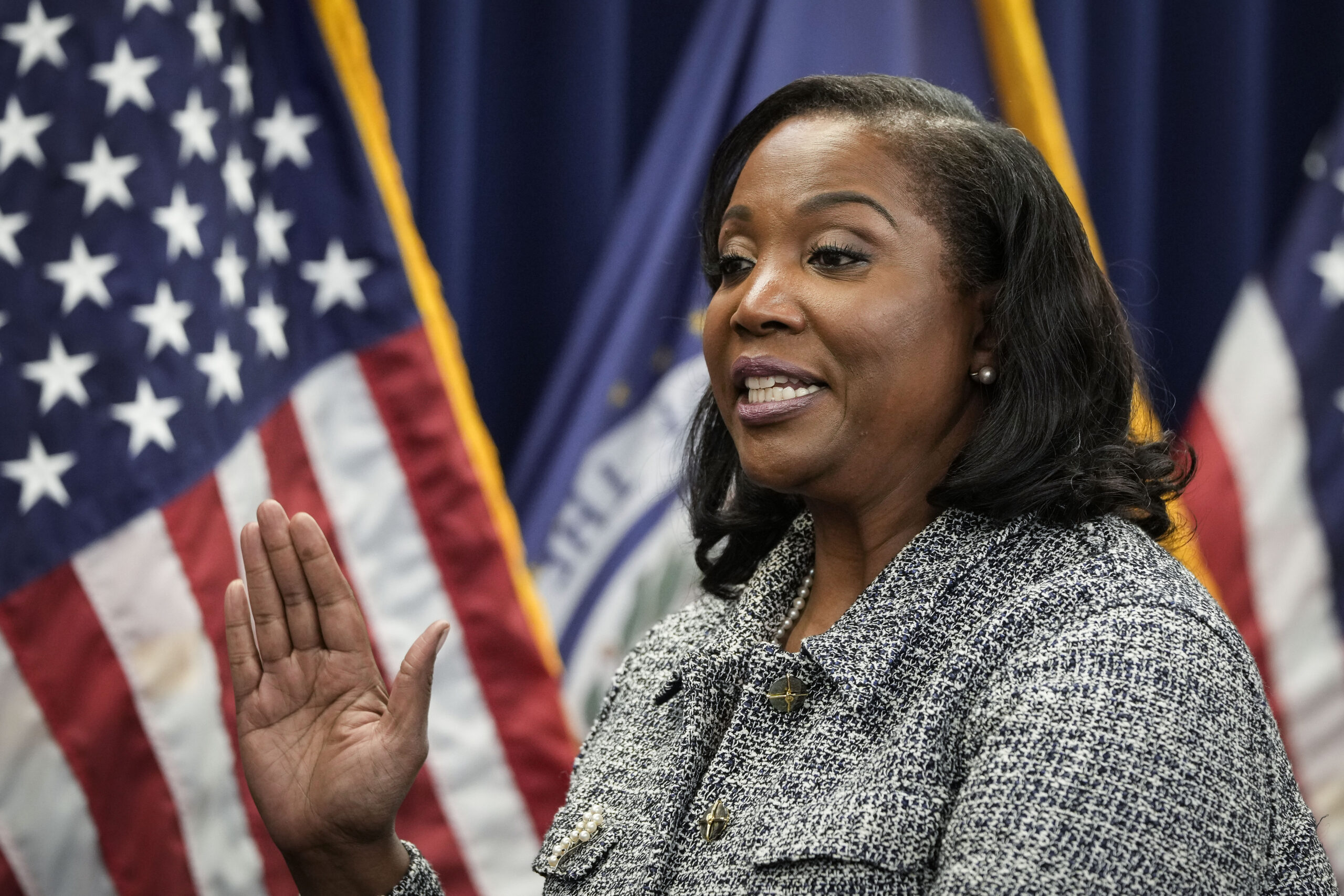
Jimmy Avila is facing murder, attempted murder and multiple weapons possession charges for blasting away at building super Ryan Hines, 37, inside the College Ave. apartment building near E. 170th S…
 The Ocean Avenue News - oceanavenuenews.com
antisemitic messages by mass shooters – Google Search https://t.co/wamAcAxwIt
— Michael Novakhov (@mikenov) August 28, 2025
By: Tzirel Rosenblatt
A recent segment on i24 News has reignited one of the most consequential debates within the Israeli charedi world: should ultra-Orthodox Jewry continue its delicate cooperation with the State of Israel in exchange for yeshiva funding, or should it follow the uncompromising path of Satmar, renouncing state support entirely in order to preserve its independence?
As VIN News reported on Thursday, the debate over the draft law has reached a boiling point. With tens of thousands of draft notices issued to full-time yeshiva students, the traditional arrangement that allowed charedi men to remain in study while exempt from military service appears increasingly fragile. For charedi leadership, the question has grown existential: how can they protect Torah learning, maintain their way of life, and still contend with mounting state pressure for reciprocity?
The charedi community’s relationship with the state has long been defined by an approach attributed to the Chazon Ish, who counseled pragmatic cooperation after the founding of Israel in 1948. Recognizing the permanence of the Jewish state, the Chazon Ish and other leading rabbis sought to establish a modus vivendi—an understanding that would safeguard the independence of yeshivos while securing financial support from the state.
This approach, as highlighted by VIN News, enabled Torah institutions to flourish for three-quarters of a century. Thousands of young men were able to devote their lives to Torah study without conscription, while yeshivos received consistent government subsidies. For many, it was the compromise that ensured the continuity of Jewish religious life in the modern state.
Yet the state’s position has shifted. Israeli leaders argue that funding Torah institutions without reciprocal participation in national service—particularly the army—represents an unsustainable imbalance. The proposed new draft law seeks to dramatically raise enlistment targets for charedim, making the continuation of the old arrangement nearly impossible.
For yeshiva students, the implications are stark. As the report at VIN News described, thousands of young men are now living under the shadow of arrest by military police should they fail to comply with conscription orders. The community is experiencing an unprecedented climate of fear, with the draft law serving as a wedge issue between the government and charedi leadership.
This shift has forced many within the ultra-Orthodox world to reassess their strategy. Is cooperation with the state still viable if it comes at the expense of mass arrests, threats to Torah study, and state interference in the autonomy of their institutions?
Enter the Satmar approach, pioneered by Rabbi Yoel Teitelbaum zts’l. From its inception, the Satmar ideology rejected the legitimacy of the Zionist state and refused all forms of cooperation. Its yeshivos do not accept a single shekel from the government, instead relying entirely on community fundraising and philanthropy.
This ideological clarity has, paradoxically, ensured institutional stability. By severing ties with the state, Satmar yeshivos are immune from government strings attached to funding. They operate with total independence, shaping curricula and maintaining their community life without compromise.
In recent years, the Jerusalem Faction, a Lithuanian group of staunchly anti-establishment rabbanim and yeshivos, has joined Satmar in this ideological posture. As VIN News has covered extensively, the Jerusalem Faction has embraced militant opposition to government interference, rallying in the streets against draft laws and refusing to engage in political compromise.
The Satmar position gained fresh visibility when mega-donor Yoeli Landau visited Israel, ostensibly to mark the yahrzeit of the rebbe but with an additional mission: to persuade more factions within the charedi community to adopt the Satmar method.
According to the information provided in the VIN News report, Landau met with rabbinic leaders to emphasize that Satmar’s vast network of philanthropists is prepared to provide robust financial support should other factions sever ties with the state. Landau’s message was clear: if the Israeli government insists on conscription in exchange for funding, charedim should reject the funding altogether and rely on alternative sources to safeguard Torah learning.
Landau’s assurances reflect Satmar’s confidence in its diaspora-backed financial power. With a well-organized philanthropic network across the United States and beyond, Satmar has demonstrated the capacity to maintain and even expand its institutions without a single dollar of state aid.
Despite Satmar’s aggressive push, many charedi politicians and rabbinic leaders remain cautious. Members of Knesset representing ultra-Orthodox parties have emphasized that the time has not yet come to abandon state funding. While acknowledging that circumstances are becoming untenable, they stress the importance of leveraging political power within the Knesset to preserve the traditional arrangement.
At the same time, leading Lithuanian gedolim have not ruled out the possibility of a strategic shift. As the VIN News report noted, they privately admit that if rejecting state funds would, in practice, protect Torah study, they would be prepared to endorse such a dramatic move.
This delicate balancing act reflects the internal tensions within the charedi world. On one side is the Chazon Ish model of pragmatic cooperation, which has ensured growth for decades. On the other side is the Satmar model of principled independence, increasingly attractive amid state crackdowns on draft evasion.
The i24 News report, amplified in the report at VIN News, illustrates how urgent this dilemma has become. For decades, the question of whether to rely on state funds was largely theoretical. Today, with arrests looming and enlistment targets rising, the question is practical, immediate, and unavoidable.
Some argue that cooperation remains the only realistic path, pointing to the immense financial burden of running thousands of yeshivos without government support. Others counter that Satmar has demonstrated the feasibility of independence, and that reliance on the state leaves Torah institutions vulnerable to political bargaining.
The division is not merely strategic but ideological. For those inspired by Rabbi Yoel Teitelbaum’s vision, cooperation with the state is a spiritual compromise that endangers the authenticity of Torah life. For others, rejecting state support risks undermining the very existence of large-scale Torah study, which has been sustained in Israel for decades only through subsidies.
Central to this debate is the question of whether alternative funding streams can replace government aid. Landau and other Satmar philanthropists argue that they can, pointing to the billions of dollars in global Jewish philanthropy directed toward yeshivos and kollelim each year.
Yet as the VIN News report observed, the scale of Israel’s charedi yeshiva world dwarfs that of any other community. Replicating state support through philanthropy alone would require unprecedented levels of organization and commitment from donors abroad. While possible, it would represent a fundamental reorientation of how Torah institutions are financed.
The dilemma facing the charedi world today is unprecedented in scope. With the draft law threatening mass arrests, the traditional model of cooperation with the state is under strain as never before. At the same time, the Satmar method offers a tested but daunting alternative: total independence at the cost of financial security.
The choice is no longer theoretical but pressing. Charedi leaders must soon decide whether to cling to the arrangement that has sustained them for 75 years or to embrace the radical independence of Satmar, with all the risks and promises that entails.
For now, the community remains at a crossroads, weighing pragmatism against principle, survival against sovereignty. Whatever path is chosen will reshape not only the future of Israel’s charedi world but also the very relationship between Torah Judaism and the modern Jewish state.
The post Charedi Dilemma Deepens: To Cut Ties With the State or Pursue Cooperation Amid Draft Crisis? appeared first on The Jewish Voice.
Storytime turned legendary as New York Liberty Center Jonquel Jones hosted an afternoon of reading, rhymes, songs, and art and crafts at the Crown Heights library on Aug. 27.
Families, fans, and book lovers of all ages filled the library, listening attentively as the 2024 WNBA Finals MVP and Bahamian native read from her two favorite books, “I am My Caribbean Culture” by Malissa Y. Saul-Angus and “Hello Grandma” by Robert E. Constant, inspiring her young fans to explore the joy of reading, and anecdotes about her family visits in the Bahamas.
After the reading, Jones took a time-out to sign autographs and take selfies with fans before showcasing her arts and crafts skills, creating a Caribbean carnival mask in time for the West Indian Day Parade on Sept. 1.


The event was presented in partnership with the Brooklyn Public Library and the New York Liberty through Brooklyn Basketball, which helps support BPL’s Summer at the Library program. The program aims to inspire kids to continue reading throughout the summer and keep up their literacy skills while school is out.
Attendees also had the opportunity to sign up for the limited-edition New York Liberty library card, featuring the team’s beloved mascot, Ellie the Elephant. The card also came with an Ellie-approved booklist to help readers discover their next read and entry to a raffle for tickets to Thursday night’s Liberty game against the Washington Mystics.
Flatbush resident Cherie learned about the story time with Jones last week and rushed to Crown Heights from a doctor’s appointment to attend the “unique” event, noting that more adults than kids took part.

“It says, ‘All ages welcome,’ so we are here,” Cherie said. “I’m proud of [Jones’] accomplishments. I’m also from the Caribbean, so that’s something we [have] in common. I’m happy that she’s here to meet the community, talk to the kids, engage with them, you know, meet the fans.”
Former teacher and childcare provider Haley McNeil visits the library often with the children in her care, sisters Zora and Phoenix.
“I’ve been a teacher for years, so I wasn’t aware that [BPL and the Liberty] are teaming up on literacy projects, but that’s huge, getting the community involved, getting little kids excited about reading and coming to the library and doing fun things,” McNeil said.
Crown Heights resident and Liberty season-ticket holder Szu Min Yu attended the event because she “loves” Jonquel Jones, and shared that story time with Jones was a “powerful” statement.


“I know she’s from the Bahamas, so I think it’s really nice to do something for the community, and to read stories for kids,” Min Yu. “The Liberty team stands for like equality and equity, and I think that’s really nice that they’re contributing to the community.”
Assembly Member Brian Cunningham, whose district includes Crown Heights, told the Brooklyn Paper that the Brooklyn Public Library had been a big part of his childhood, describing BPL’s community engagement as “second to none.”
“Anytime you have young people at a library, it’s a great day in District 43. Certainly, when you have celebrities they look up to, admire, and respect, showing that you can come from our communities and reach the highest levels of life professionalism is an exciting day,” Cunningham noted.
When asked what his prediction was for the Liberty’s 2025 season, Cunningham confidently predicted a “two-peat.”
“I think LeBron James said it best. Not one, not two, not three, not four, not five, but we want to see New York continue to repeat and win, because Brooklynites are winners,” Cunningham declared.
POLICE ARRESTED a truck driver who allegedly collided with a 30-year-old police officer motorcyclist at 8:27 a.m. Wednesday on the BQE.
The post Police arrest truck driver who allegedly collided with NYPD motorcyclist on BQE appeared first on Brooklyn Eagle.
Trump Admin Touts Lowest Labor Day Gas Prices in Five Years Amid Broader Travel Savings
By: Fern Sidman
As millions of Americans hit the road and skies for Labor Day weekend, travelers are being greeted with a rare gift: the lowest gas prices in at least five years, alongside cheaper airfare, hotels, and rental cars. Analysts say the drop represents not only seasonal relief but also a clear sign of how the Trump administration’s energy policies are reshaping the nation’s economy.
According to GasBuddy, a leading fuel-tracking platform, motorists “can expect more relief to arrive in the weeks ahead,” with this holiday marking the lowest Labor Day average at the pump since 2020. The outlook extends beyond gasoline, with hotel rates dipping 11 percent compared to last year, domestic airfares down six percent, and car rental costs easing by three percent.
The White House has swiftly highlighted these developments, framing them as evidence that President Donald J. Trump’s commitments—lower prices, higher wages, and stable inflation—are being delivered in real time.
Across the United States, news outlets have underscored the extent of the decline. From Axios’s headline, “Here comes the cheapest Labor Day driving in years,” to The Hill’s observation that “Labor Day gas prices [are] lowest since 2020,” the theme has been consistent: American families will feel a lighter financial burden while traveling this weekend.
Local media reports echo the national trend. In Florida, WFTV Orlando, WFLA Tampa Bay, and WPBF West Palm Beach all confirmed falling gas prices across the state. In the South, The Augusta Chronicle reported Georgia drivers will see their lowest Labor Day prices in half a decade, while WCIV Charleston pointed to GasBuddy forecasts predicting statewide relief.
Even regions known for price volatility are experiencing respite. In Colorado, KCNC Denver and KDVR Denver reported forecasts of sub-$3 per gallon averages this fall. KTVB Boise hailed “low prices ahead of a busy travel weekend,” while stations across Texas, including KAMR Amarillo and KAUZ Wichita Falls, stressed that Labor Day prices had not been this low since 2020.
In the Midwest, Milwaukee Journal Sentinel said Wisconsin could see prices fall to a five-year low, while WSAW Wausau noted statewide averages had already dipped below last year’s figures.
Taken together, the mosaic of reports illustrates how widespread the price decline has become—stretching across coasts, regions, and demographics.
Behind the scenes, administration officials attribute the price relief to deliberate policy choices. Trump has spent his second term undoing regulations imposed under the Biden administration, which, according to White House aides, “strangled” U.S. energy production.
By aggressively reviving domestic drilling, expanding refinery capacity, and cutting restrictions on natural gas exports, the Trump administration has sought to secure what it calls “energy dominance.” The result, the White House argues, has been lower costs across the energy spectrum, translating directly into consumer savings.
“Labor Day is a perfect snapshot of what happens when America is free to produce its own energy,” a senior official said in remarks provided to reporters this week. “Prices fall, families benefit, and inflation is held in check.”
Independent analysts agree that increased supply has played a role. With U.S. production surging and global demand softening, crude oil markets have stabilized. That stability, in turn, has filtered down to the pump.
The impact is not confined to gasoline. Airfares, hotels, and rental cars have all seen year-over-year declines. According to federal data, domestic airfare is averaging six percent less than last year, while hotel rates are down 11 percent. Car rentals, a significant expense during holiday weekends, have dropped three percent.
These declines are particularly noteworthy given the inflationary spikes experienced during the early 2020s, when families were forced to contend with soaring travel costs in the aftermath of pandemic disruptions.
For many Americans, the reductions mark a return to affordability that had seemed elusive just a few years ago.
News outlets across the country have captured the impact on local communities:
In New Jersey, NJ.com confirmed a five-year Labor Day low in gas prices, declaring the drop “just the beginning.”
In New York, WSTM Syracuse noted prices were 36 cents lower than last year statewide, while WKBN Youngstown, Ohio, cited the lowest holiday average in five years.
In Michigan, WZZM Grand Rapids and WEYI Saginaw observed price cuts that could stretch into autumn, with consumers seeing the lowest costs in four years.
In Pennsylvania, both the Reading Eagle and WPMT York predicted a surge in holiday travel, attributing it to favorable gas prices and weather conditions.
In South Dakota, KKRC-FM Sioux Falls reported residents of South Dakota, Iowa, and Minnesota could expect their lowest Labor Day averages in years.
The cumulative effect is a portrait of an America entering the holiday with an unusual sense of economic optimism.
For Trump, the timing is politically fortuitous. With the administration preparing for contentious fall debates over trade, tariffs, and healthcare, a visible “pocketbook victory” provides a tangible example of his policies’ impact.
The Daily Caller and the New York Post both emphasized the administration’s framing of the price drop as a campaign promise fulfilled. Meanwhile, The Washington Examiner stressed that the broader narrative of “Making America Affordable Again” is central to Trump’s reelection strategy.
Critics, however, caution that energy markets remain volatile, subject to geopolitical shocks that can quickly reverse consumer gains. They argue that while Trump’s deregulation has boosted supply, it has also left the U.S. vulnerable to environmental and long-term sustainability risks.
Still, as Axios succinctly summarized, “the cheapest Labor Day driving in years” speaks louder to voters than abstract policy debates.
GasBuddy forecasts further relief in coming weeks, with some regions poised to dip below $3 per gallon this fall. If realized, that would mark a symbolic milestone, reversing the trend of persistent price hikes that dominated headlines just a few years ago.
Hotel, airline, and rental car industries are also projecting continued moderation into the fall travel season, thanks in part to stabilized fuel costs and renewed consumer demand.
The question is whether the administration can maintain these gains amid global uncertainty. Conflicts in oil-producing regions, shifts in OPEC policy, or unforeseen supply chain disruptions could all change the trajectory. But for now, analysts agree the immediate outlook is favorable.
As families set out for beaches, mountains, and backyard barbecues, the economic context of this year’s Labor Day travel is impossible to ignore. With gas prices at their lowest levels in five years, airfares and hotel costs declining, and inflation showing signs of stability, many Americans are experiencing tangible relief.
For the Trump administration, it is a narrative victory as well as an economic one—proof, as officials have framed it, that promises of lower prices and higher wages are not slogans but realities.
As Reuters, The Hill, and dozens of local outlets have all reported, this Labor Day offers a rare alignment: affordable travel, economic optimism, and a sense that, at least for now, American households are keeping more of their money in their wallets.
The long-term sustainability of these trends remains uncertain. But for millions hitting the highways this weekend, the political questions can wait. What matters most is that the journey itself costs less, and the promise of affordable freedom feels within reach again.
The post Trump Admin Touts Lowest Labor Day Gas Prices in Five Years Amid Broader Travel Savings appeared first on The Jewish Voice.