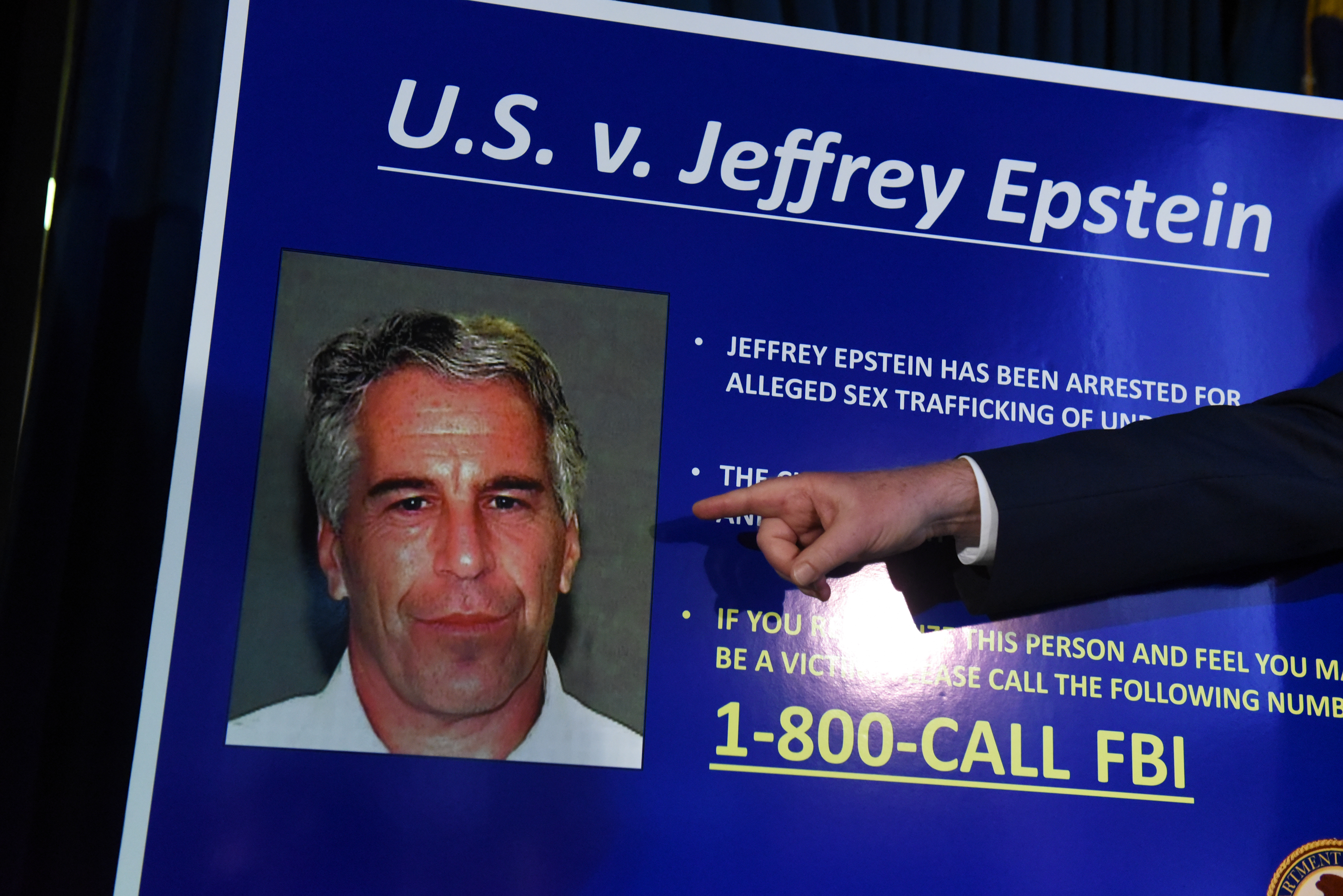
Thomas Massie, a Republican Representative for Kentucky, says embarrassment should not prevent the release of files.
 The Ocean Avenue News - oceanavenuenews.com
By: Fern Sidman
George Washington University (GW) in Washington, DC, long regarded as a bellwether for tensions around Israel and antisemitism in American higher education—has once again found itself at the center of controversy. According to a report that appeared on Monday in The Algemeiner, the institution has faced repeated allegations of indifference toward a wave of anti-Jewish harassment on its campus. This month, those allegations culminated in a Department of Justice (DOJ) finding that the university violated Title VI of the Civil Rights Act by responding with “deliberate indifference” to antisemitic abuse directed at Jewish students and faculty.
Now, as the Trump administration seeks to negotiate a settlement that would spare the university potentially crippling financial penalties, anti-Israel groups at GW have mobilized. In a flurry of statements coinciding with the start of the academic year, these groups urged administrators to reject cooperation with the federal government. Their rhetoric—framing the DOJ’s intervention as authoritarian overreach and a threat to campus activism—calls attention to the widening gulf between Jewish students seeking protection and radical anti-Israel activists determined to cast accountability measures as assaults on free expression.
On August 12, the DOJ released a document detailing its investigation into GW. The conclusions were stark: university officials had repeatedly failed to address antisemitic harassment, thereby depriving Jewish students of equal access to education in violation of federal law.
According to the DOJ, complaints of harassment—from slurs and threats to vandalism and intimidation—were met with little or no meaningful institutional response. “GW took no meaningful action and was instead deliberately indifferent to the complaints it received, the misconduct that occurred, and the harms that were suffered by its Jewish and Israeli students and faculty,” the report said.
As The Algemeiner report noted, the DOJ made clear that immediate remediation would be required. Absent a voluntary settlement, GW risked facing penalties similar to those levied against Columbia, Brown, and Harvard, each of which has suffered reputational and financial blows over related federal investigations into campus antisemitism.
Rather than welcoming federal oversight, several anti-Israel organizations at GW responded by urging resistance.
GW Alumni for Palestine released a statement on Friday denouncing the federal settlement effort as an “authoritarian attack” on academia. “The Trump administration has targeted universities as part of its authoritarian agenda, curtailing political expression, and punishing movements and individuals that challenge its power,” the group claimed.
Jewish Voice for Peace (JVP), a radical anti-Zionist group that GW suspended through May for promoting antisemitism and attempting to stage an unauthorized event on April 20—Hitler’s birthday—charged that the DOJ’s actions were disingenuous. “This action by the Trump administration is not a good faith effort to combat antisemitism but another attempt to use Jewish people as an excuse to silence, persecute, and attack our peers,” JVP declared.
The GWU Left Coalition accused the administration of waging “war against colleges and universities across the country” and warned that any agreement with the DOJ posed an “imminent danger to student safety and privacy.”
As The Algemeiner report observed, such responses exemplify the inversion at the heart of campus discourse: antisemitism is reframed not as a civil rights crisis but as collateral damage in an imagined war on student activism.
The federal findings come after years of mounting concern. As The Algemeiner has documented, GW has become a hub for Students for Justice in Palestine (SJP) and other extreme anti-Zionist organizations whose activities often cross the line into outright antisemitism.
In recent years, Jewish professors have been threatened, Jewish students harassed, and pro-Israel voices silenced.
In May, a civil lawsuit cataloged dozens of antisemitic incidents following the Hamas-led massacre of Oct. 7, 2023, including vandalism of the campus Hillel, threats of violence against Jewish students, and destruction of Jewish-owned property.
Perhaps most shockingly, one student at her commencement ceremony accused Israel of genocide and apartheid in remarks that administrators said bore no resemblance to the approved speech. The incendiary rhetoric, echoing tropes popular among both jihadist and neo-Nazi groups, was broadcast to the entire graduating class.
Faculty misconduct has also been highlighted. In 2023, psychology professor Lara Sheehi faced allegations of harassing Israeli and Jewish students. According to a civil rights complaint filed by Stand With Us, Sheehi told an Israeli student on the first day of class, “It’s not your fault you were born in Israel,” before spreading rumors about her Jewish students and filing misconduct charges against them. Administrators, the complaint alleged, failed to intervene or provide alternative accommodations.
As one student told The Algemeiner at the time, “We never even learned what policies we were accused of violating—it was just a way to silence us.”
Friday marked the deadline for GW to signal whether it would enter into a voluntary resolution agreement with the DOJ. Such an agreement would commit the university to significant reforms—potentially including enhanced training, accountability measures, and monitoring—in exchange for avoiding more severe penalties.
GW confirmed that discussions were ongoing but declined to comment on substance. “We have taken appropriate action under university policy and the law to hold individuals or organizations accountable, including during the encampment, and we do not tolerate behavior that threatens our community or undermines meaningful dialogue,” spokesperson Shannon Mc Clendon said in a statement. She added that GW has worked “diligently” with members of its Jewish community and local authorities to combat antisemitism.
Yet as The Algemeiner report observed, such statements have done little to reassure Jewish students who feel abandoned by their administration and endangered by unchecked hostility on campus.
The reaction from anti-Israel groups highlights a familiar inversion: Jewish students, the targets of harassment and intimidation, are erased from the narrative, while radical activists claim to be the true victims of government overreach.
This rhetorical sleight of hand, as The Algemeiner has repeatedly noted, has become a hallmark of campus discourse on Israel. By framing accountability as censorship, groups like JVP and SJP effectively demand impunity for conduct that would never be tolerated against any other minority group.
Such logic was evident in JVP’s claim that “criticism of Israel is not inherently antisemitic”—a truism deployed to deflect responsibility for rhetoric and actions that have directly endangered Jewish students.
GW’s predicament is not unique. Across the United States, universities have faced a reckoning as antisemitic incidents surged following the Hamas atrocities of Oct. 7. Columbia, Harvard, and other elite institutions have all faced federal scrutiny, congressional investigations, and donor revolts.
The Trump administration has made campus antisemitism a policy priority, seeking to enforce Title VI protections vigorously. Supporters argue that Jewish students deserve the same protections from harassment as other minorities, while critics claim the administration is weaponizing civil rights law to suppress political speech.
What is clear is that the old equilibrium—where antisemitic hostility was tolerated as part of campus “debate”—is no longer tenable.
George Washington University now stands at a crossroads. On one path lies cooperation with federal authorities, meaningful reforms, and the possibility of restoring trust with its Jewish students. On the other lies defiance, the embrace of radical activists’ rhetoric, and the risk of both financial penalties and reputational collapse.
As The Algemeiner report indicated, the stakes are immense—not only for GW’s Jewish community but for the integrity of American higher education itself. The university’s history of indifference has already inflicted profound harm. Whether it seizes this moment to change course, or succumbs to the pressure of anti-Israel groups demanding rejection of accountability, will determine not only its legal fate but its moral standing.
For Jewish students who have endured harassment, vandalism, and threats, the question is not abstract. As one young woman told The Algemeiner after receiving a death threat on campus, “I just want to know that my university will protect me.”
That plea for protection—simple, urgent, and just—should be the measure of GW’s next steps.
The post At George Washington University, Antisemitism Crisis Deepens as Anti-Israel Groups Reject Federal Settlement appeared first on The Jewish Voice.
By: Tzirel Rosenblatt
The rising tide of antisemitic violence in Europe reached another alarming milestone this week as anti-Israel rioters on the Greek island of Crete physically assaulted Israeli tourists disembarking from the MS Crown Iris, an Israeli cruise ship operated by Mano Maritime. The incident, which occurred on Thursday, represents the third time in a single month that Israeli tourists have been targeted by violent demonstrators in Greek ports.
According to a report that appeared on Friday in The Algemeiner, the demonstration turned violent when approximately 25 pro-Palestinian activists gathered at the island’s main port, waving Palestinian flags and carrying banners accusing Israel of “genocide” in Gaza. As passengers attempted to disembark, rioters hurled rocks and metal bars, forcing many tourists to retreat to the safety of the ship. The violent clashes prompted Greek police to shut down the port temporarily and order all passengers back onboard.
Witnesses reported that what began as a protest quickly escalated into targeted violence. The Algemeiner report described scenes of chaos as police struggled to hold back the demonstrators while tourists—many of them families—attempted to step ashore. When police advised passengers to return to the ship, protesters blocked exit routes, leaving disembarkation impossible.
Greek riot police were eventually deployed, dispersing the crowd with pepper spray and detaining four of the protesters. Nonetheless, several passengers suffered injuries in the melee, according to local reports cited in The Algemeiner report.
The violent episode draws attention to a disturbing trend: the deliberate targeting of Jewish and Israeli travelers as proxies for political grievances over the Gaza conflict. “This is no longer about protests,” a Greek official told reporters. “It is intimidation, violence, and blatant antisemitism directed against people simply because they are Israeli.”
Thursday’s attack is not an isolated incident. As The Algemeiner report highlighted, the MS Crown Iris and its passengers have become repeated targets of anti-Israel protests in Greece.
Last month, nearly 1,600 Israeli passengers aboard the same vessel were blocked from disembarking at the island of Syros after a protest by roughly 300 demonstrators erupted on the dock. While police attempted to keep the crowd under control, safety concerns forced Mano Maritime to divert the ship to Limassol, Cyprus. Videos shared on social media showed protesters waving Palestinian flags and chanting antisemitic slogans, with banners reading “Stop the Genocide” and even grotesque slogans such as “No AC in Hell.”
In another incident, pro-Palestinian demonstrators attempted to block Israeli passengers from disembarking on the island of Rhodes. According to the information provided in The Algemeiner report, more than 600 tourists were prevented from safely leaving the ship until Greek riot police intervened. Footage from the scene showed demonstrators clashing with security forces while shouting “Freedom for Palestine” and accusing Israelis of war crimes.
The repeated disruption of Israeli cruises has prompted Mano Maritime to review its itineraries and port security arrangements. The company, according to the report in The Algemeiner, has described the situation as unprecedented and deeply concerning for passengers’ safety.
The Greek government has been quick to condemn the violence. Michalis Chrysochoidis, Greece’s Minister of Citizen Protection, issued a strongly worded statement vowing prosecution against those who obstruct the legal entry of foreign visitors.
“Anyone who tries to prevent a foreign national from legally entering the country will face prosecution, arrest, and then criminal proceedings under the anti-racism law,” Chrysochoidis declared. His comments, reported in The Algemeiner, shed light on the seriousness with which Greek authorities are treating these incidents.
However, questions remain about the ability of local police and port authorities to ensure the safety of Israeli visitors, especially as the attacks grow bolder and more coordinated.
The violence against Israeli cruise passengers is part of a broader surge of antisemitic incidents across Greece since Hamas’s October 7, 2023 massacre in Israel, which left over 1,200 dead and more than 250 abducted.
As The Algemeiner has documented, Greek restaurants, tavernas, and cultural institutions have also been targeted. Just last week, a group of Israeli tourists from London were thrown out of a Crete taverna and branded “baby killers” by the pro-Palestinian owner. In Athens, an Israeli restaurant was vandalized with antisemitic graffiti including slogans such as “No Zionist is safe here,” while attackers shouted slurs and posted a sign accusing IDF soldiers of war crimes.
In June, an Israeli tourist was beaten by anti-Israel activists in Athens after they overheard him using Hebrew while navigating with Google Maps. According to the information contained in The Algemeiner report, the attackers began assaulting him physically while shouting antisemitic slogans, calling attention to the vulnerability of Jewish visitors simply for speaking their native language.
The attacks on tourists highlight a climate of intimidation that goes well beyond political protest. Analysts quoted by The Algemeiner argue that the campaign to disrupt Israeli cruise liners, restaurants, and tourist activity is part of a broader attempt to make Greece inhospitable to Jewish visitors and to normalize hostility against Israelis in European public life.
These demonstrations, while couched in the rhetoric of Palestinian solidarity, often deploy nakedly antisemitic slogans and tactics. By physically assaulting tourists and attempting to boycott businesses linked to Israel, activists cross the line from protest into hate crime.
The fear is that such intimidation may discourage Jewish tourism to Greece altogether, undermining both the safety of visitors and the economic interests of local communities that depend on international travelers.
The recurring violence against Israelis in Greece carries broader international implications. Israel and Greece have in recent years developed closer diplomatic and security ties, including cooperation on energy projects in the Eastern Mediterranean. Incidents like those in Crete, Rhodes, and Syros risk straining those ties, especially if Israeli officials and citizens come to perceive Greece as unsafe.
According to the information in The Algemeiner report, Jewish organizations in Europe and the United States have already begun pressing Athens to take stronger measures to prevent attacks. Calls have been made for increased port security, stricter enforcement of anti-racism laws, and tougher penalties against rioters who target Jewish and Israeli visitors.
The incidents in Greece are symptomatic of a wider European trend. Since October 2023, antisemitic hate crimes have surged across the continent, with Jewish schools, synagogues, and businesses facing vandalism and threats. The Algemeiner has chronicled similar demonstrations outside cultural institutions in France, the United Kingdom, and Germany, where anti-Israel protests often blur seamlessly into antisemitic intimidation.
In this context, the violent targeting of Israeli tourists in Greece underscores the increasingly transnational character of antisemitic activism. Whether in Athens or Berlin, demonstrators are attempting to export Middle Eastern conflict into European streets and public spaces, with Jews frequently paying the price.
For Israel and Jewish communities worldwide, the lesson is clear: vigilance is required, alliances must be reinforced, and antisemitic violence must be met with unambiguous condemnation and firm legal consequences. Anything less risks emboldening extremists and deepening a climate of fear for Jews abroad.
The post Anti-Israel Rioters Attack Israeli Cruise Ship in Crete as Violence Against Jewish Tourists Escalates appeared first on The Jewish Voice.
By: Jerome Brookshire
The United States government is mounting a sweeping effort to overhaul the nation’s organ transplant system, a response to mounting evidence of dangerous lapses in safety, integrity, and fairness. At the center of the reforms is the Department of Health and Human Services (H. H. S.), which has begun investigating several of the nonprofit organizations responsible for arranging organ donations, while also drafting new rules intended to restore public faith in a system that saves thousands of lives every year but has recently come under unprecedented criticism.
The push follows a cascade of revelations, congressional hearings, and investigations spurred largely by the reporting of The New York Times, which in recent months has chronicled cases of bungled or premature organ retrievals, troubling conflicts of interest, and systemic deviations from established allocation rules. The exposure of such failures—often hidden from public view—has shaken confidence in one of the most celebrated pillars of modern medicine: the ability to match donated organs with patients in desperate need.
The immediate spark for the federal intervention was a disturbing report concerning the Kentucky Organ Donor Affiliates, one of the 56 federally designated organ procurement organizations (OPOs) across the country. According to findings released by Congress and covered extensively by The New York Times on Thursday, the group had ignored critical signs of patient responsiveness in individuals being prepared for organ donation.
Unlike traditional donors who are declared brain-dead, these patients fell into the category of “circulatory death donation,” a practice in which patients on life support who are not expected to recover are removed from mechanical assistance. After their hearts stop, surgeons quickly recover viable organs. But as experts and officials told The Times, such procedures demand extraordinary precision, since they hinge on medical judgments that can easily be misapplied.
In Kentucky’s case, regulators found evidence that staff had misinterpreted or disregarded patient responses—decisions that might have led to near-fatal errors in organ retrieval. One congressional aide summarized the conclusions starkly: “They were not only negligent but dangerously cavalier.”
Dr. Raymond Lynch, chief of transplantation at the Health Resources and Services Administration (HRSA), an arm of H. H. S. that oversees the transplant network, said in an interview that his agency was broadening the inquiry nationwide. “We want to make sure that people continue to have faith in the public good that is organ procurement and transplant,” he said, according to The New York Times. “We will make it safe and reliable.”
The Kentucky case was hardly an anomaly. As The New York Times reported last month, more than a dozen cases have surfaced in which patients endured bungled or premature attempts to recover organs. One woman in New Mexico was nearly operated on before she unexpectedly regained consciousness. In another case in Alabama, doctors reportedly began surgical incisions before realizing the patient was still alive.
Such revelations have rocked both the medical community and the broader public, raising existential questions about whether the transplant system—long celebrated as a medical miracle—remains worthy of the trust placed in it. “Faith in the system is everything,” one transplant surgeon told The Times. “Without it, donations collapse.”
Congress has taken note. In addition to the House hearing convened earlier this summer, multiple committees are now investigating organ procurement organizations, with the Senate Finance Committee scheduled to question Health Secretary Robert F. Kennedy Jr. about oversight failures next week.
The political fallout has already translated into worrying real-world consequences. According to Donate Life America, which maintains national donor registration statistics, more than 20,000 Americans withdrew from donor registries in the past month alone—a sudden and alarming reversal after decades of gradual expansion. Earlier this year, there were 174 million registered donors.
Although families can still authorize donations even if a loved one is not officially registered, officials worry the trend could spell disaster for the more than 100,000 Americans waiting for life-saving organs. “Fewer people registering their lifesaving decision to be an organ, eye and tissue donor may mean more deaths of patients waiting,” Donate Life America warned in a statement.
This erosion of trust has become one of the government’s central concerns. In an attempt to calm fears, H. H. S. has created a specialized working group to establish national rules for circulatory death donation, expected to be finalized by late November. Officials told The New York Times that the group will impose stricter neurological testing requirements, new training protocols, and closer supervision of OPOs nationwide.
The Kentucky organization at the heart of the controversy has already enacted reforms, including mandatory neurology evaluations for potential donors, in an effort to stave off further sanctions.
Beyond the safety scandals, another issue bedeviling the transplant system is fairness. As The New York Times reported in February, procurement organizations have increasingly skirted regulations by bypassing patients at the top of transplant waiting lists. Federal data showed that in 2024 nearly 20 percent of organs were allocated to patients lower on the list, six times more frequent than just a few years earlier.
OPOs claimed these deviations were often necessary to prevent organs from expiring in transit or to expedite placement. But The Times uncovered evidence that many of these decisions were driven by convenience—sending organs to hospitals with whom OPOs had comfortable relationships, or to reduce staff workloads.
Such practices undermine the carefully designed national system intended to ensure fairness and medical need dictate allocation, not geography or connections. As The New York Times report emphasized, the principle of impartiality is foundational to maintaining public confidence.
Following the February report, HRSA has stepped up enforcement. In recent weeks, the agency issued formal warnings to OPOs reminding them that repeated deviations from the waitlist would be punished. Regulators have also begun publishing data online showing how frequently each organization bypasses patients—a transparency measure applauded by patient advocates.
Interestingly, data since the exposé suggests some improvement. According to a New York Times analysis, list deviations fell below 18 percent in the second quarter of 2025. Several organizations spotlighted in the original reporting, including those in Miami, Minnesota, and Cleveland, appear to have sharply reduced their frequency of skipping patients. Lifebanc, the Cleveland-based OPO, even ended a controversial arrangement with the Cleveland Clinic after whistleblowers described troubling favoritism.
The transplant industry, however, is not accepting these changes quietly. The Association of Organ Procurement Organizations, a powerful trade group, insists that “skipping” rules allow OPOs flexibility to place organs that might otherwise go unused. The group has criticized H. H. S. for canceling pilot programs aimed at testing faster allocation methods, arguing that tighter oversight could paradoxically reduce organ usage.
Yet the data, as The New York Times report highlighted, shows the opposite: despite reduced deviations from the list, organ utilization has actually increased. More organs are being transplanted, not fewer, suggesting that stricter adherence to fairness rules enhances rather than diminishes efficiency.
Political leaders are now weighing in. While some Republicans have seized on the scandals as evidence of systemic bureaucratic incompetence, Democrats have emphasized the need for new oversight frameworks rather than dismantling the existing system altogether. Secretary Kennedy has positioned himself as a reformer, pledging to make “transparency, accountability, and safety” the pillars of a new transplant era.
The stakes could hardly be higher. Each year, more than 40,000 transplants take place in the United States, offering a second chance at life for patients suffering from end-stage organ failure. But for every success story, thousands more languish on waiting lists. The average wait time for a kidney, the most commonly transplanted organ, is three to five years. For hearts and livers, the margins are even narrower, with survival dependent on precision logistics and public generosity.
The recent scandals have threatened that delicate balance. As The New York Times has observed in editorials, the transplant network is one of the few arenas where public altruism directly fuels medical progress. Eroding trust risks triggering a vicious cycle: fewer donors, fewer transplants, and more preventable deaths.
For now, the government’s strategy combines immediate enforcement with long-term reform. HRSA is investigating multiple OPOs, though officials have not yet named which groups are under review. At least one organization in West Virginia is reportedly facing penalties, according to two individuals familiar with the process cited by The New York Times.
Meanwhile, the forthcoming rules on circulatory death donation promise to standardize practices that have until now been subject to wide interpretation. Federal officials say the aim is to prevent tragedies like those in New Mexico and Alabama from ever occurring again.
Transparency is also emerging as a cornerstone. By publishing bypass data online, regulators hope to give patients, families, and watchdog groups the tools to hold procurement organizations accountable in real time.
The U. S. organ transplant system stands at a crossroads, grappling with both scandal and opportunity. The exposure of grievous errors, brought to light by The New York Times, has catalyzed a reckoning long overdue. For patients on waiting lists, the stakes are existential; for donors and their families, trust is everything.
H. H. S. officials insist that reforms will restore credibility and safety. “We will make it safe and reliable,” Dr. Lynch vowed in his interview with The Times. Whether the government can succeed in repairing the system’s image while simultaneously increasing its capacity will define the next chapter of American transplantation.
What remains clear is that the very legitimacy of the nation’s transplant system now depends on accountability—ensuring that the gift of life is never again tainted by negligence, favoritism, or avoidable error.
The post Federal Government Moves to Reform Troubled U. S. Organ Transplant System Amid Rising Public Scrutiny appeared first on The Jewish Voice.