Categories
The News And Times – thenewsandtimes.com

Phoenix Sets New Heat Record, Hitting 43.3 C on 54 Days This Year


How hot is it in Phoenix? In what has been the hottest summer ever measured, the sizzling city in the Sonoran Desert broke yet another record Saturday when temperatures topped 43.3 Celsius.

It was the 54th day this year that the official reading at Phoenix Sky Harbor Airport made the mark, eclipsing the previous record of 53 days set in 2020.

Matt Salerno, a National Weather Service meteorologist, said the hot streak could reach 55 days.

“We do have one more day,” he said.

An extreme heat warning remained in effect, with temperatures forecast at 43.9 C on Sunday and 41.1 C on Monday.

Salerno said Phoenix experienced the hottest three months since record-keeping began in 1895, including the hottest July and the second-hottest August.

The daily average temperature of 36.1 C in June, July and August passed the previous record of 35.9 C set three years ago.

The average daily temperature was 39.3 C in July, Salerno said, and the daily average in August was 37.1 C.

In July, Phoenix also set a record with a 31-day streak of highs at or above 43.3 C. The previous record of 18 straight days was set in 1974.

The sweltering summer of 2023 has seen a historic heat wave stretching from Texas across New Mexico and Arizona and into California’s desert.

Worldwide, last month was the hottest August ever recorded, according to the World Meteorological Organization. It was also the second hottest month measured, behind only July 2023. Scientists blame human-caused climate change with an extra push from a natural El Nino, which is a temporary warming of parts of the Pacific Ocean that changes weather around the globe.

As of Saturday, Phoenix has tallied 104 days this year with temperatures over 37.7 C, Salerno said. That’s in line with the average of 111 days of 37.7 C  or higher every year between 1991 and 2020.

Maricopa County, home to Phoenix and the most populous county in Arizona, also appears headed toward an annual record for heat-associated deaths.

County public health officials have confirmed 194 heat-associated deaths this year as of Sept. 2. An additional 351 cases are under investigation.

Maricopa County confirmed 425 heat-related deaths in 2022.

The post Phoenix Sets New Heat Record, Hitting 43.3 C on 54 Days This Year first appeared on The News And Times – thenewsandtimes.com.


Categories
The News And Times – thenewsandtimes.com

New Mexico Governor Suspends Right to Carry Guns in Public in City; Group Sues


New Mexico Gov. Michelle Lujan Grisham’s emergency order suspending the right to carry firearms in public in and around Albuquerque drew an immediate court challenge from a gun-rights group Saturday, as legal scholars and advocates said they expected.

The National Association for Gun Rights and Foster Haines, a member who lives in Albuquerque, filed documents in U.S. District Court in New Mexico suing Lujan Grisham and seeking an immediate block to the implementation of her order.

The challenge was expected, but even so, the governor’s action Friday was an attempt to “move the debate,” said Jessica Levinson, a law professor at Loyola Marymount’s Loyola Law School in Los Angeles, after Lujan Grisham announced she was temporarily suspending the right to carry firearms in her state’s largest city and surrounding Bernalillo County.

The governor, a Democrat, said the 30-day suspension, enacted as an emergency public health measure, would apply in most public places, from city sidewalks to parks.

She said state police would be responsible for enforcing what amount to civil violations and carry a fine of up to $5,000.

Bernalillo County District Attorney Sam Bregman, who once served as a Democratic Party leader and was appointed by Lujan Grisham, on Saturday joined Albuquerque Mayor Tim Keller and Police Chief Harold Medina saying they wouldn’t enforce the order.

“As an officer of the court, I cannot and will not enforce something that is clearly unconstitutional,” said Bregman, the top prosecutor in the Albuquerque area. “This office will continue to focus on criminals of any age that use guns in the commission of a crime.”

Bernalillo County Sheriff John Allen said he was uneasy about how gun owners might respond.

“I am wary of placing my deputies in positions that could lead to civil liability conflicts,” Allen said, “as well as the potential risks posed by prohibiting law-abiding citizens from their constitutional right to self-defense.”

Medina noted that Albuquerque police had arrested more than 200 suspects in killings in the last two years. Police spokesperson Gilbert Gallegos said enforcing the order also could put Albuquerque police in a difficult position with a U.S. Department of Justice police reform settlement.

Lujan Grisham said she was compelled to act after recent shootings including the death this week of an 11-year-old boy outside a minor league baseball stadium and gunfire last month that killed a 5-year-old girl who was asleep in a motor home. The governor also cited the shooting death in August of a 13-year-old girl in Taos County.

“No person, other than a law enforcement officer or licensed security officer, shall possess a firearm … either openly or concealed,” the governor’s order states.

Levinson told The Associated Press in a phone call Friday that Lujan Grisham would draw a court fight, saying the governor was “bumping up against the Second Amendment, no doubt about it.”

“And we have a very conservative Supreme Court that is poised to expand Second Amendment rights,” Levinson added.

Dudley Brown, founder and president of the Colorado-based gun-rights group, called the governor’s action unconstitutional.

“She needs to be held accountable for stripping the God-given rights of millions away with the stroke of a pen,” he said in a statement announcing the lawsuit and request for a restraining order. A court hearing was not immediately set.

The top Republican in the New Mexico Senate, Greg Baca of Belen, also denounced Lujan Grisham’s order as an infringement on the gun rights of law-abiding citizens. Dan Lewis, who serves on the nonpartisan Albuquerque City Council, called the order an unconstitutional edict.

Lujan Grisham said gun owners still would be able to transport guns to private locations such as a gun range or gun store if the firearm is in a container or has a trigger lock or mechanism making it impossible to discharge.

The governor’s order calls for monthly inspections of firearms dealers statewide to ensure compliance with gun laws and for the state Department of Health to compile a report on gunshot victims at hospitals that includes age, race, gender and ethnicity, along with the brand and caliber of firearm involved.

Levinson said she was not aware of any other governor taking a step as restrictive as Lujan Grisham. But she pointed to a proposal by California Gov. Gavin Newsom, a Democrat, to amend the U.S. Constitution to harden federal gun laws.

“I don’t think it will be a political loss for (Lujan Grisham) to be overturned,” Levinson said. “She can say she did everything she could but was stopped by the courts.”

Jacob Charles, a law professor at Pepperdine Caruso School of Law who studies the Second Amendment, noted that the Supreme Court, in the June 2022 Bruen case, expanded the right of law-abiding Americans to carry guns in public for self-defense.

He said that ruling takes away the ability to take into account arguments about a compelling government interest, like the gun violence that Lujan Grisham said prompted her order. Now, judges must solely rely on whether any similar historical examples exist.

“They can’t assess whether or not this is going to reduce gun violence. They can’t assess whether or not there are other alternatives that government could have done,” Charles said. He later added, “What it means is that contemporary costs and benefits aren’t part of the analysis.” 

The post New Mexico Governor Suspends Right to Carry Guns in Public in City; Group Sues first appeared on The News And Times – thenewsandtimes.com.


Categories
The News And Times – thenewsandtimes.com

Many in Marrakech sleep outdoors for second night after Morocco quake


2023-09-10T02:45:30Z

Families in Marrakech huddled into the early hours of Sunday, spending a second night on the streets as Morocco’s deadliest earthquake in more than half a century left many fearing their homes were no longer safe to return to.

Uncertainty gripped many in Marrakech, some 70 km (45 miles) northeast of the epicentre, as they worried the quake that has killed more than 2,000 may have damaged their homes or that an aftershock could destroy them in the coming hours or days.

Since Friday’s quake, the north African country’s worst since 1960, Mouhamad Ayat Elhaj, 51, has slept on the streets with his family nearby the city’s historic medina after finding signs of damage to his home, including cracks in the walls.

“I cannot sleep there. I am asking the authorities to help me and bring in an expert to assess whether it is possible for me to return to the house or not. If there is a risk, I will not return to the house,” he told Reuters.

Across parts of Morocco, people spent the night outdoors on Friday after the earthquake hit the country. By Saturday, the number of people killed had risen to 2,012 and another 2,059 were injured, according to the Ministry of Interior.

Parts of Marrakech’s historical medina, a popular tourist attraction for Moroccans and foreigners, were damaged in the earthquake. On Saturday, Moroccans and foreigners were walking through the ancient city taking photos of the damage and eating at popular restaurants while others gathered to sleep in the main square.

Noureddine Lahbabi, a retired 68-year-old with four children, said as he too prepared to sleep outside for a second night that the damage caused to people’s homes was distressing.

“It’s a painful experience. When this happens to your brother or sister, it’s really painful,” he said.

Mohamed Aithadi, a Moroccan-American, was surveying the damage to a mosque in the medina on Saturday near where his mother is living. He said he had been in the medina’s main square when the earthquake struck and on Saturday urged Moroccans to take care of those most vulnerable.

“I am very sure that our people, our Moroccan people and our Moroccan community can get together and go through this safely and peacefully,” he said.

Away from the medina, families were sleeping in open spaces and along roads. Eleven-year-old Jowra, speaking alongside her father, said she felt uneasy having to sleep near strangers.

Related Galleries:

People play soccer next to a woman resting on the sidewalk in Marrakesh, following a powerful earthquake in Morocco, September 9, 2023. REUTERS/Hannah McKay

Residents rest on the street in Moulay Brahim village, in the province of Al Haouz, following a powerful earthquake in Morocco, September 9, 2023. REUTERS/Nacho Doce

Mohamed, 66, stands near his damaged house in Moulay Brahim village, in the province of Al Haouz, following a powerful earthquake in Morocco, September 9, 2023. REUTERS/Nacho Doce

The post Many in Marrakech sleep outdoors for second night after Morocco quake first appeared on The News And Times – thenewsandtimes.com.


Categories
The News And Times – thenewsandtimes.com

King Charles III Shows Reign Will Be More About Evolution Than Revolution


A year after the death of Queen Elizabeth II triggered questions about the future of the British monarchy, King Charles III’s reign has been marked more by continuity than transformation, by changes in style rather than substance.

Charles, who waited more than 70 years to ascend the throne, moved seamlessly into his new role, avoiding controversy and sidestepping major reforms despite questions about whether an unelected king can still represent the people of modern Britain.

Most people seem to have shrugged off Charles’ occasional faux pas — most publicly when he threw a hissy fit over an aide’s failure to move an ornate pen case during a signing ceremony — focusing instead on successes like his state visit to Germany, where the king wowed his audience by switching effortlessly between English and German during a speech to lawmakers.

The message delivered by the new king’s first year on the throne is clear, said Sally Bedell Smith, author of “Charles: The Passions and Paradoxes of an Improbable Life.” Change will be subtle, more evolution than revolution.

“The queen was known for incremental change and his incremental change may be a little more obvious in various moments,” she said. “But back in the ’90s, there was a lot of talk about how he just wanted to really shake up the deck and do things in a more radical way and be more outspoken. And I think he has recognized that this is not his role.”

So while Charles has made it clear that he wants to streamline the monarchy, cut costs and reform a system of patronage seen as bloated and anachronistic, there has been no obvious overhaul of Buckingham Palace — at least not yet.

Instead, Charles has focused on building bridges at home and abroad as he embraces the role of diplomat-in-chief. After traveling to each of the four nations that comprise the United Kingdom, the king visited faith communities around the country, greeted Ukrainian President Volodymyr Zelensky in London and staged a successful state visit to Germany.

Charles became sovereign on Sept. 8, 2022, the day Elizabeth died after more than 70 years on the throne.

The following day, the new king telegraphed much of what has happened since in a speech that paid homage to the way his mother honored the history of a 1,000-year-old monarchy while embracing the changes that transformed Britain after World War II.

“In her life of service, we saw that abiding love of tradition, together with that fearless embrace of progress, which makes us great as a nation,” Charles said as he pledged to serve all his people, no matter where they live or what they believe.

Known for speaking his mind during his decades as heir to the throne, Charles also acknowledged that he would have to tone down his support for causes such as conservation and environmental protection.

But he immediately handed that mantle to Prince William, encouraging him to “lead our national conversation” and help “bring the marginal to the center ground, where vital help can be given.”

William accepted that challenge, continuing his fight against climate change and announcing a campaign to end homelessness in Britain.

Charles joined the nation in mourning the late queen at a state funeral that celebrated the life of the only monarch most people had ever known. After the queen’s piper played one final lament, the Westminster Abbey congregation offered a thunderous rendition of the national anthem — though for the first time in seven decades the first line was, “God save our gracious king.”

With that, the queen seemed to slide into the background of history and Charles took center stage in a multi-cultural nation where schoolchildren now speak more than 300 languages.

During his first Christmas Day broadcast, Charles gave a nod to the changing face of Britain, splicing in video of his travels around the kingdom, including scenes of the king meeting with food kitchen volunteers at a Sikh house of worship in Luton, a diverse community 30 miles north of London.

During the coronation ceremony in May, Charles again balanced the traditions of monarchy against the pressure for change.

As Charles sat in the 700-year-old coronation chair at Westminster Abbey, the Archbishop of Canterbury placed a jewel-encrusted crown on his head. Then he was enclosed behind a screen where he was anointed with holy oil.

But the monarch also made sure there was a role for other religions, with non-Christian faith leaders taking part in the ceremony for the first time.

And while the TV cameras focused on presidents and prime ministers, lords, ladies and royals as they trooped into the abbey, the audience also included dozens of people invited in honor of the work they do for charities, schools and youth programs around the country.

More challenges are to come.

The perception of the monarchy itself has changed since Elizabeth took the throne, making it harder for the palace to stick to its mantra of “never explain, never complain” as the media demand more information about royal spending and accountability.

Charles is also facing demands to make the palace staff more representative of modern Britain and to acknowledge the monarchy’s role in slavery and imperialism.

Some of those calls come from within the royal family after Prince Harry, and his wife, Meghan, criticized the palace in a book and TV series released earlier this year. But there is also pressure from republican groups that want to get rid of the hereditary monarchy and some of the 14 Commonwealth realms that bridle at the idea of having an English king as their head of state.

“It seems likely that his reign will end with less realms than it started,” said Joe Little, managing editor of Majesty Magazine. “But, you know, that was also the case with Queen Elizabeth II. It’s just a natural progression, I think. But ultimately, it’s down to the people of the countries who have him as sovereign.”

The post King Charles III Shows Reign Will Be More About Evolution Than Revolution first appeared on The News And Times – thenewsandtimes.com.


Categories
The News And Times – thenewsandtimes.com

Amid Devastation and Mud, Brazil Buries Victims of Cyclone


Families in southern Brazil on Saturday began to bury victims of a cyclone that left at least 42 dead and affected some 150,000 people, many of whom lost their homes or faced isolation because of landslides that washed away roads and bridges.

In the cemetery of Muçum, in the state of Rio Grande do Sul, mourners wept and hugged one another as loved ones were buried.

Pallbearers carried caskets through mud and puddles left by the storm.

The heavy rains and strong winds that hit the area last week tore away stone slabs weighing several tons and opened up tombs, some of which were flooded with mud.

Fabiano Bolnr, a 48-year-old policeman, lost his aunt, uncle and cousin. He said his cousin escaped flooding but returned to try to save his parents.

All three were buried Saturday.

“They had already been through several floods; they had even moved to a house on higher ground. But unfortunately, the waters came back and this time they took them away,” he told AFP.

Muçum was hit harder by floods and landslides than any other municipality in Rio Grande do Sul. Authorities Saturday night raised the death toll from the cyclone to 42 people and said 46 remain missing.

Relatives of nine victims had to go to the neighboring town of Vespasiano Correa to say their last goodbyes in an emotional ceremony in the municipal gymnasium.

“I thought the worst was over, but I think this is really the worst moment, the moment of farewell and collective farewell,” the mayor of Muçum, Mateus Trojan, told AFP.

On the main street of Muçum, piles of red brick and wood were all that was left of houses that once stood. Mounds of corrugated metal roofing, splintered lumber, broken furniture, sodden clothing and wet mattresses were strewn along muddy roads.

Amid a search for the missing, access to the city was restricted. Of the 46 people still missing, 30 were from Muçum.

Elsewhere in the city, men on tractors or aboard heavy machinery moved debris. Groups of women carried food to volunteers and rescue workers.

At the cemetery, floral bouquets brightened the grim scene, sitting on muddy sidewalks as bereaved families gathered to place caskets of loved ones in burial niches.

Pope Francis on Saturday expressed his solidarity with the affected communities, according to a telegram in Portuguese from the Vatican secretary of state’s office.

The pontiff “offers prayers for the eternal rest of the fatal victims as well as prayers for the homeless families, wishing that the reconstruction of the affected localities may take place quickly and efficiently.”

The cyclone, which affected 88 localities in Rio Grande do Sul, caused economic losses of more than $270 million, according to the National Confederation of Municipalities. 

The post Amid Devastation and Mud, Brazil Buries Victims of Cyclone first appeared on The News And Times – thenewsandtimes.com.


Categories
The News And Times – thenewsandtimes.com

Armenia Angry Over Moscow’s Inaction As Nagorny Karabakh Blockade Continues – Analysis


c-87.jpg?fit=800%2C450&ssl=1

By Giorgi Lomsadze

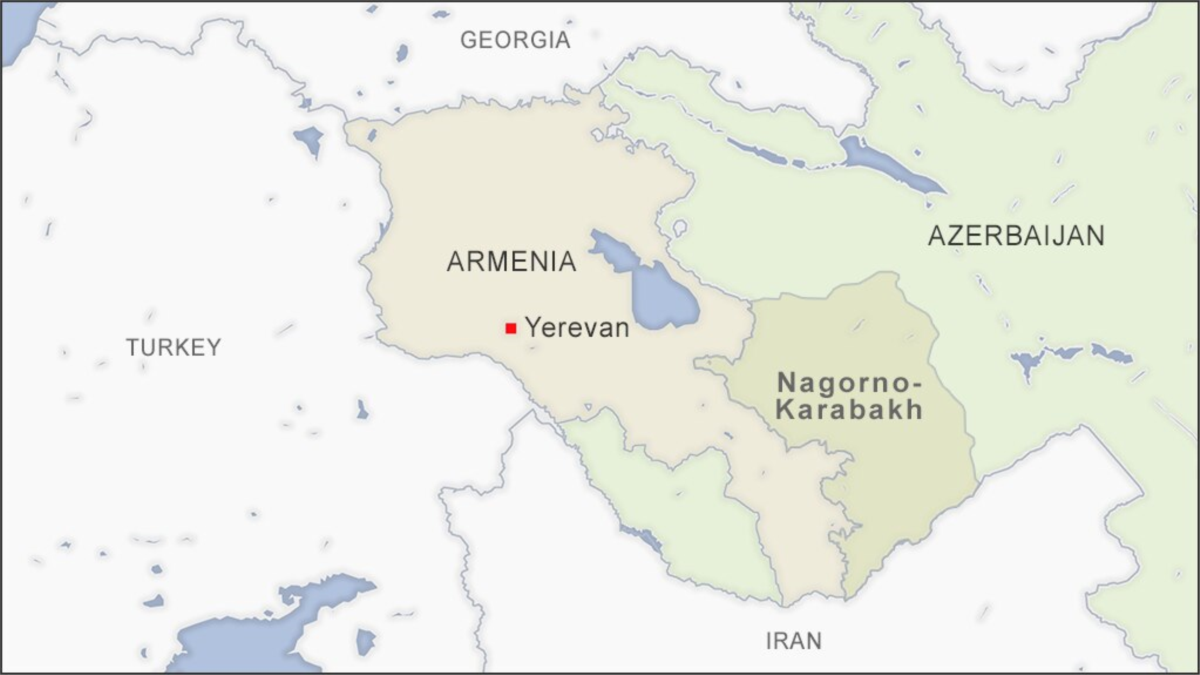
As Azerbaijan keeps a chokehold on supplies to Nagorny Karabakh in a months-long blockade driving food and fuel shortages in the Armenian-populated territory, Russia’s reluctance in intervening to unlock the situation has soured relations between Yerevan and Moscow.

Russia has long been Armenia’s security guarantor, but in an interview released on September 3, Armenian Prime Minister Nikol Pashinyan said that depending solely on Moscow was “a strategic mistake” because it has been unable to deliver. Russian media labelled Pashinyan’s statement as “unacceptable in tone”. 

On September 5, Armenia recalled Viktor Biyakov, its ambassador to the Collective Security Organisation Treaty (CSTO), the Russia-led security alliance of post-Soviet countries. He was then appointed ambassador to the Netherlands and experts noted that he was unlikely to be replaced.

In addition, on September 6, Yerevan announced joint military exercises with the US on its territory from September 11 to 20, as part of preparation for participation in international peacekeeping missions. 

Stretched in Ukraine, the Kremlin has avoided getting entangled in the blockade of the Lachin corridor. Russian peacekeepers, tasked with enforcing the 2020 ceasefire between Yerevan and Baku, did little to prevent Azerbaijan from setting up checkpoints along Lachin and shutting down traffic of goods. The Azerbaijani side claims Armenia was first to violate the terms of truce and that Baku had to take measures in response.  

Baku’s victory in 2020 in the latest war over the Armenian-populated enclave, which is inside Azerbaijan’s internationally recognised territory, left the region with Lachin as the only link to the outside world: since December 2022, Baku has gradually restricted movement through the road, until it effectively sealed it off mid-June. Trucks with aid and supplies were left stranded on the Armenian side. 

Dismissing these reports as exaggerations, Baku claimed that Armenia was using the route to send ammunition into Karabakh and to otherwise sabotage Azerbaijan’s push to enforce its jurisdiction over the enclave. But closing this key passage has led to mounting tensions and reduced the room for dialogue between the sides to the conflict. 

“It seems that Baku’s blockade is driven by vindictiveness,” Hans Gutbrod, associate professor at Ilia State University in Tbilisi, told IWPR. “It’s hard to see this as a calculated policy since the more constructive and conciliatory approach would be much more likely to result in a last solution.” 

Armenia and Azerbaijan fought two major wars over Karabakh, an Armenian-dominated autonomous region of Azerbaijan during the Soviet era. These conflicts, one from 1988–1994 and another in late 2020,  claimed tens of thousands of lives and displaced hundreds of thousands of people. 

In between these wars there were almost 30 years of chronic exchanges of fire and state-sponsored mutual threats amid futile international efforts to broker peace.  

Home to around 120,000 ethnic Armenians, the region has been de facto independent since a ceasefire was signed in 1994. Armenian troops occupied swathes of surrounding Azerbaijani lands, forming a buffer zone around the region. 

In 2020, Azerbaijan reclaimed all of the occupied territories and part of Karabakh itself, and effectively encircled it from all sides. Under a Moscow-brokered armistice, Russian peacekeepers were to guarantee free and safe passage between Karabakh and Armenia through the five kilometre-wide Lachin mountain pass. 

In late 2022, however, Baku effectively severed this lifeline. Supplies soon began to dwindleand shops’ shelves began to empty in the region’s main city Stepanakert, Khenkendi in Azerbaijani Aid organisations called for lifting the blockade, warning of a looming humanitarian crisis. Authorities in Karabakh, which Armenians call Artsakh, claim that Azerbaijan’s goal is to starve Armenians out of the region. On August 15, authorities reported the region’s first death from starvation. 

Armenia has called for an emergency meeting of a UN Security Council to discuss the plight of its protectorate. 

“The people of Karabakh are on the verge of a full-fledged humanitarian catastrophe,” Armenia’s representative to the UN, Mher Margaryan, wrote on August 11. 

Azerbaijan has accused Armenia of manipulating international opinion with tales of a humanitarian crisis so as to stall the process of Karabakh’s reintegration into Azerbaijan. Yashar Aliyev, Margaryan’s Azerbaijani counterpart, said that if the situation was that bad Armenia and Karabakh would have agreed to opening up an alternative, Azerbaijan-controlled supply route.

Azerbaijan has been offering to provide essential goods to Karabakh through the Aghdam road, which would link link Karabakh to mainland Azerbaijan. 

While the EU backed Baku’s proposal, Karabakh residents refused it as marking the effective legitimation of Azerbaijan’s rule over the region. 

“Aghdam road is a road to ethnic cleansing,” said placards held by protesters from Karabakh on July 18, as they barricaded the entry from Aghdam.

Azerbaijani border guards’ treatment of Karabakh citizens at the Lachin checkpoint, most notably the arrest of a 65-year-old Karabakh resident on allegations of committing war crimes 30 years ago, has also hampered building trust between the sides.   

Humanitarian organisations, international observers and diplomats, including EU High Commissioner Josep Borrell, said that the Aghdam road cannot serve as a substitute to Lachin road, and not just because of the mistrust between the warring sides. 

“Aghdam road is not an alternative,” Olesya Vartanyan, a South Caucasus analyst with the International Crisis Group, a Brussels-headquartered think-tank, told IWPR. “After you had been using one road for 30 years, get all of your supplies through that road and have an infrastructure set up, you can’t just switch away from it overnight.”     

Convened at the behest of Armenia, UN Security Council members called on August 17 for the reopening of the Lachin corridor. The Russian representative suggested using both Lachin and Aghdam for supplies. 

Baku has insisted all along that the Lachin corridor is open, at least to the movement of civilians. In August Azerbaijani television aired reports showing Armenians going through the checkpoint and Baku stated that this disproved the Armenian claims of a blockade. 

Reached by IWPR, Karabakh’s de-facto authorities confirmed that there “no free exit or entry to Artsakh”.  

“No goods, supplies and even medication are allowed through,” the de-facto foreign ministry said in a written response to IWPR’s query. “Sometimes Azerbaijan allows the transportation of seriously ill patients to Armenia. Two days ago [in late August] it was possible to arrange the departure of a group of students, who study in higher education institutions of Armenia or other countries. But in general the situation hasn’t changed.” 

International pressure has been mounting on Azerbaijan, but Baku remains defiant, at least in its public statements. 

“Internationally, the situation is so liquid that it’s no guarantee that international attention alone with be enough to lift the blockade, in whole or part,” said Gutbrod. “The West does have some leverage, but it is also facing multiple crises at the same time.”

This publication was published by IWPR and prepared under the “Amplify, Verify, Engage (AVE) Project” implemented with the financial support of the Ministry of Foreign Affairs, Norway.
The post Armenia Angry Over Moscow’s Inaction As Nagorny Karabakh Blockade Continues – Analysis first appeared on The News And Times – thenewsandtimes.com.


Categories
The News And Times – thenewsandtimes.com

‘Teeth shaking in your head’: Massive earthquake hits Morocco


(NewsNation) — As the death toll from the Morocco earthquake crosses 2,000, one resident of Marrakech says the damage in the mountains looks very different from the city.

“In the city, thank God, most of the damage is structural or just property. But in the mountain areas, outside of the city, it’s a lot, it’s a different story. And a lot of our friends and colleagues up there have reported things are much much worse,” said Marrakech resident Amanda Ponzio Mouttaki.

Mouttaki joins “NewsNation Prime” to share her experience of the earthquake, saying at first, she had “no idea” what was happening.

“I thought that maybe it was a plane crashing, because all of a sudden, the house started shaking, a little slowly at first, and then it just really picked up intensity, like so much that your teeth are shaking in your head. And then we realized that it was not a plane and grabbed our 5-year-old son and just ran down the steps as fast as we could,” Mouttaki said.

More than 2,000 people were killed in the earthquake and the toll is expected to rise as rescuers struggle to reach hard-hit remote areas.

Remote villages like those in the drought-stricken Ouargane Valley were largely cut off from the world when they lost electricity and cellphone service. By midday, people were outside mourning neighbors, surveying the damage on their camera phones and telling one another “May God save us.”

“It’s kind of surreal because it’s such a major thing that’s happened and then people still have to carry on into their normal life,” Mouttaki said.

Mouttaki tells NewsNation some residents, afraid to return home, are sleeping outside.

“People are terrified, right? People are sleeping outside tonight, they won’t go home, they’ve stayed outside all day, and they won’t go back into their houses,” she said.

The magnitude 6.8 quake, the biggest to hit the North African country in 120 years, sent people fleeing their homes in terror and disbelief late Friday. One man said dishes and wall hangings began raining down, and people were knocked off their feet. The quake brought down walls made from stone and masonry, covering whole communities with rubble.

“Any support that people can offer, even if it’s just encouragement is really meaningful,” Mouttaki said. “Don’t keep us out of your mind because people will be ready to welcome you back, you know, as soon as we’re able.”

  • Moroccan boys, Rayan and Ali walk amidst the rubble of their home which was damaged by the earthquake, in Ijjoukak village, near Marrakech, Morocco, Saturday, Sept. 9, 2023. A rare, powerful earthquake struck Morocco, sending people racing from their beds into the streets and toppling buildings in mountainous villages and ancient cities not built to withstand such force. (AP Photo/Mosa’ab Elshamy)
  • Members of rescue teams carry the body of a victim of an earthquake in Ouargane village, near Marrakech, Morocco, Saturday, Sept. 9, 2023. A rare, powerful earthquake struck Morocco late Friday night, killing more than 1000 people and damaging buildings from villages in the Atlas Mountains to the historic city of Marrakech. (AP Photo/Mosa’ab Elshamy)
  • People and security forces walk in the village of Ouargane which was struck by an earthquake near Marrakech, Morocco, Saturday, Sept. 9, 2023. A rare, powerful earthquake struck Morocco late Friday night, killing more than 1000 people and damaging buildings from villages in the Atlas Mountains to the historic city of Marrakech. (AP Photo/Mosa’ab Elshamy)
  • A man weeps after burying his brother who was killed by the earthquake, in Ouargane village, near Marrakech, Morocco, Saturday, Sept. 9, 2023. A rare, powerful earthquake struck Morocco, sending people racing from their beds into the streets and toppling buildings in mountainous villages and ancient cities not built to withstand such force. (AP Photo/Mosa’ab Elshamy)
  • Women comfort each other after a burial for people killed by an earthquake, in Moulay Brahim village, near Marrakech, Morocco, Saturday, Sept. 9, 2023. A rare, powerful earthquake struck Morocco late Friday night, killing more than 1000 people and damaging buildings from villages in the Atlas Mountains to the historic city of Marrakech. But the full toll was not known as rescuers struggled to get through boulder-strewn roads to the remote mountain villages hit hardest. (AP Photo/Mosa’ab Elshamy)
  • CORRECTS NAME OF THE VILLAGE – A man stands next to a damaged hotel after the earthquake in Moulay Brahim village, near the epicentre of the earthquake, outside Marrakech, Morocco, Saturday, Sept. 9, 2023. A rare, powerful earthquake struck Morocco late Friday night, killing more than 800 people and damaging buildings from villages in the Atlas Mountains to the historic city of Marrakech. But the full toll was not known as rescuers struggled to get through boulder-strewn roads to the remote mountain villages hit hardest. (AP Photo/Mosa’ab Elshamy)
  • Residents flee their homes after an earthquake in Moulay Brahim village, near the epicenter of the earthquake, outside Marrakech, Morocco, Saturday, Sept. 9, 2023. A rare, powerful earthquake struck Morocco late Friday night, killing more than 800 people and damaging buildings from villages in the Atlas Mountains to the historic city of Marrakech. But the full toll was not known as rescuers struggled to get through boulder-strewn roads to the remote mountain villages hit hardest. (AP Photo/Mosa’ab Elshamy)
  • Moroccan Red Crescent workers help remove large stones which fell on roads during an earthquake, on the way to affected villages in the Middle Atlas mountain, near Marrakech, Morocco, Saturday, Sept. 9, 2023. A rare, powerful earthquake struck Morocco late Friday night, killing more than 800 people and damaging buildings from villages in the Atlas Mountains to the historic city of Marrakech. But the full toll was not known as rescuers struggled to get through boulder-strewn roads to the remote mountain villages hit hardest. (AP Photo/Mosa’ab Elshamy)
  • CORRECTS NAME OF VILLAGE People inspect their damaged homes after an earthquake in Moulay Brahim village, near Marrakech, Morocco, Saturday, Sept. 9, 2023. A rare, powerful earthquake struck Morocco late Friday night, killing more than 800 people and damaging buildings from villages in the Atlas Mountains to the historic city of Marrakech. But the full toll was not known as rescuers struggled to get through boulder-strewn roads to the remote mountain villages hit hardest. (AP Photo/Mosa’ab Elshamy)
  • CORRECTS NAME OF VILLAGE The foot of a man stuck under rubble while a rescue operation for him is underway, after an earthquake, in Moulay Brahim village, near Marrakech, Morocco, Saturday, Sept. 9, 2023. A rare, powerful earthquake struck Morocco late Friday night, killing more than 800 people and damaging buildings from villages in the Atlas Mountains to the historic city of Marrakech. But the full toll was not known as rescuers struggled to get through boulder-strewn roads to the remote mountain villages hit hardest. (AP Photo/Mosa’ab Elshamy)
  • People dig a grave to bury bodies of victims of the earthquake, in Ouargane village, near Marrakech, Morocco, Saturday, Sept. 9, 2023. A rare, powerful earthquake struck Morocco, sending people racing from their beds into the streets and toppling buildings in mountainous villages and ancient cities not built to withstand such force. (AP Photo/Mosa’ab Elshamy)
  • A family cooks dinner in a farm after their home was damaged by the earthquake, in Ijjoukak village, near Marrakech, Morocco, Saturday, Sept. 9, 2023. A rare, powerful earthquake struck Morocco, sending people racing from their beds into the streets and toppling buildings in mountainous villages and ancient cities not built to withstand such force. (AP Photo/Mosa’ab Elshamy)
  • Mohammed Elhmatif and his sons, Rayan, right, and Ali, stand amidst the rubble of their home which was damaged by the earthquake, in Ijjoukak village, near Marrakech, Morocco, Saturday, Sept. 9, 2023. A rare, powerful earthquake struck Morocco, sending people racing from their beds into the streets and toppling buildings in mountainous villages and ancient cities not built to withstand such force. (AP Photo/Mosa’ab Elshamy)
  • CORRECTS NAME OF VILLAGE A rescue workers pauses while taking part in a rescue operation after the earthquake, in Moulay Brahim village, near Marrakech, Morocco, Saturday, Sept. 9, 2023. A rare, powerful earthquake struck Morocco late Friday night, killing more than 800 people and damaging buildings from villages in the Atlas Mountains to the historic city of Marrakech. But the full toll was not known as rescuers struggled to get through boulder-strewn roads to the remote mountain villages hit hardest. (AP Photo/Mosa’ab Elshamy)
  • People drive past a damaged wall of the historic Medina of Marrakech, after after an earthquake in Morocco, Saturday, Sept. 9, 2023. A rare, powerful earthquake struck Morocco late Friday night, killing more than 600 people and damaging buildings from villages in the Atlas Mountains to the historic city of Marrakech. (AP Photo/Mosa’ab Elshamy)
The post ‘Teeth shaking in your head’: Massive earthquake hits Morocco first appeared on The News And Times – thenewsandtimes.com.


Categories
The News And Times – thenewsandtimes.com

John Bolton: Another 9/11 ‘is possible’


John Bolton: “I do think another 911 is possible. I think, you know, we forget more quickly than we realize the nature of this threat.”

The post John Bolton: Another 9/11 ‘is possible’ first appeared on The News And Times – thenewsandtimes.com.


Categories
The News And Times – thenewsandtimes.com

Israeli Army Kills 16-year-old Palestinian in West Bank


Israeli security forces on Saturday killed a 16-year-old Palestinian in a confrontation in the southern occupied West Bank, Palestinian health officials said, the latest violence to roil the territory during one of the most violent stretches of the Israeli-Palestinian conflict in nearly two decades.

The death of Milad al-Rai brings to 185 the number of Palestinians killed in the West Bank so far this year by Israeli fire, including more than 30 youths younger than 18. This year’s death toll in the West Bank and east Jerusalem has overtaken that of 2022, which had been considered the deadliest year since the United Nations began tracking in 2005.

The Israeli military said that it used tear gas and opened fire at a group of Palestinians outside the Al-Aroub refugee camp in the southern West Bank who had lobbed Molotov cocktails at troops across the way. It said it was aware that one of the Palestinians had been shot and said there were Israeli military casualties.

The Palestinian Health Ministry identified the Palestinian killed as 16-year-old Milad al-Rai and said he was struck in the back by bullets.

Nearly half of the Palestinians killed in the violence this year have been affiliated with militant groups, according to a tally by The Associated Press. Israel says most of those killed were militants, but stone-throwing youths protesting the incursions as well as people not involved in the confrontations have also died.

Palestinian attacks against Israelis have spiked as the Israeli military intensifies its arrest raids in the West Bank. More than 30 people have been killed in Palestinian attacks against Israelis since the start of 2023.

Israel says the raids are meant to dismantle militant networks and thwart future attacks. Palestinians say the raids undermine their security forces, inspire more militancy and entrench Israeli control over lands they seek for a hoped-for future state.

Israel captured the West Bank in the 1967 Mideast war.

The post Israeli Army Kills 16-year-old Palestinian in West Bank first appeared on The News And Times – thenewsandtimes.com.


Categories
The News And Times – thenewsandtimes.com

Deal Reached to Open Roads Through Azerbaijan to Nagorno-Karabakh


a3a8689a-e37d-4b7a-91fd-e9e500a8d177_w12

TBILISI, georgia — 

Ethnic Armenian authorities in Nagorno-Karabakh agreed on Saturday to let in aid shipments from Azerbaijan-held territory for the first time in decades, in return for the restoration of road links to Armenia.

The moves, initially reported by Armenia’s Armenpress state news agency and confirmed by Baku, appear at least partly to grant Azerbaijan’s decades-old demand to restore transportation links between Azeri government-held territory and the province, which broke free of Baku’s rule in the 1990s.

Armenpress cited Karabakh authorities as saying that they had “decided to allow access of the Russian goods to our republic through the town of Askeran,” referring to a Karabakh town close to the front-line with Azerbaijan.

“At the same time, an agreement has been reached to restore humanitarian shipments by the Russian peacekeepers and the International Committee of the Red Cross along the Lachin Corridor,” the Armenpress report said, referring to the area through which the road linking Karabakh to Armenia passes.

It said the move was driven by “severe humanitarian problems” in the blockaded region.

Hikmet Hajiyev, a foreign policy adviser to Azerbaijani President Ilham Aliyev, confirmed to Reuters that both routes would be opened simultaneously, while an Azerbaijani checkpoint on the road to Armenia would stay in place. He restated Baku’s longtime position that the Karabakh separatist authorities must dissolve and disarm.

Karabakh is recognized as part of Azerbaijan but has been controlled by its population of around 120,000 ethnic Armenians since a war that coincided with the breakup of the Soviet Union.

Azerbaijan recaptured large swaths of territory in a second major war in 2020, and for the past nine months has exerted new pressure on the region by restricting its access to Armenia through the Lachin Corridor. The road has been cut off except for urgent medical cases, leading to shortages of basic supplies, including bread.

Azerbaijan has accused Armenia of using the corridor to smuggle weapons, and of rejecting an offer to reopen the road simultaneously with another route into Karabakh.

The apparent deal came on a day Karabakh’s parliament chose a new president of its self-proclaimed independent republic, a move Azerbaijan has denounced as illegal, amid days of escalating tensions between Baku and Yerevan.

Azerbaijan said on Saturday that Armenian forces had fired on its troops overnight, and that Azerbaijan army units took “retaliatory measures.” Armenia denied the incident.

The Armenian government said Prime Minister Nikol Pashinyan held phone conversations on Saturday with the leaders of France, Germany, Iran and Georgia, and with U.S. Secretary of State Antony Blinken. Azerbaijan said its foreign minister discussed the situation with a senior U.S. State Department official, Yuri Kim.

Baku has a close relationship with Turkey, while Yerevan has historically held close ties with Russia, which sent peacekeepers to the area and promised to keep the Lachin Corridor open as part of a peace deal that ended the 2020 war. Pashinyan has lately complained that Moscow failed to live up to its assurances, leading him to seek wider international support.

According to Armenia’s government, Pashinyan told the foreign leaders that tensions were rising on the border, and that Azerbaijan was concentrating troops there and around Nagorno-Karabakh. Baku has denied this, while accusing Armenia of similar steps.

Pashinyan said he was ready to hold an urgent meeting with Azerbaijani President Ilham Aliyev to defuse tensions, according to the Armenian government. Hajiyev, Aliyev’s foreign policy adviser, told Reuters Baku had received no such offer.

Earlier on Saturday, Karabakh’s separatist parliament elected Samvel Shakhramanyan, a military officer and former head of the territory’s security service, as its new president, replacing an incumbent who resigned a week ago.

In a speech to parliament, Shakhramanyan called for direct negotiations with Azerbaijan, and for transport links to Armenia to be restored.

Azerbaijan’s foreign ministry called the ethnic Armenian leadership of Karabakh a “puppet separatist regime” and said the vote was illegal.

“The only way to achieve peace and stability in the region is the unconditional and complete withdrawal of the Armenian armed forces from the Karabakh region of Azerbaijan and the disbandment of the puppet regime,” it said in a statement.

In the capitals of both Armenia and Azerbaijan, residents told Reuters they feared a new war between the two countries.

The post Deal Reached to Open Roads Through Azerbaijan to Nagorno-Karabakh first appeared on The News And Times – thenewsandtimes.com.