Categories
The News And Times – thenewsandtimes.com

7:59 AM 9/22/2023 – Menendez Bill Seeks Ban on U.S. Military Aid to Azerbaijan … Armenian PM hopes ethnic Armenians can remain in Nagorno-Karabakh … Azerbaijan sees possible amnesty for Karabakh fighters … Azerbaijan sends food, other aid to Nagorno-Karabakh after ending an offensive against Armenians – The Associated Press … Chaos and Crisis as Azerbaijan Attacks Nagorno-Karabakh


3600.jpg?width=1200&height=630&quality=8

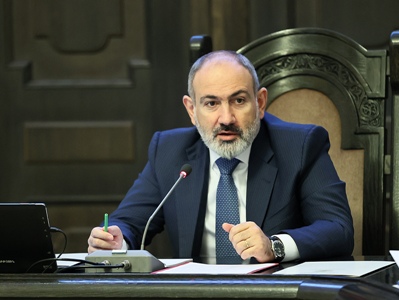
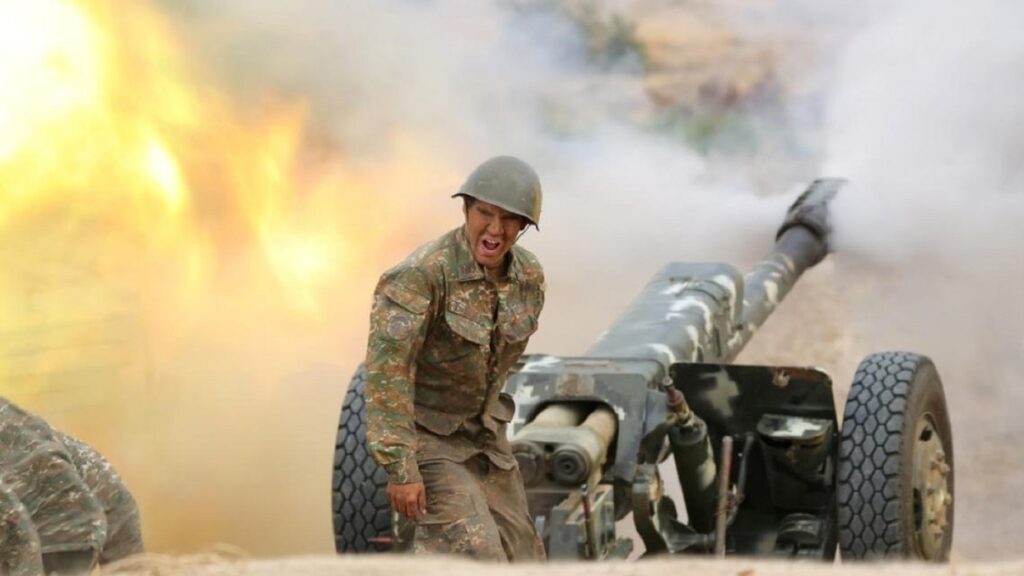
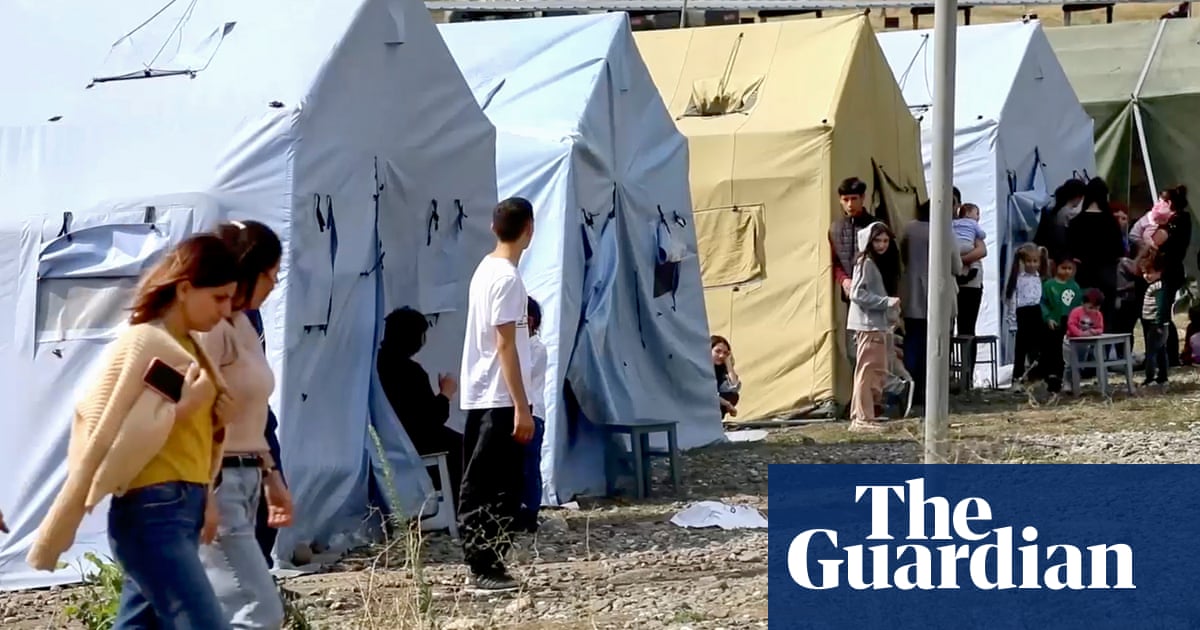
Armenia’s prime minister, Nikol Pashinyan, has expressed hopes that ethnic Armenians can stay in Nagorno-Karabakh amid fears that Azerbaijan, which says it controls the region after a military offensive this week, is seeking to push out tens of thousands of people.

Speaking during a government meeting in Yerevan, Pashinyan said Armenia would welcome ethnic Armenians who lived in the breakaway region but mass resettlement would only happen if it became impossible for Karabakh Armenians to remain there.

About 120,000 ethnic Armenians live in the South Caucasus enclave, which is recognised internationally as part of Azerbaijan but had largely been under ethnic Armenian control since 1994.


Selected Articles – The News And Times – 7:59 AM 9/22/2023

Armenian PM hopes ethnic Armenians can remain in Nagorno-Karabakh
Armenia’s prime minister, Nikol Pashinyan, has expressed hopes that ethnic Armenians can stay in Nagorno-Karabakh amid fears that Azerbaijan, which says it controls the region after a military offensive this week, is seeking to push out tens of thousands of people.Speaking during a government meeting in Yerevan, Pashinyan said Armenia would welcome…
 

Nagorno-Karabakh and Azerbaijani officials meet in Yevlakh to discuss region’s future
Representatives of Nagorno-Karabakh have met with Azerbaijani officials in the central Azerbaijani city of Yevlakh, to discuss the future of the region following Nagorno-Karabakh’s surrender. Thursday’s meeting reportedly lasted around three hours, with further meetings expected in the days and weeks ahead. The discussions were said to involve the…


Ukraine war latest: Biden welcomes Zelenskyy to White House … – Sky News
Ukraine war latest: Biden welcomes Zelenskyy to White House …  Sky News


Establishment of ceasefire doesn’t mean Azerbaijan no longer seeks to drag Armenia into military operations, warns PM – ARMENPRESS
Establishment of ceasefire doesn’t mean Azerbaijan no longer seeks to drag Armenia into military operations, warns PM  ARMENPRESS
 
Azerbaijan sees possible amnesty for Karabakh fighters who lay … – Colorado Springs Gazette
Azerbaijan sees possible amnesty for Karabakh fighters who lay …  Colorado Springs Gazette
 
Azerbaijan sends food, other aid to Nagorno-Karabakh after ending an offensive against Armenians – The Associated Press
Azerbaijan sends food, other aid to Nagorno-Karabakh after ending an offensive against Armenians  The Associated Press
 
Azerbaijan claims big advance in Nagorno-Karabakh as civilians … – POLITICO Europe
Azerbaijan claims big advance in Nagorno-Karabakh as civilians …  POLITICO Europe
 
OSCE Chair says use of force in Nagorno Karabakh unacceptable
OSCE Chairman-in-Office, the Minister of Foreign Affairs of North Macedonia Bujar Osmani, held separate meetings yesterday with the Minister of Foreign Affairs of Azerbaijan, Jeyhun Bayramov, and the Minister of Foreign Affairs of Armenia, Ararat Mirzoyan, on the margins of the UN General Assembly. Chairman Osmani raised his deep concerns over…
 
Artsakh authorities agree to Russia-brokered ceasefire
The authorities of the Republic of Artsakh have agreed to the proposal of the Russian peacekeepers to establish ceasefire from 1 pm today. Artsakh President’s staff said in a statement the analysis of the actions of the Armed Forces of Azerbaijan shows that they aim at dividing Artsakh and causing irreparable damage to its vitality. “During…
 
U.S. joint exercise in Armenia to end on Wednesday as planned … – Reuters
U.S. joint exercise in Armenia to end on Wednesday as planned …  Reuters
 
Armenia Says 32 Killed, Over 200 Wounded In Azerbaijan Operation – Barron’s
Armenia Says 32 Killed, Over 200 Wounded In Azerbaijan Operation  Barron’s
 
Azerbaijan and Armenian forces reach cease-fire deal for breakaway Nagorno-Karabakh, reports say – KPRC Click2Houston
Azerbaijan and Armenian forces reach cease-fire deal for breakaway Nagorno-Karabakh, reports say  KPRC Click2Houston
 
Azerbaijan and Armenian forces fight for 2nd day over the breakaway region of Nagorno-Karabakh – WIVB.com – News 4
Azerbaijan and Armenian forces fight for 2nd day over the breakaway region of Nagorno-Karabakh  WIVB.com – News 4
 

President’s special representative: Illegal armed formations in Karabakh pose serious threat to lives of hundreds of Azerbaijanis every day
“Illegal armed formations in Karabakh pose a serious threat to the lives of hundreds of our people every day. About 10,000 illegal militants have been present in that area for nearly three years,” Representative of the President of the Republic of Azerbai
 

3 dead, 4 injured in Balashikha gas explosion in Russia
Four people have died in a gas explosion in a nine-story residential building in the Moscow Region’s Balashikha in Russia, four others were injured and two remain under the rubble
 

Menendez Bill Seeks Ban on U.S. Military Aid to Azerbaijan
Introduces Sanctions Act Revoking the President’s Authority to Waive Section 907, Providing Direct U.S. Aid to Artsakh WASHINGTON – Senate Foreign Relations Committee Chairman Bob Menendez introduced legislation today to revoke the President’s authority to waive Section 907 of the FREEDOM Support Act and enact U.S. sanctions against President…
 

Chaos and Crisis as Azerbaijan Attacks Nagorno-Karabakh
Azerbaijan and representatives of Nagorno-Karabakh’s de-facto Armenian government have begun re-intergration talks for the territory after a 24 hour offensive by Azerbaijani forces. On Tuesday, September 19 Azerbaijan launched a new offensive against the self-governing Armenian-populated region. The attack followed a nine-month blockade of the territory…
 

The post 7:59 AM 9/22/2023 – Menendez Bill Seeks Ban on U.S. Military Aid to Azerbaijan … Armenian PM hopes ethnic Armenians can remain in Nagorno-Karabakh … Azerbaijan sees possible amnesty for Karabakh fighters … Azerbaijan sends food, other aid to Nagorno-Karabakh after ending an offensive against Armenians – The Associated Press … Chaos and Crisis as Azerbaijan Attacks Nagorno-Karabakh first appeared on The News And Times – thenewsandtimes.com.


Categories
The News And Times – thenewsandtimes.com

The Just Security Podcast: A Fourth Amendment Privacy Paradox


In 2018, the Supreme Court created a revolution in the Fourth Amendment. In Carpenter v. United States, the Court found that the government needed a warrant to obtain data about the cell phone towers to which a person connected when using their phone. That data can reveal the digital breadcrumbs of a person’s life – including where they went and how long they stayed. But cell phone users give that location data to their phone providers, third-party companies like AT&T and Verizon. Those companies don’t have the legal ability to challenge a government’s request for the user’s data. In fact, the companies often can’t even notify the user about a request for information. This creates a paradox. Cell phone users, the people who have a Fourth Amendment right to challenge the government’s request for information, don’t know the government is requesting it and third-party companies know about the request but can’t challenge it in court.

The third-party paradox has massive implications for privacy rights and raises important questions about how to challenge the government’s request for information that might be protected by the Fourth Amendment.

Joining the show to discuss the third-party paradox and the Fourth Amendment is Michael Dreeben. Michael argued Carpenter and over 100 other cases before the Supreme Court on behalf of the government. He is now a partner at the law firm O’Melveny & Myers, a Distinguished Lecturer from Government at Georgetown University Law Center, and a Lecturer on Law at Harvard Law School.

Listen to the podcast by clicking below.

The title of the episode with sound waves behind it.


The post The Just Security Podcast: A Fourth Amendment Privacy Paradox appeared first on Just Security.

The post The Just Security Podcast: A Fourth Amendment Privacy Paradox first appeared on The News And Times – thenewsandtimes.com.


Categories
The News And Times – thenewsandtimes.com

Armenian PM hopes ethnic Armenians can remain in Nagorno-Karabakh


3600.jpg?width=1200&height=630&quality=8

Armenia’s prime minister, Nikol Pashinyan, has expressed hopes that ethnic Armenians can stay in Nagorno-Karabakh amid fears that Azerbaijan, which says it controls the region after a military offensive this week, is seeking to push out tens of thousands of people.

Speaking during a government meeting in Yerevan, Pashinyan said Armenia would welcome ethnic Armenians who lived in the breakaway region but mass resettlement would only happen if it became impossible for Karabakh Armenians to remain there.

About 120,000 ethnic Armenians live in the South Caucasus enclave, which is recognised internationally as part of Azerbaijan but had largely been under ethnic Armenian control since 1994.

A ceasefire agreement was reached on Wednesday between Azerbaijan and the local government in Nagorno-Karabakh, a day after Azerbaijan launched its new military offensive. The two sides held the first round of talks on Thursday to discuss the future of the region and its residents.

A senior Azerbaijani official said on Friday that Baku would ensure that civilians could travel safely in their own vehicles along the road leading from Nagorno-Karabakh to Armenia through the Lachin corridor.

Nagorno-Karabakh map

Hikmet Hajiyev, a foreign policy adviser to Azerbaijan’s president, also said Azerbaijan would guarantee an amnesty for Karabakh Armenian fighters who gave up their arms, though he claimed some Karabakh military units had said they would continue their resistance.

Meanwhile, a Karabakh representative told the AFP news agency that Azerbaijani troops were on the edge of the region’s capital, Stepanakert, which is known in Azerbaijan as Khankendi, prompting residents to hide in basements in fear.

“The situation in Stepanakert is horrible, Azerbaijani troops are all around the city, they are on the outskirts and people fear Azerbaijani soldiers could enter the city at any moment and start killings,” said Armine Hayrapetyan, a separatist spokesperson.

Pashinyan stressed on Thursday evening that the ceasefire in the breakaway region had largely been held. But other Armenian officials said Azerbaijan was preparing for an “ethnic cleansing” in the region.

Speaking at a meeting of the UN security council, Armenia’s foreign minister, Ararat Mirzoyan, said: “The intensity and cruelty of the offensive makes it clear that the intention is to finalise ethnic cleansing of the Armenian population of Nagorno-Karabakh.

There have also been warnings over a deteriorating humanitarian situation in Karabakh. Karabakh’s human rights ombudsman, Gegham Stepanyan, said on social media that the streets of Stepanakert were “filled with displaced people, hungry, scared, and in uncertainty”.

“People are desperately looking for each other,” Stepanyan said.

Observers have said many in Karabakh were already weakened after Azerbaijan established a blockage of the Lachin corridor last spring, cutting off the flow of people and goods between Armenia and Nagorno-Karabakh.

On Friday, the ethnic Armenian leadership of Nagorno-Karabakh said an agreement had been reached for a humanitarian convoy to come from Armenia.

There have been unconfirmed reports of civilians being targeted by Azerbaijani forces. One separatist official in Nagorno-Karabakh said at least 200 people had been killed and more than 400 wounded after Azerbaijan launched its offensive, including at least 10 civilians and five children.

Siranush Sargsyan, a freelance journalist in Nagorno-Karabakh, shared videos online showing destroyed civilian vehicles and damage to apartment buildings on Azatamartikneri Avenue in Stepanakert.

Nagorno-Karabakh and sizeable surrounding territories had been under ethnic Armenian control since the end of a separatist war in 1994, but Azerbaijan regained the territories and parts of Nagorno-Karabakh during the 2020 fighting. That ended with an armistice placing Russian peacekeepers in Nagorno-Karabakh.

On Thursday, Azerbaijan’s president, Ilham Aliyev, apologised in a phone call with Vladimir Putin for the death of six Russian peacekeeping troops who came under Azerbaijani fire while returning from a patrol in Nagorno-Karabakh.

The post Armenian PM hopes ethnic Armenians can remain in Nagorno-Karabakh first appeared on The News And Times – thenewsandtimes.com.


Categories
The News And Times – thenewsandtimes.com

Exclusive: At least 40% of Colombia“s ELN rebels seen rejecting peace deal-security sources


2023-09-22T11:05:19Z

Pablo Beltran, head of leftist guerrilla group National Liberation Army (ELN), speaks with members of the media in Caracas, Venezuela January 21, 2023. REUTERS/Leonardo Fernandez Viloria/File Photo

At least 40% of fighters from Colombia’s National Liberation Army (ELN) rebels could reject a potential peace deal being negotiated with the government, three high-level security sources told Reuters, citing reluctance to surrender profits from drug smuggling and illegal mining.

The estimate puts at risk ambitious plans by the country’s first leftist leader, President Gustavo Petro, to end Colombia’s six-decade war, which has killed 450,000 people, through accords with rebels and criminal groups.

The formation of dissident groups by ELN members would echo what was seen after a 2016 peace deal with the Revolutionary Armed Forces of Colombia (FARC) guerrilla group, when hundreds of holdouts rejected the agreement and to this day continue illegal activities and fighting.

It would also appear to undermine repeated reassurances by ELN leaders that the group is united behind talks. The group did not immediately respond to a request for comment.

The atomized command structure of the ELN has long been a concern for security analysts and critics of the talks, who have warned the group’s most radical units are unlikely to adhere to an accord.

The three security sources said some 2,300 of the ELN’s total 5,850 members were seen as likely to reject the deal.

Most of them number among the group’s 3,000 armed members and belong especially to its Western, Eastern and Northeastern Fronts, units based in the Pacific jungle and in several provinces along Colombia’s porous eastern border with Venezuela, according to the sources.

“Illicit economies like drug trafficking and illegal mining and their millions in earnings will be the principal incentive for many members of the ELN to continue in their armed struggle and reject a peace accord,” one of the sources said.

A second said another factor was the ELN’s autonomous and difficult to control structure. “And many of its members are in Venezuela and they’re not interested in entering a peace process,” said the source.

It is unclear exactly how many former FARC members have rejected that group’s accord, but about 15% of its fighters never signed the deal and formed an initial dissident faction, according to estimates by analysts.

And dozens, at least, of the 13,000 members who did back the accord later rejected it, founding a second major dissident group.

Reaching accords with the FARC dissidents – who have remained active in the conflict – is also among Petro’s peace goals.

Both the ELN’s head peace negotiator Pablo Beltran and its top armed commander Antonio Garcia have told Reuters in recent interviews that the group is united behind peace negotiations.

The group did not respond to a request for comment on the 40% estimate, but the Western Front’s spokesman, who uses the alias Yerson, told a local media outlet this week that his unit is “not a loose wheel” and that it follows the ELN’s national command structure.

The ELN talks, which restarted in November 2022, are the most advanced of Petro’s peace efforts, which also include conversations with crime gangs like the Clan del Golfo.

Petro’s high peace commissioner Danilo Rueda told Reuters there is a risk some fighters will not lay down arms and that internal divisions over unit autonomy and other issues are worrying, but said talks so far have demonstrated ELN unity.

“We don’t deny the risks that could come from a dialogue that doesn’t acknowledge that reality,” Rueda said, but added that orders from national ELN leaders are respected by fighters.

The talks’ methodology includes efforts to guarantee communication not just with leaders but fighters too, he added.

The ELN is different from the FARC and despite the power of regional commanders, is disciplined, said Ariel Avila, a security expert and senator for the Green Alliance.

He said the 40% estimate would be a very high figure.

“I don’t think there will be large dissident groups,” Avila said. “There will be dissidents, there are in all conflicts, but it will be a normal average between 10% and 15%.”

Provisions in an eventual accord barring extradition abroad and protecting economic programs meant to provide jobs for former rebels must be implemented to discourage dissidents, Avila added.

The post Exclusive: At least 40% of Colombia“s ELN rebels seen rejecting peace deal-security sources first appeared on The News And Times – thenewsandtimes.com.


Categories
The News And Times – thenewsandtimes.com

Chaos and Crisis as Azerbaijan Attacks Nagorno-Karabakh


Screenshot-2023-09-21-at-14.45.07-2.png

Azerbaijan and representatives of Nagorno-Karabakh’s de-facto Armenian government have begun re-intergration talks for the territory after a 24 hour offensive by Azerbaijani forces. On Tuesday, September 19 Azerbaijan launched a new offensive against the self-governing Armenian-populated region. The attack followed a nine-month blockade of the territory by the Azerbaijani authorities, which prompted international condemnation. 

Azerbaijan’s armed forces initially attacked Nagorno-Karabakh’s capital Stepanakert with drones and artillery, breaking through the line of contact (the front line separating Armenian and Azerbaijani troops) to surround key settlements. 

Azerbaijan’s President Ilham Aliyev declared that the country had “restored its sovereignty” to the area internationally recognised as part of Azerbaijan, and a ceasefire was declared. However, at the time of writing there are reports of continued shelling and small arms fire in some areas.

Since the advance of Azerbaijani forces and the capitulation of Nagorno-Karabakh’s de-facto authorities thousands of Armenian civilians have fled their homes; Armenia’s prime minister has accused Azerbaijan of carrying out a policy of ethnic cleansing in Nagorno-Karabakh. Bellingcat has previously documented human rights violations by Azerbaijan’s forces in areas of Nagorno-Karabakh which came under Baku’s control in 2020.

Since the start of Azerbaijan’s latest offensive, Bellingcat has been monitoring open source information about the humanitarian consequences — in particular attacks on the territory’s civilian infrastructure and the movement of its ethnic Armenian population.

Azerbaijan declared an end to operations on the evening of Wednesday, September 20, however there are reports that gunfire could still be heard near Stepanakert on the morning of September 21, hours before aforementioned talks between Azerbaijani and Karabakh Armenian representatives commenced in the town of Yevlakh. Widespread and prolonged disruptions to internet services in the area have resulted in sporadic filtering of information out of the region.

Area controlled by Karabakh Armenian forces between November 2020 and September 2023 highlighted in red.

Armenian officials and international experts fear the ethnic cleansing of the approximately 100,000 ethnic Armenians in the enclave. Last month, Luis Moreno Ocampo, the former lead prosecutor of the International Criminal Court, released a report warning there is a “reasonable basis” to believe there is a genocide against Armenians living in Nagorno-Karabakh — for the past nine months, Azerbaijani security forces have blocked access to Nagorno-Karabakh, cutting off essential supplies including food and medicine.

Videos Show Damage to Civilian Areas, Civilians Fleeing

Bellingcat has seen evidence of attacks on residential areas of Nagorno-Karabakh. 

Early reports on social media place the start of the hostilities shortly after noon on September 19. The Azerbaijani Ministry of Foreign Affairs (MFA) released videos throughout the day showing its armed forces striking Armenian military targets. Among these were videos shared on the MFA’s YouTube page featuring drone footage of military positions and the bombing of military equipment.  

Hikmet Hajiev, foreign policy adviser to Azerbaijan’s president, claimed in an interview to CNN that Azerbaijan only targeted military infrastructure with “precision weapons” in the offensive. However, available open source evidence shows that residential areas were also impacted in the attack. The country’s Defence Ministry also released a statement on September 19 claiming that “humanitarian aid stations” had been opened along the Lachin Corridor connecting Nagorno-Karabakh to Armenia to ensure the “evacuation of the population”, but no open source evidence of civilians fleeing towards them has yet emerged.

The Human Rights Defender of the Republic of Artsakh (as Nagorno-Karabakh is also known to its Armenian population) announced on the evening of September 20 that at least ten civilians — including five children — were among the 200 fatalities in the hostilities.

The entity also decried the worsening humanitarian situation in the area, pointing out that civilians in the region had been suffering through prolonged interruptions to electrical, heating, and internet services. Importantly, critical fuel shortages had caused all public transport to cease during the nine-month blockade, complicating any evacuation or humanitarian efforts.

Siranush Sargsyan, a freelance journalist in Nagorno-Karabakh, shared videos showing destroyed civilian vehicles and damage to apartment buildings on Azatamartikneri Avenue (39.821232, 46.758423) in downtown Stepanakert.

Images of damage to a car and commercial buildings in Stepanakert, from Siranush Sargsyan’s Tweet

Sargsyan shared a video of damage to another civilian building apparently in central Stepanakert, which Bellingcat was unable to immediately geolocate.

Other videos shared on September 20 showed Armenian civilians fleeing their homes. A large number of them arrived at the Russian peacekeepers’ base at the airport near Khojaly:

Stills from a video showing Armenian civilians walking in the premises of the Russian peacekeeping force’s base at Khojaly. Video by AlphaNews, shared by Leonid Ragozin on Twitter.

One photograph whose initial author is unknown was then widely circulated on social media, showing a large crowd gathering at the terminal building of the airport.

Photo from Andranik Shirinyan’s Tweet

At 2:00 PM local time, footage appeared showing a large group of Armenian civilians and vehicles near the airport’s terminal building (39.899226, 46.787836).

The television channel of Russia’s military, TV Zvezda, also released footage of Russian peacekeepers letting a large group of Armenian civilians into the base. Images later appeared of a group of civilians at an Orthodox Church on its premises at (39.902255, 46.793253).

The independent Russian news website Meduza reported on a brief from the Russian Presidential Administration which instructed state media to highlight the role of peacekeepers in “evacuating the civilian population”, particularly stressing the fact that some took shelter in the aforementioned Orthodox Church.

A statement posted to Russia’s Defence Ministry website on September 20 notes that Russian peacekeepers evacuated 3,154 people from the Mardakert, Martuni and Askeran Regions. It is not known whether these are the civilians seen in the videos mentioned above.

Given extensive cloud cover over the airport yesterday, Bellingcat tasked a synthetic aperture radar (SAR) satellite image of the site. Unlike visible light satellite images, SAR can penetrate through clouds and, in effect, “see” certain objects.

The SAR images that Bellingcat obtained, seen below, are not strongly conclusive. However, they show what appear to be a large number objects on the road adjacent to the Russian base. Two large groups of these are also visible, one in a parking lot by the airport terminal and another in a field nearby.

These objects could plausibly be vehicles, which have also been seen in the area in large numbers in one video uploaded by an Armenian social media user and another video bearing the coat of arms of Russia’s Defence Ministry.

SAR data © 2023 Umbra Lab, Inc. (Licensed under CC BY 4.0). Annotations by Logan Williams. The raw SAR magnitude image is available as a GeoTIFF and can be downloaded here for further reference, analysis, and reproduction under the terms of the CC BY 4.0 license.

At the time of writing, there are numerous claims on social media that Azerbaijani soldiers have advanced into the city of Stepanakert. This morning, local journalist Marut Vanyan posted images of internally displaced people from across Nagorno-Karabakh on the streets of Stepanakert.

https://twitter.com/marutvanian/status/1704733065673687175

An Uncertain Future

The future of Nagorno-Karabakh’s 100,000 ethnic Armenians remains uncertain. In his speech on Wednesday, Aliyev assured that the rights of Armenians would be preserved under Baku’s rule, however some experts have argued that most Karabakh Armenians are unlikely to put much faith in Baku’s assurances.

Armenia’s Prime Minister Pashinyan has “taken into account” the decision of the Karabakh Armenian authorities and in a video address argued that the Russian-negotiated ceasefire obliged Moscow to guarantee their security, reported Armenian news website CivilNet. Yesterday the same website reported confusion on the ground as to whether “humanitarian corridors” to Armenia via the Lachin Corridor will be opened at all.“Fears of expulsion and ethnic cleansing are justified because there is precedent. Every time territory has changed hands in the Armenian-Azerbaijani conflict, ethnic cleansing has taken place,” said Laurence Broers, an Associate Fellow at Chatham House’s Russia and Eurasia Programme, in comments to Bellingcat.“The previous nine months of blockade followed by yesterday’s offensive are not the ideal background to discussions of co-existence. What we’ve seen here is a coercive model, where we now have no trust whatsoever and a deep asymmetry in power. This is not a setting that can provide for a successful process, which would need painstaking negotiations and transitional arrangements.”

Bellingcat will continue to monitor the situation to track the humanitarian consequences of this latest escalation of the Nagorno-Karabakh crisis.

Giancarlo Fiorella, Maxim Edwards and Narine Khachatryan contributed research alongside members of Bellingcat’s Global Authentication Project (GAP)
The post Chaos and Crisis as Azerbaijan Attacks Nagorno-Karabakh first appeared on The News And Times – thenewsandtimes.com.


Categories
The News And Times – thenewsandtimes.com

5:05 AM 9/22/2023 – Selected Articles – The News And Times: PM Pashinyan notes case in which Karabakh Armenians might move to Armenia … We shouldn’t turn a blind eye on failures of Russian peacekeepers in Nagorno-Karabakh – Pashinyan


 Michael Novakhov’s favorite articles

default.jpg

The transfer of our compatriots from Nagorno-Karabakh to Armenia may take place in the conditions when it is recorded that it is impossible for our compatriots to stay in Nagorno-Karabakh; that is, if this situation continues. Prime Minister Nikol Pashinyan stated this at Friday’s Cabinet meeting of the Armenian government.

“We assess that this impossibility exists at the moment. If the situation does not improve, that situation will be on the agenda of all of us. But also, I want to inform that back on September 19, that is, the day of the start of [Azerbaijan’s military] operations [in Nagorno-Karabakh], I gave an instruction to Deputy Prime Minister Tigran Khachatryan to discuss with his government colleagues how, where, and with what we will assist our compatriots in the event of a possible flow of people to Armenia. More than 40,000 places have been prepared; it’s about places to stay, as well as simultaneously in terms of health care, food. This is an agreed position with Nagorno-Karabakh colleagues. Our Plan A is not to de-Armenianize Nagorno-Karabakh. We must do everything in our actions so that our compatriots have the chance to live in their homes without fear, with dignity,” Pashinyan said.

!

This text available in   Հայերեն and Русский

Print

We shouldn’t turn a blind eye on failures of Russian peacekeepers in Nagorno-Karabakh – Pashinyan 19:19, 21 September 2023

YEREVAN, SEPTEMBER 21, ARMENPRESS. Prime Minister Nikol Pashinyan has said that Armenia bears its share of responsibility but the failures of the Russian peacekeeping mission in Nagorno-Karabakh shouldn’t be ignored.

Addressing the nation live on Thursday, PM Pashinyan commented on Russian media claims that Armenia is trying to blame Russia for its own failures.

“We are not shifting responsibility of any of our failures on anyone. There is the clear 9 November 2020 trilateral statement, by which the Lachin Corridor was supposed to be under the full control of the Russian peacekeeping contingent, the Russian peacekeeping contingent was supposed to oversee the safety of the civilian population. And we’ve been consistently raising this issue for over one and a half years, raising that the processes aren’t proceeding in the right course. We bear our share of responsibility, but I don’t think that we all should turn a blind eye on the failures that the Russian peacekeeping contingent has had in Nagorno-Karabakh,” Pashinyan said, mentioning the deadly incident in 2022 when Russian peacekeepers had assured a farmer in Nagorno-Karabakh that it was safe to conduct agricultural work but the farmer was shot dead by an Azeri sniper in the presence of the peacekeepers.

“Why did this latest outbreak happen? If the peacekeepers were able to agree a ceasefire, why couldn’t they do so before the attack, so that an attack on Nagorno-Karabakh wouldn’t have happened? After all, we’ve all been warning about this, we were saying that Nagorno-Karabakh is blockaded by Azerbaijani military equipment. Why didn’t this mediation take place back then? These are questions that require answers,” the Armenian PM said.

Second-Nagorno-Karabakh-War-1024x576.jpg

Azerbaijani President Ilham Aliyev appears to relish embarrassing the State Department.

Just weeks after the now-voided ceasefire, Aliyev castigated on live television Andrew Schofer, at the time the chief US representative on the Karabakh issue, during a Baku meeting.

Noting that Aliyev did not invite the American and French representatives, he said he would nevertheless listen on the off chance they had something worthwhile to say.

Aliyev, though, had no desire to listen to diplomats. “Azerbaijan resolved the conflict, which lasted for almost 30 years, resolved by force and political means,” he said. “And I can only agree with what [Russian] president [Vladimir] Putin said, the president of the one of the co-chair countries, that Nagorno-Karabakh conflict is already in the history… Azerbaijan resolved it itself. And by defeating Armenia on the battlefield, we forced aggressor to admit its defeat, to sign declaration which we consider as an act of capitulation of Armenia.”

In the three years since, he has only redoubled his contempt for American diplomacy. Testifying last week before the Senate Foreign Relations Committee, acting Assistant Secretary of State Yuri Kim declared, “We will not tolerate any attack on the people of Nagorno-Karabakh.” Aliyev called her bluff and Kim, who hopes to be the next US ambassador to Turkey, showed her declaration both empty and insincere.

Selected Articles – The News And Times – 5:05 AM 9/22/2023

PM Pashinyan notes case in which Karabakh Armenians might move to Armenia
The transfer of our compatriots from Nagorno-Karabakh to Armenia may take place in the conditions when it is recorded that it is impossible for our compatriots to stay in Nagorno-Karabakh; that is, if this situation continues. Prime Minister Nikol Pashinyan stated this at Friday’s Cabinet meeting of the Armenian government. “We assess that this impossibility…
 

We shouldn’t turn a blind eye on failures of Russian peacekeepers in Nagorno-Karabakh – Pashinyan
19:19, 21 September 2023 YEREVAN, SEPTEMBER 21, ARMENPRESS. Prime Minister Nikol Pashinyan has said that Armenia bears its share of responsibility but the failures of the Russian peacekeeping mission in Nagorno-Karabakh shouldn’t be ignored. Addressing the nation live on Thursday, PM Pashinyan commented on Russian media claims that Armenia is…
 

What Should America Do Now in Nagorno-Karabakh?
Azerbaijani President Ilham Aliyev appears to relish embarrassing the State Department. Just weeks after the now-voided ceasefire, Aliyev castigated on live television Andrew Schofer, at the time the chief US representative on the Karabakh issue, during a Baku meeting. Noting that Aliyev did not invite the American and French representatives, he…
 

Nagorno-Karabakh conflict: Will EU take on Azerbaijan? – DW – 09/21/2023
For years, the European Union was treading a thin line, keeping things even-handed when dealing with Armenia and Azerbaijan. The two neighbors are locked into a decades-old dispute over Nagorno-Karabakh, the mountainous breakaway region located in Azerbaijani territory but populated largely by ethnic Armenians. Long-standing hostilities erupted 30 years…
 

Armenia was under heavy cyberattack prior to Azeri offensive in NK – expert
11:37, 22 September 2023 YEREVAN, SEPTEMBER 22, ARMENPRESS. The Armenia International Airports and governmental agencies came under heavy cyberattacks prior to the Azeri attack on Nagorno-Karabakh. Information security expert Samvel Martirosyan told ARMENPRESS that the attacks happened September 10-19. Hackers used an MS Word document with a…
 

Hikmet Hajiyev: Baku considering possible amnesty for Karabakh militants
Azerbaijan envisages an amnesty for Karabakh Armenian fighters who give up their arms, though there have been some Karabakh military units which have said they will continue their resistance, Assistant to the President of Azerbaijan – Head of the Foreign Policy Affairs Department of the Presidential Administration Hikmet Hajiyev told Reuters, Report…
 

Jeyhun Bayramov meets with Joe Biden
Azerbaijani Foreign Minister Jeyhun Bayramov attended a reception organized by US President Joe Biden within the framework of the high-level week of the 78th session of the UN General Assembly. The Ministry of Foreign Affairs of Azerbaijan informed on its page in X that within the framework of the reception, the Azerbaijani Foreign Minister met with…
 

Nagorno-Karabakh conflict: Who is Azerbaijan’s President Ilham Aliyev?
Azerbaijan’s President Ilham Aliyev moved closer to asserting rule over the separatist region of Karabakh this week, in what would mark a major victory for the autocratic leader of almost two decades. Issued on: 21/09/2023 – 14:54 3 min A file photo of Azerbaijan’s President Ilham Aliyev reviewing the honour guard with the Hungarian President…
 

The Shifting Geography of the South Caucasus
Thirty years after the Soviet Union’s collapse, the geopolitical boundaries that once marked its former republics are blurring. Treating this space as simply post-Soviet, as Western policymakers have done for the past three decades, is out of date. Undoubtedly, Russia is anything but shy about throwing its weight around the neighborhood. Countries along…
 

Nagorno-Karabakh Defense Army units remain in same positions when ceasefire took effect – PM
18:16, 21 September 2023 YEREVAN, SEPTEMBER 21, ARMENPRESS. Nagorno-Karabakh Defense Army units are deployed in the same positions where they were stationed at the time of the ceasefire taking effect, PM Nikol Pashinyan said on September 21 while presenting the situation in Nagorno-Karabakh. “At this moment, when the ceasefire is established,…
 

As Armenia and Azerbaijan Clash, Russia Is a Distracted Spectator
In the conflict over Nagorno-Karabakh, Russia, drained by the war in Ukraine, seemed incapable of acting as the indispensable power capable of knocking heads together.
 

Armenia ex-ombudsman: What is happening in Karabakh is real tragedy
What is happening in Artsakh (Nagorno-Karabakh) is a real tragedy. Arman Tatoyan, director of the Tatoyan Foundation Center for Law and Justice, and the former Human Rights Defender (ombudsman) of Armenia, noted about this on Facebook. Tatoyan added as follows: “Tens of thousands of civilians are forced to displacement from their homes and communities…
 

Armenia needs peace, PM Nikol Pashinyan says after Azerbaijan retakes Karabakh
Windows of a government building that were broken during a protest following the launch of a military operation by Azerbaijani forces in the region of Nagorno-Karabakh, in Yerevan, Armenia, on Sept. 20.IRAKLI GEDENIDZE/ReutersArmenia needs to be “free of conflict” for the sake of its independence, Prime Minister Nikol Pashinyan told his compatriots…


Op-ed | Speaker’s Words About Ukraine Friendship Ring Hollow – Civil Georgia
Op-ed | Speaker’s Words About Ukraine Friendship Ring Hollow  Civil Georgia


Европарламентарий заявил, что был «шокирован» решением Нацбанка Грузии
По мнению члена группы «Renew Europe» европарламентария от Литвы Пятраса Аустревичюса, решения подобные решению Нацбанка об изменении порядка применения санкций, являются причиной того, что Европа все больше сомневается в том, что Грузия действительно соблюдает санкции. «Я был немного шокирован первоначальным решением центрального банка Грузии. Потом…
 
Azerbaijan arrests anti-war figures 
Azerbaijani authorities have arrested at least five people who spoke out against the war following the beginning of Azerbaijan’s military offensive against Nagorno-Karabakh. On Wednesday and Thursday, three people were arrested after speaking out against the war for posting ‘prohibited’ content on social media. Two of the three have already been sentenced…
 

Stoltenberg: NATO will remain regional alliance
The North Atlantic Alliance will remain a regional bloc and does not intend to expand globally, beyond the European continent, NATO Secretary General Jens Stoltenberg stated during a speech at the Council on Foreign Relations in the United States, Report
 
Nagorno-Karabakh: Fresh reports of gunfire despite ceasefire – bbc.com
Nagorno-Karabakh: Fresh reports of gunfire despite ceasefire  bbc.com
 

The post 5:05 AM 9/22/2023 – Selected Articles – The News And Times: PM Pashinyan notes case in which Karabakh Armenians might move to Armenia … We shouldn’t turn a blind eye on failures of Russian peacekeepers in Nagorno-Karabakh – Pashinyan first appeared on The News And Times – thenewsandtimes.com.


Categories
The News And Times – thenewsandtimes.com

Nagorno-Karabakh conflict: Will EU take on Azerbaijan? – DW – 09/21/2023


For years, the European Union was treading a thin line, keeping things even-handed when dealing with Armenia and Azerbaijan.

The two neighbors are locked into a decades-old dispute over Nagorno-Karabakh, the mountainous breakaway region located in Azerbaijani territory but populated largely by ethnic Armenians.

Long-standing hostilities erupted 30 years ago when the Soviet Union, to which both countries previously belonged, was dissolved and they’ve flared up periodically ever since. In 2020, Baku emerged victorious from a six-week war and reasserted control over swaths of the region.

Ever since Baku launched what it described as “anti-terrorist” military activities to restore its sovereignty in the enclave earlier this week, a number of voices in the European Parliament have been calling for the EU to get tougher on Azerbaijan.

In a written statement, four leading EU representatives with senior positions called on member states “to fundamentally reconsider the EU’s relations with Azerbaijan in this light, and consider imposing sanctions against responsible Azerbaijani authorities.” On Thursday, more than 60 parliamentarians asked for sanctions in a separate statement.

Despite the strong feelings, these elected officials don’t have much foreign policy clout. The question is whether those calling the shots, the national EU governments, would really take the plunge, especially since the EU clinched a gas supply deal with Baku last year to help replace direct supplies from Russia.

What role does the EU play in the conflict?

Traditionally, the EU has been a relatively small player compared to Russia, which brokered a peace deal — deemed unfavorable to Armenians — in the 2020 war as well as a cease-fire this week, and Turkey, which is a close ally and economic partner of Azerbaijan, not to mention a major arms supplier.

The flag of the "Republic of Artsakh", how some Armenians refer to Nagorno-Karabakh, is waved in YerevanEarlier this week, protesters in Yerevan accused Pashinyan of abandoning Karabakh ArmeniansImage: SNA/IMAGO

At present, both Russia and the EU are coordinating separate peace talks between Yerevan and Baku. With Moscow tied up with its full-scale invasion of Ukraine, Baku appears emboldened, analyst Marcel Röthig told DW from Tbilisi, the Georgian capital.

“Turkey sees its role as the new big player in the Caucasus, as the one who’s shaping the Caucasus,” said Röthig, an analyst from Germany’s Friedrich Ebert Foundation. “Azerbaijan feels the backing. And that’s why they became much more adventurous than they have been in the years before.”

Armenia, along with other post-Soviet states, is in a military alliance with Russia but Prime Minister Nikol Pashinyan has increasingly appealed to the West, including the EU.

What’s at stake for the EU?

Earlier this year, the EU set up a civilian mission in Armenia in response to a request from Yerevan, including operations at several points along the border with Azerbaijan.

Its stated goal, according to the website of the EU Mission in Armenia, is “observing and reporting on the situation on the ground; contributing to human security in conflict-affected areas and based on the above, contributing to build confidence between populations of both Armenia and Azerbaijan and, where possible, their authorities.”

European Council President Charles Michel (center) with Azerbaijani President Ilham Aliyev (left) and Armenian Prime Minister Nikol Pashinyan (right) walking on a red carpet in front of the EU member flagsThe EU is engaged in negotiations with Baku and Yerevan, but that didn’t stop the latest round of hostilitiesImage: Dursun Aydemir/AA/picture alliance

However, the EU also signed a gas supply deal with Baku last year. European Commission President Ursula von der Leyen even praised authoritarian Azerbaijan as a “crucial partner” in mitigating the energy crisis, despite serious concerns among Western observers about the state of democracy and human rights violation there.

With war already raging in Ukraine and a number of powerful geopolitical players — US, China, Iran and Israel — involved in the Caucasus region, the situation is delicate. “The EU’s aim is to have a stable vicinity unthreatened by wars,” Czech EU parliamentarian Marketa Gregorova, who sits in the Green group, told DW in a written statement.

“The EU’s strategic interest is for Armenia and Azerbaijan to prosper, to minimize Russian influence in Armenia and the region, help Azerbaijan achieve democracy and to resolve the ongoing decades-long conflict,” she added.

Damaged residential buildings after attacks on Stepanakert, Nagorno-KarabakhNagorno-Karabakh lies in tatters after fresh fighting earlier this weekImage: TAR-TASS/IMAGO
Gregorova said she had long called for the EU to play a greater role in mediating long-term peace, but there are risks attached — especially due to the gas deal. “If we get deeply involved in Nagorno-Karabakh, Azerbaijan will have less interest in supplying the EU with energy, at least at current price and conditions,” she said.

The solution, she said, is “to concentrate on further diversification of our resources, and a swift one.” Sanctions could be an option, but the EU should also look at attaching conditions to the gas agreement, Gregorova said.

What comes next?

With Azerbaijan now claiming control over Nagorno-Karabakh and ethnic Armenian separatist fighters laying down arms, the next concern is the humanitarian situation as well as keeping both sides talking.

Baku is blockading the only road between Nagorno-Karabakh and Armenia, choking supplies to civilians. In the fresh fighting, many ethnic Armenians in Nagorno-Karabakh have fled, leading to accusations of ethnic cleansing.

In a written statement on Tuesday, EU foreign affairs chief Josep Borrell condemned the military escalation and called for “the immediate cessation of hostilities and for Azerbaijan to stop the current military activities.”

“There is an urgent need to return to dialogue between Baku and Karabakh Armenians,” Borrell said. “This military escalation should not be used as a pretext to force the exodus of the local population.”

In Brussels, ambassadors from the EU member states discussed the situation on Wednesday, but only one country showed interest in resorting to sanctions immediately, an EU diplomatic source told DW on condition of anonymity. The focus was on stopping military actions, moving forward through diplomacy and dealing with the humanitarian situation, the source added.

All eyes will be on the Spanish city of Granada in two weeks, where close to 50 European countries are expected for talks in the European Political Community format — including Armenia and Azerbaijan.

Edited by: Martin Kuebler

The post Nagorno-Karabakh conflict: Will EU take on Azerbaijan? – DW – 09/21/2023 first appeared on The News And Times – thenewsandtimes.com.


Categories
The News And Times – thenewsandtimes.com

What Should America Do Now in Nagorno-Karabakh?


Second-Nagorno-Karabakh-War-1024x576.jpg

Azerbaijani President Ilham Aliyev appears to relish embarrassing the State Department.

Just weeks after the now-voided ceasefire, Aliyev castigated on live television Andrew Schofer, at the time the chief US representative on the Karabakh issue, during a Baku meeting.

Noting that Aliyev did not invite the American and French representatives, he said he would nevertheless listen on the off chance they had something worthwhile to say.

Aliyev, though, had no desire to listen to diplomats. “Azerbaijan resolved the conflict, which lasted for almost 30 years, resolved by force and political means,” he said. “And I can only agree with what [Russian] president [Vladimir] Putin said, the president of the one of the co-chair countries, that Nagorno-Karabakh conflict is already in the history… Azerbaijan resolved it itself. And by defeating Armenia on the battlefield, we forced aggressor to admit its defeat, to sign declaration which we consider as an act of capitulation of Armenia.”

In the three years since, he has only redoubled his contempt for American diplomacy. Testifying last week before the Senate Foreign Relations Committee, acting Assistant Secretary of State Yuri Kim declared, “We will not tolerate any attack on the people of Nagorno-Karabakh.” Aliyev called her bluff and Kim, who hopes to be the next US ambassador to Turkey, showed her declaration both empty and insincere.

It is not a good look for American diplomacy. Nor is Kim alone. Secretary of State Antony Blinken repeated there could be “no military solution” or that “the use of force to resolve disputes is unacceptable” in recent days. To sit idle as Aliyev imposes through military force a solution that leads to the mass flight or expulsion of one of the region’s oldest Christian communities not only reinforces the notion that Blinken is the weakest secretary of State since Frank Kellogg a century ago. The danger is that not only Aliyev but also other dictators will see inaction or empty rhetoric as a greenlight. The Armenia fight might not be over, after all, especially as Aliyev occupies portions of Armenia and claims even capital Yerevan as an Azeri city.

So how should the United States react?

First, Azerbaijan’s military conquest should not push aside the ongoing investigations of severe human rights abuses and torture and executions of prisoners of war stemming from the 2020 war. The best resource on these cases rests in a repository at the Institute for the Study of Human Rights at Columbia University assembled by now-Georgetown University Scholar David Phillips and his able team.  

Second, will Congress assess how recent waivers of Section 907 of the Freedom Support Act contributed and enabled the Azerbaijani military action? Will any diplomats from the Trump or Biden administrations be held accountable by Congress for flagrant violations of U.S. law?

Third, what will the United States do to ensure preservation of cultural heritage? While the Hudson Institute’s Luke Coffey says, “There is no religious dimension to this conflict,” such a statement is patently false. Put aside the rhetoric of Al Qaeda-affiliated mercenaries from 2020. There is a long history of the Aliyev regime destroying Christian sites or seeking to erase Armenian heritage. Consider, for example, the destruction of the Julfa Cemetery. Every scholar or analyst apologetic to Azerbaijan’s position should explain what motivates such destruction and if they can voice any plausible excuse. The same holds true for the sandblasting of Armenian inscriptions in other churches and monasteries.  The simple facts are these: Few believe the Azerbaijani narrative because Aliyev has not allowed foreign media or foreign observers in for years. Pinocchio’s nose is too big to ignore the ongoing eradication of a community. There is a reason why so many living under Azerbaijani guns fear for their lives.

Fourth, the State Department should immediately dispatch multiple diplomats from the US Embassy in Baku to Stepanakert to monitor the situation. Atrocities occur in the dark. If Azerbaijan has nothing to hide, then it will not impede diplomats visiting beleaguered, Christian populations on land Azerbaijan controls.

Fifth and finally, Azerbaijani officials say that they will allow Armenians from Nagorno-Karabakh to remain as equal citizens under Azerbaijani law. Put aside the fact that they already accuse many generations-old Armenians of the region of having no proof of residency. Congress should demand the State Department release a report assessing the Azerbaijani constitution and the independence of the Azerbaijani judiciary. Does the State Department believe that the Aliyev family is subordinate to Azerbaijani law or above it? Does Blinken believe that Azerbaijani will, for example, bring to justice those seen beheading or mutilating prisoners on video?

Freedom and faith suffer today, but Azerbaijani triumphalism need not be the final chapter. The downside of imposing a military solution, rather than the “consensual” solution for which Secretary of State James Baker called when he crafted the American position to the region more than three decades ago, is that the pendulum of unilateralism swings both ways. Aliyev will not live forever, and even the most ambitious family dynasties unravel. In the interim, it is essential that the State Department cease its business-as-usual with Azerbaijan and work overtime to help one of the world’s oldest Christian communities that, unfortunately, Washington’s own distraction and indifference now imperils.

About the Author

Now a 19FortyFive Contributing Editor, Dr. Michael Rubin is a Senior Fellow at the American Enterprise Institute (AEI). Dr. Rubin is the author, coauthor, and coeditor of several books exploring diplomacy, Iranian history, Arab culture, Kurdish studies, and Shi’ite politics, including “Seven Pillars: What Really Causes Instability in the Middle East?” (AEI Press, 2019); “Kurdistan Rising” (AEI Press, 2016); “Dancing with the Devil: The Perils of Engaging Rogue Regimes” (Encounter Books, 2014); and “Eternal Iran: Continuity and Chaos” (Palgrave, 2005).

The post What Should America Do Now in Nagorno-Karabakh? first appeared on The News And Times – thenewsandtimes.com.


Categories
The News And Times – thenewsandtimes.com

First big grain ship leaves Ukraine“s Black Sea port


2023-09-22T07:44:38Z

The first big ship carrying grain from a Ukrainian Black Sea port has set sail since Moscow quit a deal in July to allow exports, a Ukrainian deputy prime minister said on Friday, part of Kyiv’s campaign to break Russia’s de facto blockade.

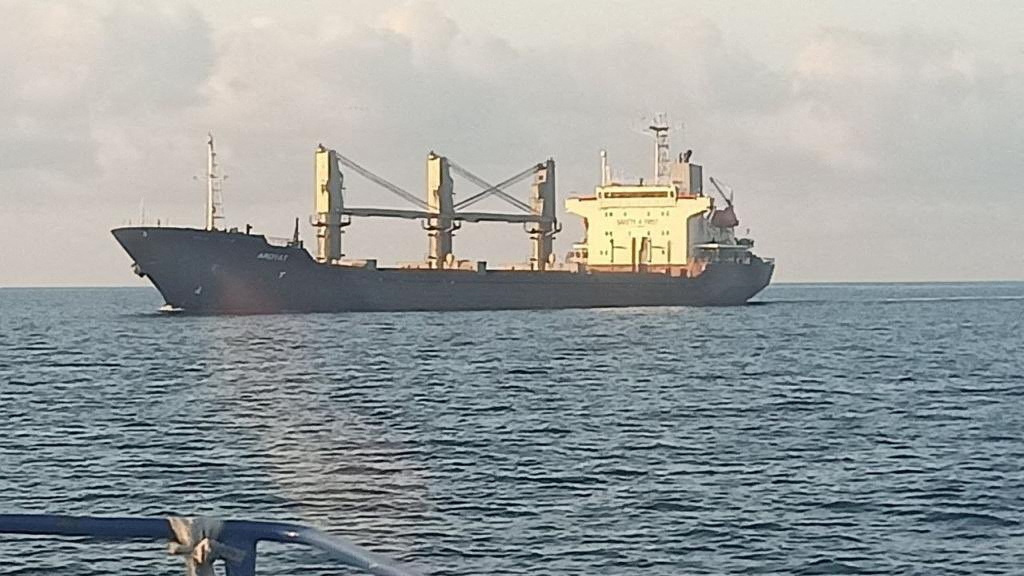
The Aroyat “left the port Chornomorsk after loading 17,600 (metric tons of) Ukrainian wheat for Egypt,” Oleksandr Kubrakov said on the X social media app, formerly Twitter.

He posted a photo of the ship at sea.

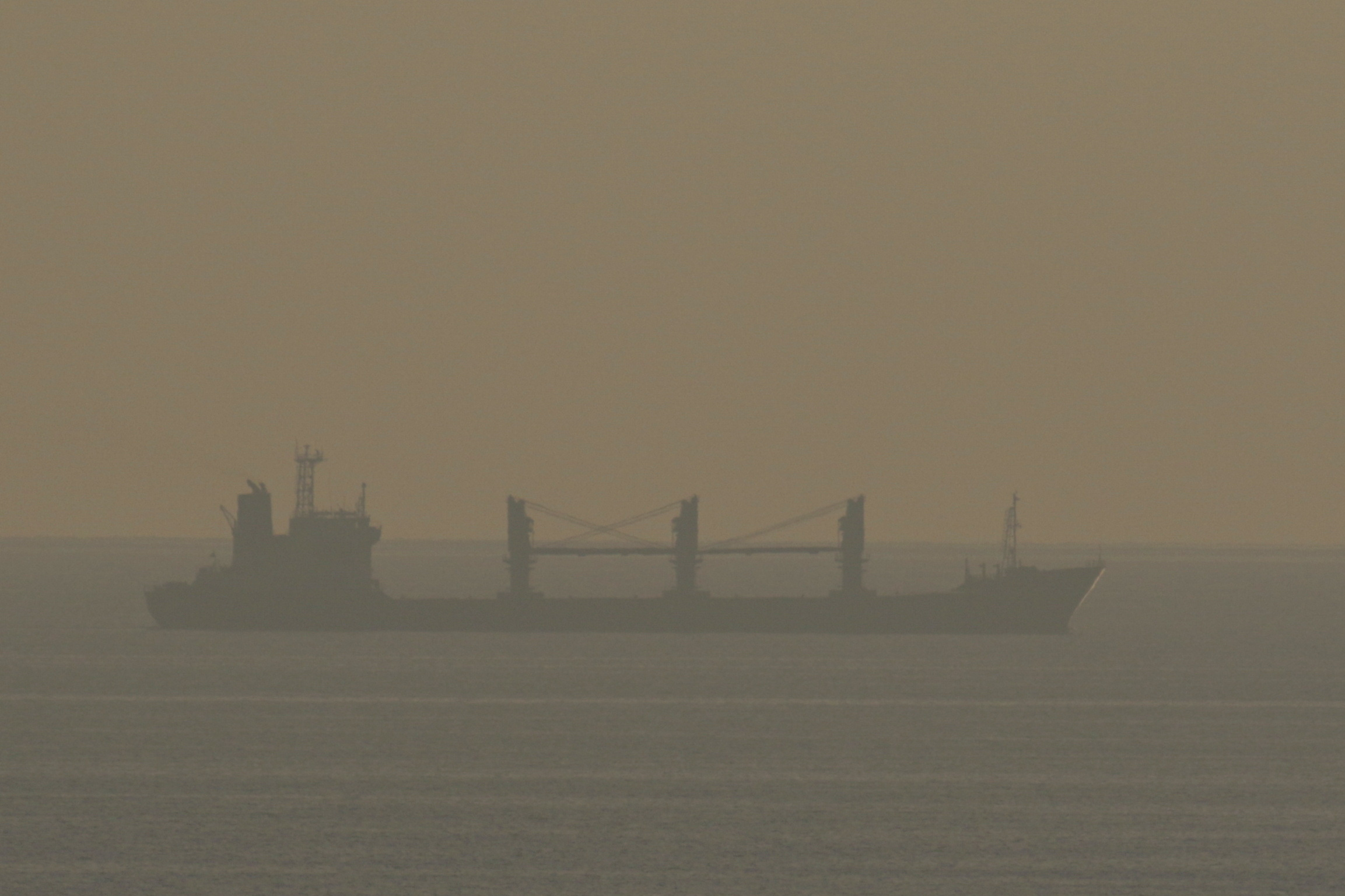
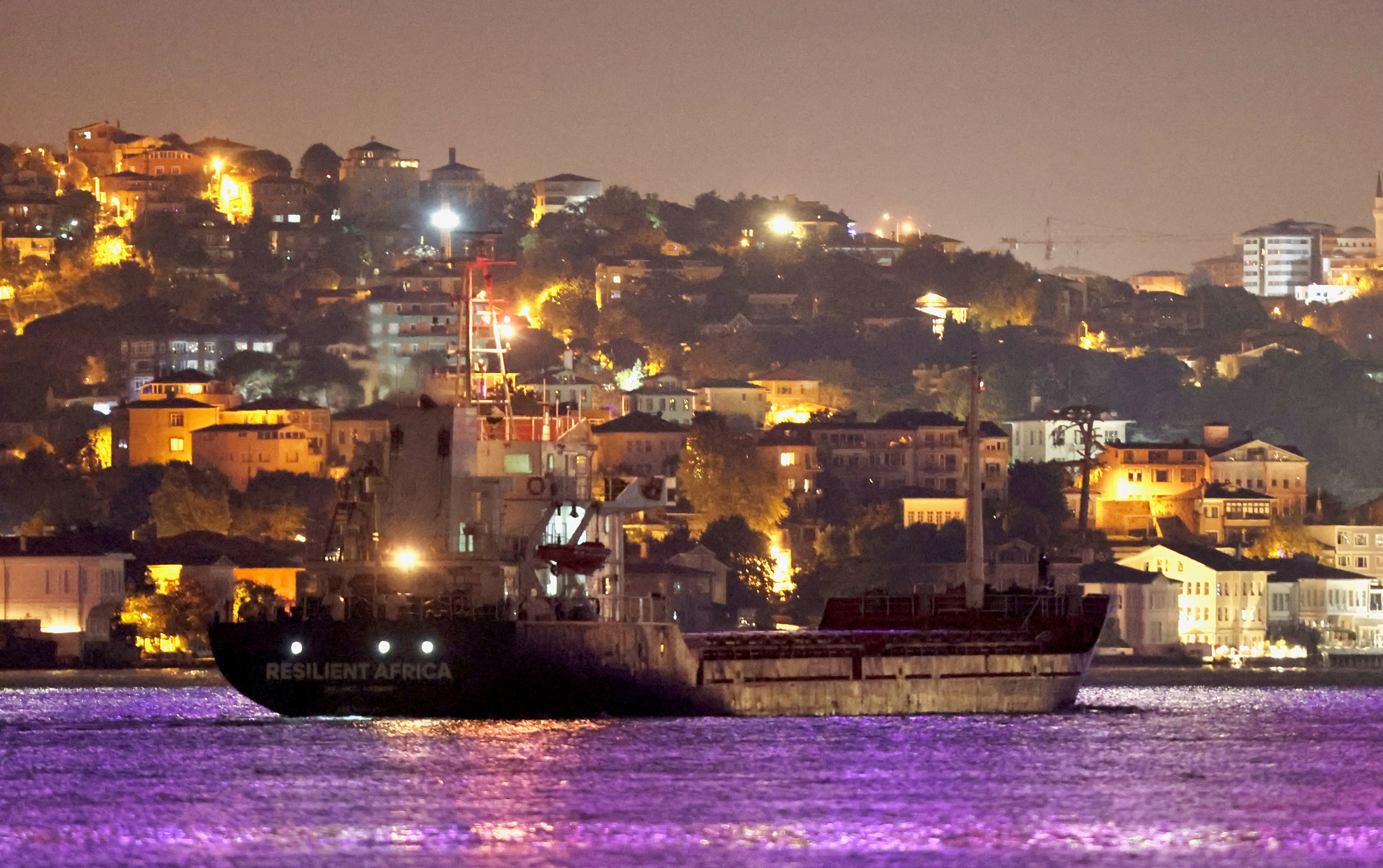
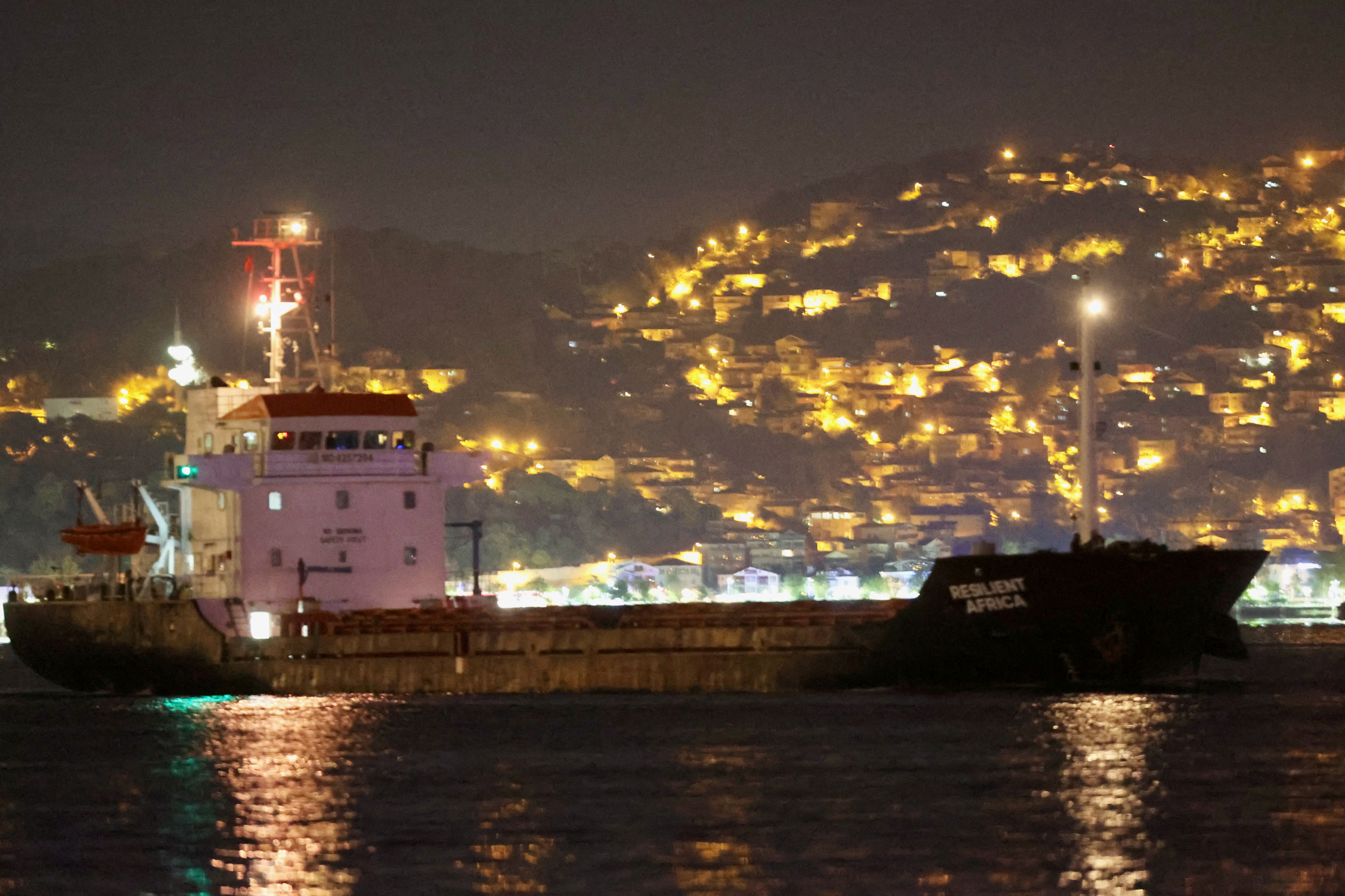
It was the second of two bulk carriers to leave the port this week using what Kyiv calls a new temporary humanitarian corridor. The first, the much smaller Resilient Africa, left on Tuesday, testing the route with a cargo of just 3,000 tons.

After invading Ukraine last year, Moscow closed off the Black Sea ports from one of the world’s biggest suppliers of grain, in what Kyiv and its Western backers called an attempt to use global food supplies as blackmail. Moscow said the ports could bring in weapons.

From July 2022 the ports were reopened under the UN-backed grain deal, allowing Russia to inspect ships for arms. But Moscow quit a year later and reimposed the blockade, saying its demands for better terms for its own food and fertiliser exports were being ignored.

Ukraine last month announced a “humanitarian corridor” in the Black Sea, initially using it to release ships that do not carry grain and were not covered by the grain deal, which had been trapped in its ports for more than a year.

Five vessels have left so far using the corridor, which hugs the Romanian and Bulgarian coasts.

Kyiv has also kept up exports from river ports on the Danube while its Black Sea ports were shut. Russia has launched frequent drone and missile attacks on Ukrainian grain export infrastructure in what Ukraine and its allies call attacks with no military justification. Moscow says it hits military targets.

Odesa’s three seaports, including Chornomorsk, shipped tens of millions of tons of grain during Russia’s invasion under the U.N.-brokered deal before Russia abandoned it.

Related Galleries:

Palau-flagged bulk carrier Aroyat is pictured at sea, in this picture obtained from social media and released on September 22, 2023. Oleksandr Kubrakov via X/via REUTERS

Palau-flagged bulk carrier Aroyat loaded with grain, leaves the sea port of Chornomorsk, amid Russia’s attack on Ukraine, near Odesa, Ukraine September 22, 2023. REUTERS/Stringer

Palau-flagged cargo ship Resilient Africa, carrying Ukraine grain, transits Bosphorus in Istanbul, Turkey September 22, 2023. REUTERS/Yoruk Isik

Palau-flagged cargo ship Resilient Africa, carrying Ukraine grain, transits Bosphorus in Istanbul, Turkey September 22, 2023. REUTERS/Yoruk Isik

The post First big grain ship leaves Ukraine“s Black Sea port first appeared on The News And Times – thenewsandtimes.com.


Categories
The News And Times – thenewsandtimes.com

AstraZeneca and Daiichi“s breast cancer drug meets goal in study


2023-09-22T07:47:35Z

FILE PHOTO-Test tubes are seen in front of a displayed AstraZeneca logo in this illustration taken, May 21, 2021. REUTERS/Dado Ruvic/Illustration/File Photo

AstraZeneca (AZN.L) said on Friday its experimental precision drug had slowed the progression of breast cancer in a late-stage trial, a boost for the company after its shares fell in July on results from a separate trial of the same drug for lung cancer.

The drug, datopotamab deruxtecan, which AstraZeneca is jointly developing with Japan’s Daiichi Sankyo (4568.T), is being closely watched by analysts and investors in part due to the promise of the class of drugs to which it belongs, known as antibody drug conjugates (ADC).

ADCs consist of tumour-seeking monoclonal antibodies that are combined with a cell-killing chemotherapy payload.

The trial data released on Friday showed the drug, abbreviated as Dato-DXd, demonstrated a statistically significant and clinically meaningful improvement in slowing the progression of breast cancer in trial participants, compared to patients who received other treatments such as chemotherapy.

The British drugmaker also said that there was a “trend in improvement” in the other main goal of the study, “overall survival” of patients, but the data on that was not mature so the trial would continue as planned.

AstraZeneca shares rose 1.7% in early trading, to their highest level in more than five weeks.

AstraZeneca is simultaneously developing the drug for use in lung cancer, and while data from a separate late-stage trial released in July was positive, the market was concerned that the drug’s benefits for use in lung cancer treatment might not as pronounced as hoped, leading shares to fall more than 6% on the day the data was released.

The company has not said when it will release detailed data from the lung cancer study.

Analysts see the positive results from the breast cancer trial as good for AstraZeneca, but the market is more focused on the results of a trial called MARIPOSA by Johnson & Johnson. It compares AstraZeneca’s blockbuster cancer drug Tagrisso alone with its own drug, Rybrevant, in combination with another medicine.

Those results are expected later this year.

The post AstraZeneca and Daiichi“s breast cancer drug meets goal in study first appeared on The News And Times – thenewsandtimes.com.