
The health department said it has been more than two weeks since a new case was reported.
 The Ocean Avenue News - oceanavenuenews.com
New York officials sued prediction market platform Kalshi on Friday, calling it an “illegal, unlicensed gambling operation” as the state seeks to halt its operations and force the company to forfeit its profits. New York joins a growing number of states filing lawsuits against Kalshi and other companies in a dispute with President Donald Trump’s […]
The post New York sues prediction market platform Kalshi alleging ‘illegal gambling operation’ appeared first on Brooklyn Eagle.
For many interns, Camp Quiñones represents not only a professional stepping stone but also a team to take that step alongside.
The post ‘Camp Quiñones:’ A summer of learning, service and community appeared first on Brooklyn Eagle.
GOV. KATHY HOCHUL and AG Letitia James on Friday announced that New York has sued Kalshi for allegedly running an illegal gambling operation.
The post James, Hochul announce Kalshi suit over sports betting appeared first on Brooklyn Eagle.
Inside a sprawling Brooklyn Navy Yard warehouse, volunteers sort fresh milk, produce and frozen chicken destined for families across the borough. The operation is the next chapter for Community Help in Park Slope, better known as CHiPS, a longtime Brooklyn nonprofit expanding its footprint for the first time in 55 years as food insecurity continues to climb across New York City.
To meet growing demand, CHiPS — a food pantry, community meal and transitional housing provider on Fourth Avenue between Park Slope and Gowanus — recently moved its pantry program from its longtime headquarters to an approximately 4,000-square-foot warehouse in the Navy Yard, marking the organization’s first physical expansion since its founding in 1971.
The move comes as more New Yorkers are turning to food pantries to meet basic needs amid persistent inflation — food prices in the United States have increased 33% over the past seven years — and cuts and rule changes to the Supplemental Nutrition Assistance Program (SNAP) under President Trump’s “One Big Beautiful Act,” signed into law on July 4, 2025.
According to City Harvest, 1 in 4 New York City children are experiencing food insecurity, an increase of 50,000 children compared to the previous year. One in 5 New Yorkers, or nearly 1.6 million people, are experiencing food insecurity, up from 1 in 6 a year ago and 1 in 8 in 2019. Forty-six percent of working-age New York City households are struggling to make ends meet, and 67% of food pantry visitors are employed. Average monthly visits to food pantries and soup kitchens are up 84% since 2019. In 2025, city soup kitchens and food pantries recorded 3.3 million more visits than at the peak of the COVID-19 pandemic, bringing the total to 47 million visits.
In addition to its six-days-a-week community meals program at its headquarters, where it serves around 600 to-go meals daily, CHiPS runs its food pantry two days a week and operates six mobile pantry locations throughout Brooklyn. In 2022, the organization distributed just over 50,000 meals and 5,600 pantry bags and logged 5,800 volunteer hours. Last year, it distributed 207,000 meals and 34,000 pantry bags, with more than 46,000 volunteer hours — representing a 400% increase in meals, a 600% increase in pantry services and a 700% increase in volunteer hours.
Thanks to the expansion, CHiPS expects to broaden its outreach into new parts of Brooklyn and more than double its pantry operation from approximately 700 households per week to more than 1,500 within the coming year, ensuring that thousands of Brooklyn families continue to have access to nutritious food and supportive services during a time of increasing need.


Peter Endriss, executive director of CHiPS, told Brooklyn Paper during a recent tour of the Brooklyn Navy Yard facility that the larger footprint allows the organization to receive multiple pallets of groceries at a time. Previously, it could accept only one pallet, which had to be broken down on the sidewalk before volunteers and staff hauled the products down basement stairs.
“[The expansion] has greatly improved efficiency and allowed us to receive larger in-kind donations. For example, we used to get one to two pallets from City Harvest. Now we get six to eight,” Endriss said.
He noted that food insecurity is no longer confined to lower-income households and appears to be affecting middle-income families as well because of New York City’s high cost of living and rising grocery prices.
He also said CHiPS has received numerous requests for food pantry services from public schools and community partners such as Callen-Lorde Brooklyn, where employees started an employee-run pantry program for patients.
“The pantry program in particular is the one where we keep seeing more need,” Endriss said. “We’re getting more calls from public schools that have started their own little makeshift food pantries.”
After the Trump administration cut federal food assistance programs, including the Emergency Food Assistance Program (TEFAP) and Local Food Purchase Assistance Cooperative Agreement Program — which support food banks and other feeding organizations — as well as SNAP funding, individual and foundation support has increased, Endriss said.
“I think it’s kind of how the public feels that they can help in an otherwise helpless situation,” Endriss said. “For me personally, also, this whole shift of responsibility from government to nonprofit — which is kind of, when you step back, what we’ve seen — has deepened our obligation to the people we serve. Now we are the providers, and with the increased support that we’ve received, we’ve increased what we’re serving and the quality of what we’re serving.”
The expansion will free up about 700 square feet at the organization’s Fourth Avenue location and more than double the net square footage available for food service programming, leading to a more streamlined guest experience, a more organized volunteer experience and a more open, accessible food service area.
“We just created a new chef position at Chips, which will increase our food services. We started quarterly dinners in collaboration with a Brooklyn Winery; they come in and do a dinner service, which is something we’ve never done at Chips,” Endriss explained. “So we’re trying to address the increased need on that front too, as well as provide more options, better food, maybe hot breakfast a few times a week instead of just a cold breakfast. So, just across the board, I think we feel an increased responsibility to the people we serve.”
Yet despite the food insecurity crisis, there is a silver lining: the community continues to rally around its neighbors.
“The flip side to all of the depressing stuff that’s happening is the outpouring of support that we’ve seen, both in people reaching out and people showing up; it’s been a real gift,” Endriss said. “When you read the news, and then you go to work and get to see 60 people who show up to help, those stories restore your faith in humanity a little bit.”


James Gordon, pantry van manager at CHiPS, and Quincy Powers, director of pantry services, told Brooklyn Paper that the 4,000-square-foot facility is a “big step” up, providing ample space for five industrial-sized refrigerators and two freezers to store fresh groceries such as protein, eggs and milk, in addition to staples including fresh produce, canned goods, rice and pasta.
“We’ve expanded not just the number of pantries that we can do, but also what we’re giving to each site, and that’s really only possible because of this expansion of space,” Gordon said. “It’s not just the SNAP cuts. It’s also the war, gas prices, [and] food prices in general. I think people are really struggling right now and are turning to the pantry as a resource.”
He said the organization has noticed increased need over the past month or two.
Gordon also gave a shoutout to CHiPS’ volunteers.
“Each of our distributions is impossible without volunteers, and we rely very heavily on them,” Gordon said.
With the expansion and growing need, more volunteers are always welcome, and interested New Yorkers can sign up through the CHiPS website.


Volunteers and CHiPS staffer Hansel Toussaint were busy preparing for a food distribution at P.S. 124 in Sunset Park that included onions, potatoes, milk, carrots, cabbage, sweet potatoes, zucchini, cornbread, pineapple and frozen chicken legs.
Toussaint meticulously inspected cabbage and corn on the cob, removing the outer layers to ensure the produce was fresh and in good condition.
“We open the boxes [and] make sure that everything is in perfect condition before it actually goes out to the customers,” Toussaint said, noting that vegetable scraps are composted by Brooklyn Grange Farm, which operates a soil-based farm on the roof of the same building.

Powers said one of the organization’s goals is to provide each household with about $100 worth of groceries every week while diversifying offerings and prioritizing fresh products. CHiPS also focuses on sourcing New York state products, including eggs and milk, through Five Acre Farms, a network of sustainable local farmers.
“We’ve been sourcing about two pallets of fresh half-gallon milk a week to start with at every distribution. We’re already seeing a response in our numbers,” Powers said. “We’re having more attendance at each site, so it feels like it’s kind of the balance between being grateful that you’re in a position to offer a service that is valuable to people, but also realizing that so many people are in need.”





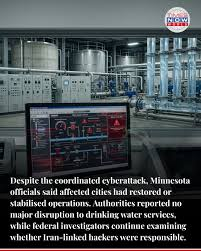


![#Minnesota #Water #Cybersecurity Minnesota water system threat and the state of cybersecurity A highly coordinated cyberattack targeted more than 30 municipal water and wastewater systems across Minnesota. This event has triggered a widespread multi-agency response and a critical national security warning. While drinking water safety remains uncompromised, this incident shines a harsh spotlight on the severe vulnerabilities of America's decentralized water sector. [1, 2, 3, 4, 5] The Minnesota Water System Threat On July 26 and 27, 2026, malicious actors infiltrated the operational technology (OT) systems of over 30 Minnesota communities. [1, 6]](https://pbs.twimg.com/media/HOjvXfsWYAA2Xqp.jpg)







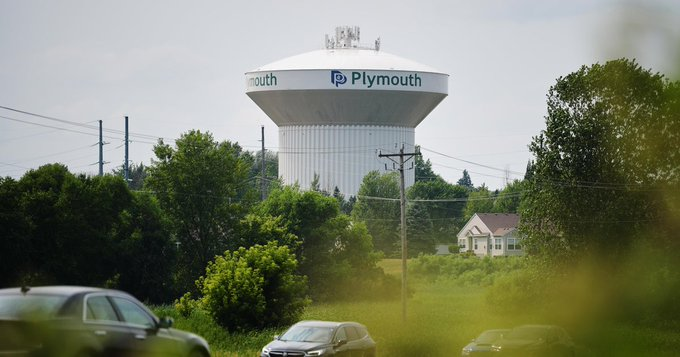
![Malicious #Cyber Actors Targeting #Water and Wastewater Sector Internet- Facing Programmable Logic Controllers, Causing Operational Disruptions Malicious cyber actors are actively targeting U.S. water and wastewater systems Yes, the FBI, EPA, and CISA have issued urgent warnings following a massive surge in cyberattacks targeting U.S. water and wastewater systems. [1, 2, 3] A coordinated cyberattack hit more than 30 community water systems in Minnesota, prompti](https://pbs.twimg.com/media/HOjLTUNXgAAwobv.png)


