
Something went wrong. Wait a moment and try again.
The post Is the Wagner Group in Karabakh? first appeared on The News And Times – thenewsandtimes.com.
 The Ocean Avenue News - oceanavenuenews.com
Something went wrong. Wait a moment and try again.
The post Is the Wagner Group in Karabakh? first appeared on The News And Times – thenewsandtimes.com.

Welcome back to World Brief, where we’re looking at political infighting following the Wagner Group revolt, a deadly missile strike in Ukraine, and the French president’s rare rebuke of racist policing.
Welcome back to World Brief, where we’re looking at political infighting following the Wagner Group revolt, a deadly missile strike in Ukraine, and the French president’s rare rebuke of racist policing.
Wagner Revolt Triggers Infighting
Russia’s paramilitary Wagner Group faces an uncertain future after Saturday’s failed insurrection and the expulsion of the mercenary organization’s top leader, Yevgeny Prigozhin, to Belarus on Tuesday. But one thing is clear: To the outside world, Russian President Vladimir Putin’s grip on power has started to look unsteady.
According to U.S. officials, a senior Russian military leader had advance knowledge of Prigozhin’s rebellion against Putin. Gen. Sergey Surovikin, a former top Russian commander in Ukraine, helped Prigozhin plan last weekend’s siege of Rostov-on-Don and march toward Moscow. Surovikin was replaced in January but maintained influence over Russia’s war operations. Kremlin spokesperson Dmitry Peskov denied the allegations on Wednesday, saying unity remains strong within Russia’s military.
If Surovikin or any other Russian commanders assisted Prigozhin, then Putin could face a bigger split within his ranks than previously thought—especially after Prigozhin called for the resignations of Russian Defense Minister Sergei Shoigu and Chief of General Staff Valery Gerasimov. In this way, Putin’s very authority and grip on power could be threatened.
Despite increasing concerns over political infighting, the Kremlin dropped criminal charges against Prigozhin for “armed mutiny” on Tuesday, just as the Wagner leader arrived in Belarus, where he will remain in exile. According to Belarusian President Aleksandr Lukashenko, Putin suggested executing Prigozhin but was convinced not to during negotiations in which Lukashenko told the Russian leader that “a bad peace is better than any war.”
Meanwhile, Wagner may face consequences beyond Russia. On Tuesday, the U.S. Treasury sanctioned four companies and one individual connected to the organization’s work in Africa. The four corporations—Midas Ressources, Diamville, Industrial Resources General Trading, and Limited Liability Company—all assist in funding the Wagner Group through Africa’s illegal gold and diamond mining trades. Andrey Nikolayevich Ivanov, Wagner’s facilitator in Mali, was also sanctioned.
“The sanctions showcase how Washington is aiming to cripple the Wagner Group’s international operations beyond the war in Ukraine, even as Moscow may cripple Wagner’s operations closer to home,” FP’s Robbie Gramer reported.
This ruling came the same day that numerous U.S. federal agencies issued warnings of terrorism, money laundering, human rights abuses, and environmental degradation related to sub-Saharan Africa’s illegal gold trade. As of February, Wagner had generated more than $250 million from natural resources in Africa and the Middle East in exchange for security services.
Deadly missile strike in Ukraine. On Wednesday, Ukrainian authorities arrested an individual suspected of assisting Russia in directing a missile strike at a pizza restaurant in Kramatorsk, Ukraine. The Tuesday attack killed at least 11 people, including three minors, and wounded 61 others. Multistory buildings, homes, schools, and various other structures were also damaged in the assault.
Initial reports said the attack was conducted with S-300 missiles, a long-range surface-to-air missile system that has a poor track record of target accuracy. However, Ukrainian officials said Russian troops used Iskander ballistic missiles, which have high accuracy and are primarily used against military targets such as command centers. Kramatorsk is a front-line city that houses the Ukrainian army’s regional headquarters, suggesting it may have been deliberately targeted.
France protests racism in policing. On Wednesday, French President Emmanuel Macron condemned the killing of a 17-year-old by police—a rare rebuke of law enforcement in a country with a history of discriminatory policies. The teenager, who was of North African descent, was shot and killed on Monday while stopped at a traffic light near Paris. One of the police officers accused of shooting the boy is now under investigation for voluntary homicide. “It is unexplainable and inexcusable,” Macron said. “Nothing justifies the death of a young man.”
Protests erupted across France on Tuesday night following the teenager’s killing, where individuals launched fireworks and set cars on fire. Around 1,200 police officers were deployed during the demonstrations, resulting in 31 arrests. According to French Interior Minister Gérald Darmanin, 2,000 more police officers will be deployed Wednesday night after 24 officers were injured during the protests.
Flare-up over Nagorno-Karabakh. Violence escalated this week over the disputed Nagorno-Karabakh region: Four Armenian soldiers were killed on Wednesday by an Azerbaijani artillery and drone attack. The deaths came 24 hours after Azerbaijan’s defense ministry alleged one of its soldiers was shot by Armenian troops.
Armenian Foreign Minister Ararat Mirzoyan met with U.S. Secretary of State Antony Blinken on Tuesday in Washington to discuss mediating the yearslong conflict; both Armenia and Azerbaijan claim Nagorno-Karabakh as their own territory. However, regional security and stability remain out of reach.
Next time someone tells you they’re not getting any younger, remember that in some parts of the world, it’s possible. South Koreans wound back their age clocks by one or two years on Wednesday after a new law went into effect that requires citizens to follow the international method of counting age. Until Wednesday, South Koreans were born 1 year old, and every Jan. 1, they added a year. Talk about turning back time.
The post Russian Infighting Raises Questions About Wagner Group’s Future first appeared on The News And Times – thenewsandtimes.com.
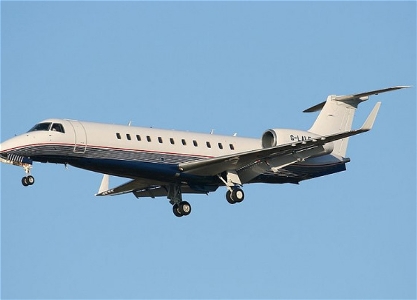
Why did the second plane of Wagner Group leader Yevgeny Prigozhin head for Azerbaijani capital Baku, ask Azerbaijani media.
One of Prigozhin’s Embraer ERJ-135bj Legacy 650 planes went to Baku on Thursday. This is evidenced by flight tracking service Flightradar, according to which, this plane left Moscow at 3:30pm and landed in Baku at 7:04pm.
Russian sources claim that this is one of the two planes that belonged to Yevgeny Prigozhin, who died in a plane crash on Wednesday.
After Prigozhin’s plane crashed, the second plane returned to Moscow, but then left for Baku the next day.
There is no information about the passengers of this plane that went to the Azerbaijani capital, the media report.
The post Why Wagner Group leader Prigozhin’s 2nd plane head for Azerbaijan capital Baku? first appeared on The News And Times – thenewsandtimes.com.
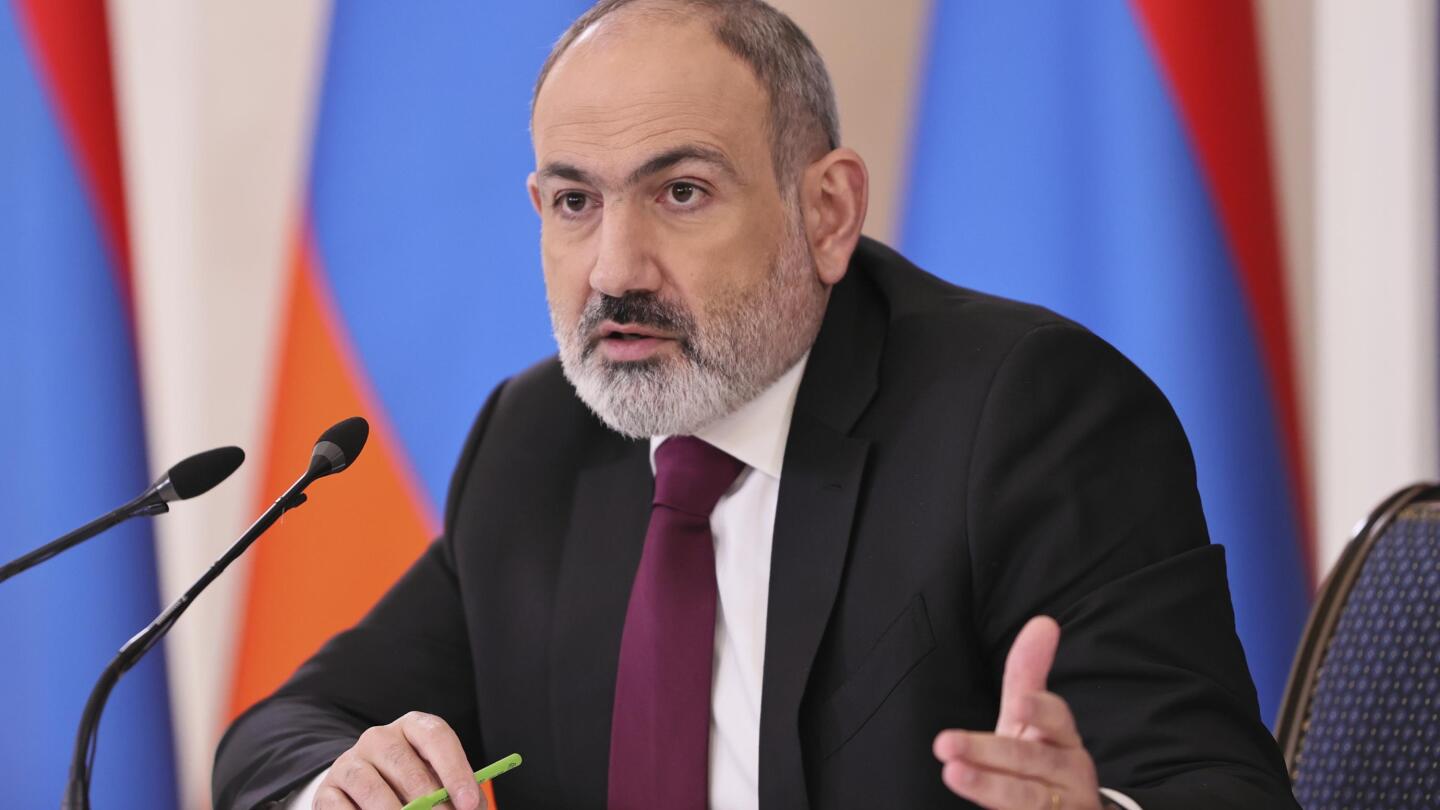
YEREVAN, Armenia (AP) — The prime minister of Armenia said Tuesday that his country has refused to host military drills planned by a Russia-dominated security pact, an announcement that reflected the Armenian government’s growing tensions with Moscow.
Nikol Pashinyan has repeatedly criticized Russian peacekeepers for failure to secure free transit along a corridor linking Armenia and the separatist region of Nagorno-Karabakh that Azerbaijani activists have blocked since last month.
Speaking at a news conference Tuesday, Pashinyan said that Armenia considers the military exercise the Moscow-dominated Collective Security Treaty Organization planned for later this year “inappropriate in the current situation.”
“At least this year, these drills won’t take place,” he said.
Pashinyan’s move followed his refusal in the fall to sign a conclusive document from a meeting of the leaders of CSTO member nations in Yerevan, Armenia’s capital.
Nagorno-Karabakh lies within Azerbaijan but has been under the control of ethnic Armenian forces backed by Yerevan since a separatist war there ended in 1994. That conflict left not only Nagorno-Karabakh itself but large chunks of surrounding lands in Armenian hands.
In 44 days of heavy fighting that began in September 2020, the Azerbaijani military routed Armenian forces, forcing Yerevan to accept a Russia-brokered peace deal that saw the return to Azerbaijan of a significant part of Nagorno-Karabakh. The agreement also required Armenia to hand over swaths of land it held outside the separatist region.
Lachin province, which lies between Nagorno-Karabakh and Armenia, was the last of the three areas on the rim of Nagorno-Karabakh that Armenian forces surrendered in December 2020. Russia deployed nearly 2,000 peacekeepers for at least five years to ensure safe transit across the region, to monitor the peace deal and to help refugees return.
But travel across the Lachin corridor has been blocked since Dec. 12 by Azerbaijani activists, who demanded access to what Azerbaijan has described as unlawful mining sites in Nagorno-Karabakh. Armenian authorities have described the blockade as part of efforts by Azerbaijan to extend its control over the region and urged the Russian peacekeepers to unblock the road.
The Azerbaijani move has left Russia in a precarious position. Armenia hosts a Russian military base, and Moscow has been the country’s top ally and sponsor. But the Kremlin also has sought to maintain warm ties with oil-rich Azerbaijan. Western sanctions over the Russian invasion of Ukraine have made Russia increasingly dependent on Azerbaijan’s main ally, Turkey.
With its attention focused on the fighting in Ukraine, Russia has taken a wait-and-see attitude on the Lachin corridor blockade, angering Armenia.
“Russia’s military presence in Armenia not only fails to guarantee its security, but it raises security threats for Armenia,” Pashinyan said Tuesday.
He noted that the blockade of the Lachin corridor is intended to “break the will of the people of Nagorno-Karabakh,” adding that Armenia will also seek support from the U.S. and the European Union to help ease the tensions with Azerbaijan.
After the Russian peacekeepers’ five-year mandate is over, Armenia could invite U.N. peacekeepers to come in “if Russia fails to fulfill its function to ensure security for the population of Nagorno-Karabakh,” Pashinyan said.
The Russia-brokered 2020 peace deal also called for the creation of a transportation link between Azerbaijani and its Nakchivan exclave via Armenian territory. Azerbaijani President Ilham Aliyev accused Armenia on Tuesday of reneging on its promise to provide such a transit corridor.
“Whether Armenia wants it or not, it will be implemented,” Aliyev said in televised remarks, describing the corridor to Nakchivan as Azerbaijan’s “natural right.” He added, though, that Azerbaijan has no plans to wage another war against Armenia.
Asked to comment on Armenia’s decision to cancel the planned military drills, Kremlin spokesman Dmitry Peskov said Moscow would ask Yerevan to clarify its position. “In any case, Armenia is our close ally, and we will continue our dialogue, including the most complex issues,” he told reporters.
Peskov previously rejected a claim by the secretary of Armenia’s Security Council that Moscow had pressured Armenia to join a union of Russia and Belarus.
Commenting on the claim Tuesday, Pashinyan said that Moscow had not made any official request to that effect but noted that “the reality isn’t as simple as it seems.” He added: “Sometimes, it’s not the text but the subtext that needs to be considered.”
“Armenia’s sovereignty is an absolute value,” the prime minister said.
The post Armenia cancels military drills, widening rift with Moscow first appeared on The News And Times – thenewsandtimes.com.

The Armenian telegram channel Bagramyan 26, considered close to Pashinyan, reported on September 8 that Russia was preparing a coup in Armenia with the help of members of the mercenaries from the private military company Wagner.
We publish this material with some abbreviations:
At the time of Prigozhin’s death, there were about 3,000 fighters of the Wagner PPK in Armenia. Recently (mostly from Rostov) they have been joined by about 2,000 contract soldiers (mostly ethnic Armenians). Considering Pashinyan’s recent statements about the mistake of choosing Russia as a strategic partner and accusing the Russian leadership of non-compliance with agreements on the Karabakh issue, the Kremlin has authorized the scenario of a coup d’etat in Armenia.
The goal of this plan is to remove Pashinyan and his team from power using the Wagner militants present in the country. The “last straw” for Putin was the joint Armenian-American military exercises. Currently, the number of Wagnerians in Armenia has increased to 12 thousand. The command to act was “for the day before yesterday.” The Russians’ main bet is on the top management of the military, intelligence services, and police, where there are plenty of Russian agents. In the middle and lower levels, support from Russians is much less. Russia does not have worthy candidates to replace Pashinyan (both Kocharyan and Sargsyan are popping up there…) and is going all-in.
The likelihood of success is extremely low, given the presence of numerous military formations in and around Yerevan. However, the emphasis is on destabilization on the contact line of Nagorno-Karabakh and on the Armenian-Azerbaijani border.
In continuation of the process, the cards of pro-Russian candidates for the mayor of Yerevan will be played (Tandilyan – Ruben Vardanyan’s candidate, Marutyan – Patrushev’s candidate, Tevanyan – Kocharyan’s candidate). -0-
The post Is Russia preparing a coup in Armenia? first appeared on The News And Times – thenewsandtimes.com.
The post VOA Newscasts first appeared on The News And Times – thenewsandtimes.com.
The update, posted on X, formerly known as Twitter, also indicated that it is “highly likely” Russia has taken forces from other areas of the front line “to replace degraded units” near Robotyne. The redeployments, the ministry said, are “likely limiting” Russia’s capacity for executing offensive operations in other frontline areas and are “highly likely” indicative of pressure on Russia’s defensive lines, especially around Robotyne.
U.N. Secretary-General Antonio Guterres told Russian Foreign Minister Sergey Lavrov in a letter last month that Russia would be eligible to apply for membership and access to the SWIFT banking system for food and fertilizer transactions.
The Russian Agricultural Bank subsidiary in Luxembourg could immediately apply to SWIFT to “effectively enable access” for the bank to the international payments system within 30 days, the United Nations told Russia in a letter, seen by Reuters on Friday.
In an effort to persuade Moscow to return to the U.N.-brokered Black Sea Grain Initiative that had allowed the safe export through the Black Sea of Ukrainian grain, Guterres outlined four measures the United Nations could facilitate to improve Russia’s grain and fertilizer exports.
Guteres told Lavrov the U.N. was immediately ready to move on all measures “based on the clear understanding that their application would lead to the Russian Federation’s return to the Black Sea Initiative and the full resumption of operations.”
A key Russian demand has been the reconnection of the Russian Agricultural Bank, Rosselkhozbank, to the SWIFT system. It was cut off by the European Union in June of last year after Russia’s February invasion of Ukraine.
The Russian Foreign Ministry expressed skepticism in a statement Wednesday at the U.N. chief’s proposals.
“Instead of actual exemptions from sanctions, all Russia got was a new dose of promises from the U.N. Secretariat,” it said. “These recent proposals do not contain any new elements and cannot serve as a foundation for making any tangible progress in terms of bringing our agricultural exports back to normal.”
Russia exited the deal in July, a year after it was brokered by the U.N. and Turkey to combat a global food crisis the U.N. said was worsened by Russia’s invasion. Ukraine and Russia are both leading grain exporters.
In other developments, Ukrainian President Volodymyr Zelenskyy said Friday that Russian leader Vladimir Putin masterminded the death of Wagner mercenary boss Yevgeny Prigozhin, who died in an unexplained plane crash with his top lieutenants last month.
Zelenskyy did not provide evidence to back up the claim he made in passing during a conference in Kyiv when he was asked a question about the Russian president.
“The fact that he killed Prigozhin — at least that’s the information we all have, not any other kind — that also speaks to his rationality, and about the fact that he is weak,” Zelenskyy said.
The Kremlin says all possible causes of the crash will be investigated, including the possibility of foul play. It has called the suggestion that Putin ordered the deaths of Prigozhin and his men an “absolute lie.”
Prigozhin led a short-lived mutiny in Russia in June that Putin characterized as treasonous and a “stab in the back.”
The post Ukraine Making ‘Tactical Advances’ Against Russian Forces, UK Says first appeared on The News And Times – thenewsandtimes.com.

A resident of Nagorno-Karabakh filmed empty supermarket shelves as reports show it has become harder to access food, medicines and other essential supplies as an Azerbaijani blockade of the breakaway region drags into its ninth month.
Karabakh is internationally recognised as part of Azerbaijan but its population of 120,000 is overwhelmingly ethnic Armenian and the enclave’s one remaining land link to Armenia, the Lachin corridor policed by Russian peacekeepers, was first disrupted in December. In April, Azerbaijani border guards installed a checkpoint along the route, tightening the blockade
The post Nagorno-Karabakh conflict: supermarket shelves empty as food shortages hit – video first appeared on The News And Times – thenewsandtimes.com.
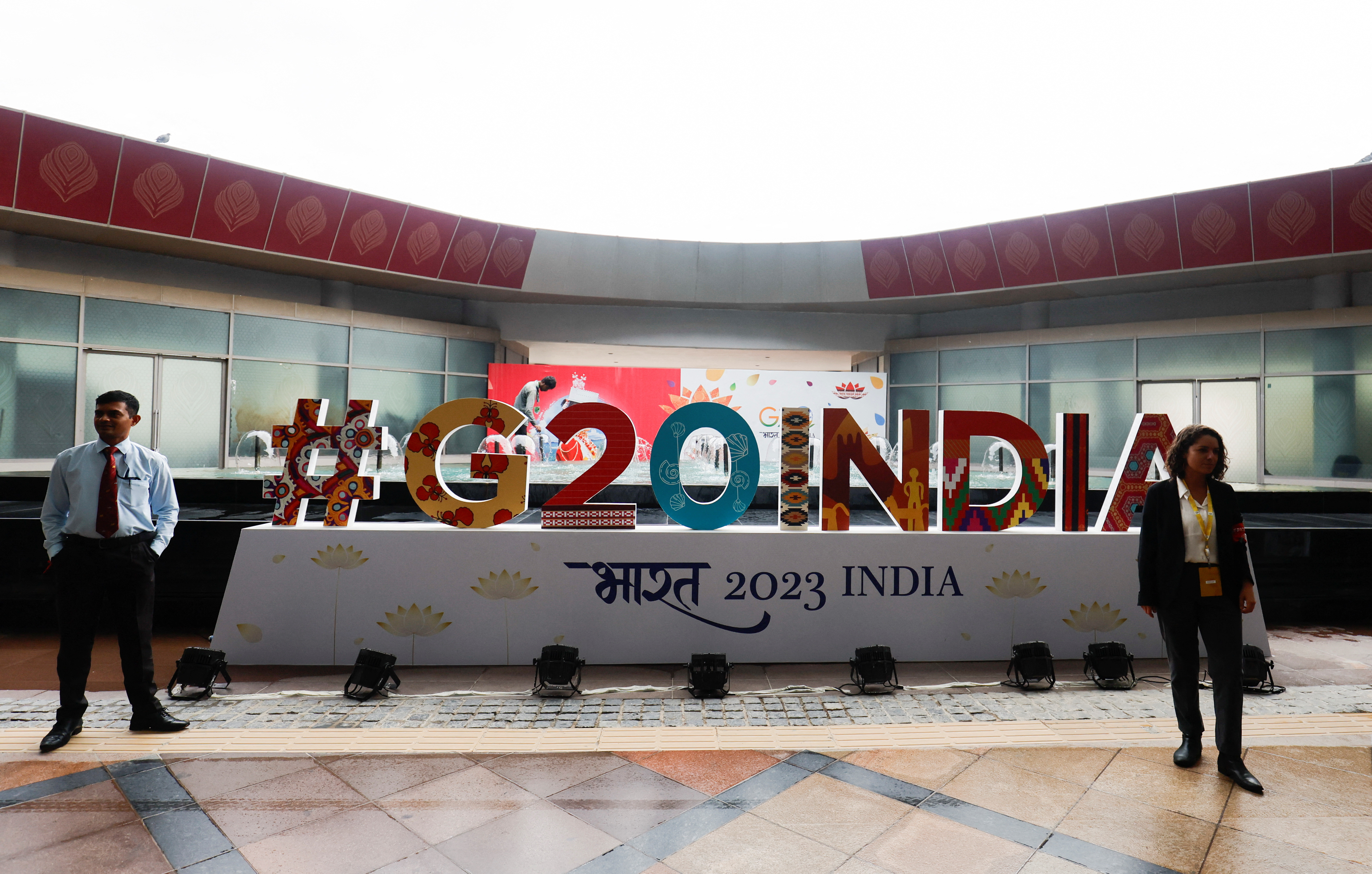
Delegates from the world’s most powerful countries have reached a compromise on language to describe the war in Ukraine, a source with knowledge of the discussions said, as their leaders began the annual G20 summit on Saturday in New Delhi.
Prime Minister Narendra Modi of host India inaugurated the meeting by calling on members to end a “global trust deficit” and announced that the bloc was granting permanent membership to the African Union in an effort to make it more representative.
“Today, as the president of G20, India calls upon the entire world to first convert this global trust deficit into one trust and one confidence,” he said. “It is time for all of us to move together.”
The group is deeply divided over the war in Ukraine, with Western nations pushing for strong condemnation of Russia while others are demanding a focus on broader economic issues.
The sherpas, or country representatives, have reached a compromise on the language to be used in the final communique, which will be presented to the leaders, the source with knowledge of the negotiations said.
No details were immediately available, but it could be similar to the language in the communique issued in Indonesia at the 2022 summit, which noted that while most nations condemned Russia for the invasion, there were also divergent views.
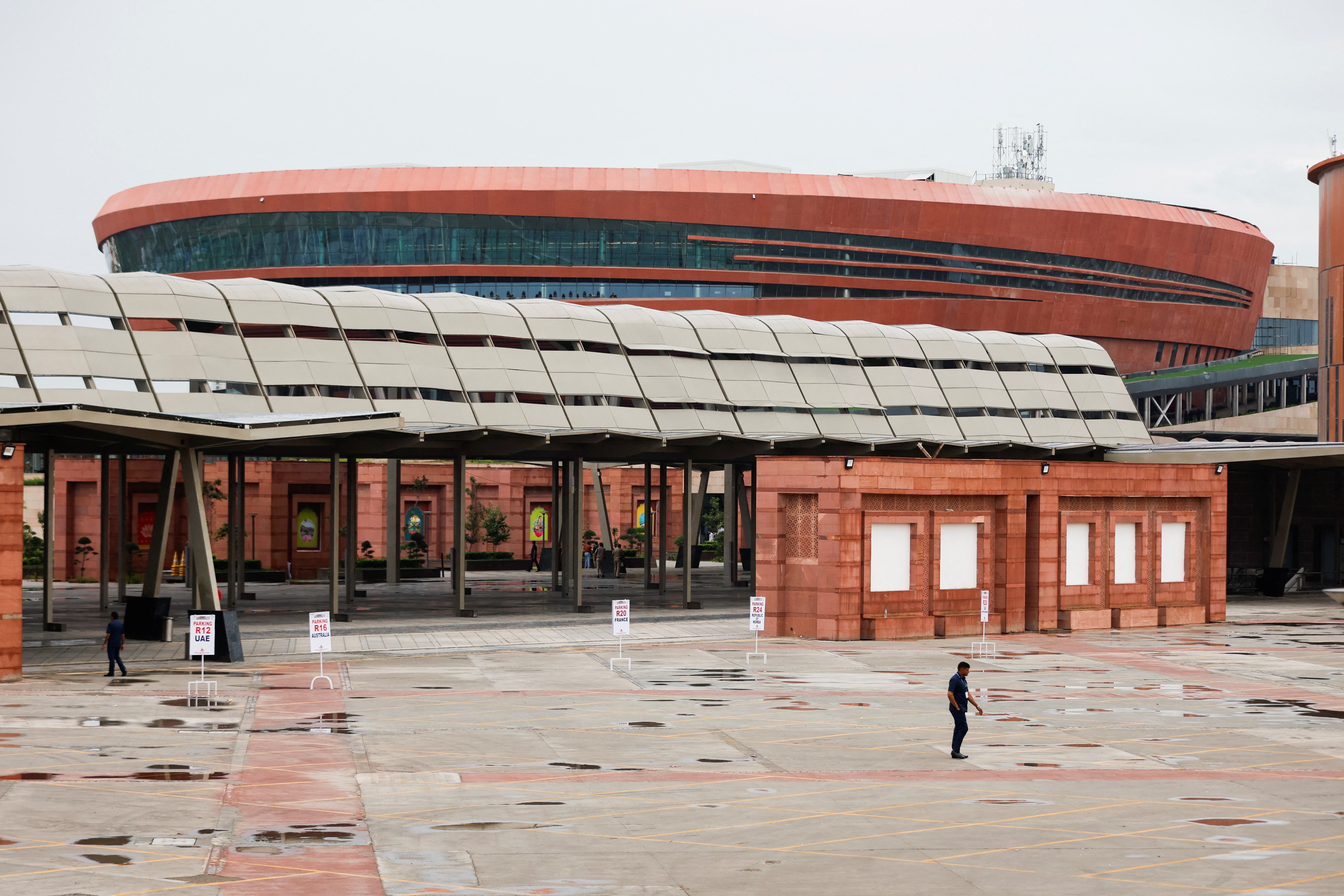
At the start of the day, U.S. President Joe Biden and other leaders of the Group of 20 were driven through deserted streets to a new, $300 million conch-shaped convention centre called Bharat Mandapam, opposite a 16th-century stone fort, for the two-day summit.
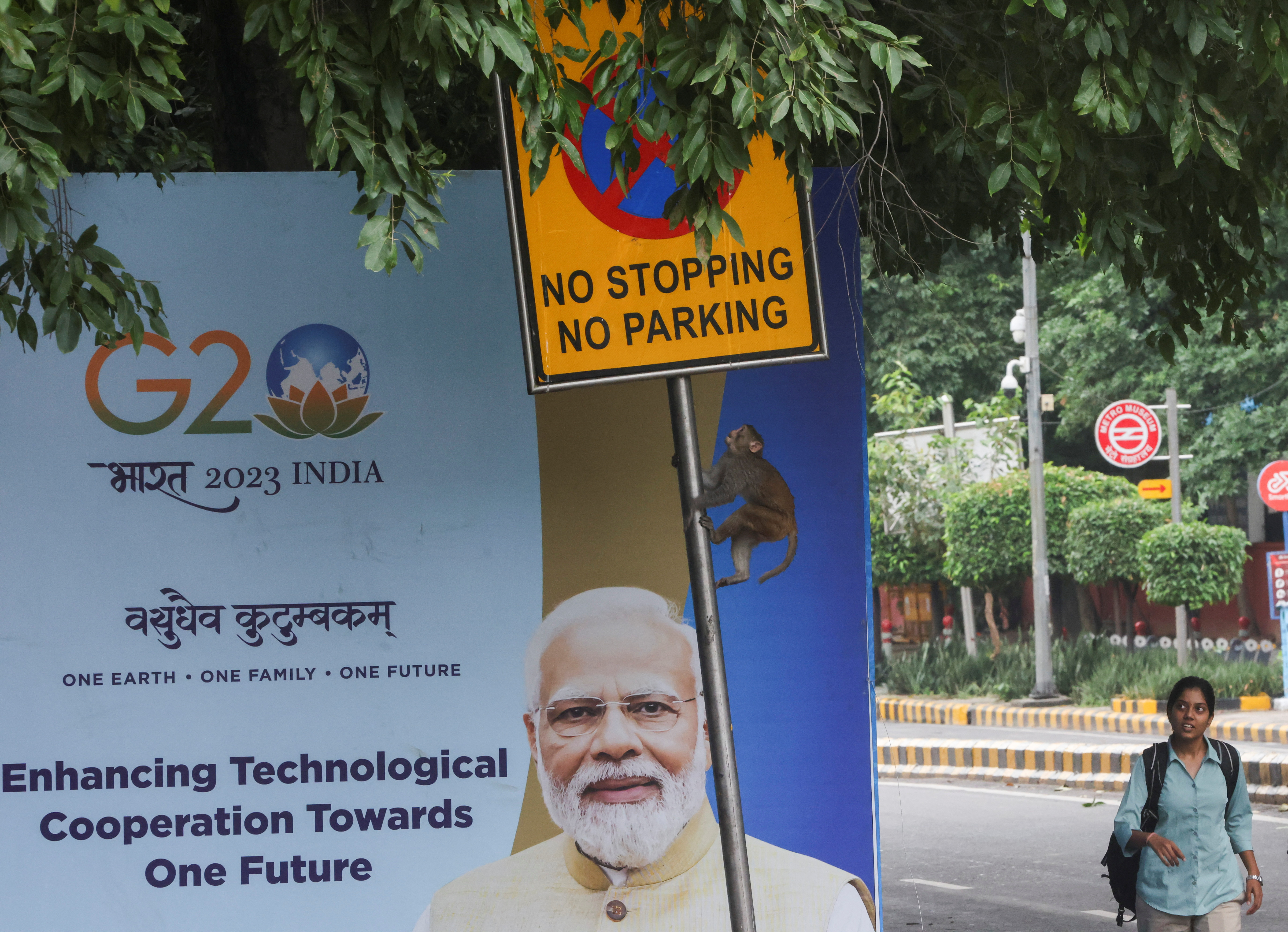
Many businesses, shops, offices and schools have been closed in the city of 20 million, and traffic restricted as part of security measures to ensure the smooth running of the most high-powered meeting to be hosted by the country. Slums have been demolished and monkeys and stray dogs removed from the streets.
According to an earlier draft of the summit declaration reviewed by Reuters, negotiators were unable to resolve disagreements over the wording on the war in Ukraine, leaving it to the leaders to reach a compromise if possible.
The 38-page draft that was circulated among members left the “geopolitical situation” paragraph blank, while it had agreed on 75 other paragraphs covering a range of issues.
Biden will press for a higher level of climate action from major countries at the summit, a White House official said, as concerns grow about lack of consensus on cutting emissions.
The G20 nations account for 80% of global emissions and their views are being keenly watched ahead of the COP 28 meeting in the United Arab Emirates.
Modi, in his opening remarks at the summit, invited the AU, represented by Chairperson Azali Assoumani, to take a seat at the table of G20 leaders as a permanent member.
The summit is expected to be dominated by the West and its allies. Chinese President Xi Jinping is skipping the meeting and has sent Premier Li Qiang instead, while Russia’s Vladimir Putin will also be absent.
Biden, German Chancellor Olaf Scholz, French President Emmanuel Macron, British Prime Minister Rishi Sunak, Saudi Arabia’s Mohammed Bin Salman and Japan’s Fumio Kishida, among others, are attending.
The summit had been seen as affording a venue for a possible meeting between Xi and Biden following months of efforts by the two world powers to mend ties frayed by trade and geopolitical tensions.
“It’s incumbent upon the Chinese government to explain” why its leader “would or would not participate”, Jon Finer, the U.S. deputy national security adviser, told reporters in Delhi.
He said there was speculation that China is “giving up on G20” in favour of groupings like BRICS, where it is dominant.
BRICS includes Brazil, Russia, India, China and South Africa, and has agreed to add another six new members – Saudi Arabia, Iran, Ethiopia, Egypt, Argentina and the United Arab Emirates – in a move aimed at accelerating its push to reshuffle a world order it sees as outdated.
G20 sherpas, or country negotiators, have been struggling to agree on the language because of differences over the Ukraine war, hoping to get Russia on board to produce what is called the Leaders’ Declaration.
Russia is being represented by Foreign Minister Sergei Lavrov, and he has said he will block the final declaration unless it reflects Moscow’s position on Ukraine and other crises.
One source told Reuters a joint declaration may or may not come to a unanimous agreement. It could have different paragraphs stating the views of different countries. Or it could record agreement and dissent in one paragraph.
According to another senior source in one of the G20 countries, the paragraph on the war on Ukraine had been agreed by Western countries and sent to Russia for its views.
The official said Russia had the option to accept Western countries’ views and give its dissent as part of the statement.
In the absence of an agreement, India will have to issue a chair statement, which would mean that G20 for the first time in 20 years of summits will not have a declaration.
A Leaders’ Declaration “is by far the best way to record what has been agreed, so that countries can be held to account in the future by external parties, and so that government systems know what their leaders have signed up to and what they need to do internally”, said Creon Butler, director for the global economy and finance programme at London’s Chatham House.
The differing views on the war have prevented agreement on even a single communique at ministerial meetings during India’s G20 presidency so far this year.
The post G20 delegates reach compromise on declaration as leaders begin summit first appeared on The News And Times – thenewsandtimes.com.
The pact comes at a critical time as U.S. President Joe Biden seeks to counter China’s Belt and Road push on global infrastructure by pitching Washington as an alternative partner and investor for developing countries at the G20 grouping.
The deal will benefit low and middle-income countries in the region and enable a critical role for the Middle East in global commerce, Jon Finer, the U.S. deputy national security adviser, told reporters at the bloc’s annual summit in New Delhi.
It aims to link Middle East countries by railway and connect them to India by port, helping the flow of energy and trade from the Gulf to Europe, U.S. officials have said, by cutting shipping times, costs and fuel use.
A memorandum of understanding for the deal will be signed by the European Union, India, Saudi Arabia, the United Arab Emirates, the United States and other G20 partners, Finer said.
“Linking these key regions, we think, is a huge opportunity,” said Finer. No immediate details of the value of the deal were available.
The move comes amid U.S. efforts for a broader diplomatic deal in the Middle East that would have Saudi Arabia recognize Israel.
From the U.S. viewpoint, Finer added, the deal helps “turn the temperature down across the region” and “address a conflict where we see it.”
The post US, India, Saudi, EU to Unveil Rail, Ports Deal on G20 Sidelines, Official Says first appeared on The News And Times – thenewsandtimes.com.