
Categories
The News And Times – thenewsandtimes.com

Wagner’s North Caucasian mercenaries fail to wash away their sins with Ukrainian blood


225b3b3203f54c89241035c6a9d38a31_wagners

The demise of Wagner boss Yevgeniy Prigozhin and the diminishing role of mercenaries in Ukraine has done little to assuage fears inside the North Caucasus of the return of thousands of mercenaries formerly convicted of robbery, rape, and murder.

In April, a 38-year-old resident of Tskhinvali (Tskhinval), South Ossetia, was stabbed to death in the streets.

Soslan Valiyev, known locally as ‘Tsugri’, was known to have developmental disabilities and was generally loved by his community, with current President Alan Gagloyev and former president Eduard Kokoity condemning his murder and offering their condolences to his family.

His killer, Giorgey Siukayev, was arrested the following day. Siukayev had already served time for murder in 2014 after shooting dead a soldier in Donetsk. He had barely spent a few weeks in prison before he was set free, after agreeing to serve in Wagner, a Russian state-backed private military company founded by the late Yevgeniy Prigozhin.

He has since gone by the callsign ‘Arbalet’ and had been stationed in Ukrainian territories occupied by Russia, taking part in its full-scale invasion of Ukraine in 2022.

Siukayev was among thousands of Wagner mercenaries to be given freedom in exchange for fighting in Ukraine. Many mercenaries were convicted of murder, rape, and other grave crimes, stirring concerns about their return to civilian life once the fighting dies out or their contracts expire.

In January, Prigozhin announced that the ‘first wave’ of formerly convicted Wagner mercenaries had completed their military service. Shortly after, many of them were decorated by President Vladimir Putin.

Prigozhin claimed in February that his group had stopped recruiting prisoners and later announced that 32,000 former convicts had fulfilled their contractual obligations with Wagner in June.

In a separate interview with Konstantin Dolgov, a pro-Kremlin political strategist, Prigozhin claimed that a total of 50,000 convicts had joined Wagner’s ranks, about 20% of whom had died fighting in Ukraine. 

Before this year, Russia’s penitentiary service, the Interior Ministry, and the General Prosecutor’s Office regularly published statistics about crimes committed, including by former Wagner members. The end of this has forced journalists to find different sources or to rely on information issued by the few remaining non-profit organisations in Russia.

Wife killer, drug addict, war hero

In another high-profile case in the Caucasus, the Wagner recruited a former North Ossetian police officer, Vadim Tekhov, from a penal colony. He was sentenced to 16 years in prison for the brutal murder of his ex-wife, violating restraining orders, and taking part in a mass brawl with Ingush people in North Ossetia.

CCTV footage shows Tekhov stabbing his ex-wife, Regina Gagiyeva, 21 times. She succumbed to her wounds six days later, having not regained consciousness. 

Thousands of people have attended Regina Gagiyeva’s funeral procession.

Thousands of North Ossetians took part in her funeral procession as local feminist activists condemned the authorities for not guaranteeing her safety. Gagiyeva had reportedly sought protection from the police since November 2017, and Tekhov, who was wearing an electronic tracker when he attacked her, was supposed to be under house arrest.

Fighting in Ukraine did not appear to rehabilitate Tekhov; as soon as his contract with Wagner ended, he was caught trafficking drugs in Ukraine. He dodged a prison sentence again by striking up another deal with Prigozhin’s forces.

Once his second contract expired, Tekhov returned to his home in downtown Vladikavkaz, the capital of North Ossetia. His ex-wives’ relatives fear retribution against them for having pushed for his incarceration.

‘We can’t get an answer from the prison warden where Tekhov was held’, Roksana Gagiyeva, Regina’s sister, tells OC Media. ‘How was he released?’ 

‘He is a particularly dangerous criminal, a repeat offender’, she added. 

Tekhov’s reception in Vladikavkaz after his return from Ukraine indicates concerns people feel about Wagner’s recruitment and subsequent release of dangerous convicts back to their communities.

Crimes committed by former Wagner members throughout Russia have been put under scrutiny, says North Ossetian journalist Rooslán Totrov, who refers to convict-turned-mercenaries as ‘loose cannons’.

‘These are absolutely unguided shells that are fired from the fiery furnace into as yet peaceful Russian cities’, Totrov tells OC Media. ‘These people will suffer from PTSD, which is not surprising, and, among other things, they have a record of especially grave crimes’.

Back to their old ways

Convicts released from their Wagner contracts have been known to have committed various crimes in Russia; these range from robbery to extortion, blackmail to assassination attempts, and murder.

In the Caucasus in late April, Kirill Chubko and Tatyana Mostyko, both 18 years old, disappeared in Krasnodar Krai. A search team of 500 volunteers set out to search for them after news of their disappearance, eventually finding their bodies a few days later.

The police apprehended Demyan Kevorkian, a 31-year-old former convict who had served a stint in Ukraine with the Wagner Group, on suspicion of their murder.

Many in Krasnodar Krai were left wondering how Kevorkian had his 18-year sentence commuted, despite serving time for extortion, robbery, car theft, and murder.

In Volgograd, Arsen Melkonyan, sentenced to 11 years in prison for beating a person to death in 2020, was given a new lease on life for serving with Wagner. He was sentenced to prison yet again on his return to Volgograd for threatening to murder his ex-wife and his daughter.

While in May, Sergei, a 42-year-old from Novosibirsk, was charged with raping two girls aged 10 and 12, mere days after his contract with Wagner expired.

Before his death, Prigozhin confirmed that the man had served in his private military company, dismissing the gravity of his allegedly committed crime.

‘Well, guys, these rapists, there are just immense numbers of them, rapes — they just happen 20–50 a day’, Prigozhin said at the time.

Prigozhin had always defended former Wagner members in the face of legal scrutiny, claiming that convicts employed by his group had only committed a total of 83 crimes as of June 2023.

‘[That is] 80 times lower than crimes committed by those released from prison for a similar period without a contract with the Wagner Group’, said Prigozhin.

With no open access to statistics about crimes committed by former Wagner members, some in Russia remain sceptical about the likelihood that former convicts who had fought on the frontlines would return to cause trouble in Russia.

But Yana Sherova-Ignatiyeva, a trauma psychologist based in Saint Petersburg, says that while war can contribute to increased violence in societies, especially if combatants do not seek psychological support after deployment, it is too early to tell how this could affect Russia.

‘We cannot know whether there is a difference in the number of crimes committed among convicts who were at war and those who simply served their time’, Sherova-Ignatiyeva tells OC Media.

‘The existence of a problem has to be recognised somehow, and there is no demand for it’, she tells OC Media. ‘This is not the problem of each combatant, but the problem of the society around them’.

‘There is no need for demonisation’, says Sherova-Ignatiyeva. ‘We all realise that horror happens and horror will happen. It never stays in a box; it spills out. War fundamentally changes society.’

‘Washing away their sins with blood’

With Prigozhin’s death, and his Wagner group appearing to have been neutralised, fears over the return of convicts to society have not disappeared. 

Prigozhin had already announced earlier this year that Wagner had stopped recruitment drives in Russian prisons. At the same time, reports indicate that most convicts who had served with Wagner had already fulfilled their contracts or were dismissed following July’s mutiny.

However, it appears that Moscow is unwilling to let go of Prigozhin’s legacy, with the State Duma passing a bill that would allow convicts to clear their criminal records in exchange for directly serving in the Russian Armed Forces.

Since the start of the war, there have been reports that ethnic and religious minorities in Russia — including in the North Caucasus — are being drafted disproportionately compared to those from predominantly ethnic-Russian regions.

For North Ossetian journalist Rooslán Totrov the return of convicts from the front is a real concern.

He says that try as they might, former convicts serving in Ukraine cannot ‘wash away their sins with blood’.

‘I do not believe that any “heroic” deeds in war, which involves the unjust invasion of someone else’s land, write off previous crimes’, he says.

 For ease of reading, we choose not to use qualifiers such as ‘de facto’, ‘unrecognised’, or ‘partially recognised’ when discussing institutions or political positions within Abkhazia, Nagorno-Karabakh, and South Ossetia. This does not imply a position on their status.

The post Wagner’s North Caucasian mercenaries fail to wash away their sins with Ukrainian blood first appeared on The News And Times – thenewsandtimes.com.

Categories
The News And Times – thenewsandtimes.com

Jill Biden tests negative for COVID – White House


2023-09-07T19:54:01Z

U.S. first lady Jill Biden tested negative for COVID-19 on Thursday, the White House said.

The first lady, who tested positive for COVID on Monday, experienced mild symptoms and remained in Delaware when President Joe Biden returned to Washington on Monday evening, the White House has said.

The president, who has tested negative several times since Monday, is due to travel to Group of 20 summit in India on Thursday.

The post Jill Biden tests negative for COVID – White House first appeared on The News And Times – thenewsandtimes.com.

Categories
The News And Times – thenewsandtimes.com

Harris says North Korea military support for Russia would be “huge mistake“


2023-09-07T19:25:47Z

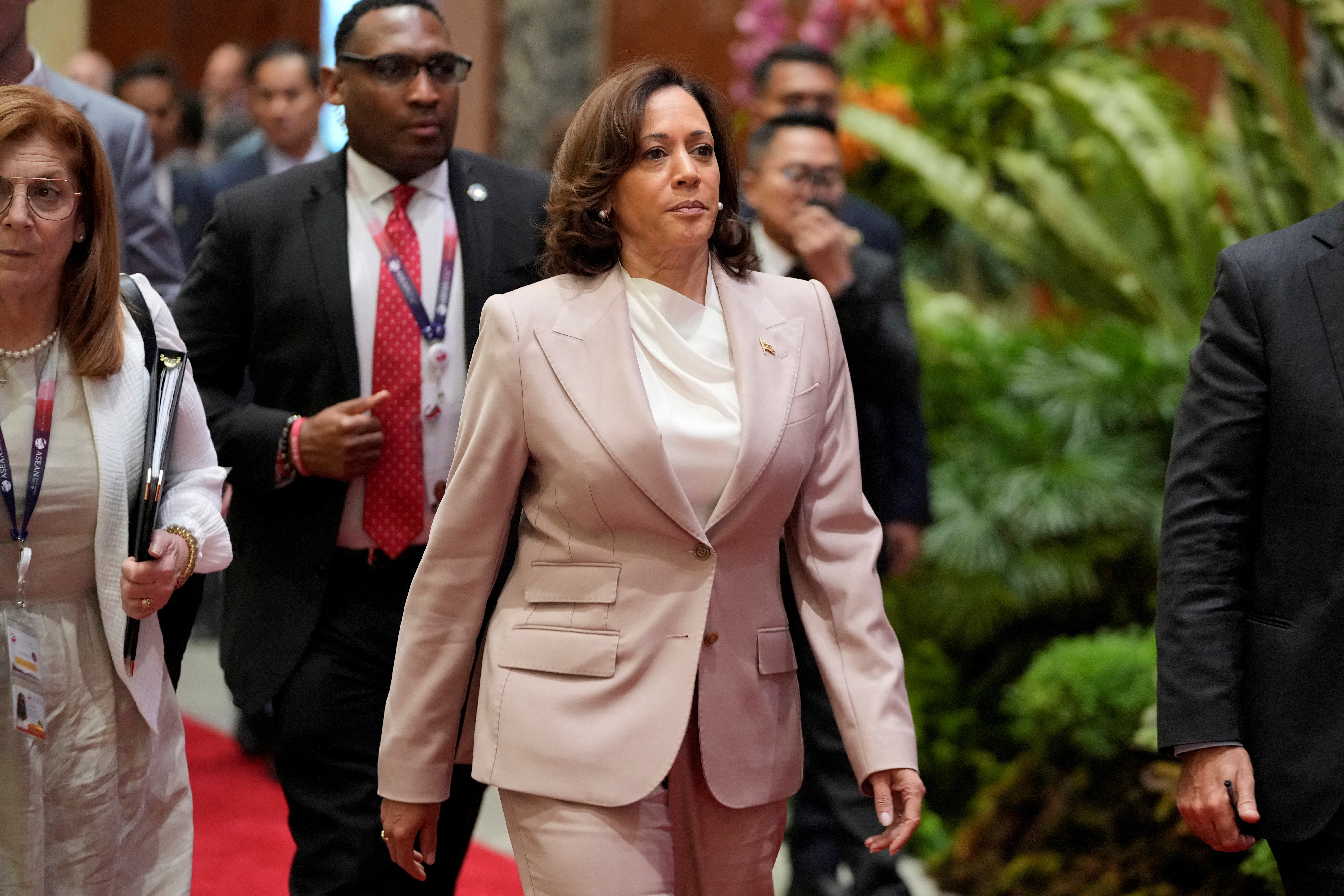
U.S. Vice President Kamala Harris leaves after attending the East Asia Summit at the Association of Southeast Asian Nations (ASEAN) Summit in Jakarta, Indonesia, Thursday, Sept. 7, 2023. Achmad Ibrahim/Pool via REUTERS

U.S. Vice President Kamala Harris said on Thursday it would be a “huge mistake” for North Korea to exchange military support with Russia for use in Ukraine, while a top former U.S. intelligence official said there would likely be limits to what Pyongyang would get in return.

U.S. officials have warned in recent days that arms negotiations between Russia and North Korea are actively advancing, and a report this week said that North Korea’s Kim Jong Un plans to travel to Russia this month to meet President Vladimir Putin and discuss supplying Moscow with weapons for its war effort.

Harris, who was in Indonesia for an ASEAN summit, told CBS News in an interview broadcast on Thursday that it would be a sign of desperation for Russia to seek aid from reclusive North Korea and it would further isolate both countries.

“I think it would be a huge mistake. The idea that they would be supplying ammunition to that end, is — would be a huge mistake. I also believe very strongly that for both Russia and North Korea, this will further isolate them,” Harris said.

White House national security adviser Jake Sullivan said on Tuesday that arms negotiations between Russia and North Korea were actively advancing and warned Kim that his country would pay a price for supplying Russia with weapons to use in Ukraine.

Last month Washington imposed sanctions on entities it accused of being tied to arms deals between North Korea and Russia.

Sydney Seiler, who retired this summer as National Intelligence Officer for North Korea at the U.S. National Intelligence Council, told a Washington think tank that for Kim, a potential meeting with Putin “seems to be the result of a calculation that there’s something to be had from this in the near-term.”
“The worst-case scenario is that this … relationship between Russia and North Korea goes to the next level, where Russia actively seeks to improve the military capabilities,” of North Korea, he said.

Against that, however, were traditional limitations on the support Russia has provided to North Korea – which has developed a sophisticated ballistic missile and nuclear-arms program despite international sanctions – and Moscow’s adherence to the goal of a denuclearized Korean peninsula.

“The good news is, my thoughts are, (that) a lot of those traditional limitations or parameters … will serve as a limiting factor,” Seiler said.

He said Kim could be looking to fill shortfalls in military resources across the board and in food supplies as the country emerges from a long shutdown during the COVID-19 pandemic.

“The substance of what North Korea is able to get out of Russia is going to be crucial in determining its strategic impact,” Seiler said. “Is it food, is it supplies, is it linked to some material necessary to restart factories, or feed munitions assembly lines?

“Or is Russia out to really enhance North Korea’s capabilities … (amid) concerns over support to the missile program, nuclear program, conventional program?”

Seiler said Russia could perhaps agree to provide North Korea with satellite imagery until Pyongyang manages to put its own military satellite into space.

“All this stuff is potentially troubling,” he said.


The post Harris says North Korea military support for Russia would be “huge mistake“ first appeared on The News And Times – thenewsandtimes.com.


Categories
The News And Times – thenewsandtimes.com

Sudanese Artists Work to Heal From Trauma of War


The chaos of war surrounds the women in Sudanese artist Abubakr Moaz’s paintings.

“She’s sitting in here, confused and doesn’t know what to do,” Moaz said, describing on of them. “And there are gunshots around her. … She just left and [is] going nowhere, because she’s not able to live in her house anymore.”

It’s a scene Moaz knows from experience. He fled his home in Khartoum a few months after violence erupted there in April. He says he left everything behind, including his art studio. He first went through Ethiopia before landing in Kenya about a month ago.

“It was just tough days, really, really tough days,” he told VOA. “You needed to sleep outside in the streets for days, waiting for your bus, waiting for visas. Luckily … we had our passports with us.”

His work currently is part of an exhibit in the Kenyan capital, Nairobi, by a group of Sudanese artists.

Organizers called the pop-up exhibition, “Resilient Transitions,” an opportunity to create a space where all the Sudanese artists in exile can gather and meet others like themselves, said curator Rahiem Shadad.

“One of the main reasons why we did this event was to sort of bring in the Sudanese visual artists who came here due to the war and connect them one way or another to artists who are already in Nairobi, who have already created such a support system that have made this transition quite easy,” Shadad told VOA.

Once the director of Downtown Gallery in Khartoum, Shadad said that dealing with the trauma and displacement of war has been difficult.

“Most of us have lost a lot,” he said. “For example, for me, I lost a gallery, which hosted over 450 paintings inside of it.”

It’s been nearly five months since civil war erupted in Sudan between the Sudanese army and the paramilitary Rapid Support Forces, and there’s no end in sight. The U.N. Refugee Agency estimates that by year’s end, 1.8 million people will flee to neighboring countries.

Event co-organizer Mohamed Elhassan is the director of 249 Arts and Culture in Sudan. He said the Nairobi event was a way to introduce artists to the local market and try to connect them to the world.

“What it means for us is basically to support these artists who had to flee the war and come here and restart from scratch,” Elhassan told VOA. “They lost their galleries. They lost their studios, even their … art that was there.

“For me, the most significant thing is for these artists to be able to produce again, for them to be able to break out of the trauma they face after the war … and be able to come up with all these great pieces you guys are seeing today,” he said.

Elhassan also said that Sudanese people have proven over the years that they are resilient and have always managed to find creativity out of chaos.

Tibian Bahari, a Sudanese artist who works with recycled material and construction waste as well as on canvas, has a painting, “Topography of Home,” in the exhibition.

She told VOA that the recent war has affected her and others in different ways.

“My painting has now significantly changed in terms of strength, in terms of contributing, in terms of I am also here,” she said. “I feel angry, and I am not really rushing into navigating that emotion of anger. I am actually more into dwelling into the question of what now? What can I do? How can I contribute as a diaspora? What is my responsibility as a diaspora, as an artist? … And most importantly, how am I documenting this time at a time when everything is being erased, everything is being disrupted.”

Ibrahim Ahmad, an award-winning Sudanese filmmaker who, like many, was displaced because of the war, said it was important to be at the event to connect with people that he used to know in Sudan, share knowledge with the new ones and together process the new realities.

And like many, he said he hadn’t expected the war to drag on for so long. That is one of the reasons that the only thing he took with him when he fled was his phone, he said.

“But I’ve lost everything,” he said, “because … everyone thought that it would end soon.”

Ahmad said that he has been building his filmmaking and video production business for the past five years, and that while it’s hard to put a value on everything he lost, the equipment he left behind was worth between $40,000 and $50,000.

The post Sudanese Artists Work to Heal From Trauma of War first appeared on The News And Times – thenewsandtimes.com.


Categories
The News And Times – thenewsandtimes.com

Putin Faces Geopolitical Setback in South Caucasus


By Robbie Gramer 

Welcome back to Foreign Policy’s SitRep! Robbie here, flying solo as Jack takes some well-deserved time off. Happy Thursday! We’ve got news on lots of stuff today, including what the Pentagon knows about UFOs, so keep on scrolling.

Alright, here’s what’s on tap for the day: Putin loses ground in the South Caucasus, a blockade on Pentagon nominees in Congress continues, Russia gets caught recruiting mercenaries in Cuba for the war in Ukraine, and more.

There’s a geopolitical shift afoot in the South Caucasus that has U.S. officials (quietly) grinning from ear to ear and their rivals in Moscow fuming.

Armenia is having second thoughts about its longtime partnership with Russia and is beginning to shift in not-so-subtle ways toward the West, signaling an embarrassing setback for the Kremlin in the strategic region.

Armenian Prime Minister Nikol Pashinyan said in an interview with Italian newspaper La Repubblica this week that his country’s reliance on Russia wasn’t paying off, particularly as Moscow struggles to supply its own military, let alone partnering militaries. “Dependence on just one partner in security matters is a strategic mistake,” he said.

Armenia followed up by announcing its first-ever tranche of humanitarian assistance to Ukraine, which Pashinyan’s wife personally handed over during a visit to Kyiv this week.

Then, just to add some salt to the Kremlin’s wounds, Armenia announced a new joint military exercise with the United States, dubbed “Eagle Partner 2023,” to be held in the coming weeks.

Hell hath no fury like a partner scorned. The volte-face comes after mounting frustration in Armenia that Russia has done too little to address the crisis between Armenia and neighboring Azerbaijan over Nagorno-Karabakh, an enclave at the heart of a decades-old dispute between the two countries. (Russia deployed “peacekeeping troops” to the region after a deadly conflict between Armenia and Azerbaijan in 2020.)

But Armenia’s decision also reflects mounting unease in the country over the costs of maintaining its close ties to Russia after its deadly war in Ukraine, four U.S. officials and regional analysts told SitRep.

And that, in turn, has led to an intriguing geopolitical opportunity for Washington and its allies to make inroads in a country that Russia considered one of its last reliable partners, in a region Russia claims to be its own strategically important backyard. (As an interesting sidebar for Washington insiders, the former top U.S. envoy for Ukraine from 2020 to 2022, Kristina Kvien, is now ambassador to Armenia, and the current U.S. ambassador to Russia, Lynne Tracy, was the previous ambassador to Armenia.)

The taming of the Russian shrew. Armenia, a longtime partner of Moscow’s, has been careful not to openly condemn Russia’s invasion of Ukraine but has distanced itself from the war and become increasingly wary of the costs of staying in Russian President Vladimir Putin’s orbit.

For years, Armenia prioritized its relationship with Russia, mainly because it was the only game in town for security on Nagorno-Karabakh. But that partnership with Moscow turned out to be a paper tiger during the costly 2020 Armenia-Azerbaijan war. Armenia lost that war badly, and the feeling in Yerevan was that Moscow didn’t lift a finger to help until it brokered a costly cease-fire that heavily favored Azerbaijan’s territorial gains.

Azerbaijan gained control of more territory adjacent to the Nagorno-Karabakh region and has launched a new concerted campaign to wrest back the disputed territory from Armenia.

Azerbaijan has in recent months tightened the screws on Nagorno-Karabakh with a full-scale blockade that has pushed the small Armenian enclave into a humanitarian crisis and to the brink of famine. Armenian officials have publicly accused Russian peacekeepers of abetting, or at the least not doing enough to halt, the Azerbaijani blockade on Nagorno-Karabakh.

Armenia’s government isn’t being very subtle with how it feels about Russia now.

A big yikes moment for the Kremlin’s foreign policy. It’s too early to tell whether this represents a permanent shift away from Russia by Armenia, or a temporary one serving as a shot across the bow to Moscow to get its act together.

But either way, Armenia’s diplomatic moves constitute an embarrassing setback for Putin, who is running very short on friends these days after his unprovoked invasion of Ukraine in 2022 unleashed a campaign by Western powers to isolate Moscow on the world stage.

“Of course, such news causes concern, especially in the current situation,” Kremlin spokesperson Dmitry Peskov said in response to the news of the Armenian-U.S. military exercises.

The South Caucasus has immense strategic and symbolic value for Moscow, and limiting the West’s influence there remains a key priority for the Kremlin. (Recall that Russia launched an invasion of Georgia in 2008 as the country pivoted toward the West and NATO, in grim foreshadowing for the war to come in Ukraine.)

In your face. “There is no way to interpret this in any other way but [an] ‘in your face’ signal to Russia,” said Volodymyr Dubovyk, director of the Center for International Studies at Odesa Mechnikov National University in Ukraine.

Armenia’s turn against Russia is an important symbolic win for Ukraine, too, even if the amount of aid it can provide Ukraine is limited, Dubovyk said.

“We do not expect Armenia to take our side openly vis-à-vis Russia,” he said. “But the very fact that one of the most loyal allies of Moscow in the entire post-Soviet space is drifting away is something that is pleasing Kyiv,” he added. “This illustrates how Russia’s invasion backfired terribly. This is important for Ukraine: that Russia’s isolation strengthens.”

The Netherlands has a new top diplomat, as Hanke Bruins Slot becomes the new foreign minister. (Notably, Bruins Slot is a former artillery officer who was previously deployed to Afghanistan as commander of a self-propelled howitzer platoon before she entered politics.)

Former Finnish Prime Minister Sanna Marin has joined the Tony Blair Institute, an international nonprofit group, as a strategic advisor. (But she hasn’t ruled out her own return to politics.)

Defense expert Dara Massicot is leaving the Rand Corporation to join the Carnegie Endowment for International Peace think tank as a senior fellow on Russia and Eurasia.

Oana Lungescu, the former longtime NATO spokesperson, has joined the Royal United Services Institute think tank as a distinguished fellow.

And last but not least, a kudos to ace CNN reporter Alex Marquardt, who was named CNN’s chief national security correspondent this week.

What should be high on your radar, if it isn’t already.

Tuberville vs. the Pentagon. Top Pentagon officials have launched a new PR salvo condemning Republican Alabama Sen. Tommy Tuberville over his monthslong blockade of senior military nominations and promotions. Navy Secretary Carlos Del Toro accused Tuberville of “aiding and abetting” communists in an interview as the impasse drags on. (Del Toro is a Cuban-born Navy veteran.)

Tuberville has held up an estimated 300-plus military nominations that require Senate confirmation over a dispute with the Biden administration on its policy of providing leave and a travel allowance for service members seeking abortions and other reproductive health services. He says he won’t lift the blockade until the Biden administration changes its policy.

The standoff has frozen a whole chain of military promotions, leaving officers and their families in limbo and leaving three U.S. military service branches without confirmed chiefs for the first time in U.S. history.

“This has gone on too long,” Mark Esper, Trump’s former defense secretary, said on Twitter. “It politicizes uniformed officers & hurts readiness. Both sides are guilty. [Democratic Senate Majority Leader Chuck] Schumer should be clearing noms individually while GOP senators whip votes to end the bloc hold.”

Aliens? For anyone interested in what the U.S. military knows about UFOs (let’s face it, who isn’t?), we’ve got good news for you. The Pentagon just unveiled its new website dedicated to publicly disclosing what it can about unidentified flying objects, following some concerted lobbying by Congress.

Of course, it’s the Pentagon, so it has to make something that cool sound mind-numbingly dull with unnecessary acronyms. So, without further ado, here is the website for the All-Domain Anomaly Resolution Office, or AARO, whose mission is: “Minimize technical and intelligence surprise by synchronizing scientific, intelligence, and operational detection identification, attribution, and mitigation of unidentified anomalous phenomena in the vicinity of national security areas.” Yawn. But still. UFOs.

Caught in the act. Speaking of Russia alienating friends, let’s move on to Cuba. The Cuban government, another important ally of Moscow’s, has issued a rare statement accusing a “human trafficking ring” that just so happens to involve Russian military officials of secretly trying to recruit Cuban mercenaries to fight in Ukraine. The Intercept obtained hacked documents from a Russian military officer detailing how the recruiting campaign worked, from processing passport documents to the contracts and payments. The hacked Russian officer, Maj. Anton Valentinovich Perevozchikov, did not deny his role in recruiting the Cubans, as the Intercept reports: “He instead sent an expletive-laced reply to the Intercept denouncing NATO and declaring, ‘Russia will win.’”

Niger's security officers stand guard as demonstrators stand outside an airbase to demand the departure of the French military from Niger after a coup ousted its president in Niamey on Sept. 3. Niger’s security officers stand guard as demonstrators stand outside an airbase to demand the departure of the French military from Niger after a coup ousted its president in Niamey on Sept. 3.

Niger’s security officers stand guard as demonstrators stand outside an air base to demand the departure of the French military from Niger after a coup ousted its president in Niamey on Sept. 3. AFP via Getty Images

Sept. 9-10: India hosts the Group of 20 summit, with U.S. President Joe Biden in attendance. (Chinese President Xi Jinping will be a no-show.)

Sept. 10: Biden visits Vietnam to roll out a new strategic partnership with the country.

Sept. 11: The 54th session of the U.N. Human Rights Council begins.

“When I was a student, my best hangover food was actually to go to McDonald’s.”

—Ukrainian Foreign Minister Dmytro Kuleba, informing U.S. Secretary of State Antony Blinken of his hangover cures as the two diplomats shared a side of fries in Kyiv during Blinken’s visit to Ukraine this week.

Classic Florida man. Via USA Today: “Florida man arrested while attempting to run across Atlantic Ocean in giant hamster wheel.”

The post Putin Faces Geopolitical Setback in South Caucasus first appeared on The News And Times – thenewsandtimes.com.


Categories
The News And Times – thenewsandtimes.com

Danny Masterson sentenced to 30 years to life for rape convictions


By Alex Sundby

Updated on: September 7, 2023 / 3:27 PM / CBS News

Actor Danny Masterson was sentenced to 30 years to life in prison Thursday after a jury convicted him earlier this year of raping two women 20 years ago, CBS Los Angeles reports. Prosecutors in Los Angeles said the rapes occurred in 2003 while Masterson, now 47, was starring in the hit sitcom “That ’70s Show.”

Masterson was convicted of raping a 28-year-old woman in April 2003 and a 23-year-old woman later that year, according to prosecutors. Both incidents happened at Masterson’s Hollywood Hills home.

The jury didn’t reach a unanimous decision on a third count that alleged Masterson also raped a longtime girlfriend. Deliberations lasted for more than six days before Masterson was convicted on the two other counts at the end of May.

Actor Danny Masterson arrives at the Clara Shortridge Foltz Criminal Justice Center in Los Angeles on May 31, 2023. Actor Danny Masterson arrives at the Clara Shortridge Foltz Criminal Justice Center in Los Angeles on May 31, 2023. Myung J. Chun/Los Angeles Times via Getty Images

Los Angeles District Attorney George Gascón said the three women were brave for coming forward.

“Their courage and strength have been an inspiration to us all,” Gascón said in a statement after Masterson was convicted. “While we are disappointed that the jury did not convict on all counts, we respect their decision.”

Late last year, Superior Court Judge Charlaine Olmedo declared a mistrial after a different jury couldn’t reach a unanimous verdict on any charges. 

In this year’s trial, Masterson didn’t testify, and his lawyers didn’t call any witnesses. Masterson’s attorneys said what happened between him and the women was consensual.

Masterson and his three accusers were all members of the Church of Scientology at the time of the incidents. The women testified that they reported Masterson to Scientology officials but were discouraged from going to the police and feared being excommunicated. The church denied blocking anyone from cooperating with authorities.

“I think the jury believed that, they believed the narrative that the Church of Scientology and its members would have retaliated against them if they had reported this,” CBS News legal contributor Jessica Levinson said following Masterson’s conviction. “And that’s why they waited, and that’s why they interacted with Danny Masterson in different ways and continued to interact with him.”

More

Alex Sundby

Alex Sundby is a senior editor for CBSNews.com

First published on September 7, 2023 / 2:44 PM

© 2023 CBS Interactive Inc. All Rights Reserved.

The post Danny Masterson sentenced to 30 years to life for rape convictions first appeared on The News And Times – thenewsandtimes.com.


Categories
The News And Times – thenewsandtimes.com

US and EU slam Palestinian president“s remarks on Holocaust


2023-09-07T15:49:12Z

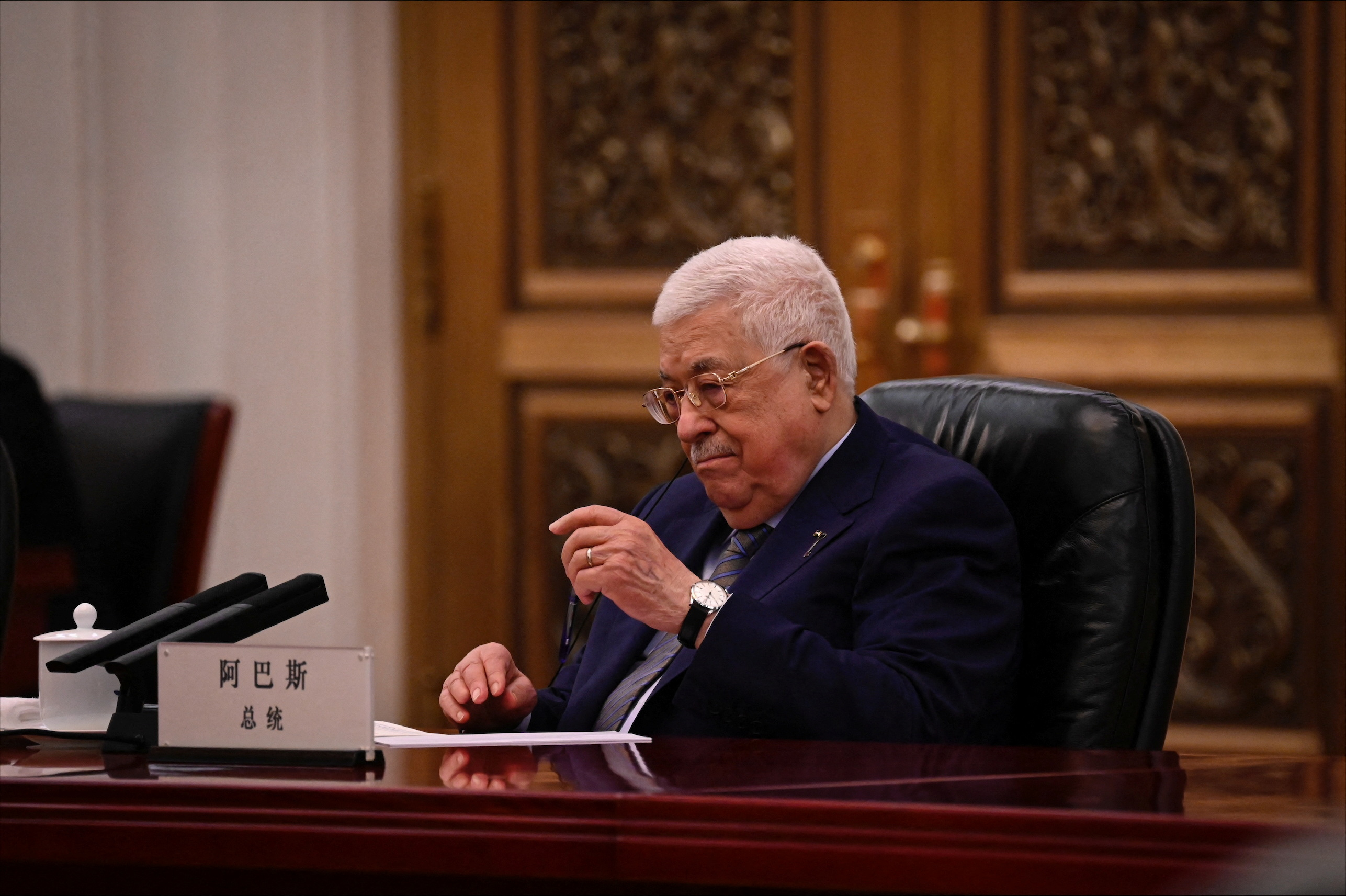
Palestinian President Mahmoud Abbas attends a meeting with Chinese Premier Li Qiang (not pictured) at the Great Hall of the People in Beijing on June 15, 2023. Jade Gao/Pool via REUTERS

The United States and European Union on Thursday criticised remarks about the World War Two persecution of Jews and antisemitism by Palestinian President Mahmoud Abbas.

In a statement, the EU’s diplomatic service said the 87-year-old Abbas’s remarks, made in late August to a meeting of his Fatah movement’s Revolutionary Council, were “false and grossly misleading”.

Deborah Lipstadt, U.S. Special Envoy to Monitor and Combat Antisemitism, called for an immediate apology for what she said were Abbas’s “hateful, antisemitic remarks”.

There was no immediate comment from Abbas. Members of his Fatah party did not immediately respond to Reuters requests for comment.

In his remarks Abbas said Jews were targeted by Nazi Germany because of their “social role” rather than their religion.

“This has been explained by many Jewish authors. When they said that Hitler killed the Jews for being Jews, and that Europe hates the Jews because they were Jews, no. It was clearly explained that they fought (the Jews) because of their social role and not their religion,” Abbas said.

Abbas has frequently drawn the anger of the international community with remarks about the Nazi Holocaust, in which around 6 million Jews were murdered, as well as members of groups such as the Roma community, people with disabilities and those from sexual and gender minorities.

In a statement, the foreign affairs spokesman for the EU, one of the major donors to the Palestinian Authority, called the remarks “an insult to the millions of victims of the Holocaust and their families”.

“Such historical distortions are inflammatory, deeply offensive, can only serve to exacerbate tensions in the region and serve no one’s interests,” he said. “They play into the hands of those who do not want a two-state solution, which President Abbas has repeatedly advocated for.”

The Palestinian Authority exercises limited self-rule in territory occupied by Israel since the 1967 Middle East war and where Palestinians seek to establish an independent state.

Abbas’ remarks were also condemned by Germany’s ambassador to Israel, Steffen Seibert, who said in a post on the social messaging platform X: “The Palestinians deserve to hear the historical truth from their leader, not such distortions.”

During a visit to Berlin last year, Abbas was rebuked by German Chancellor Olaf Scholz after he accused Israel of committing “50 Holocausts” in response to a question about the 50th anniversary of the attack on the Israeli team at the 1972 Munich Olympics by Palestinian militants.

Abbas has rebuffed repeated demands from the Palestinian public to step down during his two decades in power.

The post US and EU slam Palestinian president“s remarks on Holocaust first appeared on The News And Times – thenewsandtimes.com.


Categories
The News And Times – thenewsandtimes.com

Authorities ‘confident’ capture near for Pennsylvania escapee


(NewsNation) — Hundreds of law enforcement officers, along with police dogs and advanced technology are tirelessly working to locate the escape from a suburban Philadelphia prison as the manhunt stretches into its seventh day.

Surveillance footage from earlier this week captured Danelo Cavalcante walking north and then south an hour later, indicating his unfamiliarity with the area and the possibility of him being disoriented.

Pennsylvania State Police are indicating that their ongoing manhunt is taking a toll on Cavalcante. Despite the challenges, the police maintain their confidence that he will eventually make a mistake.

“I’m quite confident that we’re wearing him down,” said Pennsylvania State Police Lt. Col. George Bivens. “Regardless of the location, the background that a person comes from, these are hot, humid temperatures; he’s not living in shelter. Has no regular means of obtaining food other than if he’s able to break in someplace or scavenge something. So it’s a difficult existence out there for someone that’s trying to do this. That will definitely take its toll.”

While some schools reopened Thursday, residents in the suburban Pocopson Township region still live in fear as the manhunt for Cavalacante continues.

Schools were closed on Tuesday and Wednesday due to additional sightings of Cavalcante.

Cavalcante was spotted hiding from law enforcement in a wooded area west of Philadelphia. The weeklong manhunt has significantly eroded the sense of safety in the area, and residents are being advised to lock their cars and homes to avoid encountering this dangerous fugitive.

His last known sighting was near a creek in the area on Tuesday night, and the search area continues to expand.

Meanwhile, there are emerging details about the extraordinary method he used to escape from prison.

Chester County Prison officials announced Wednesday that Calvacante made a brazen escape from the prison’s jail yard by scaling a wall, climbing over razor wire and jumping from a roof.

The acting warden of the Chester County Prison said a guard in an observation tower has been put on administrative leave.

Cavalcante has been spotted five times since he escaped from jail on Aug. 31. He was awaiting transfer to serve a life sentence in state prison. A jury convicted Cavalcante of murdering his girlfriend in 2021. He’s also wanted in his native Brazil over a killing.

Prison officials have acknowledged the need for enhanced security measures following the initial escape attempt, stating their intention to fully enclose the outdoor recreation areas.

A 420,000 reward is being offered for information that leads to the arrest of Cavalcante.

The post Authorities ‘confident’ capture near for Pennsylvania escapee first appeared on The News And Times – thenewsandtimes.com.


Categories
The News And Times – thenewsandtimes.com

US, Britain Sanction 11 Linked to Russian Cybercrime Group


The United States and Britain on Thursday sanctioned 11 people who are part of the Russia-based Trickbot cybercrime hacking group, accusing it of targeting critical government infrastructure and businesses, along with hospitals, during the coronavirus pandemic.

A U.S. Treasury statement said the blacklisted targets included “key actors involved in management and procurement” for Trickbot, which it said has ties to Russian intelligence services.

Treasury undersecretary Brian Nelson said in a statement, “The United States is resolute in our efforts to combat ransomware and respond to disruptions of our critical infrastructure.”

Ransomware refers to the demand for payments to unlock computer services that cybercriminals have frozen.

British Foreign Secretary James Cleverly said the sanctions are an attempt to disrupt Trickbot’s business model and strip officials of their anonymity.

“We know who they are and what they are doing,” he said in a statement. 

British officials said the Trickbot group had extorted at least $180 million from people around the world to restore their computer services.

In conjunction with the sanctions, which block any assets the Trickbot officials have in the United States and Britain, the U.S. Justice Department unsealed indictments against nine individuals in the gang.

The U.S. said that in one instance, the Trickbot group used ransomware against three medical facilities in the midwestern state of Minnesota, “disrupting their computer networks and telephones, and causing a diversion of ambulances.”

The U.S. said Trickbot workers “publicly gloated over the ease of targeting the medical facilities and the speed in which ransoms had been paid to the group.” 

The post US, Britain Sanction 11 Linked to Russian Cybercrime Group first appeared on The News And Times – thenewsandtimes.com.


Categories
The News And Times – thenewsandtimes.com

Student Visa Denials Are Rising, and African and South American Applicants Bear the Brunt


From 2015 to 2022, visa denials for South American students rose sharply (from 10% to 24%), and African students were the most likely to be denied overall. However, demand remains stronger than ever, with the U.S. State Department setting a new record for student visas in 2022.

Emi Tuyetnhi Tran examines the research for NBC. (July 2023)

The post Student Visa Denials Are Rising, and African and South American Applicants Bear the Brunt first appeared on The News And Times – thenewsandtimes.com.