Categories
The News And Times – thenewsandtimes.com

Spanish Soccer Star Hermoso Accuses Rubiales of Sexual Assault


Spanish soccer player Jenni Hermoso has formally accused Luis Rubiales, president of the Royal Spanish Football Federation, of sexual assault for an unwanted kiss after the Women’s World Cup final, the national prosecutor’s office announced Wednesday.

In late August, FIFA, world soccer’s governing body, issued Rubiales a 90-day suspension “pending the disciplinary proceedings opened” against him. The entire World Cup-winning team has refused to compete until Rubiales is ousted. Spanish politicians and some of the nation’s most famous soccer clubs and players have also denounced his conduct.

Rubiales, who says he has no plans to step down, maintains that the kiss was consensual and that he is the victim of a libelous political crusade.

Rafael del Amo, vice president of the Royal Spanish Football Federal, and two other federation officials have resigned in protest. On Tuesday, Jorge Vilda was fired as coach of the women’s soccer team.

Some information is from The Associated Press.

The post Spanish Soccer Star Hermoso Accuses Rubiales of Sexual Assault first appeared on The News And Times – thenewsandtimes.com.


Categories
The News And Times – thenewsandtimes.com

‘We are starving to death:’ Residents of Nagorno-Karabakh fear for future under blockade


Ani Kirakosyani found out she was pregnant a month after the blockade of Nagorno-Karabakh began.

In her village of Haterk, tucked in a valley between the Caucasus hills, food supplies ran out quickly and the shops started to close, Kirakosyani told CNN. The only food available was what she could pick from her garden, mainly tomatoes and beans.

Throughout her pregnancy, Kirakosyani could not attend her hospital consultations as public transport was cancelled due to fuel shortages – instead she walked for miles to the local medical clinic, which did not have the capacity to detect early problems with her pregnancy, she said, speaking to CNN by telephone.

Kirakosyani is one of the 120,000 inhabitants of Nagorno-Karabakh – known as the Republic of Artsakh by locals – a disputed territory home to a majority ethnic Armenian population that is internationally recognized as being a part of Azerbaijan. The region has been blockaded since December 2022, when the only road connecting the landlocked region to the outside world, the Lachin corridor, was blocked by “eco-activists” backed by the Azerbaijani government, which has since installed a military checkpoint along the corridor. This prompted the International Association of Genocide Scholars (IAGS) to warn of the risk of genocide against the Armenian population of Nagorno-Karabakh.

Six months into her pregnancy, Kirakosyani felt a pain in her abdomen and was taken to the hospital. On the way, the ambulance had to stop and collect six other patients, as the driver had to ration its fuel. When Kirakosyani finally arrived in hospital, she was told her pregnancy was in jeopardy and she would have to give birth three months early.

Her husband was away working with the military, and he could not get fuel to make the 100-mile car ride to support her in the hospital. She was alone when the doctors told her she had had a stillbirth brought on by malnutrition and stress, she said.

“If not for the blockade, I would be playing with my child today,” Kirakosyani told CNN.

According to statistics provided exclusively to CNN by the Ombudsman of the Artsakh Republic – a public official who monitors protection of human rights by state and local self-government bodies – the number of recorded miscarriages has increased fourfold from this time last year.

And, as shortages of food, fuel and medicines caused by the months-long blockade take an increasing toll on the region’s population, officials there have reported the first death from malnutrition on August 15, according to Gegham Stepanyan, the ombudsman of Artsakh, who CNN reached by phone.

International media have been refused entry into the territory since the blockade was imposed.

The Tom Lantos Human Rights Commission, a bipartisan US congressional body, has scheduled a Wednesday hearing on the situation in Nagorno-Karabakh.

The Lachin corridor is known locally as “the road of life,” as 90% of the food consumed in Nagorno-Karabakh previously came into the region from Armenia via that route, according to figures provided by the elected president of Nagorno-Karabakh.

The International Committee of the Red Cross (ICRC), which was previously the only NGO allowed to bring humanitarian aid across the Lachin corridor, last delivered desperately needed food supplies to the region on June 14, according to an ICRC press release from August 18.

In August, UN experts urged Azerbaijan to end “the dire humanitarian crisis” in the enclave by lifting the blockade, while former International Criminal Court chief prosecutor Luis Moreno Ocampo said there was “reasonable basis to believe that genocide is being committed against Armenians.”

Responding to Ocampo’s comments, a lawyer hired by Azerbaijan called the claim of genocide “a groundless and very dangerous allegation.”

Artsakh President Arayik Harutyunyan, who was elected in 2020, told CNN by email: “Azerbaijan has blockaded the Republic of Artsakh with the ultimate goal of committing genocide against our people.”

Asked by CNN for comment, the Armenian government shared remarks made by Armenian Prime Minister Nikol Pashinyan in a cabinet meeting, in which he said: “Azerbaijan is subjecting the Armenians of Nagorno-Karabakh to genocide by subjecting them to starvation.”

CNN reached out to the Azerbaijani foreign ministry for comment but has not heard back.

As food, medicine, water and fuel are prevented from entering the territory, local supplies are dwindling. According to the administration for the Artsakh Republic, dairy products, cereal, fish, chicken, cooking oil, sugar, salt, fruit and vegetables, as well as fuel and hygiene products, are unavailable inside the territory.

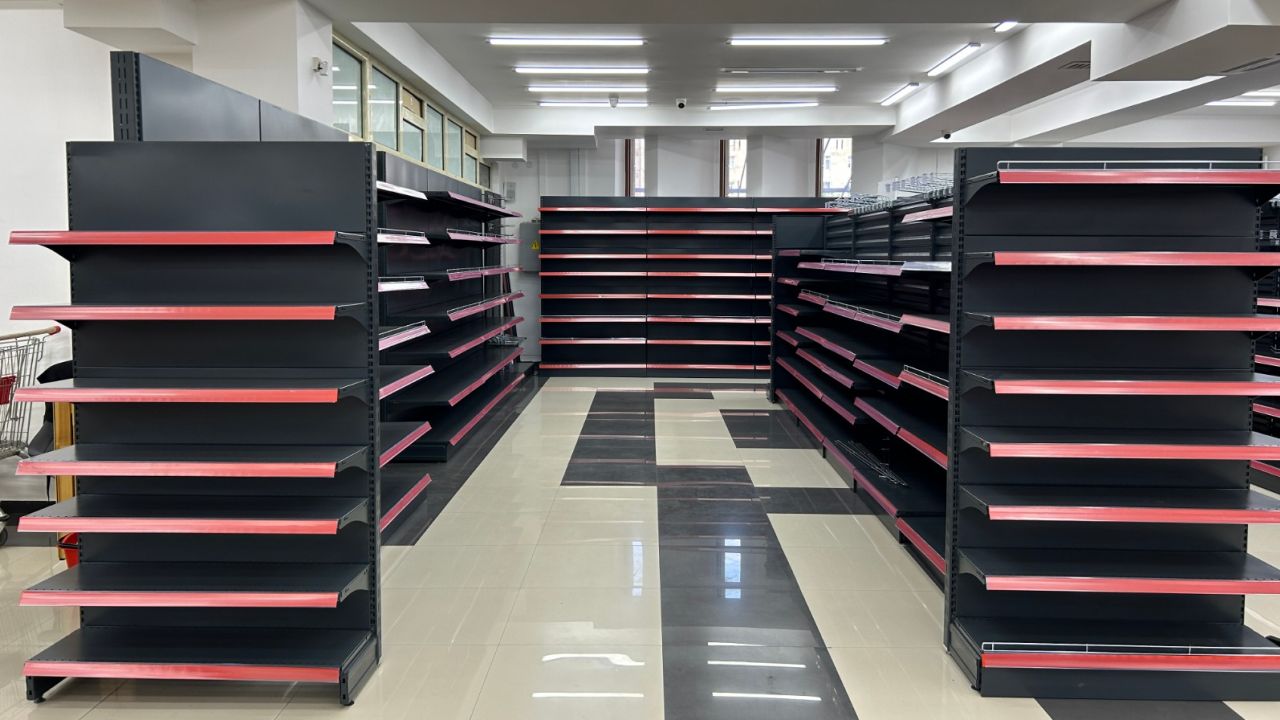
Empty shelves are seen inside the Supermarket Titan in Stepanakert. (Photo provided by the office of the Ombudsman of the Artsakh Republic.)

Max Mkhitaryan, a shopkeeper, took CNN on a video tour of his shop in the capital, Stepanakert.

He told CNN that before the blockade he had received most of his produce from Armenia. The only things now left on the shelves were packets of bread, locally produced honey, and a few bottles of vodka. With most shelves empty, he says he can now only serve one in 10 customers.

“Before I used to serve 250 customers per day – now I can barely serve my family. I only have one week left until the shop closes and I am jobless,” he told CNN.

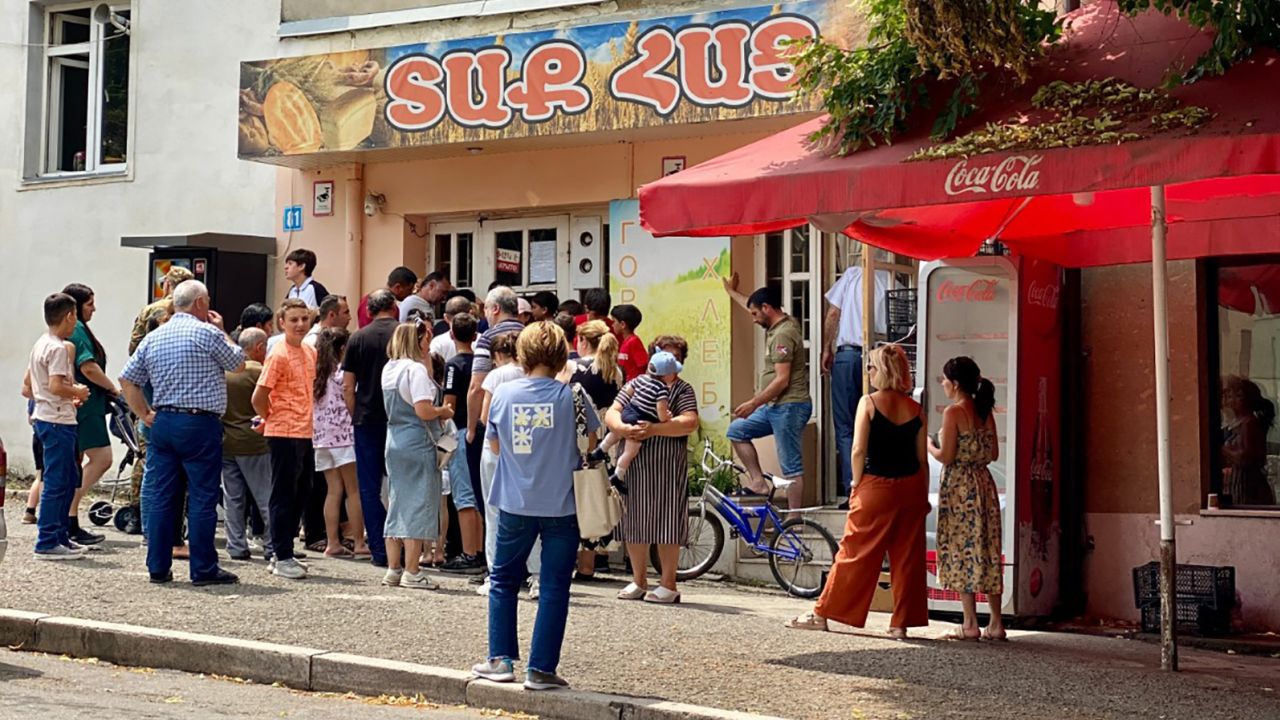
Outside his shop, queues for bread meander through the unkempt streets. Garbage collections are regularly postponed due to fuel shortages, while in the local pharmacy, supplies are rapidly diminishing.

The fuel shortages also mean electricity is rationed, with power cuts for eight hours each day, and drinking water is no longer treated, leading to a spike in related illnesses, according to Stepanyan.

Inside a pharmacy on Baghramyan Street, near Stepanakert Medical Centre. (Photo provided by the office of the Ombudsman of the Artsakh Republic.)

According to the enclave’s administration, 95% of residents are suffering from malnutrition and hidden hunger, a term referring to a lack of essential vitamins and minerals.

As winter beckons and the harvest season approaches without fuel to collect the crops, those trapped in Nagorno-Karabakh fear their cries are being ignored.

Armenia and Azerbaijan have been engaged in a tug of war over the status of Nagorno-Karabakh since the collapse of the Soviet Union. This power vacuum was filled by nationalism, and violence against ethnic minorities quickly followed. Both Armenians in Azerbaijan and Azeris in Armenia claim they were ethnically cleansed, leaving sectarian scars on the minds of generations – on either side of their disputed border.

In the early 1990s, Armenian forces took control of large swaths of territory in and around Nagorno-Karabakh. Azerbaijan, backed by Turkey, in turn seized control over large parts of those territories during a six-week war in 2020 that claimed thousands of lives.

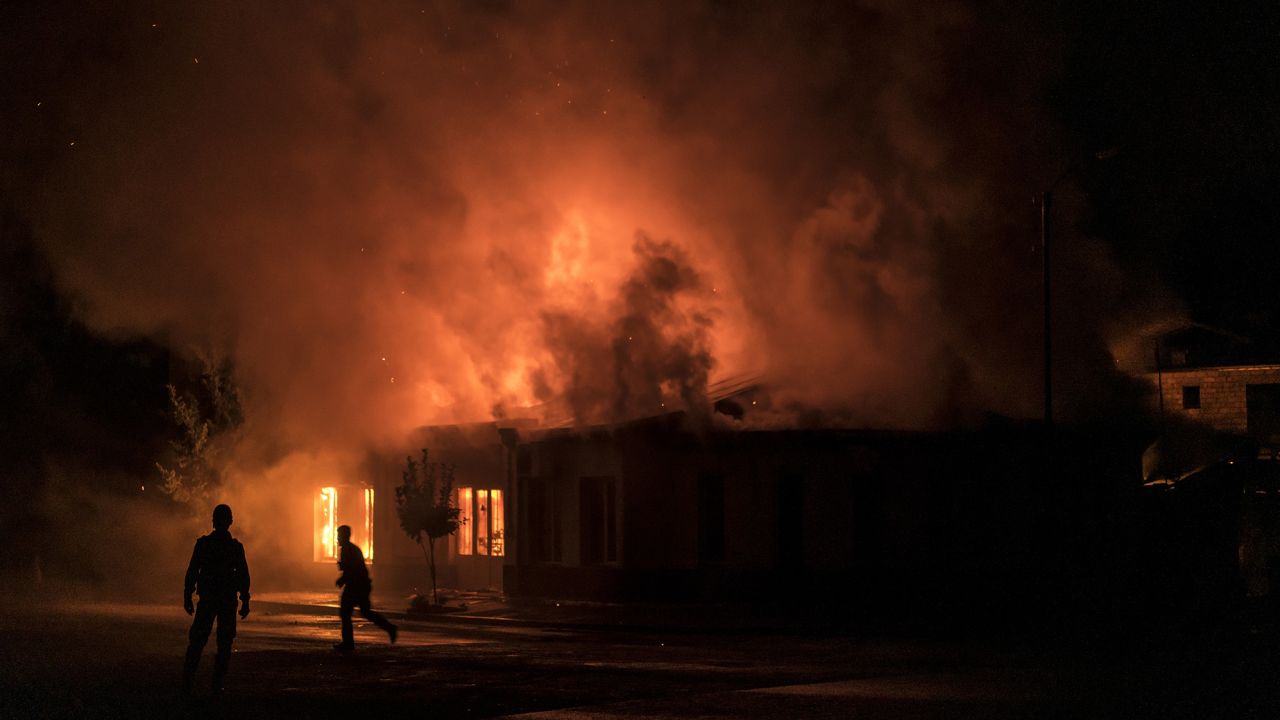
A fire burns in a hardware store after a rocket attack caused the building to catch fire on October 3, 2020 in Stepanakert, Nagorno-Karabakh.

The separatist territory was left with the main city of Stepanakert and a few surrounding towns, as well as a population still reeling from the losses of the bloody 2020 conflict, which was followed by sporadic skirmishes along the border. Amid the latest flare-up of tensions, Baku claims it will fully retake and integrate the territory into Azerbaijan – while ethnic Armenians refuse to be uprooted from a region they claim is their homeland.

Ronald Suny, a professor of political science at the University of Michigan, told CNN: “Now that it has won the 2020 war with Armenia, Azerbaijan’s ultimate goal is to drive the Armenians of Artsakh out of Azerbaijan.

“Rather than use direct violence, which would incite opposition from abroad… Baku is determined to make the Armenians’ lives impossible, starve them out, and pressure them to leave,” he said.

To make matters more complicated, Azerbaijan – a one-party state headed by President Ilham Aliyev for the past two decades – has offered to supply the breakaway region via a crossing at the nearby Azerbaijani city of Aghdam.

“Given Azerbaijan’s genocidal intentions and their systematic state policy of long-standing anti-Armenian hatred, our people hold legitimate concerns about the safety of any products originating from Azerbaijan,” Harutyunyan, the elected Nagorno-Karabakh leader, told CNN

“Instead of feigning attempts to deliver humanitarian assistance, Azerbaijan must unblock the Lachin corridor,” he said.

As the blockade carries on with no end in sight, Peter Stano, an EU foreign affairs spokesperson, told CNN of his “deep concern over the serious humanitarian situation” and called for the full resumption of traffic through the Lachin corridor, including medical evacuations and humanitarian supplies.

A United States State Department spokesperson told CNN by email: “We urge the government of Azerbaijan to restore free transit of commercial, humanitarian, and private vehicles through the Lachin corridor expeditiously.”

But Harutyunyan told CNN he was “disappointed with the reactions of the EU and the US so far” and argued the “reasons behind the European and American inaction and failures are purely geopolitical.”

“These reasons include energy reliance on Azerbaijan,” he added.

Bread queues form outside a bakery in Tumanyan Street, Stepanakert. (Photo provided by the office of the Ombudsman of the Artsakh Republic.)

According to Reuters, the European Union agreed in July 2022 to double gas imports from Azerbaijan by 2027.

Meanwhile Russia, which brokered the ceasefire in 2020, has peacekeepers along the Lachin corridor but has refrained from intervening further.

CNN has reached out to the Russian Foreign Ministry but has yet to hear back.

Russian Foreign Ministry spokeswoman Maria Zakharova said in a briefing on August 2 that Russia dismissed any claim of inaction against the Russian peacekeepers “as counterproductive and non-reflective of their real contribution to the effort to stabilize the situation on the ground.”

Artyom Tonoyan, a professor of global studies at Hamline University in the United States, told CNN that the Russians, who usually exert influence over the Caucasus, are “so engaged with Ukraine they do not have the willpower to mitigate the conflict.”

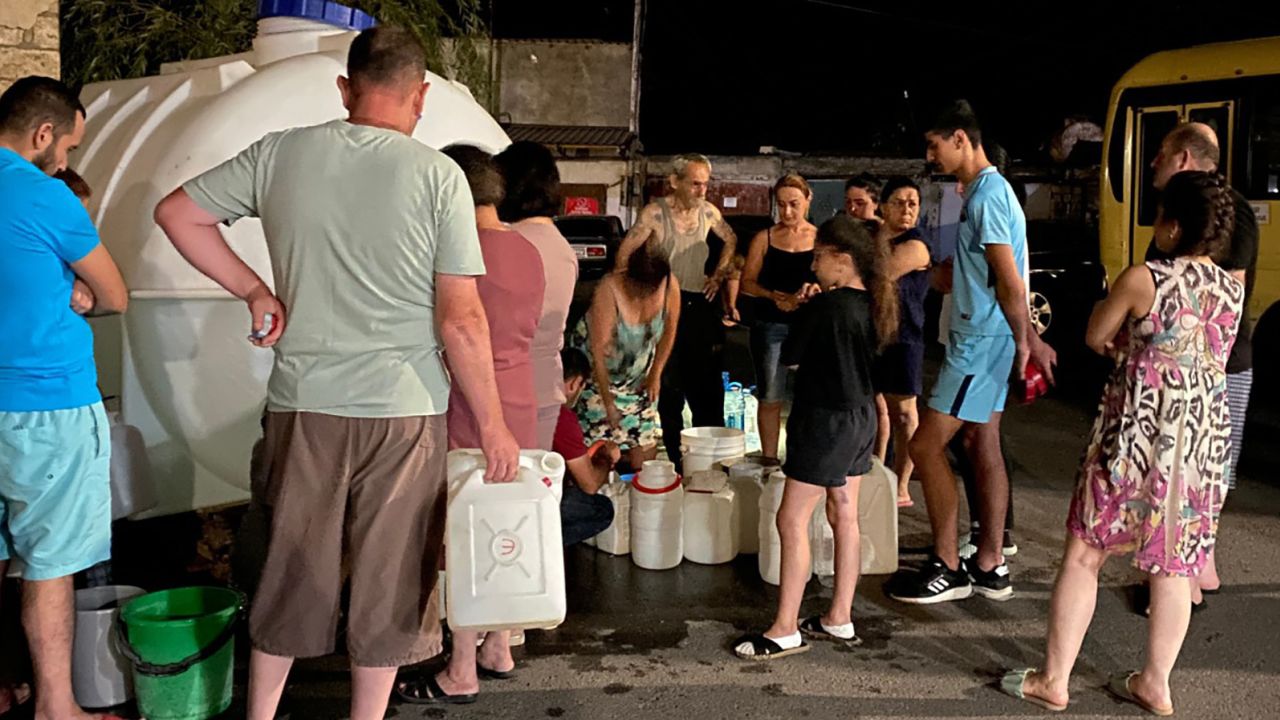
As co-ordinated international action to end the blockade appears unlikely anytime soon, the people of Nagorno-Karabakh are left focusing on short-term solutions: gathering firewood, collecting water and foraging for food.

A water tank is seen on Azatamartikneri Street, Stepanakert. (Photo provided by the office of the Ombudsman of the Artsakh Republic.)

This time last year, Anahit Gharaghazaryan, a schoolteacher and mother of three, told CNN she was preparing lessons for her pupils as they return from the summer holidays.

Next week was meant to be her five-year-old son’s first day of school. Instead, she is wondering how he will survive the winter.

According to a report given to CNN by Stepanyan, doctors consider it unacceptable for children to continue their studies after suffering malnutrition, while a lack of public transport and an inability to access stationery, books and clothing make it impossible for children to attend school this year.

At a UN Security Council meeting in August, the Deputy Foreign Minister of Armenia, Vahe Gevorgyan, warned that Azerbaijan’s blockade “has impacted 2,000 pregnant women, around 30,000 children, 20,000 older persons, and 9,000 persons with disabilities.”

“If the blockade does not end soon – more people will starve. I cannot sleep thinking about how I will feed my three sons,” Gharaghazaryan said. “We are all running out of hope. How many more people will have to die before the world takes notice?”
The post ‘We are starving to death:’ Residents of Nagorno-Karabakh fear for future under blockade first appeared on The News And Times – thenewsandtimes.com.


Categories
The News And Times – thenewsandtimes.com

‘We are starving to death:’ Residents of Nagorno-Karabakh fear for future under blockade


Ani Kirakosyani found out she was pregnant a month after the blockade of Nagorno-Karabakh began.

In her village of Haterk, tucked in a valley between the Caucasus hills, food supplies ran out quickly and the shops started to close, Kirakosyani told CNN. The only food available was what she could pick from her garden, mainly tomatoes and beans.

Throughout her pregnancy, Kirakosyani could not attend her hospital consultations as public transport was cancelled due to fuel shortages – instead she walked for miles to the local medical clinic, which did not have the capacity to detect early problems with her pregnancy, she said, speaking to CNN by telephone.

Kirakosyani is one of the 120,000 inhabitants of Nagorno-Karabakh – known as the Republic of Artsakh by locals – a disputed territory home to a majority ethnic Armenian population that is internationally recognized as being a part of Azerbaijan. The region has been blockaded since December 2022, when the only road connecting the landlocked region to the outside world, the Lachin corridor, was blocked by “eco-activists” backed by the Azerbaijani government, which has since installed a military checkpoint along the corridor. This prompted the International Association of Genocide Scholars (IAGS) to warn of the risk of genocide against the Armenian population of Nagorno-Karabakh.

Six months into her pregnancy, Kirakosyani felt a pain in her abdomen and was taken to the hospital. On the way, the ambulance had to stop and collect six other patients, as the driver had to ration its fuel. When Kirakosyani finally arrived in hospital, she was told her pregnancy was in jeopardy and she would have to give birth three months early.

Her husband was away working with the military, and he could not get fuel to make the 100-mile car ride to support her in the hospital. She was alone when the doctors told her she had had a stillbirth brought on by malnutrition and stress, she said.

“If not for the blockade, I would be playing with my child today,” Kirakosyani told CNN.

According to statistics provided exclusively to CNN by the Ombudsman of the Artsakh Republic – a public official who monitors protection of human rights by state and local self-government bodies – the number of recorded miscarriages has increased fourfold from this time last year.

And, as shortages of food, fuel and medicines caused by the months-long blockade take an increasing toll on the region’s population, officials there have reported the first death from malnutrition on August 15, according to Gegham Stepanyan, the ombudsman of Artsakh, who CNN reached by phone.

International media have been refused entry into the territory since the blockade was imposed.

The Tom Lantos Human Rights Commission, a bipartisan US congressional body, has scheduled a Wednesday hearing on the situation in Nagorno-Karabakh.

The Lachin corridor is known locally as “the road of life,” as 90% of the food consumed in Nagorno-Karabakh previously came into the region from Armenia via that route, according to figures provided by the elected president of Nagorno-Karabakh.

The International Committee of the Red Cross (ICRC), which was previously the only NGO allowed to bring humanitarian aid across the Lachin corridor, last delivered desperately needed food supplies to the region on June 14, according to an ICRC press release from August 18.

In August, UN experts urged Azerbaijan to end “the dire humanitarian crisis” in the enclave by lifting the blockade, while former International Criminal Court chief prosecutor Luis Moreno Ocampo said there was “reasonable basis to believe that genocide is being committed against Armenians.”

Responding to Ocampo’s comments, a lawyer hired by Azerbaijan called the claim of genocide “a groundless and very dangerous allegation.”

Artsakh President Arayik Harutyunyan, who was elected in 2020, told CNN by email: “Azerbaijan has blockaded the Republic of Artsakh with the ultimate goal of committing genocide against our people.”

Asked by CNN for comment, the Armenian government shared remarks made by Armenian Prime Minister Nikol Pashinyan in a cabinet meeting, in which he said: “Azerbaijan is subjecting the Armenians of Nagorno-Karabakh to genocide by subjecting them to starvation.”

CNN reached out to the Azerbaijani foreign ministry for comment but has not heard back.

As food, medicine, water and fuel are prevented from entering the territory, local supplies are dwindling. According to the administration for the Artsakh Republic, dairy products, cereal, fish, chicken, cooking oil, sugar, salt, fruit and vegetables, as well as fuel and hygiene products, are unavailable inside the territory.

Empty shelves are seen inside the Supermarket Titan in Stepanakert. (Photo provided by the office of the Ombudsman of the Artsakh Republic.)

Max Mkhitaryan, a shopkeeper, took CNN on a video tour of his shop in the capital, Stepanakert.

He told CNN that before the blockade he had received most of his produce from Armenia. The only things now left on the shelves were packets of bread, locally produced honey, and a few bottles of vodka. With most shelves empty, he says he can now only serve one in 10 customers.

“Before I used to serve 250 customers per day – now I can barely serve my family. I only have one week left until the shop closes and I am jobless,” he told CNN.

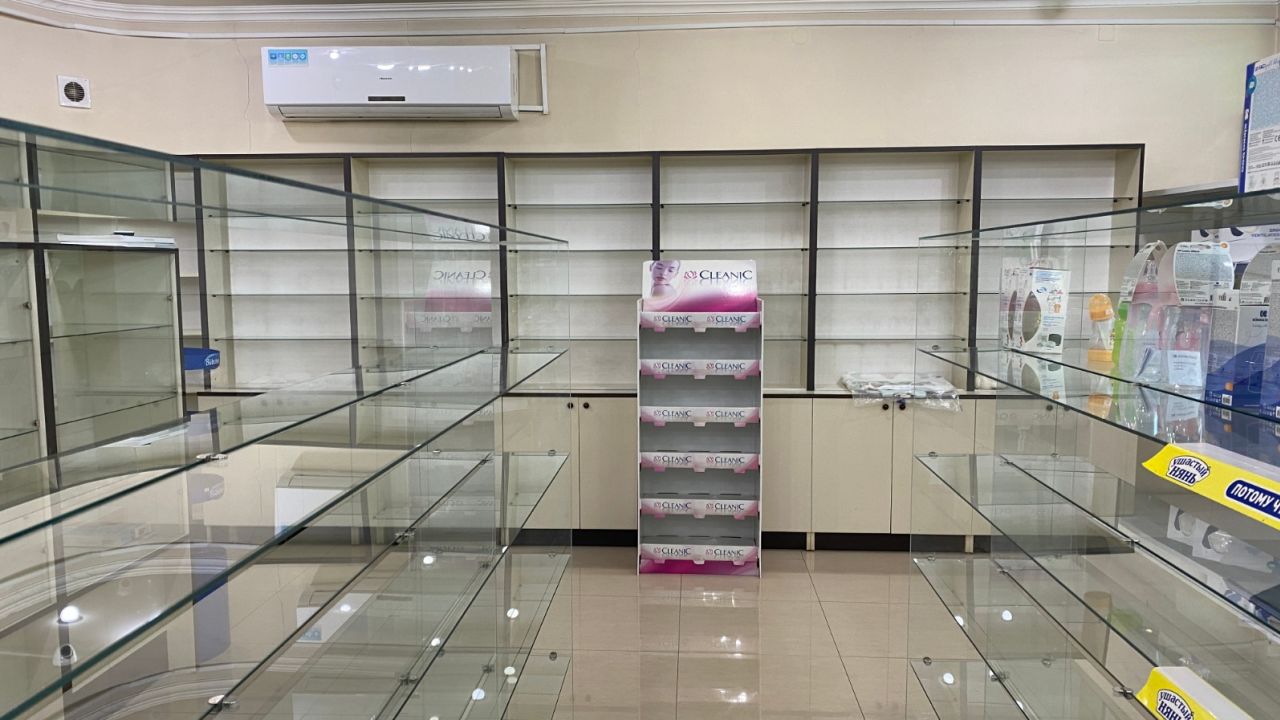
Outside his shop, queues for bread meander through the unkempt streets. Garbage collections are regularly postponed due to fuel shortages, while in the local pharmacy, supplies are rapidly diminishing.

The fuel shortages also mean electricity is rationed, with power cuts for eight hours each day, and drinking water is no longer treated, leading to a spike in related illnesses, according to Stepanyan.

Inside a pharmacy on Baghramyan Street, near Stepanakert Medical Centre. (Photo provided by the office of the Ombudsman of the Artsakh Republic.)

According to the enclave’s administration, 95% of residents are suffering from malnutrition and hidden hunger, a term referring to a lack of essential vitamins and minerals.

As winter beckons and the harvest season approaches without fuel to collect the crops, those trapped in Nagorno-Karabakh fear their cries are being ignored.

Armenia and Azerbaijan have been engaged in a tug of war over the status of Nagorno-Karabakh since the collapse of the Soviet Union. This power vacuum was filled by nationalism, and violence against ethnic minorities quickly followed. Both Armenians in Azerbaijan and Azeris in Armenia claim they were ethnically cleansed, leaving sectarian scars on the minds of generations – on either side of their disputed border.

In the early 1990s, Armenian forces took control of large swaths of territory in and around Nagorno-Karabakh. Azerbaijan, backed by Turkey, in turn seized control over large parts of those territories during a six-week war in 2020 that claimed thousands of lives.

A fire burns in a hardware store after a rocket attack caused the building to catch fire on October 3, 2020 in Stepanakert, Nagorno-Karabakh.

The separatist territory was left with the main city of Stepanakert and a few surrounding towns, as well as a population still reeling from the losses of the bloody 2020 conflict, which was followed by sporadic skirmishes along the border. Amid the latest flare-up of tensions, Baku claims it will fully retake and integrate the territory into Azerbaijan – while ethnic Armenians refuse to be uprooted from a region they claim is their homeland.

Ronald Suny, a professor of political science at the University of Michigan, told CNN: “Now that it has won the 2020 war with Armenia, Azerbaijan’s ultimate goal is to drive the Armenians of Artsakh out of Azerbaijan.

“Rather than use direct violence, which would incite opposition from abroad… Baku is determined to make the Armenians’ lives impossible, starve them out, and pressure them to leave,” he said.

To make matters more complicated, Azerbaijan – a one-party state headed by President Ilham Aliyev for the past two decades – has offered to supply the breakaway region via a crossing at the nearby Azerbaijani city of Aghdam.

“Given Azerbaijan’s genocidal intentions and their systematic state policy of long-standing anti-Armenian hatred, our people hold legitimate concerns about the safety of any products originating from Azerbaijan,” Harutyunyan, the elected Nagorno-Karabakh leader, told CNN

“Instead of feigning attempts to deliver humanitarian assistance, Azerbaijan must unblock the Lachin corridor,” he said.

As the blockade carries on with no end in sight, Peter Stano, an EU foreign affairs spokesperson, told CNN of his “deep concern over the serious humanitarian situation” and called for the full resumption of traffic through the Lachin corridor, including medical evacuations and humanitarian supplies.

A United States State Department spokesperson told CNN by email: “We urge the government of Azerbaijan to restore free transit of commercial, humanitarian, and private vehicles through the Lachin corridor expeditiously.”

But Harutyunyan told CNN he was “disappointed with the reactions of the EU and the US so far” and argued the “reasons behind the European and American inaction and failures are purely geopolitical.”

“These reasons include energy reliance on Azerbaijan,” he added.

Bread queues form outside a bakery in Tumanyan Street, Stepanakert. (Photo provided by the office of the Ombudsman of the Artsakh Republic.)

According to Reuters, the European Union agreed in July 2022 to double gas imports from Azerbaijan by 2027.

Meanwhile Russia, which brokered the ceasefire in 2020, has peacekeepers along the Lachin corridor but has refrained from intervening further.

CNN has reached out to the Russian Foreign Ministry but has yet to hear back.

Russian Foreign Ministry spokeswoman Maria Zakharova said in a briefing on August 2 that Russia dismissed any claim of inaction against the Russian peacekeepers “as counterproductive and non-reflective of their real contribution to the effort to stabilize the situation on the ground.”

Artyom Tonoyan, a professor of global studies at Hamline University in the United States, told CNN that the Russians, who usually exert influence over the Caucasus, are “so engaged with Ukraine they do not have the willpower to mitigate the conflict.”

As co-ordinated international action to end the blockade appears unlikely anytime soon, the people of Nagorno-Karabakh are left focusing on short-term solutions: gathering firewood, collecting water and foraging for food.

A water tank is seen on Azatamartikneri Street, Stepanakert. (Photo provided by the office of the Ombudsman of the Artsakh Republic.)

This time last year, Anahit Gharaghazaryan, a schoolteacher and mother of three, told CNN she was preparing lessons for her pupils as they return from the summer holidays.

Next week was meant to be her five-year-old son’s first day of school. Instead, she is wondering how he will survive the winter.

According to a report given to CNN by Stepanyan, doctors consider it unacceptable for children to continue their studies after suffering malnutrition, while a lack of public transport and an inability to access stationery, books and clothing make it impossible for children to attend school this year.

At a UN Security Council meeting in August, the Deputy Foreign Minister of Armenia, Vahe Gevorgyan, warned that Azerbaijan’s blockade “has impacted 2,000 pregnant women, around 30,000 children, 20,000 older persons, and 9,000 persons with disabilities.”

“If the blockade does not end soon – more people will starve. I cannot sleep thinking about how I will feed my three sons,” Gharaghazaryan said. “We are all running out of hope. How many more people will have to die before the world takes notice?”
The post ‘We are starving to death:’ Residents of Nagorno-Karabakh fear for future under blockade first appeared on The News And Times – thenewsandtimes.com.


Categories
The News And Times – thenewsandtimes.com

Russia is losing in Ukraine but winning in Georgia


Russia is losing in Ukraine but winning in Georgia

With attention at NATO’s July summit in Vilnius firmly focused on Ukraine’s membership prospects, the absence of Georgian Prime Minister Irakli Garibashvili received relatively little attention. And yet this absence reflected an ongoing geopolitical shift in the wider Black Sea region with potentially major consequences for international security. While Russia is losing in Ukraine, there are growing indications that the Kremlin is winning in Georgia.

Weeks before this summer’s NATO summit, Georgian PM Garibashvili sparked international headlines by blaming NATO for the Russian invasion of Ukraine. This statement reportedly caused the alliance to deny Garibashvili a place at the summit, according to German daily newspaper Frankfurter Allgemeine Zeitung. Garibashvili’s comments were controversial but hardly exceptional. Indeed, they reflected the Georgian government’s broader turn away from Euro-Atlantic integration and toward the Kremlin.

In July 2023, Georgia signed a strategic partnership with China, signaling a further shift away from the West amid growing signs of Beijing’s tacit support for the Russian invasion of Ukraine. The Georgian government has not only embraced Beijing’s “Belt and Road” initiative, but has also indicated support for other Chinese foreign policy ventures that appear designed to counterbalance the West in general and the United States in particular. This trend should be on the radar of all Western policymakers.

Subscribe to UkraineAlert

As the world watches the Russian invasion of Ukraine unfold, UkraineAlert delivers the best Atlantic Council expert insight and analysis on Ukraine twice a week directly to your inbox.

Western leaders should know that downplaying the geopolitical changes currently taking place in Georgia is short-sighted. The West’s weak response to Russia’s 2008 invasion of Georgia is now widely seen as a major strategic blunder that emboldened Vladimir Putin and set the stage for the genocidal invasion of Ukraine. Fifteen years on, the revival of Russian influence in Georgia is helping to convince Putin that despite major setbacks, he will ultimately be able to achieve his goals in Ukraine.

While the Western world has united in opposition to Russia’s attack on Ukraine, Georgia has stood aside and has instead adopted a range of Kremlin-friendly policies. Crucially, the Georgian authorities have flatly refused to join international sanctions against Russia. Meanwhile, Tbilisi recently restored direct flights with Russia, despite calls from the EU and US not to do so. Government officials have also echoed Kremlin propaganda accusing the West of attempting to pressure Georgia into attacking Russia.

Meanwhile, critics have accused the Georgian authorities of embracing anti-democratic policies similar to those adopted by Russia in recent decades. In spring 2023, the ruling Georgian Dream party attempted to implement new laws that closely mirrored existing Russian legislation targeting civil society organizations as “foreign agents.” This initiative was eventually blocked by large-scale public protests, but efforts to demonize civil society and the country’s political opposition have continued.

The impact of Russian propaganda in the Georgian information space is another problematic issue that is particularly evident in the rehabilitation of Soviet dictator Josef Stalin. For years, the Putin regime has promoted a revisionist approach to Stalin, portraying him a strong leader whose role in securing victory over Nazi Germany outweighs his crimes. Among Georgian audiences, Russia has successfully utilized Stalin’s Georgian roots, with the Soviet dictator emerging as a figurehead for an anti-Western strain of Georgian nationalism that aligns closely with Kremlin narratives.

In recent years, 11 new statues to Stalin have been erected in Georgia, while one recent Georgian opinion poll found almost 46% of respondents agreed that “patriotic Georgians should be proud of Stalin.” This change in attitudes toward Stalin has yet to attract much attention in the West, but it serves to highlight the vulnerability of Georgian society to Russian information warfare.

Failing to address Georgia’s slide into Russia’s geopolitical orbit would be a costly mistake. To avoid this outcome, Washington and Brussels need to adopt clear policies. Time is of the essence. As Russian influence continues to grow in today’s Georgia, Western leverage is inevitably diminishing. It is vital that the West puts its legitimate leverage to work without delay to demonstrate that further steps toward Moscow will come with considerable costs. This would help the Georgian people to democratically reverse the country’s dangerous current trajectory.

The alternative would be disastrous for Georgia, Ukraine, and Western interests. If Putin is able to reassert Russian dominance over Georgia and derail the country’s Euro-Atlantic ambitions while continuing to occupy twenty percent of the country, he will be encouraged to believe that a similar outcome will eventually prove possible in Ukraine. That would prolong the current war and pave the way for further acts of Russian aggression.

Giorgi Kandelaki is a former Georgian MP and a former Chair of the Georgian Delegation to the NATO Parliamentary Assembly. He is currently a project manager at the Soviet Past Research Laboratory (Sovlab), a think-tank dedicated to researching Georgia’s totalitarian past and countering the weaponization of history.

The views expressed in UkraineAlert are solely those of the authors and do not necessarily reflect the views of the Atlantic Council, its staff, or its supporters.

The Eurasia Center’s mission is to enhance transatlantic cooperation in promoting stability, democratic values and prosperity in Eurasia, from Eastern Europe and Turkey in the West to the Caucasus, Russia and Central Asia in the East.

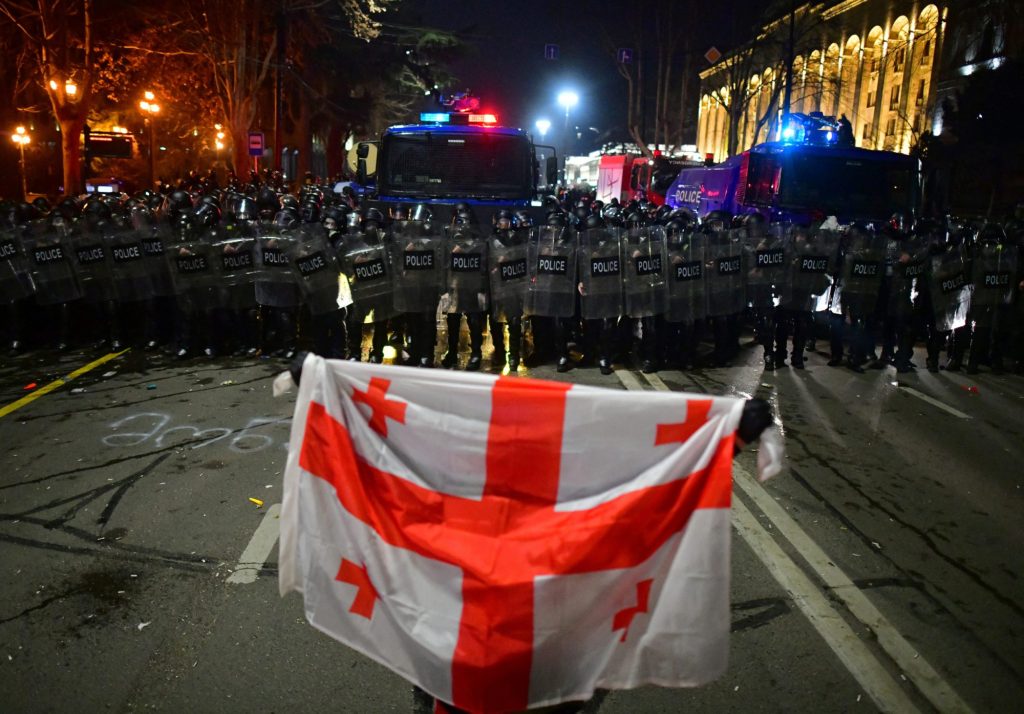
Image: A demonstrator holds a Georgian flag in front of police officers during a protest against a draft law on “foreign agents”, which critics say represents an authoritarian shift and could hurt Georgia’s bid to join the European Union, in Tbilisi, Georgia. March 9, 2023. (REUTERS/Zurab Javakhadze)

The post Russia is losing in Ukraine but winning in Georgia first appeared on The News And Times – thenewsandtimes.com.


Categories
The News And Times – thenewsandtimes.com

Azerbaijan determined to have peace with Armenia solely on its own terms


default.jpg

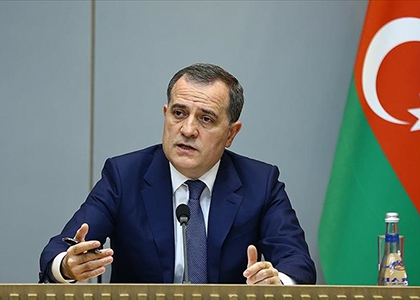
Azerbaijan’s Minister of Foreign Affairs, Jeyhun Bayramov, in an interview with the Azertac news agency and the Hungarian Magyar Demokrata newspaper, which he gave during his official visit to Hungary, once again presented demands to Armenia—and under the name of “willingness to establish peace.”

“Azerbaijan is determined to achieve peace with Armenia. We (…) are convinced that the peace agenda should continue, we are determined to finish that process. The development of the final text of the [peace] agreement should also be completed, which should be based solely on the norms of international law,” said the Azerbaijani FM.

He noted that Baku’s position is so that “hostility remains behind and a new era begins between the two countries,” TASS reported.

At the same time, however, Bayramov accused Armenia of “provocations on the ground” from time to time. According to him, “a serious source of tension and volatility in the region is the presence of Armenian armed units (about 10,000 people) in the territory of Azerbaijan [i.e. Nagorno-Karabakh] maintained to this day.”

He stated that these units are kept by Armenia, which funds them from its state budget.

“Part of the personnel of those units is the military personnel of the Armed Forces of Armenia. There are many proofs confirming this,” added the Azerbaijani FM.

!

This text available in   Հայերեն and Русский

Print

The post Azerbaijan determined to have peace with Armenia solely on its own terms first appeared on The News And Times – thenewsandtimes.com.


Categories
The News And Times – thenewsandtimes.com

Azerbaijani official says New York Times curbing alternative views


thumbs_b_c_ddf2044fa9c543cd3c58e7305d57f

ISTANBUL

Azerbaijan’s presidential adviser said Wednesday that The New York Times is curbing alternative views, amid reports by media outlets on an alleged “blockade” on the country’s Karabakh region.

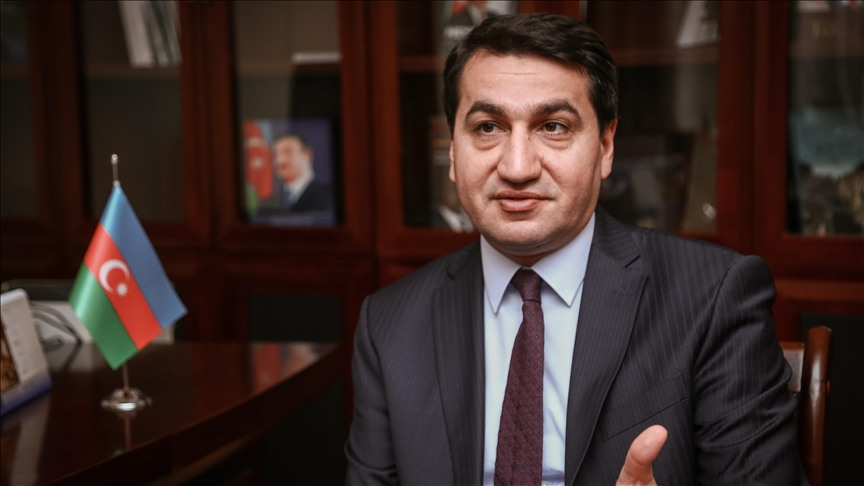
“Instead of being a fair platform for all voices, I do regret that NYT is putting firewalls and bureaucratic barriers to alternative views,” Hikmet Hajiyev said on X, along with the screenshot of an open letter addressing the daily’s editor.

Hajiyev said that there is an information monopoly made up of “some western media outlets,” which he said are engaged in “Soviet style propaganda” against Azerbaijan.

He went on to say that X provides “a more powerful free and open platform” compared to these outlets, adding that, upon reading the articles, they give the impression that they were written “in the same government studio or PR company financed by the Armenian lobby and government.”

In his open letter, Hajiyev refers to an opinion piece published by the top daily on Saturday, reiterating Baku’s call for the opening of additional routes into Karabakh.

He said Karabakh was a “grey zone” during Armenia’s occupation of the region, adding: “Such a grey zone would not be tolerable to Armenia if it was in their country. So why should it be acceptable to Azerbaijan when it is in ours?”

Despite ongoing talks over a long-term peace agreement, tensions between Azerbaijan and Armenia rose in recent months over the Lachin road, the only land route giving Armenia access to the Karabakh region, where Azerbaijan established a border checkpoint in April on the grounds of preventing the illegal transport of military arms and equipment to the region.

Since then, Yerevan has accused Azerbaijan of “blockading” the region and causing a “humanitarian crisis.” Baku has vehemently denied Armenia’s claims and has proposed the use of the Aghdam-Khankendi road for shipments to the region.

In the fall of 2020, Azerbaijan liberated several cities, villages, and settlements from Armenian occupation during 44 days of clashes. The war ended with a Russia-brokered peace agreement.

Anadolu Agency website contains only a portion of the news stories offered to subscribers in the AA News Broadcasting System (HAS), and in summarized form. Please contact us for subscription options.

The post Azerbaijani official says New York Times curbing alternative views first appeared on The News And Times – thenewsandtimes.com.


Categories
The News And Times – thenewsandtimes.com

CIA Director Burns says the Wagner uprising’s fallout ‘will play out for some time’


Selected Articles – The News And Times
CIA Director Burns says the Wagner uprising’s fallout ‘will play out for some time’
CIA Director William Burns called the short-lived Russian mercenary rebellion “a vivid reminder of the corrosive effect” of Putin’s regime. Burns is pictured testifying at a House Select Committee on Intelligence annual open hearing…
The U.S. says the Wagner Group is a transnational criminal organization. Here’s why | CBC News
The U.S. Treasury Department this week designated the Wagner Group a significant transnational criminal organization — part of an effort to crack down on an entity responsible for a growing number of atrocities in Ukraine.The Wagner Group — a private military company owned by Russian oligarch Yevgeny Prigozhin — first took to the battlefield during…
Massive split in Russian military forces as Wagner vows to quit Bakhmut on May 10
Press play to listen to this article Voiced by artificial intelligence. KYIV — The war of words between Wagner chief Yevgeny Prigozhin and the Russian defense ministry escalated on Friday, with the paramilitary group’s financier filming himself raging at Moscow and threatening to pull out of the key battleground town of Bakhmut. In a statement published…
Why Wagner Group leader Prigozhin’s 2nd plane head for Azerbaijan capital Baku?
Why did the second plane of Wagner Group leader Yevgeny Prigozhin head for Azerbaijani capital Baku, ask Azerbaijani media. One of Prigozhin’s Embraer ERJ-135bj Legacy 650 planes went to Baku on Thursday. This is evidenced by flight tracking service Flightradar, according to which, this plane left Moscow at 3:30pm and landed in Baku at 7:04pm. Russian…
U.S. to designate Wagner mercenary group a ‘transnational criminal organization’
The U.S. will designate the Russian mercenary Wagner Group as a “significant transnational criminal organization” and impose further sanctions against the organization and its support network next week, the White House said Friday. “These actions recognize the transcontinental threat that Wagner poses, including through its ongoing pattern of serious…
Is Russia’s Wagner Group recruiting US veterans to fight in Ukraine? – Tully Rinckey PLLC
The Wagner Group, Russia’s notorious private military company accused of war crimes and identified as a “significant transnational criminal organization” by the U.S. Treasury Department, may be trying to recruit American veterans as mercenaries. A video being shared on social media is purportedly a Wagner recruiting commercial that targets U.S. military…
US top diplomat Blinken makes surprise visit to Kyiv – DW – 09/06/2023
09/06/2023September 6, 2023US Secretary of State Antony Blinken makes a surprise visit to Kyiv and is expected to announce a new aid package for Ukraine.US Secretary of State Antony Blinken on Wednesday made an unannounced visit to Kyiv where he is expected to announce a new aid package worth more than $1 billion (€930 million). The Reuters news agency…
Russia’s Wagner Group: Where is it active? – DW – 06/25/2023
The Wagner Group isn’t just active in Ukraine. It also has a presence in many other countries, including Syria or Mali. And it’s not the only Russian private military company either. Over the past few years, there has been an increase in these kinds of groups, also known as PMCs, in Russia, a report from the US-based think tank, the Center for Strategic…
What is the Wagner Group, and who is Yevgeny Prigozhin? What to know about the Russian private military company
For years, it was shrouded in secrecy, then infamy, and after claims of a “rebellion” in Russia in June, questions about the notorious Wagner Group and the intentions of its leader Yevgeny Prigozhin — who Russian officials said was killed in an airplane crash Aug. 24 — were swirling.The group has been a key piece of Russia’s strategy in Ukraine, with…
Jacksonville shooter named; Prigozhin’s death confirmed: Weekend Rundown
Authorities share new details about the gunman and the victims of an apparent race-motivated shooting in Florida. Russia confirms the death of Yevgeny Prigozhin. And Vivek Ramaswamy says he would have certified Biden’s victory on Jan. 6, 2021.Here’s the biggest news you missed this weekend.Jacksonville shooter is identified Authorities on Sunday named…
Retired Utah officer speaks about investigations of shootings involving FBI agents
A retired deputy police chief spoke to 2News about why the Utah County Attorney opened an investigation into the officer-involved fatal shooting of a Provo man. The Utah County Attorney’s Office announced they have opened an investigation into the FBI shooting that resulted in the death of a Provo man to determine if the shooting death was justified….
Here is the growing list of fugitive Jan. 6 rioters running from the FBI: report – Raw Story
Here is the growing list of fugitive Jan. 6 rioters running from the FBI: report  Raw Story
FBI Hunting for Several Jan. 6 Fugitives: Report – The Messenger
FBI Hunting for Several Jan. 6 Fugitives: Report  The Messenger
Armen Grigoryan holds meetings at US Central Intelligence Agency
Secretary of the Security Council of Armenia Armen Grigoryan held meetings at the headquarters of the US Central Intelligence Agency, APA reports citing the Facebook page of the Armenian Secretary of the Security Council. “During my visit to Washington, I had business meetings at the headquarters of the Central Intelligence Agency in Langley,” Grigoryan…
South Caucasus in a geopolitical context of Russia: Analysis from Baku
South Caucasus in the Russian geopolitical context Resource constraints currently prevent Russia from playing a dominant role in the South Caucasus, and Moscow is in process of defining its interests in the new reality in the region. Such is the conclusion of the South Caucasus analytical center, located in Baku. Azerbaijani experts believe that…
Germany’s spy agencies should be more like GCHQ, say ex-spy chiefs who complain of ‘sprawling bureaucracy’ – Daily Mail
Germany’s spy agencies should be more like GCHQ, say ex-spy chiefs who complain of ‘sprawling bureaucracy’  Daily Mail
FBI Launches Search For Convicted Proud Boy Who Disappeared … – Forbes
FBI Launches Search For Convicted Proud Boy Who Disappeared …  Forbes
CIA stairwell attack among flood of sexual misconduct complaints at spy agency
FAIRFAX, Va. (AP) — In a secluded stairwell at CIA headquarters last year, officer trainee Ashkan Bayatpour came up behind a colleague, wrapped a scarf around her neck and plainly spoke as he tried to kiss her on the mouth.“There are many uses for this,” the woman recalls him saying. “This is what I want to do to you.”Bayatpour was convicted Wednesday…
CIA stairwell attack among flood of sexual misconduct complaints at spy agency – WYMT
CIA stairwell attack among flood of sexual misconduct complaints at spy agency  WYMT
FBI Data on Active Shootings Is Misleading
Americans are constantly debating policing and gun control. But to discuss these issues, we have to depend on government crime data. Unfortunately, politics has infected the data handling of agencies such as the FBI and the Centers for Disease Control and Prevention. Last year, the CDC became the center of controversy when it removed its estimates…

The post CIA Director Burns says the Wagner uprising’s fallout ‘will play out for some time’ first appeared on The News And Times – thenewsandtimes.com.


Categories
The News And Times – thenewsandtimes.com

Indian Capital Dresses Up for G20 Summit 


Bright murals on city walls, freshly paved roads, illuminated monuments and fountains and tall new statues that showcase India’s cultural heritage will greet delegates arriving for the Group of 20 summit to the Indian capital New Delhi.

Even as Delhi is dressed up as never before, massive security measures will turn the city into a virtual fortress for the weekend summit with tens of thousands of police, paramilitary and commandos deployed along its streets, borders and at hotels that will house presidents and prime ministers. Anti-drone systems will deter aerial threats.

During its G20 presidency, India has tried to boost its global stature and authorities want the city of over 20 million to showcase a rising power.

Earlier this year, Delhi’s Lieutenant Governor, Vinai Kumar Saxena, said the G20 summit was an opportunity to show “the best face of India.”

The summit meeting will be held at a revamped convention and exhibition center, named Bharat Mandapam, in the heart of New Delhi. Thousands of potted plants and flowers bedeck sidewalks along roads that VIP motorcades will zip by.

Cutouts of large monkeys called “langurs” have been installed to scare away smaller monkeys, a routine menace in the city. Workers are dowsing mosquito breeding sites with insecticides in a city where dengue cases have been reported in recent months.

The “beautification” drive, that carries a price tag of millions of dollars, is not without controversy.

Several demolition drives in recent months have bulldozed shanties, displacing hundreds of low-income workers. Authorities have denied any link between the demolitions and the G-20 summit, and said they were carried out against “illegal encroachers.” The government said they will help those who lost their homes.

But rights activists point out that these tenements had existed for decades.

“It is an attempt to conceal the poverty that is visible — that is why there was a frenzy of demolitions,” said Harsh Mander, a prominent rights activist. “That is because these shanties are a reminder of the fact that in the midst of India’s economic growth, huge levels of poverty persist. It is a sanitized version of the city that is being projected.”

The city’s homeless who live under bridges and sleep on footpaths have been shifted to shelter homes, according to local media.

Many pavement vendors who plied their trade along major roads have been moved to inner lanes. The opposition Congress Party has demanded financial compensation for street vendors, weekly market traders and others whose livelihoods will be affected by the summit restrictions.

“Since the last two days, I was asked to set up my cart in a lane about 150 meters away from the main road. But customers don’t come inside,” said Devki Nandan Pant, a street vendor who sells “kulfi”, an Indian version of ice cream in a South Delhi neighborhood. “It is creating a lot of hardship for people like us.”

Delhi’s usually crowded streets will be largely silent around the G20 venue with stringent traffic restrictions making it out of bounds for most citizens. Major markets in the vicinity of the convention center, schools and colleges have also been ordered shut from Friday. Offices have been told to work from home.

Many residents are simply leaving the city, choosing to take a break rather than navigate the restrictions.

New Delhi resident Vishaka Talreja took a flight on Wednesday to Kashmir with her family. “Everything will be shut down including food deliveries, so what would we do in the city? We left today itself because I thought it is better to leave before airport security etc. also becomes very stringent or flights get cancelled.”

The grand showcasing of the G20 summit is not just meant to underline India’s ambitions as a rising power, which wants to emerge as the voice of what it calls the “Global South” or developing countries.

It is also expected to give Prime Minister Narendra Modi a boost domestically ahead of next year’s general elections. India’s G20 logo features a lotus, the symbol of Mr. Modi’s Bharatiya Janata Party — posters have been plastered along roads, not just in Delhi, but in other cities that hosted a series of G20 events in the past year.

Political analyst Rasheed Kidwai pointed out that G20 summits, whose presidency rotates between members, have been held for many years but have never been scaled up to the level as they have been under India’s presidency.

“Among Modi’s biggest backers are the great Indian middle class and urban India. For them, this grand showcasing and fanfare projects the image that we have arrived on the international high table. So, taking the G20 summit from a somewhat routine event to a high profile one does yield political dividends domestically also,” he said.

The post Indian Capital Dresses Up for G20 Summit  first appeared on The News And Times – thenewsandtimes.com.


Categories
The News And Times – thenewsandtimes.com

Futures fall as inflation concerns resurface, investors await economic data


2023-09-06T11:29:20Z

Raindrops hang on a sign for Wall Street outside the New York Stock Exchange in Manhattan in New York City, New York, U.S., October 26, 2020. REUTERS/Mike Segar/File Photo

Wall Street futures fell on Wednesday as concerns about sticky inflation kept investors on edge ahead of key data, including the Federal Reserve’s report on the U.S. economy, which could help determine the central bank’s interest rate path.

A rise in Treasury yields and oil prices had pushed stocks lower on Tuesday as signs of persistent inflationary pressures tempered expectations of a less hawkish Federal Reserve.

Investors now await a slew of fresh economic data due later in the day, including the S&P Global final U.S. composite Purchasing Managers’ Index (PMI) and the ISM non-manufacturing PMI for hints on the state of the economy.

“The extension of output cuts by Russia and Saudi Arabia through to the end of the year is likely to add to inflationary pressures,” said Russ Mould, investment director at AJ Bell in a note.

“It may force the Fed to keep interest rates higher for longer and this is helping undercut the more comfortable narrative that the trajectory for rates is on the way to shifting.”

Investors are also focused on the Fed’s “Beige Book”, due at 2:00 p.m. ET, for a snapshot of the U.S. economy, ahead of the keenly awaited inflation data scheduled for next week and the Fed’s policy decision on Sept. 20.

Traders’ odds for a pause in interest rate hikes in the central bank’s September meeting remained intact at 93%, with bets on a pause in November at 57.8%, according to the CME FedWatch Tool.

Investors will also parse comments from Boston Fed President Susan Collins and Dallas Fed President Lorie Logan later in the day.

At 7:07 a.m. ET, Dow e-minis were down 76 points, or 0.22%, S&P 500 e-minis were down 11.5 points, or 0.26%, and Nasdaq 100 e-minis were down 50 points, or 0.32%.

Shares of Apple (AAPL.O) slipped 0.7% before the bell as a report said China had ordered officials at central government agencies to not use iPhones and other foreign-branded devices for work, or bring them into their offices.

Shares of Alaska Air Group (ALK.N), Southwest Airlines (LUV.N) and United Airlines (UAL.O) fell between 0.6% and 3.3% after the three airlines warned of higher fuel costs in the third quarter due to a jump in crude prices.

Gitlab (GTLB.O) gained 6.1% after the software coding platform posted a surprise profit for the second quarter.

Shares of Roku (ROKU.O) climbed 8.6% after the video-streaming company said on Wednesday it would reduce its workforce by about 10% and limit new hiring.

General Mills (GIS.N) rose 1.4% after the Cheerios cereals-maker reaffirmed its financial targets for 2024.

The post Futures fall as inflation concerns resurface, investors await economic data first appeared on The News And Times – thenewsandtimes.com.


Categories
The News And Times – thenewsandtimes.com

Armenia to exercise with US troops next week, Russia voices concern


2023-09-06T10:03:17Z

Armenia said on Wednesday it would host a joint military exercise with the United States next week, a development that Russia said was cause for concern.

The Armenian Defence Ministry said the purpose of the Sept. 11-20 “Eagle Partner 2023” exercise was to prepare its forces to take part in international peacekeeping missions.

A U.S. military spokesperson said 85 US soldiers and 175 Armenians would take part. He said the Americans – including members of the Kansas National Guard which has a 20-year-old training partnership with Armenia – would be armed with rifles and would not be using heavy weaponry.

Despite the small scale of the exercise, the Kremlin said it would be watching closely.

“Of course, such news causes concern, especially in the current situation. Therefore, we will deeply analyse this news and monitor the situation,” Kremlin spokesman Dmitry Peskov said.

Russia has a military base in Armenia and sees itself as the pre-eminent power in the South Caucasus region, which until 1991 was part of the Soviet Union.

It maintains a peacekeeping force in the region to uphold an agreement that ended a war between Armenia and Azerbaijan in 2020, the second they have fought since the Soviet collapse.

Armenian Prime Minister Nikol Pashinyan said in a weekend interview with an Italian newspaper that Russia had failed to protect Armenia against what he called continuing aggression from Azerbaijan. He suggested that Russia’s war in Ukraine meant it was unable to meet all Armenia’s security needs.

Peskov told reporters on Tuesday he disagreed with Pashinyan’s remarks.

“Russia is an absolutely integral part of this region,” he said. “Russia plays a consistent, very important role in stabilising the situation in this region … and we will continue to play this role.”

The post Armenia to exercise with US troops next week, Russia voices concern first appeared on The News And Times – thenewsandtimes.com.