Categories
The News And Times – thenewsandtimes.com

Score another one for President Joe Biden


joe-biden.jpg

Sign up for the free Palmer Report mailing list.

Help support our 2024 efforts by donating here.


Palmer Report has led the way in political analysis. Now we’re gearing up to cover the 2024 election, up and down the ballot. Help support Palmer Report’s 2024 efforts by donating here.


A lot of President Biden’s detractors like to act as though all the money being spent now is being sent overseas to Ukraine – ignoring the fact that a lot of the weapons they need have already been produced and foreign spending generally makes up a small part of the budget.

The Inflation Reduction Act and Build Back Better both call for considerable investments in American infrastructure and the economy as well as a number of social programs, enough impact that it’s basically the closest we’ve come to a modern day incarnation of the Roosevelt administration’s New Deal.

The week of Aug 27 to Sept 2 was declared Overdose Awareness week, and on Thursday, the Biden Administration declared that more than $450 million would be spent on preventing deaths related to overdose, with $83 billion spent so far on helping people recover and get treatment, a 42% increase over the last four years.


While the former guy and Republicans are ranting about executing drug dealers and invading Mexico, the Biden administration is getting real results at home and leading the world by example at how to combat opioid abuse. The parallels between the GOP and the Democratic Party have never been clearer than they are today – and while Republicans like to bring up this issue, Democrats are the ones getting results.

Palmer Report has led the way in political analysis. Now we’re gearing up to cover the 2024 election, up and down the ballot. Help support our 2024 efforts by donating here or sign up for our free mailing list.
Let’s go win this! Support Palmer Report by clicking here!

Send $5 to Palmer Report:

Send $25 to Palmer Report:

Send $75 to Palmer Report:

The post Score another one for President Joe Biden appeared first on Palmer Report.

The post Score another one for President Joe Biden first appeared on The News And Times – thenewsandtimes.com.


Categories
The News And Times – thenewsandtimes.com

Gabon Reopens Borders Three Days After Military Coup


Gabon reopened its borders on Saturday, an army spokesman said, three days after closing them during a military coup in which President Ali Bongo was ousted.

Military officers led by General Brice Oligui Nguema seized power Wednesday, placed Bongo under house arrest and installed Nguema as head of state, ending the Bongo family’s 56-year hold on power.

The coup — the ninth in the continent in three years — has raised concerns about a contagion of military takeovers across the region that have erased democratic progress made in the last two decades.

Coup leaders have come under international pressure to restore civilian government but said Friday night that they would not rush to hold elections.

The land, sea and air borders were opened because the junta was “concerned with preserving respect for the rule of law, good relations with our neighbors and all states of the world” and wanted to keep its “international commitments,” the army spokesman said on national television.

Bongo was elected in 2009, taking over from his late father, Omar, who came to power in 1967. Opponents say the family did little to share Gabon’s oil and mining wealth.

The takeover in Gabon follows coups in Guinea, Chad and Niger, plus two each in Mali and Burkina Faso since 2020, worrying international powers with strategic interests at stake.

The post Gabon Reopens Borders Three Days After Military Coup first appeared on The News And Times – thenewsandtimes.com.


Categories
The News And Times – thenewsandtimes.com

VOA Newscasts


Give us 5 minutes, and we’ll give you the world. Around the clock, Voice of America keeps you in touch with the latest news. We bring you reports from our correspondents and interviews with newsmakers from across the world.

The post VOA Newscasts first appeared on The News And Times – thenewsandtimes.com.


Categories
The News And Times – thenewsandtimes.com

Biden heads to Florida to survey storm damage, will not meet with DeSantis


2023-09-02T15:39:27Z

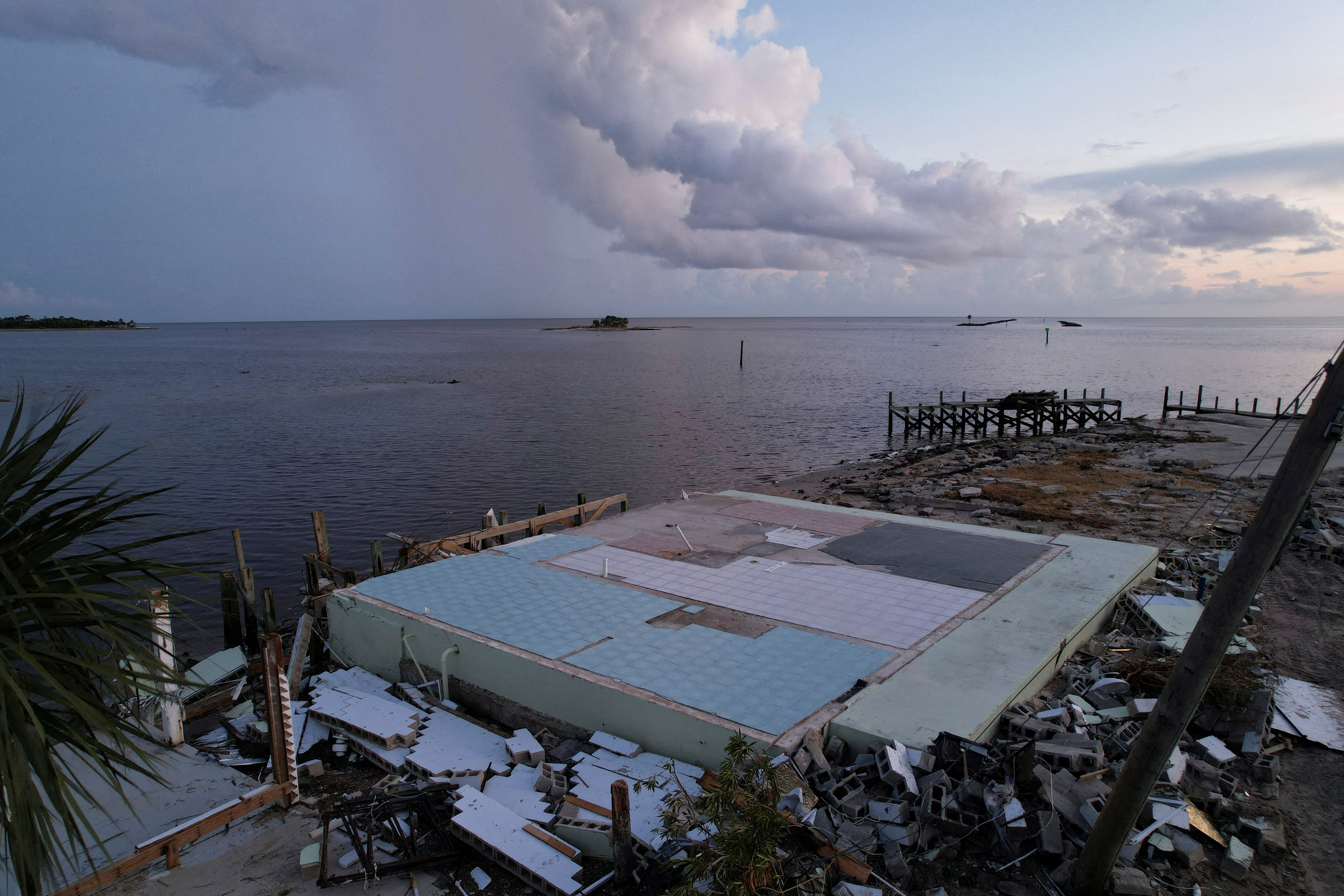
U.S. President Joe Biden heads to Florida on Saturday to survey damage caused by Hurricane Idalia and comfort people affected by the storm, but he will not be meeting Ron DeSantis, the state’s Republican governor and a potential presidential rival.

Biden, a Democrat, told reporters on Friday he would see the governor during the trip, but DeSantis’ spokesman Jeremy Redfern said later that no meeting was planned and “the security preparations alone that would go in to setting up such a meeting would shut down ongoing recovery efforts.”

Responding to a question on Saturday on what had happened to the meeting, Biden told reporters, “I don’t know. He’s not going to be there.”

DeSantis, 44, is running for the 2024 Republican presidential nomination to oust Biden from the White House but trails former President Donald Trump in polls. Biden, 80, is running for re-election.

Biden and DeSantis have spoken regularly this week about the storm, which pummeled Florida’s Big Bend region with Category 3 winds of nearly 125 mph (200 kph). On Wednesday the president said politics had not crept in to their conversations. “I think he trusts my judgment and my desire to help,” Biden said.

The White House said Biden, who is traveling with his wife, Jill, informed DeSantis about the visit during a conversation on Thursday and the governor did not raise concerns then.

“Their visit to Florida has been planned in close coordination with FEMA as well as state and local leaders to ensure there is no impact on response operations,” White House spokesperson Emilie Simons said, referring to the Federal Emergency Management Agency.

DeSantis has been a sharp critic of Biden, and the two have clashed over COVID-19 vaccines, abortion and LGBT rights. But they met last year when Biden came to Florida to assess the devastation from Hurricane Ian, and Biden said at the time that they had worked together “hand in glove.”

DeSantis may not want to be photographed with Biden overlooking storm damage now as the Republican presidential primary race intensifies. Though he trails Trump, DeSantis leads the other Republican candidates in the race.

When Biden visited Florida after Hurricane Ian, a photo of DeSantis standing awkwardly to the side as Biden talked animatedly with a local couple went viral, highlighting the difference between the two politicians’ styles of public interaction.

Former New Jersey Governor Chris Christie, who is also running for the 2024 Republican presidential nomination, drew criticism for his praise of President Barack Obama in 2012 when the Democrat visited his state in the aftermath of superstorm Sandy.

Biden will visit Live Oak, Florida, take an aerial tour of the damage and receive a briefing about recovery efforts, the White House said. He and the first lady will also tour a community that was hit by the storm.

Biden visited Hawaii just last week in the aftermath of deadly fires there and said on Wednesday that no one could deny the climate crisis in light of the extreme weather. He is slated to travel to his home state of Delaware for the weekend after concluding the Florida trip.

Related Galleries:

A view of the foundation of Dennis Buckley’s home after the arrival of Hurricane Idalia in Horseshoe Beach, Florida, U.S., August 31, 2023. REUTERS/Cheney Orr/File Photo

U.S. President Joe Biden speaks prior to awarding Medals of Honor to U.S. Army veterans who fought in the Vietnam War, during a ceremony in the East Room at the White House in Washington, U.S., July 5, 2022. REUTERS/Kevin Lamarque/File Photo

The post Biden heads to Florida to survey storm damage, will not meet with DeSantis first appeared on The News And Times – thenewsandtimes.com.


Categories
The News And Times – thenewsandtimes.com

A Brutal Path Forward, Village by Village


A howitzer partially hidden by brush fires with a blast of flame and smoke, and two Ukrainian soldiers operating it crouch down, one covering his ears.

Ukrainian soldiers fire a howitzer at targets in the direction of Bakhmut on the eastern front line on Monday.

As Ukraine pushes slowly forward in its counteroffensive, it’s relying heavily on the effort of hundreds of small-scale assault groups, each tasked with attacking a single trench, tree line or house.

Ukrainian soldiers fire a howitzer at targets in the direction of Bakhmut on the eastern front line on Monday.Credit…

Marc SantoraTyler Hicks

By Marc Santora

Photographs by Tyler Hicks

  • Sept. 2, 2023Updated 5:04 a.m. ET

The mission for the Ukrainian unit was to take a single house, in a village that is only a speck on the map but was serving as a stronghold for Russian soldiers.

Andriy, a veteran marine, had waited for three days with his small assault team — none of whom had seen combat before — as other Ukrainian units crawled through minefields, stormed trenches and cleared a path to the farming village of Urozhaine. Finally, one day last month, the order came to move.

They raced to a predetermined location in an armored personnel carrier, and disembarked as explosions and gunfire rattled the ground beneath their feet, Andriy and members of his unit said. Driving out or killing the remaining Russians, they secured the house as night fell, posting guards and reviewing the day’s tactics to see how they might improve.

In the morning, the new order came: Take another house.

The monthslong campaign to breach heavily fortified Russian lines is being conducted in many domains and in many forms of battle, with artillery duels and drone strikes across the breadth of the front in southern Ukraine. But the engine driving the effort are hundreds of small-scale assault groups, often just eight to 10 soldiers, each tasked with attacking a single trench, tree line or house.

In this tactical approach, small villages loom large. They line paved roads, facilitating transport, and the buildings, even those ravaged by shelling, provide a measure of cover. The Russians are using them as strongholds; Urozhaine, for instance, was ringed by two trench lines and a maze of tunnels that allowed Russian troops to shoot in one location, then pop up somewhere else.

ImageIn a training exercise, a Ukrainian soldier peers through a doorway in a gutted building, while in the background another soldier crouches, holding a rifle.

Ukrainian marines practice house-to-house combat during training exercises in the region of Vuhledar in August.

A Ukrainian soldier at an artillery position in the Bakhmut region.

It’s a hard way to fight a war — village by village, house by house — with no guarantee of success. Once taken and secured, however, the surviving Russian fortifications provide a base for the Ukrainians to plot their next move forward.

This has been the pattern for Ukraine as it tries to move along two north-south routes toward the Sea of Azov, looking for a place to break through and sever the so-called land bridge between Russia and occupied Crimea.

To the West, Ukrainian forces have been pushing on the path that leads toward Melitopol; having secured the key village of Robotyne, they were fighting fiercely this week at the village of Verbove, the next step in the advance. On Friday, the Ukrainian military said it had pushed three and a half miles beyond Robotyne, and John Kirby, the White House National Security Council spokesman, said Ukraine had made “notable progress” in the preceding 72 hours.

Urozhaine lies on a route farther east, along a small rural road that leads to Mariupol on the southern coast.

The battle over the village would last nine days, with the Russians finally retreating on Aug. 19 under a hail of Ukrainian artillery fire. It was a small but necessary step. As with Robotyne, securing it meant Ukraine’s forces had broken through the Russians’ first layer of defenses. Just as importantly, they have now held it for two weeks.

There are still some 60 miles of hard road ahead for the Ukrainians before they can reach the coast, and at least one more heavily fortified Russian defensive line in their way. The Russians are resisting fiercely, protected by entrenched positions, minefields and air superiority. The marines expect the fight to be bloody and slow.

“Russians have more artillery, more tanks, more drones, and more people,” said a veteran marine named Denis. “And they also fortify very well — whenever they get to somewhere — be it a settlement, a forest belt, or just a field.”

Ukrainian Marines during training exercises in the south. There are many newly trained recruits joining the war effort.
A Marine runs during training exercises. The path forward on the counteroffensive has been grueling.

The Ukrainians allowed a team from The New York Times to visit marines fighting on the road to Mariupol on multiple occasions over two weeks in August, on the condition that the journalists not reveal precise locations, soldiers’ full names and ranks, and certain operational details.

Daily success is measured in yards rather than miles. But dozens of these assaults have been raging daily for weeks and, taken together, they are adding up to gains that Ukraine says will pose increasing problems for overstretched Russian forces.

In more than a dozen interviews in recent days, troops engaged in combat voiced great confidence that they can break the Russian lines.

“After the first and the second lines there will be the straight way toward the sea, no more fortifications,” said Maksym, another veteran marine who fought in Urozhaine. “We will move like rockets.”

The marines are fighting on a line that runs south along the T0158, a rural road that winds its way through the Mokri Yali River Valley, where Ukrainians have retaken a series of villages since launching their counteroffensive in June. The next major assault target is Staromlynivka, about 12 miles from where the campaign began.

The Russians are racing in reinforcements to try and stop the advance, Ukrainian soldiers said.

Their description of the battle at Urozhaine was supported by unedited Ukrainian drone footage viewed by The Times. Key details also corresponded with accounts posted on social media by Russian soldiers and bloggers.

Ukrainian soldiers with a resupply of artillery for their 122-millimeter howitzer in the Bakhmut region.
Ukrainian soldier looking for a drone overhead that they can hear.

Before attacking Russians in a village, Ukrainians fight to control the elevated positions on the flanks, hoping to make the Russian positions untenable and limit the house-to-house fighting.

Each settlement presents many of the same challenges, so the marines map out each assault and drill as much as they can before launching an attack.

“The most important thing is to hold the first street,” Denis said. “Then we send an additional drone that looks at each building. Our soldiers are divided into two groups: the fire group and the maneuver group. The fire group shoots Russians hiding on different floors of the building and then the maneuver group clears it. This is how we move house after house.”

If the assault fails, he said, they call in artillery strikes and destroy the house.

The Russians are also adapting, the marines said, including using new tactics to make the already treacherous minefields even more lethal.

They will lace a pasture filled with mines with a flammable agent, for instance. Once the Ukrainians get to work clearing an opening, the Russians will drop a grenade from a drone, igniting a sea of fire and explosions.

The mining makes control over paved roads essential; they are the safest routes because mines are easier to spot and remove. The Russians know this and have set up defenses along the T0158, with concrete bunkers for machine gunners. Russian drones keep the roads under constant surveillance.

As Denis spoke a few miles from the line of contact, a unit was practicing an assault on a house. There is no shortage of battered buildings to run such drills, so they move locations often.

Ukrainian marines during exercises. The military does not have the luxury of a lot of time for training.
Marines of the Ukrainian Armed Forces during training exercises in the region of Vuhledar.

But Russian drones picked up the gathering of soldiers and fired rockets at them. The soldiers heard the whistle of the incoming rockets and had seconds to dive for cover. They scattered as the Russians unleashed another salvo. A hail of rockets crashed around the marines, but no one was injured.

A few days later, another group was preparing for their next assault along the road to Mariupol. They were among a recent influx of Marines who had completed training in Britain but had yet to experience combat.

A trainer named Vasyl, 53, was running the drills, barking orders as the new soldiers fired live rounds and rocket-propelled grenades for the first time. Time is a luxury they do not have as battles rage, he said, “so we do our best to get them ready as soon as possible.”

A key part of forming a successful assault unit, the soldiers said, was finding the most motivated recruits willing to race into a cauldron of destruction.

Like other Ukrainian outfits, the marines are composed of a mix of career fighters, volunteers and mobilized conscripts. About 70 percent come from the local area — including the occupied city of Mariupol — and soldiers believe that gives them a distinct advantage over an enemy they view as fighting for a paycheck, and holding positions out of fear of punishment for retreating.

As experienced soldiers, Andriy and Maksym, both 35, guided the new recruits.

“Of course we had some losses, not within our platoon, but within the brigade,” Maksym said. “It’s war, you know.”

Still, the marines achieved their objective in Urozhaine and were one small step closer to the sea.

“It’s also important for self-confidence and motivation,” Maksym said. “Many of the guys were new, it was their first fight. And now they know how it is.”

Marines practice carrying a wounded comrade during training exercises in the region of Vuhledar.

Gaëlle Girbes and Dimitry Yatsenko contributed reporting from the front line.

Marc Santora has been reporting from Ukraine since the beginning of the war with Russia. He was previously based in London as an international news editor focused on breaking news events and earlier the bureau chief for East and Central Europe, based in Warsaw. He has also reported extensively from Iraq and Africa. More about Marc Santora

Tyler Hicks is a senior photographer for The Times. In 2014, he won the Pulitzer Prize for Breaking News Photography for his coverage of the Westgate Mall massacre in Nairobi, Kenya. More about Tyler Hicks

The post A Brutal Path Forward, Village by Village first appeared on The News And Times – thenewsandtimes.com.


Categories
The News And Times – thenewsandtimes.com

A Brutal Path Forward, Village by Village


A howitzer partially hidden by brush fires with a blast of flame and smoke, and two Ukrainian soldiers operating it crouch down, one covering his ears.

Ukrainian soldiers fire a howitzer at targets in the direction of Bakhmut on the eastern front line on Monday.

As Ukraine pushes slowly forward in its counteroffensive, it’s relying heavily on the effort of hundreds of small-scale assault groups, each tasked with attacking a single trench, tree line or house.

Ukrainian soldiers fire a howitzer at targets in the direction of Bakhmut on the eastern front line on Monday.Credit…

Marc SantoraTyler Hicks

By Marc Santora

Photographs by Tyler Hicks

  • Sept. 2, 2023Updated 5:04 a.m. ET

The mission for the Ukrainian unit was to take a single house, in a village that is only a speck on the map but was serving as a stronghold for Russian soldiers.

Andriy, a veteran marine, had waited for three days with his small assault team — none of whom had seen combat before — as other Ukrainian units crawled through minefields, stormed trenches and cleared a path to the farming village of Urozhaine. Finally, one day last month, the order came to move.

They raced to a predetermined location in an armored personnel carrier, and disembarked as explosions and gunfire rattled the ground beneath their feet, Andriy and members of his unit said. Driving out or killing the remaining Russians, they secured the house as night fell, posting guards and reviewing the day’s tactics to see how they might improve.

In the morning, the new order came: Take another house.

The monthslong campaign to breach heavily fortified Russian lines is being conducted in many domains and in many forms of battle, with artillery duels and drone strikes across the breadth of the front in southern Ukraine. But the engine driving the effort are hundreds of small-scale assault groups, often just eight to 10 soldiers, each tasked with attacking a single trench, tree line or house.

In this tactical approach, small villages loom large. They line paved roads, facilitating transport, and the buildings, even those ravaged by shelling, provide a measure of cover. The Russians are using them as strongholds; Urozhaine, for instance, was ringed by two trench lines and a maze of tunnels that allowed Russian troops to shoot in one location, then pop up somewhere else.

ImageIn a training exercise, a Ukrainian soldier peers through a doorway in a gutted building, while in the background another soldier crouches, holding a rifle.

Ukrainian marines practice house-to-house combat during training exercises in the region of Vuhledar in August.

A Ukrainian soldier at an artillery position in the Bakhmut region.

It’s a hard way to fight a war — village by village, house by house — with no guarantee of success. Once taken and secured, however, the surviving Russian fortifications provide a base for the Ukrainians to plot their next move forward.

This has been the pattern for Ukraine as it tries to move along two north-south routes toward the Sea of Azov, looking for a place to break through and sever the so-called land bridge between Russia and occupied Crimea.

To the West, Ukrainian forces have been pushing on the path that leads toward Melitopol; having secured the key village of Robotyne, they were fighting fiercely this week at the village of Verbove, the next step in the advance. On Friday, the Ukrainian military said it had pushed three and a half miles beyond Robotyne, and John Kirby, the White House National Security Council spokesman, said Ukraine had made “notable progress” in the preceding 72 hours.

Urozhaine lies on a route farther east, along a small rural road that leads to Mariupol on the southern coast.

The battle over the village would last nine days, with the Russians finally retreating on Aug. 19 under a hail of Ukrainian artillery fire. It was a small but necessary step. As with Robotyne, securing it meant Ukraine’s forces had broken through the Russians’ first layer of defenses. Just as importantly, they have now held it for two weeks.

There are still some 60 miles of hard road ahead for the Ukrainians before they can reach the coast, and at least one more heavily fortified Russian defensive line in their way. The Russians are resisting fiercely, protected by entrenched positions, minefields and air superiority. The marines expect the fight to be bloody and slow.

“Russians have more artillery, more tanks, more drones, and more people,” said a veteran marine named Denis. “And they also fortify very well — whenever they get to somewhere — be it a settlement, a forest belt, or just a field.”

Ukrainian Marines during training exercises in the south. There are many newly trained recruits joining the war effort.
A Marine runs during training exercises. The path forward on the counteroffensive has been grueling.

The Ukrainians allowed a team from The New York Times to visit marines fighting on the road to Mariupol on multiple occasions over two weeks in August, on the condition that the journalists not reveal precise locations, soldiers’ full names and ranks, and certain operational details.

Daily success is measured in yards rather than miles. But dozens of these assaults have been raging daily for weeks and, taken together, they are adding up to gains that Ukraine says will pose increasing problems for overstretched Russian forces.

In more than a dozen interviews in recent days, troops engaged in combat voiced great confidence that they can break the Russian lines.

“After the first and the second lines there will be the straight way toward the sea, no more fortifications,” said Maksym, another veteran marine who fought in Urozhaine. “We will move like rockets.”

The marines are fighting on a line that runs south along the T0158, a rural road that winds its way through the Mokri Yali River Valley, where Ukrainians have retaken a series of villages since launching their counteroffensive in June. The next major assault target is Staromlynivka, about 12 miles from where the campaign began.

The Russians are racing in reinforcements to try and stop the advance, Ukrainian soldiers said.

Their description of the battle at Urozhaine was supported by unedited Ukrainian drone footage viewed by The Times. Key details also corresponded with accounts posted on social media by Russian soldiers and bloggers.

Ukrainian soldiers with a resupply of artillery for their 122-millimeter howitzer in the Bakhmut region.
Ukrainian soldier looking for a drone overhead that they can hear.

Before attacking Russians in a village, Ukrainians fight to control the elevated positions on the flanks, hoping to make the Russian positions untenable and limit the house-to-house fighting.

Each settlement presents many of the same challenges, so the marines map out each assault and drill as much as they can before launching an attack.

“The most important thing is to hold the first street,” Denis said. “Then we send an additional drone that looks at each building. Our soldiers are divided into two groups: the fire group and the maneuver group. The fire group shoots Russians hiding on different floors of the building and then the maneuver group clears it. This is how we move house after house.”

If the assault fails, he said, they call in artillery strikes and destroy the house.

The Russians are also adapting, the marines said, including using new tactics to make the already treacherous minefields even more lethal.

They will lace a pasture filled with mines with a flammable agent, for instance. Once the Ukrainians get to work clearing an opening, the Russians will drop a grenade from a drone, igniting a sea of fire and explosions.

The mining makes control over paved roads essential; they are the safest routes because mines are easier to spot and remove. The Russians know this and have set up defenses along the T0158, with concrete bunkers for machine gunners. Russian drones keep the roads under constant surveillance.

As Denis spoke a few miles from the line of contact, a unit was practicing an assault on a house. There is no shortage of battered buildings to run such drills, so they move locations often.

Ukrainian marines during exercises. The military does not have the luxury of a lot of time for training.
Marines of the Ukrainian Armed Forces during training exercises in the region of Vuhledar.

But Russian drones picked up the gathering of soldiers and fired rockets at them. The soldiers heard the whistle of the incoming rockets and had seconds to dive for cover. They scattered as the Russians unleashed another salvo. A hail of rockets crashed around the marines, but no one was injured.

A few days later, another group was preparing for their next assault along the road to Mariupol. They were among a recent influx of Marines who had completed training in Britain but had yet to experience combat.

A trainer named Vasyl, 53, was running the drills, barking orders as the new soldiers fired live rounds and rocket-propelled grenades for the first time. Time is a luxury they do not have as battles rage, he said, “so we do our best to get them ready as soon as possible.”

A key part of forming a successful assault unit, the soldiers said, was finding the most motivated recruits willing to race into a cauldron of destruction.

Like other Ukrainian outfits, the marines are composed of a mix of career fighters, volunteers and mobilized conscripts. About 70 percent come from the local area — including the occupied city of Mariupol — and soldiers believe that gives them a distinct advantage over an enemy they view as fighting for a paycheck, and holding positions out of fear of punishment for retreating.

As experienced soldiers, Andriy and Maksym, both 35, guided the new recruits.

“Of course we had some losses, not within our platoon, but within the brigade,” Maksym said. “It’s war, you know.”

Still, the marines achieved their objective in Urozhaine and were one small step closer to the sea.

“It’s also important for self-confidence and motivation,” Maksym said. “Many of the guys were new, it was their first fight. And now they know how it is.”

Marines practice carrying a wounded comrade during training exercises in the region of Vuhledar.

Gaëlle Girbes and Dimitry Yatsenko contributed reporting from the front line.

Marc Santora has been reporting from Ukraine since the beginning of the war with Russia. He was previously based in London as an international news editor focused on breaking news events and earlier the bureau chief for East and Central Europe, based in Warsaw. He has also reported extensively from Iraq and Africa. More about Marc Santora

Tyler Hicks is a senior photographer for The Times. In 2014, he won the Pulitzer Prize for Breaking News Photography for his coverage of the Westgate Mall massacre in Nairobi, Kenya. More about Tyler Hicks

The post A Brutal Path Forward, Village by Village first appeared on The News And Times – thenewsandtimes.com.


Categories
The News And Times – thenewsandtimes.com

VOA Newscasts


Give us 5 minutes, and we’ll give you the world. Around the clock, Voice of America keeps you in touch with the latest news. We bring you reports from our correspondents and interviews with newsmakers from across the world.

The post VOA Newscasts first appeared on The News And Times – thenewsandtimes.com.


Categories
The News And Times – thenewsandtimes.com

Prince Albert of Monaco battles corruption scandal and wife Charlene’s ‘exile’


Prince Albert II of Monaco’s title is His Serene Highness — but life inside his pink palace on a rock overlooking the Mediterranean has proven anything but this summer.

In fact, the principality of Monaco is under fire from within as Albert fights a drip-drip of corruption claims leveled by a Wikileaks-like website, at the same time as battling to prove that his marriage to Princess Charlene is alive, despite widespread reports that she is living in exile in Switzerland and sees him only “by appointment.”

The extraordinary twin crises threaten the 65-year-old prince’s future, and the Grimaldi family’s near-eight centuries of rule over the world’s second-smallest state; only the Vatican is tinier.

A photo of the Grimaldi family.Charlene and Albert share 8-year-old twins, Gabriella and Jacques. Jacques, the elder twin, is heir to the Grimaldis’ throne.Anadolu Agency via Getty Images

Albert and Charlene in MoancoAs claims that she lives in ‘exile’ and sees Albert only by appointment surfaced, Charlene took part in an awkward show of unity in Corsica. Monaco’s doubters were not assuaged by the photographs.MEGA

Monaco’s 39,050 residents — just under 7,000 are citizens — live in the wealthiest three-quarters of a square mile in the world, gazing out on a sea filled with superyachts, paying no income tax and able to while away their leisure time at some of the world’s most expensive shops and restaurants.

But inside the Grimaldis’ ancient palace located on what locals call “Le Rocher,” (The Rock), the mood is grim.

For almost two years, a mysterious online site called “Les Dossiers du Rocher” — the Rock Files — has exposed what it claims are the corrupt secrets of Albert’s inner circle.

The site has accused Albert’s powerful and longtime personal wealth manager Claude Palmero; his chief of staff Laurent Anselmi; his attorney and childhood friend Thierry Lacoste; and the president of Monaco’s Supreme Court, Didier Linotte, of fraud, cronyism, and corruption as well as undue influence on Monaco’s rich real estate and property market.

A photo of Claude Palmero and Didier Linotte.“Les Dossiers” name Claude Palmero (left), Albert’s personal wealth manager of more than 22 years as one of those involved in graft. Didier Linotte (right), president of the Supreme Court, is among others named.

The self-dealing claims have involved vast sums of cash.

The “Dossiers” alleged that in just one case Lacoste was paid $640,00 for “legal advice” in a case in which a developer won a $163 million court ruling.

The judgment was made by Lacoste’s — and Albert’s — close friend Linotte at the Supreme Court.

A photo of Laurent Anselmi and Thierry Lacoste.Albert’s chief of staff Laurent Anselmi, left, and his lawyer and childhood friend, Thierry Lacoste, round out what French media have dubbed the “G-4.”

The “G-4,” or “Club of 4,” as the four are called by French media, denied the corruption claims. But after police reportedly searched each of their homes in July and confiscated many of Palmero’s documents and his cell phone, Palmero and Anselmi resigned.

Lacoste reportedly is no longer acting as the prince’s lawyer.

There are fears in Albert’s circle that some or all of the four could turn on the prince. 

Palermo is already suing him, while Lacoste’s knowledge of the family’s secrets goes back decades; his father was press secretary to Grace Kelly when she became Princess Grace.

A photo of Monaco.The principality of Monaco lies between France and Italy. Smaller than New York’s Central Park it is dominated by “The Rock,” whose pink palace is home to the Grimaldi royals. Shutterstock

A photo of the Rock dossier.A data dump involving hacked information about Albert’s inner circle launched in the fall of 2021. It’s called the “Dossiers du Rocher” but its Wikileaks-style fallout has plunged his court into crisis.

Worryingly for all concerned, French police have become involved, raiding homes the four owned outside Monaco.

Monaco has long operated its own code of secrecy, leading to the old joke that it is a sunny place for shady people.

The mysterious leaks have started a guessing game about who could be behind them. 

Some in the principality think the “Dossiers du Rocher” may involve billionaire Monaco real estate mogul Patrice Pastor, 49, whose father was the principality’s biggest developer but who has often clashed with Albert and his inner circle over property deals.

A photo of Prince Rainier's family.A young Albert with his father, Prince Rainier, mother Grace Kelly, and sisters Caroline and Stephanie.SSPL via Getty Images

Albert, meanwhile, has been forced into a very public attempt to win back trust. 

“When the trust is broken and there are no clear answers to the questions that are asked, decisions have to be made,” Albert told Le Figaro in July.

“The “Dossiers” brought to light, via the internet, certain activities of people who were working with me. As I said: if the trust is broken, it is impossible to continue working together.”

Robert Eringer, who worked for Albert as an intelligence adviser from 2002 to 2007, told The Post that the monarch had tried to convince the public he was ignorant of the corruption, but said that in fact, Albert had been warned. 

A photo of the prince and princess of Monaco.Albert and his wife, Princess Charlene, shared an awkward hug after the prince flew to see her in South Africa in August 2021. Instagram/Princess Charlene

“He knew all along,” said Eringer, who later battled Albert after his dismissal from the palace and has blogged about him since. “He knew because I was there and investigating (some of) these guys and I told him.

“I said, ‘It’s ridiculous what’s going on here. You can’t let your old friends from when you were a child rule the roost here. They’re going to run this country into the ground, your legacy is going to be seriously damaged.’ And that’s exactly what has happened. He didn’t stop it.”

A Monaco resident of 40 years told The Post that Albert was “genuine” in wanting to fix Monaco’s reputation for corruption when he succeeded his father Prince Rainier to the throne in 2005 but added: “Reality soon kicked in and of course, his personal behavior had severely compromised him.”

Robert EringerRobert Eringer served as Albert’s intelligence advisor from 2002 to 2007 and said he warned him about corruption in his inner circle.

The resident also alluded to long-held beliefs that the power of corrupt groups is too great to curb. “Just look what happened to his brother-in-law.” Princess Caroline’s 30-year-old husband, Stefano Casiraghi, was killed in a speedboat accident off Monaco in 1990 that many at the time thought to be suspicious.

One crisis would be enough for any monarchy, but Albert has had to launch a second public relations campaign in recent days to convince the world that his marriage of 12 years to Princess Charlene, the former Olympic swimmer Charlene Wittstock, 45, is not over.

Charlene was reported by the French outlet Voici to have moved out of the palace, and to be living in Switzerland and only seeing her husband by appointment. 

Then her Instagram account, which had 464,000 followers and 96 posts was deactivated, only fueling the belief they had split.

A photo of Princess Charlene.Princess Charlene at the memorial service for her friend King Goodwill Zwelithini in South Africa in 2021.POOL/AFP via Getty Images

A photo of Princess Charlene.Princess Charlene shaved part of her head prior to this Christmas event in Monaco in 2020.POOL/AFP via Getty Images

Albert’s marriage has been the subject of rumors since Charlene reportedly fled the palace before their 2011 wedding – only to return and weep through the nuptials.

The gossip intensified in 2021 when Charlene went to South Africa for what turned out to be a months-long stay; Albert said Charlene’s long stay in South Africa was purely for medical reasons.

“She didn’t leave Monaco in a huff! She didn’t leave because she was mad at me or at anybody else… she didn’t go into exile. It was absolutely just a medical problem which had to be treated,” he said.

However, when Charlene returned to Monaco, she lasted only a few days before Albert said she “wasn’t well” and she departed for treatment at a Swiss facility. Her returns since then have been sporadic.

A photo of Prince Albert and Princess Charlene.Albert married the former Olympic swimmer Charlene Wittstock in July 2011 in his palace in Monaco: the civil ceremony in the throne room, followed by a religious ceremony in the courtyard. Charlene wept through part of her wedding.Getty Images

Charlene and Albert in formal wearCharlene and Albert have long faced questions over the nature of their marriage.Corbis via Getty Images

After the claims that she was living in self-imposed exile, the couple were photographed on the beach in Corsica last month.

If it was to prove they were still a couple, it did not convince the doubters. 

Charlene wore a wetsuit on the beach despite steamy temperatures, sitting awkwardly in a beach chair next to her husband, while their 8-year-old twins, Jacques and Gabriella played. 

It has long been speculated that some of Charlene’s issues stem from Albert’s philandering past. 

He has two illegitimate children. Jazmin Grimaldi, 31, was the product of a brief fling with Tamara Rotolo. Alexandre Coste, 20, was born after his affair with Nicole Coste, a former Air France flight attendant from Tonga.

Last week Albert celebrated his son’s birthday with his mother and half-sister.

Prince Albert, his ex-lover and his two love children celebrating.Albert, his one-time lover Nicole Coste (right), his daughter Jazmin Grimaldi (second from left), and his son Alexandre Coste (third from right) celebrated Alexandre’s 20th birthday last month. Instagram

A key public test of Albert’s marriage to Charlene is due within days. 

The two are scheduled to travel to Sun City in her native South Africa on September 13 to launch a race on waterbikes, modeled on a similar event held off Monaco, to raise funds for water safety.

What happens next with Albert’s marriage and fight to save his reputation is unclear. The media office at the Palace of Monaco did not return an email from The Post.

“All bets are off with her (Princess Charlene),” an insider who has lived in the principality for 30 years and recalls sailing with a cigarette-smoking Wittstock off Monaco when she was engaged to Albert told The Post. 

Prince Albert II and his 31-year-old daughter Jazmin in 2020.Albert and his 31-year-old daughter Jazmin in 2020.WireImage

“She’s a hard person to read. Nobody really knows what happened to her. She may hate Monaco but she could still cut a deal and go live in Paris and see her kids. Everyone thinks there’s something more going on.”

No one, including Eringer, thinks Albert will ever abdicate from ruling Monaco nor do many think an actual divorce is in the cards for him and Princess Charlene.

One Monaco resident told The Post that she thinks the couple will “just limp along. Monaco is a machine that no one is going to shut down.”


The post Prince Albert of Monaco battles corruption scandal and wife Charlene’s ‘exile’ first appeared on The News And Times – thenewsandtimes.com.


Categories
The News And Times – thenewsandtimes.com

The Multi-Level National Security Intelligence System (MNSI-System)


11589acb53bc518aa22929bf19add113.svg

23 Pages Posted: 24 Aug 2023

Date Written: August 14, 2023

The rationale of the Multi-Level National Security Intelligence System (MNSI–System) revolves around the efficacy of multi-level mega-data analysis frameworks together with the uses of multidimensional graphs as the most effective analytical artificial intelligence learning machine tool to understand and solve any military and national security problems from a holistic approach. The main motivation behind the creation of the MNSI-System is to offer a new artificial intelligence learning machine tool to evaluate dynamic and complex possible war, warlike, domestic conflicts, or border problems militarily under a large list of possible strategies efficiently. Thereby, the mission of the MNSI-System is to offer army, navy, air force, intelligence, and governments an alternative artificial intelligence approach. Hence, the MNSI-System is offering a set of different types of multidimensional artificial intelligence learning machines tools are presented: the mega-dynamic disks coordinate space (vertical position and horizontal position) learning machine tool and the mega-disks networks mapping (MDN-Mapping) learning machine tool respectively.

Keywords: Military systems, Defense Systems, Multidimensional graphical modeling, learning machine, artificial intelligence, coordinate spaces, quantitative mega- data visualization. JEL Classif

The post The Multi-Level National Security Intelligence System (MNSI-System) first appeared on The News And Times – thenewsandtimes.com.


Categories
The News And Times – thenewsandtimes.com

Analysis: The Beginning of the End of Putin in Crimea


Months in the making, Ukraine is again boldly taking the fight to Russian President Vladimir Putin. Inside of Russia itself. In and around Bakhmut, and now, most notably, strategically southward in the Zaporizhzhia Oblast toward the “decisive terrain” of the Crimean Peninsula.  

We have called for strategic patience in these pages and elsewhere, cautioning that we would know when Ukrainian President Volodymyr Zelensky and his generals’ counteroffensive would take shape. We are now starting to see it develop in small villages and towns such as Robotyne and Verbove. 

It was never going to be easy. Especially since the Kremlin had months to prepare its defensive lines in Zaporizhzhia because of the Biden Administration’s dithering in getting Kyiv the full suite of ammunition and weapons that would best position Ukraine’s armed forces to achieve an outright victory over Putin. 

Wars are managed in a variety of ways, leveraging the instruments of national power collectively known by the acronym DIME – Diplomacy, Information, Military and Economic. Up until now, given relative static battlefronts, the war in Ukraine has been predominantly one of military forces engaged in close combat. 

The results of which have played out in the information ecosphere with it being weaponized, creating a ‘Nebula of War’ and competing narratives.

Prigozhin Failed to Understand that Putin Never Forgives or Forgets – and He’s Not Alone

Not everyone who criticizes the Russian President dies violently, but many do. The death of the head of the Wagner PMC, suggests that Putin’s associates will continue to eliminate those who offend.

Washington urging Zelensky to press his counteroffensive. Ukraine’s Defense Ministry is pushing back on social media insisting they know best. And Russia trying to win the war using propaganda that Putin’s soldiers are unable to win on the ground. 

Everyone is now an expert on how we should fight. A gentle reminder that no one understands this war better than we do. pic.twitter.com/TIwssQjiFh

— Defense of Ukraine (@DefenceU) August 31, 2023

Nonetheless, Washington and Moscow’s attempt to shape and influence their distinctly different preferred outcomes of the war – arguably, a negotiated peace in terms of the United States and a defeated Ukraine in terms of Russia – are becoming irrelevant. Ukraine has weighted the DIME equation back to Military and in doing so is foreshadowing the beginning of the end of Putin in Crimea.  

Ukraine’s hard-fought counterattack south of Robotyne in the Russian-occupied Zaporizhzhia Oblast is progressing south. Zelensky and his generals are encouraged by what they are seeing. The fog or ‘nebula’ of war is lifting, and Ukraine is on the move, while the Kremlin now finds itself in reaction mode – and facing the reality that maneuver warfare favors Ukraine.

Retaking Zaporizhzhia is key in isolating the Crimean Peninsula from RussiaIf and when the coastal land route is severed by Ukraine, Moscow would be reduced to reinforcing its military forces in Crimea via Black Sea shipping or across the Kerch Bridge. 

Once that happens, Kyiv would likely destroy the bridge using – air launched cruise missiles (Storm Shadow, SCALP or Germany’s Taurus missile. Ukraine’s innovative “Sea Baby” naval drones would be highly disruptive to Russian sea shipping and sustainment operations.  

To achieve this game changing, if not game ending result, Zelensky needs his counteroffensive forces to continue breaking through the layers of multiple Russian defensive belts which are heavily seeded with mines, trenches, dragon’s teeth obstacles and dismounted infantry guarding Zaporizhzhia. It has not been easy; however, Ukraine is doing just that. 

Elements of Kyiv’s troops have liberated Robotyne, while others are pushing southeast toward the small city of Verbove and creating an expanding bulge southward. Each of these are significant as they are indicative of Ukraine having fully breached what is described as the main defensive belt, and are now being afforded manoeuvre west and south, while also being able to concentrate HIMARS and other artillery fires including cluster munitions on Russia’s layered defensive belts.

The significance of this movement southward is not lost on Washington, nor Moscow. After weeks of growing US criticism concerning the pace of Ukraine’s counteroffensive – indeed, even its direction – Gen. Mark Milley, Chairman of the Joint Chiefs of Staff, acknowledged “steady [Ukrainian] progress.” 

Russia, in response, has been forced to reposition and expose their remaining best forces in Ukraine in order to block the advance, potentially leaving gaps in their defenses. 

After Ukraine’s decisive breakthrough at Robotyne, the Kremlin dispatched elements of the once elite 76th Guards Air Assault Division (VDW) to attempt to shore up its defenses in the area facing Kyiv’s onslaught. 

Likewise, to relieve pressure in Zaporizhzhia, Russia again – either as an actual counterattack or demonstration to fix Ukrainian forces – is reported to have amassed 100,000 troops along the Kupiansk-Lyman axis in northeast Ukraine. 

Zelensky has forced Putin’s commanding general, Valery Gerasimov, to divide his forces away from Crimea’s “decisive terrain,” which will likely determine the outcome of the war. 

Zelensky’s National Guard and territorial defense forces will continue to attrit Russian ground forces in the Donbas as they did all winter and spring as his best trained and equipped forces continue to press south toward the Crimean Peninsula.

Predictably, Moscow cannot figure out how to publicly react to Kyiv’s breakthrough, let alone get on the same page. Lost in the Information aspect of DIME, Putin’s propagandists are struggling to explain the growing Military realities of DIME on the ground in Ukraine. 

Even as late as last Wednesday, Telegram channels were touting reports from Russian soldiers falsely claiming they still occupied Robotyne. Recent drone attacks on Moscow and elsewhere in Russia including the Pskov airport further contribute to the “noise” and counter the narrative given Russian citizens can now see and feel first-hand the Kremlin’s inability to defend their cities.

Moscow is on the verge of panicPutin propagandist and former Russian general Andrey Gurulev appearing on Vladimir Solovyov’s streaming show, urged Putin to use a tactical nuke on Ukrainian forces in and around Robotyne, noting “Perfect. They are all bunched up there. Simply perfect.” 

Yet another Russian man-boy crying ‘nuclear’ wolf, albeit it was music to Solovyov’s ears who readily agreed.

Ukraine remains undeterred. Putin’s use of nuclear pacifiers by his propagandists may work for a badly misinformed Russian public, however, not on Kyiv – or Washington and Brussels. 

As Putin’s “red line” increasingly comes under assault, his only recourse remains targeting civilians and Ukrainian grain. Meanwhile, Ukraine keeps pressing south. 

Seizing Verbove and moving on to Tokmak is likely Ukraine’s next move notwithstanding the Kremlin’s efforts to forestall Kyiv’s growing momentum. 

Taking Tokmak is vital as it would provide Ukraine with a glidepath to the major city of Melitopol and its control of Russia’s land bridge between Crimea and the increasingly war-beleaguered Motherland. It would also put Ukrainian artillery in striking distance of Melitopol itself and the ability to disrupt Russian lines of communication. 

Notably, Ukraine is also hitting its stride. Despite the enormous cost in lives – estimated at 70,000 dead and up to 120,000 wounded; not counting civilian casualties – Zelensky and his generals are taking the fight to Russia. Drone strikes on Moscow. Swarm drone attacks on Russian air bases, including Wednesday’s attack on the Pskov airport inside of Russia that destroyed multiple military transport planes. 

And Ukraine is manufacturing its own drones and surface vessels to continue launching a steady stream of cross border attacks.

Crimea is the end state. To achieve that, Zelensky and his generals must either isolate the peninsula, force a surrender or reconquer it. 

Ukraine is doing just that. Not only in terms of the close fight in Robotyne and Verbove, but in their Multi-Domain Operations (MDO) as well. 

As Gen. Ben Hodges, former commanding general of U.S. Army Europe, recently stated: “The [Ukrainian] counteroffensive is more than the ground assault. UAF MDO have the initiative and are gradually making Crimea untenable for Russian Navy, Air Force, air defense.”

The war is by no means close to being over. Hard days lie ahead. But we are seeing the beginning of the end of Putin in Crimea – and eventually all of Ukraine. 

Even the Biden Administration has taken notice, as a senior State Department official told reporters on Wednesday, “It’s very important that Ukraine win this war. And by ‘win,’ I mean as President Biden said, Russians leave all of Ukraine.”

The post Analysis: The Beginning of the End of Putin in Crimea first appeared on The News And Times – thenewsandtimes.com.